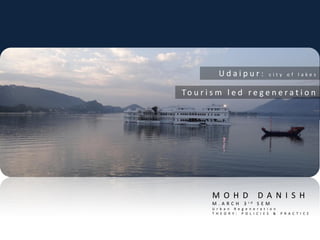
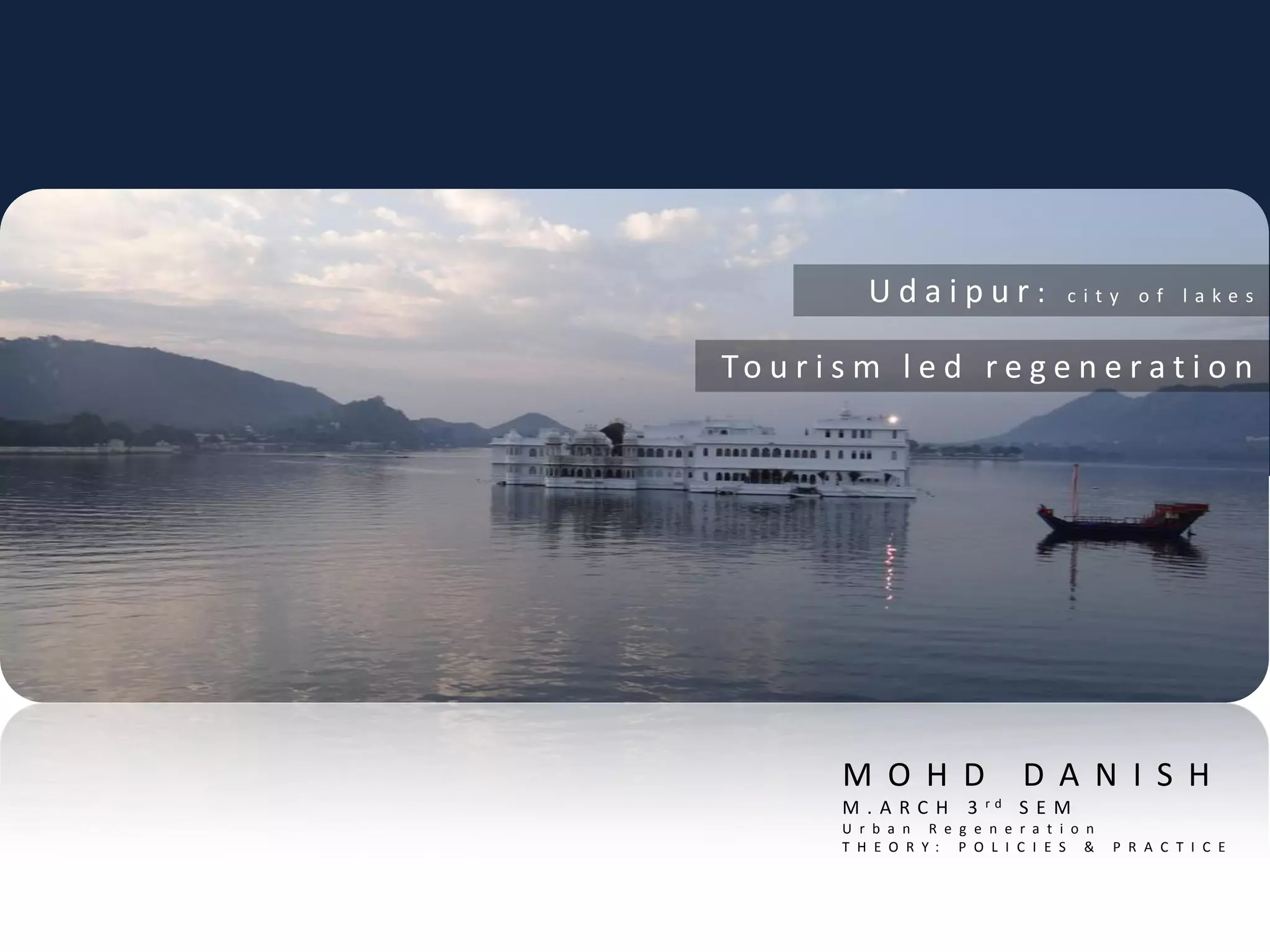
U d a i p u r : c i t y o f l a k e s
M O H D D A N I S H
M . A R C H 3 r d S E M
U r b a n R e g e n e r a t i o n
T H E O R Y : P O L I C I E S & P R A C T I C E
To u r i s m l e d r e g e n e r a t i o n
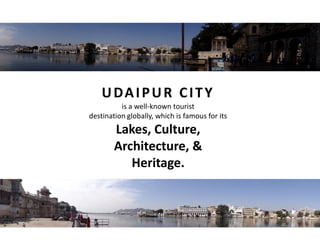
UDAIPUR CITY
is a well-known tourist
destination globally, which is famous for its
Lakes, Culture,
Architecture, &
Heritage.
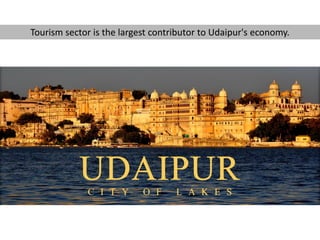
Tourism sector is the largest contributor to Udaipur's economy.
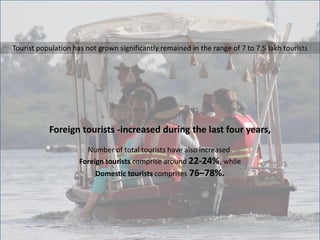
Foreign tourists -increased during the last four years,
Number of total tourists have also increased.
Foreign tourists comprise around 22-24%, while
Domestic tourists comprises 76–78%.
Tourist population has not grown significantly remained in the range of 7 to 7.5 lakh tourists
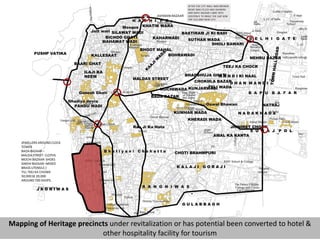
Mapping of Heritage precincts under revitalization or has potential been converted to hotel &
other hospitality facility for tourism
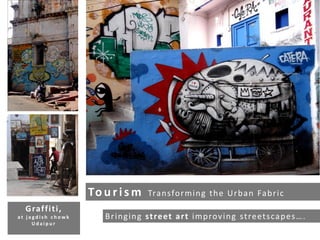
Tou ris m Transforming the Urban Fabric
Bringing street art improving streetscapes….
Graffiti,
a t j a g d i s h c h o w k
U d a i p u r
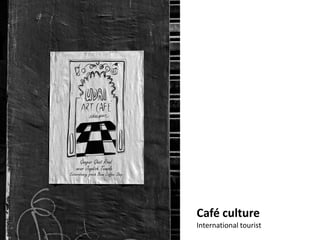
Café culture
International tourist
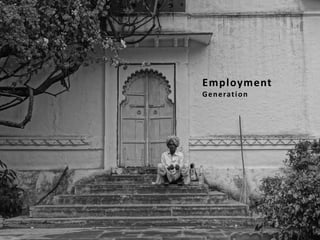
Employment
Generation
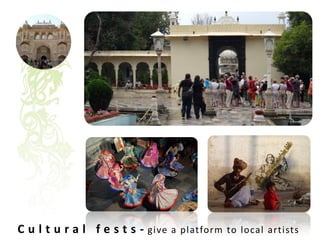
C u l t u r a l f e s t s - give a platform to local artists
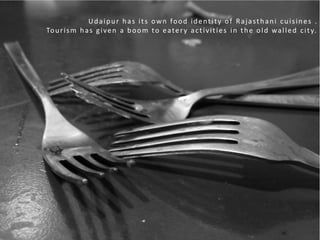
Udaipur has its own food identity of Rajasthani cuisines .
Tourism has given a boom to eatery activities in the old walled city.
Upliftment of local craft Economic
Regeneration
Tourist growth in Udaipur has been higher than that of state
average. Tourism, one of the key catalysts for Udaipur‟s economic
growth, is heavily dependent on city‟s heritage resources. Tourism is
dependent on lakes and hills, architectural heritage, and cultural and
regional linkages.
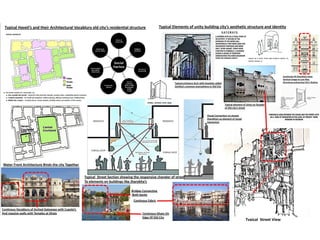
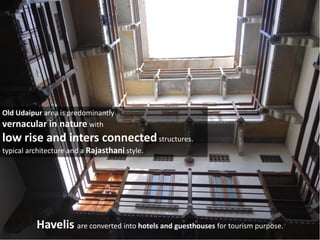
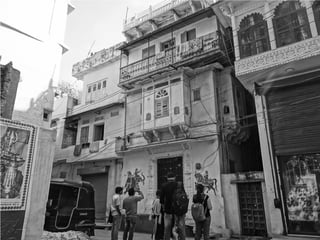
Old Udaipur area is predominantly
vernacular in nature with
low rise and inters connectedstructures.
typical architecture and a Rajasthani style.
Havelis are converted into hotels and guesthouses for tourism purpose.
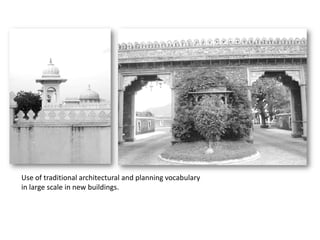
Use of traditional architectural and planning vocabulary
in large scale in new buildings.
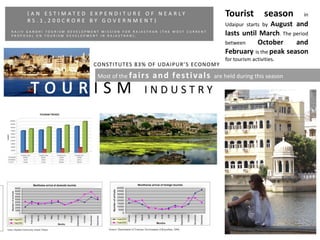
Tourist season in
Udaipur starts by August and
lasts until March. The period
between October and
February is the peak season
for tourism activities.
Most of the fairs and festivals are held during this season
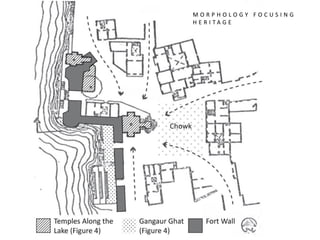
M O R P H O L O G Y F O C U S I N G
H E R I T A G E
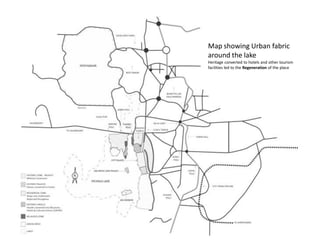
Map showing Urban fabric
around the lake
Heritage converted to hotels and other tourism
facilities led to the Regeneration of the place
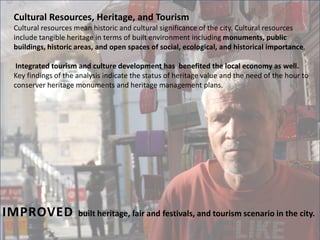
Cultural Resources, Heritage, and Tourism
Cultural resources mean historic and cultural significance of the city. Cultural resources
include tangible heritage in terms of built environment including monuments, public
buildings, historic areas, and open spaces of social, ecological, and historical importance.
Integrated tourism and culture development has benefited the local economy as well.
Key findings of the analysis indicate the status of heritage value and the need of the hour to
conserver heritage monuments and heritage management plans.
IMPROVED built heritage, fair and festivals, and tourism scenario in the city.
•Definition of a Tourism Unit :
“Tourism Unit will mean a tourism project
approved by the Department of Tourism,
Government of Rajasthan or by the Ministry of
Tourism, Government of India Allotment of
Government Land for Tourism Units”
•Conversion of Land for Tourism Units
•FAR (Floor Area Ratio)
•Regularization of Existing Tourism Units
•Fiscal Benefits and Incentives
•Incentives for Skill Development
•Time period of Annual Licenses for Tourism
Units
•Constitution of Tourism Advisory Committee
Under the control of Tourism Department, two public sector entities i.e.
•Rajasthan Tourism Development Corporation Ltd. and
•Rajasthan State Hotel Corporation Ltd.
and one society i.e.
Rajasthan Institute of Tourism and Travel Management are also operating and
work for tourism development in region.
Rajasthan Tourism Development Corporation Ltd. (RTDC)
RTDC is a registered company under the Companies Act, 1956, which is fully owned
by the Government of Rajasthan. RTDC acts as a catalyst to establish, develop, and
execute projects and schemes that accelerate tourism in the state. Functions of
RTDC include managing numerous restaurants, cafeterias, motels, and bars. To
enhance the experience of tourists, the corporation also organizes package tours,
fairs, festivals, and entertainment, shopping, and transport services.
Tourism related infrastructure is being developed by RTDC. It acquires land from the
state government to undertake hotel development and other tourism related
projects
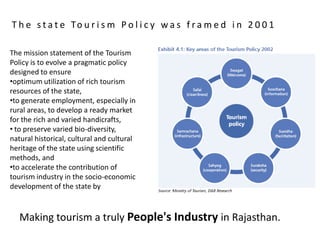
T h e s t a t e To u r i s m P o l i c y w a s f r a m e d i n 2 0 0 1
The mission statement of the Tourism
Policy is to evolve a pragmatic policy
designed to ensure
•optimum utilization of rich tourism
resources of the state,
•to generate employment, especially in
rural areas, to develop a ready market
for the rich and varied handicrafts,
• to preserve varied bio-diversity,
natural historical, cultural and cultural
heritage of the state using scientific
methods, and
•to accelerate the contribution of
tourism industry in the socio-economic
development of the state by
Making tourism a truly People's Industry in Rajasthan.
state government is making numerous efforts to get
maximum benefit from the tourism sector.
The Department of Tourism is working as a separate entity for the execution of
national and state level policies and programmes and also as a coordinating
agency for the Central – State Government
Department/offices and private sector activities for the promotion of tourism in
the state. Following efforts are being made at the department level:
• Printing of tourism publicity literature
•Advertising
• International conferences
•Films, photos, CDs
•Exhibitions
•Seminars and conferences
•Hospitality
•Library
Thank you ….

Udaipur : tourism led Regeneration

  • 1.
    U d ai p u r : c i t y o f l a k e s M O H D D A N I S H M . A R C H 3 r d S E M U r b a n R e g e n e r a t i o n T H E O R Y : P O L I C I E S & P R A C T I C E To u r i s m l e d r e g e n e r a t i o n
  • 2.
    UDAIPUR CITY is awell-known tourist destination globally, which is famous for its Lakes, Culture, Architecture, & Heritage.
  • 3.
    Tourism sector isthe largest contributor to Udaipur's economy.
  • 4.
    Foreign tourists -increasedduring the last four years, Number of total tourists have also increased. Foreign tourists comprise around 22-24%, while Domestic tourists comprises 76–78%. Tourist population has not grown significantly remained in the range of 7 to 7.5 lakh tourists
  • 5.
    Mapping of Heritageprecincts under revitalization or has potential been converted to hotel & other hospitality facility for tourism
  • 7.
    Tou ris mTransforming the Urban Fabric Bringing street art improving streetscapes…. Graffiti, a t j a g d i s h c h o w k U d a i p u r
  • 8.
  • 9.
  • 10.
    C u lt u r a l f e s t s - give a platform to local artists
  • 11.
    Udaipur has itsown food identity of Rajasthani cuisines . Tourism has given a boom to eatery activities in the old walled city.
  • 12.
    Upliftment of localcraft Economic Regeneration Tourist growth in Udaipur has been higher than that of state average. Tourism, one of the key catalysts for Udaipur‟s economic growth, is heavily dependent on city‟s heritage resources. Tourism is dependent on lakes and hills, architectural heritage, and cultural and regional linkages.
  • 13.
    Old Udaipur areais predominantly vernacular in nature with low rise and inters connectedstructures. typical architecture and a Rajasthani style. Havelis are converted into hotels and guesthouses for tourism purpose.
  • 15.
    Use of traditionalarchitectural and planning vocabulary in large scale in new buildings.
  • 16.
    Tourist season in Udaipurstarts by August and lasts until March. The period between October and February is the peak season for tourism activities. Most of the fairs and festivals are held during this season
  • 17.
    M O RP H O L O G Y F O C U S I N G H E R I T A G E
  • 18.
    Map showing Urbanfabric around the lake Heritage converted to hotels and other tourism facilities led to the Regeneration of the place
  • 19.
    Cultural Resources, Heritage,and Tourism Cultural resources mean historic and cultural significance of the city. Cultural resources include tangible heritage in terms of built environment including monuments, public buildings, historic areas, and open spaces of social, ecological, and historical importance. Integrated tourism and culture development has benefited the local economy as well. Key findings of the analysis indicate the status of heritage value and the need of the hour to conserver heritage monuments and heritage management plans. IMPROVED built heritage, fair and festivals, and tourism scenario in the city.
  • 20.
    •Definition of aTourism Unit : “Tourism Unit will mean a tourism project approved by the Department of Tourism, Government of Rajasthan or by the Ministry of Tourism, Government of India Allotment of Government Land for Tourism Units” •Conversion of Land for Tourism Units •FAR (Floor Area Ratio) •Regularization of Existing Tourism Units •Fiscal Benefits and Incentives •Incentives for Skill Development •Time period of Annual Licenses for Tourism Units •Constitution of Tourism Advisory Committee
  • 21.
    Under the controlof Tourism Department, two public sector entities i.e. •Rajasthan Tourism Development Corporation Ltd. and •Rajasthan State Hotel Corporation Ltd. and one society i.e. Rajasthan Institute of Tourism and Travel Management are also operating and work for tourism development in region. Rajasthan Tourism Development Corporation Ltd. (RTDC) RTDC is a registered company under the Companies Act, 1956, which is fully owned by the Government of Rajasthan. RTDC acts as a catalyst to establish, develop, and execute projects and schemes that accelerate tourism in the state. Functions of RTDC include managing numerous restaurants, cafeterias, motels, and bars. To enhance the experience of tourists, the corporation also organizes package tours, fairs, festivals, and entertainment, shopping, and transport services. Tourism related infrastructure is being developed by RTDC. It acquires land from the state government to undertake hotel development and other tourism related projects
  • 22.
    T h es t a t e To u r i s m P o l i c y w a s f r a m e d i n 2 0 0 1 The mission statement of the Tourism Policy is to evolve a pragmatic policy designed to ensure •optimum utilization of rich tourism resources of the state, •to generate employment, especially in rural areas, to develop a ready market for the rich and varied handicrafts, • to preserve varied bio-diversity, natural historical, cultural and cultural heritage of the state using scientific methods, and •to accelerate the contribution of tourism industry in the socio-economic development of the state by Making tourism a truly People's Industry in Rajasthan.
  • 23.
    state government ismaking numerous efforts to get maximum benefit from the tourism sector. The Department of Tourism is working as a separate entity for the execution of national and state level policies and programmes and also as a coordinating agency for the Central – State Government Department/offices and private sector activities for the promotion of tourism in the state. Following efforts are being made at the department level: • Printing of tourism publicity literature •Advertising • International conferences •Films, photos, CDs •Exhibitions •Seminars and conferences •Hospitality •Library
  • 24.