L a n d s c a p e & E c o l o g y | 2
R S Shrividhyah, 5th Year B Arch.
MUGHAL GARDENS
 MUGHAL GARDENS are a group of gardens built by the Mughals in the
Islamic style of architecture.
 This style was influenced by Persian gardens.
 Significant uses of rectilinear layouts are made within the walled
enclosures.
 Some of the typical features include pools, fountains and canals inside
the gardens.
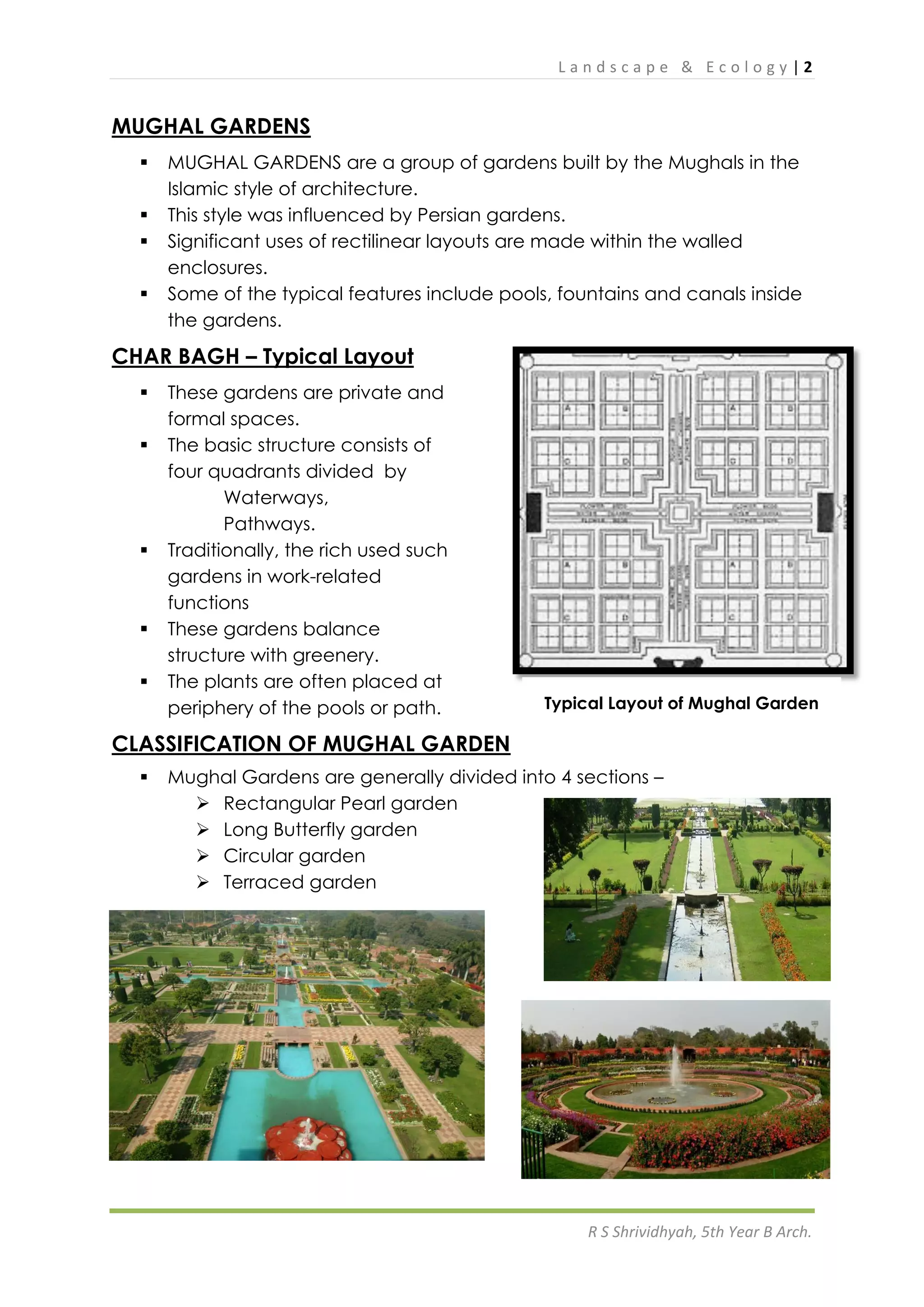
CHAR BAGH – Typical Layout
 These gardens are private and
formal spaces.
 The basic structure consists of
four quadrants divided by
Waterways,
Pathways.
 Traditionally, the rich used such
gardens in work-related
functions
 These gardens balance
structure with greenery.
 The plants are often placed at
periphery of the pools or path.
CLASSIFICATION OF MUGHAL GARDEN
 Mughal Gardens are generally divided into 4 sections –
 Rectangular Pearl garden
 Long Butterfly garden
 Circular garden
 Terraced garden
Typical Layout of Mughal Garden
L a n d s c a p e & E c o l o g y | 3
R S Shrividhyah, 5th Year B Arch.
DESIGN CONCEPT AND
PHYLOSOPHY
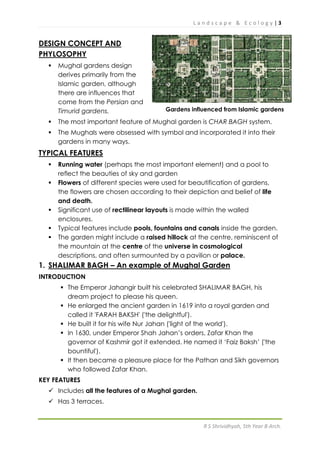
 Mughal gardens design
derives primarily from the
Islamic garden, although
there are influences that
come from the Persian and
Timurid gardens.
 The most important feature of Mughal garden is CHAR BAGH system.
 The Mughals were obsessed with symbol and incorporated it into their
gardens in many ways.
TYPICAL FEATURES
 Running water (perhaps the most important element) and a pool to
reflect the beauties of sky and garden
 Flowers of different species were used for beautification of gardens,
the flowers are chosen according to their depiction and belief of life
and death.
 Significant use of rectilinear layouts is made within the walled
enclosures.
 Typical features include pools, fountains and canals inside the garden.
 The garden might include a raised hillock at the centre, reminiscent of
the mountain at the centre of the universe in cosmological
descriptions, and often surmounted by a pavilion or palace.
1. SHALIMAR BAGH – An example of Mughal Garden
INTRODUCTION
 The Emperor Jahangir built his celebrated SHALIMAR BAGH, his
dream project to please his queen.
 He enlarged the ancient garden in 1619 into a royal garden and
called it 'FARAH BAKSH' ('the delightful').
 He built it for his wife Nur Jahan ('light of the world').
 In 1630, under Emperor Shah Jahan’s orders, Zafar Khan the
governor of Kashmir got it extended. He named it ‘Faiz Baksh’ ('the
bountiful').
 It then became a pleasure place for the Pathan and Sikh governors
who followed Zafar Khan.
KEY FEATURES
 Includes all the features of a Mughal garden.
 Has 3 terraces.
Gardens influenced from Islamic gardens
L a n d s c a p e & E c o l o g y | 4
R S Shrividhyah, 5th Year B Arch.
 The 2nd terrace garden along the axial canal slightly broader has two
shallow terraces.
 The carved stone bases and a fine platform surrounded by fountains
are still seen
 Shalimar Bagh is well known for chini khanas, or arched niches, behind
garden waterfalls.
 The garden is considered to be very beautiful during the autumn and
spring seasons due to the colour change in leaves of the famed Chinar
trees.
DESIGN LAYOUT
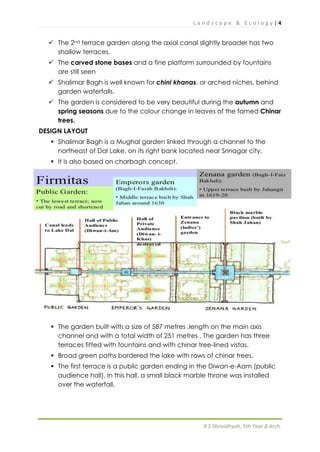
 Shalimar Bagh is a Mughal garden linked through a channel to the
northeast of Dal Lake, on its right bank located near Srinagar city.
 It is also based on charbagh concept.
 The garden built with a size of 587 metres ,length on the main axis
channel and with a total width of 251 metres . The garden has three
terraces fitted with fountains and with chinar tree-lined vistas.
 Broad green paths bordered the lake with rows of chinar trees.
 The first terrace is a public garden ending in the Diwan-e-Aam (public
audience hall). In this hall, a small black marble throne was installed
over the waterfall.
L a n d s c a p e & E c o l o g y | 5
R S Shrividhyah, 5th Year B Arch.
 The second terrace garden
along the axial canal, slightly
broader, has two shallow
terraces. The Diwan-i-Khas (the
Hall of Private Audience),
which was accessible only to
the noblemen or guests of the
court.
 In the third terrace, the axial water channel flows through the Zenana
garden, which is flanked by the Diwan-i-Khas and chinar trees.
 At the entrance to this terrace, there are two small pavilions (built in
Kashmir style on stone plinth) that is the restricted and controlled entry
zone of the royal harem.
 Shahajahan built a baradari of
black marble, called the Black
Pavilion in the zenana garden.
 It is encircled by a fountain
pool that receives its supply
from a higher terrace.
 A double cascade falls
against a low wall carved with
small niches, behind the
pavilion.
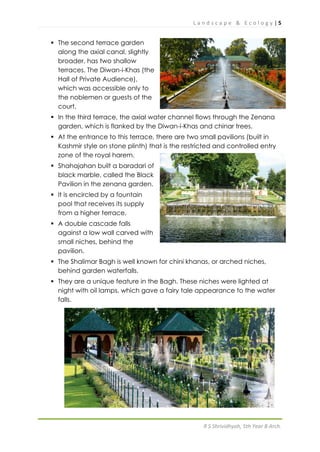
 The Shalimar Bagh is well known for chini khanas, or arched niches,
behind garden waterfalls.
 They are a unique feature in the Bagh. These niches were lighted at
night with oil lamps, which gave a fairy tale appearance to the water
falls.

Mughal gardens

  • 1.
    L a nd s c a p e & E c o l o g y | 2 R S Shrividhyah, 5th Year B Arch. MUGHAL GARDENS  MUGHAL GARDENS are a group of gardens built by the Mughals in the Islamic style of architecture.  This style was influenced by Persian gardens.  Significant uses of rectilinear layouts are made within the walled enclosures.  Some of the typical features include pools, fountains and canals inside the gardens. CHAR BAGH – Typical Layout  These gardens are private and formal spaces.  The basic structure consists of four quadrants divided by Waterways, Pathways.  Traditionally, the rich used such gardens in work-related functions  These gardens balance structure with greenery.  The plants are often placed at periphery of the pools or path. CLASSIFICATION OF MUGHAL GARDEN  Mughal Gardens are generally divided into 4 sections –  Rectangular Pearl garden  Long Butterfly garden  Circular garden  Terraced garden Typical Layout of Mughal Garden
  • 2.
    L a nd s c a p e & E c o l o g y | 3 R S Shrividhyah, 5th Year B Arch. DESIGN CONCEPT AND PHYLOSOPHY  Mughal gardens design derives primarily from the Islamic garden, although there are influences that come from the Persian and Timurid gardens.  The most important feature of Mughal garden is CHAR BAGH system.  The Mughals were obsessed with symbol and incorporated it into their gardens in many ways. TYPICAL FEATURES  Running water (perhaps the most important element) and a pool to reflect the beauties of sky and garden  Flowers of different species were used for beautification of gardens, the flowers are chosen according to their depiction and belief of life and death.  Significant use of rectilinear layouts is made within the walled enclosures.  Typical features include pools, fountains and canals inside the garden.  The garden might include a raised hillock at the centre, reminiscent of the mountain at the centre of the universe in cosmological descriptions, and often surmounted by a pavilion or palace. 1. SHALIMAR BAGH – An example of Mughal Garden INTRODUCTION  The Emperor Jahangir built his celebrated SHALIMAR BAGH, his dream project to please his queen.  He enlarged the ancient garden in 1619 into a royal garden and called it 'FARAH BAKSH' ('the delightful').  He built it for his wife Nur Jahan ('light of the world').  In 1630, under Emperor Shah Jahan’s orders, Zafar Khan the governor of Kashmir got it extended. He named it ‘Faiz Baksh’ ('the bountiful').  It then became a pleasure place for the Pathan and Sikh governors who followed Zafar Khan. KEY FEATURES  Includes all the features of a Mughal garden.  Has 3 terraces. Gardens influenced from Islamic gardens
  • 3.
    L a nd s c a p e & E c o l o g y | 4 R S Shrividhyah, 5th Year B Arch.  The 2nd terrace garden along the axial canal slightly broader has two shallow terraces.  The carved stone bases and a fine platform surrounded by fountains are still seen  Shalimar Bagh is well known for chini khanas, or arched niches, behind garden waterfalls.  The garden is considered to be very beautiful during the autumn and spring seasons due to the colour change in leaves of the famed Chinar trees. DESIGN LAYOUT  Shalimar Bagh is a Mughal garden linked through a channel to the northeast of Dal Lake, on its right bank located near Srinagar city.  It is also based on charbagh concept.  The garden built with a size of 587 metres ,length on the main axis channel and with a total width of 251 metres . The garden has three terraces fitted with fountains and with chinar tree-lined vistas.  Broad green paths bordered the lake with rows of chinar trees.  The first terrace is a public garden ending in the Diwan-e-Aam (public audience hall). In this hall, a small black marble throne was installed over the waterfall.
  • 4.
    L a nd s c a p e & E c o l o g y | 5 R S Shrividhyah, 5th Year B Arch.  The second terrace garden along the axial canal, slightly broader, has two shallow terraces. The Diwan-i-Khas (the Hall of Private Audience), which was accessible only to the noblemen or guests of the court.  In the third terrace, the axial water channel flows through the Zenana garden, which is flanked by the Diwan-i-Khas and chinar trees.  At the entrance to this terrace, there are two small pavilions (built in Kashmir style on stone plinth) that is the restricted and controlled entry zone of the royal harem.  Shahajahan built a baradari of black marble, called the Black Pavilion in the zenana garden.  It is encircled by a fountain pool that receives its supply from a higher terrace.  A double cascade falls against a low wall carved with small niches, behind the pavilion.  The Shalimar Bagh is well known for chini khanas, or arched niches, behind garden waterfalls.  They are a unique feature in the Bagh. These niches were lighted at night with oil lamps, which gave a fairy tale appearance to the water falls.