RAJARSHI SHAHU COLLEGE OF
PHARMACY ,BULDHANA
TYROSINE KINASE RECEPTOR
GUIDE BY – DR.GAURAV HARLAKA
PRESENTED BY –GANESH VASUDEV MAHAJAN
(DEPT.PHARMACOLOGY )
1/26
CONTENT
1)Introduction
2)Types of RTK
3)Mechanism
4)Signalling pathways
5)Application
2/26
Introduction
1) Definitions
Tyrosine kinase are important mediators of the signaling
Cascade,determining diverse biological process like growth ,differentiation ,
Metabolism and apoptosis in response to external and internal stimulli.
2) Tyrosine kinase is an enzyme that transfer phosphate group to ATP to a
protein in a cell. It function as an on and off switch in many cellular
functions.
3) Tyrosine kinases are implicated in several steps of neoplastics developed and
progression.
4) Tyrosine kinase represents a major portion of all oncoprotein that play
transforming role in plethora of cancers.
3/26
5) The identifications and development of therapeutic agents for
disease states that are linked to abnormal activation of tyrosine kinases
due to enhanced expression, mutation or autocrine stimulation leading
to abnormal downstream oncogenic signaling have taken a centre
stage as a potent target for cancer therapy.
6) The discovery that SRC oncogene having a transforming non receptor
tyrosine kinase activity , and the findings of EGFR , the first receptor
tyrosine kinase paved the understanding of the role and significance of
tyrosine kinase in cancer
4/26
extracellular
juxtamembrane
transmembrane
tyrosine kinase
carboxy-terminal tail
ligand binding
NH2
COOH
ATP
substrate
binding
5/26
Tyrosine kinases can be further subdevided in to two types
1) Tyrosine kinases receptor
e.g EGFR, PDGFR, FGFR
2) Non tyrosine kinases receptor
e.g SRC,ABL,FAK AND JANUS KINASE
6/26
7/26
Epidermal Growth Factor
1) A growth factor stimulates the cell growth
,proliferation and differentiation by
Binding to its receptor EGFR.
2) Human EGF is a 6065-Da
protein with 53
amino acid residue and there
Intramolecular disulfide bond
8/26
A transmembrane receptor that’s is activated by insulin IGF-1, IGF-2 and
belongs to the large class of tyrosine kinase receptor
9/26
Family of growth factors involved in
angiogenesis , wound healing and
Embryonic development .
1)The FGFs are heparin –binding
proteins and interactios with cell
surface Associated heparan sulfate
proteoglycans have been shown to be
essential for FGF signal transduction.
10/26
Potent mitogen for cell of mesenchymal
origin ,including smooth muscle and
glial cells .
1)In chemical terms,platelets derived growth
factor is dimeric glycoproteins composed of
two A (AA) or two B (BB) chains or a
combination of the two (AB)
11/26
12/26
The ephrins family of
receptor is the Largest
know subfamily receptor
tyrosine kinase and the
ligands are called ephrins
13/26
A signal proteins produced by cell that
stimulates vasculogenesis and angiogenesis
1) It is part of the system that restored the
oxygen supply to tissue when blood
circulation is inadequate.
14/26
15/26
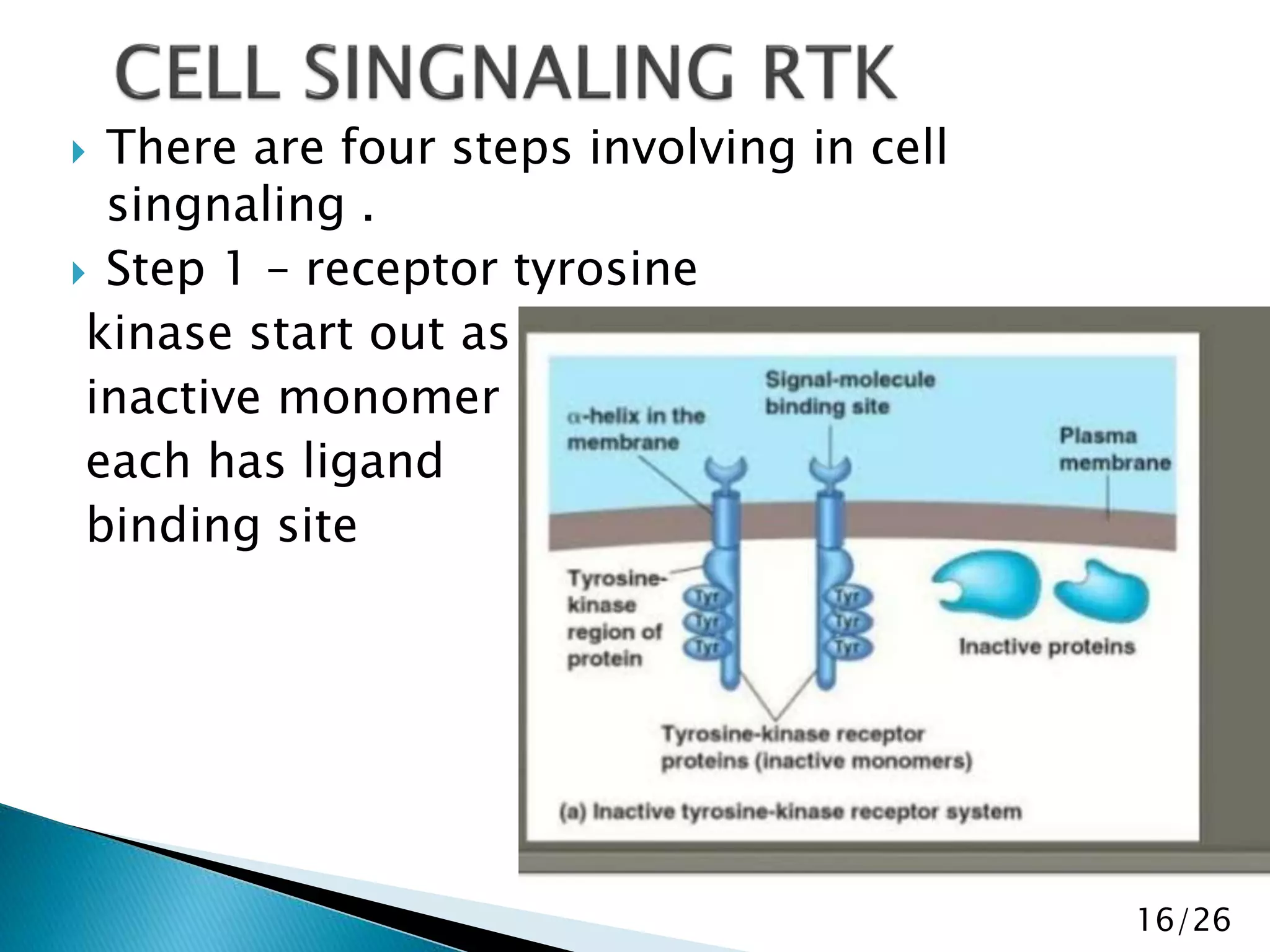
 There are four steps involving in cell
singnaling .
 Step 1 – receptor tyrosine
kinase start out as
inactive monomer
each has ligand
binding site
16/26
 Step 2- monomer make combine to make a
dimer when signal molecule bond with
receptor site
 These signal molecule are often growth factor
17/26
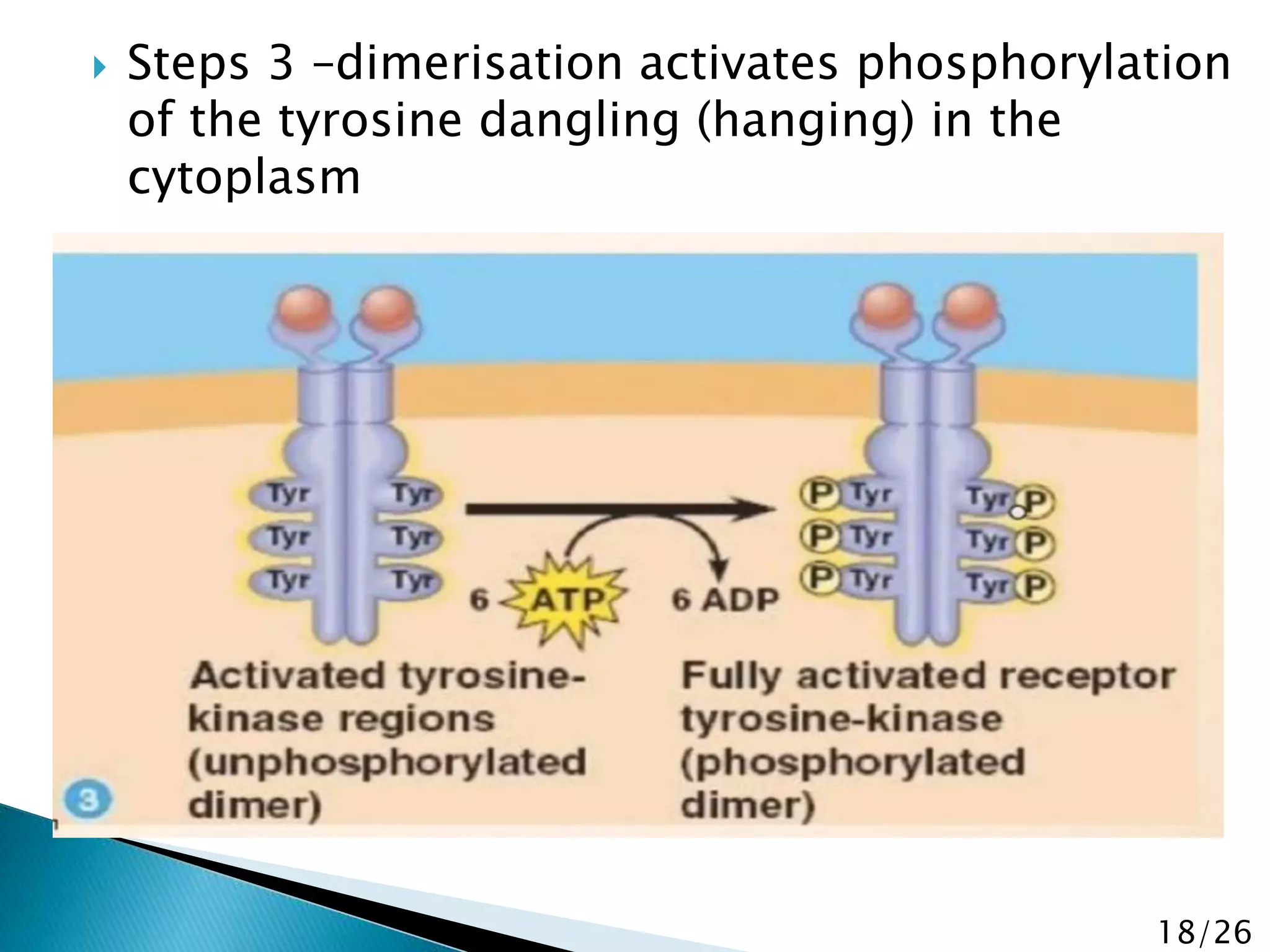
 Steps 3 –dimerisation activates phosphorylation
of the tyrosine dangling (hanging) in the
cytoplasm
18/26
 Steps 4- fully phoshorylated , the active receptor
is now recognised by multiple relay proteins.
 Each can trigger a separate cellular response .
19/26
20/26
https://youtu.be/FkkK5lTmBYQ
Oncogenic Activation RTK,
1) Normally the level of cellular tyrosine kinase phosphorylation is tightly
Controlled by the antagonizing effect of tyrosine kinase receptor and tyrosine
Phosphates
Some common mechanism of oncogenic activation
1) Activation by mutation
2) BCR –ABL AND Human leukemia
21/26
https://youtu.be/FkkK5lTmBYQ
22/26
23/26
24/26
Application
1)Tyrosine kinase as targets for anticancer agents
2) The role of tyrosine kinase activity in endocytosis, and down regulation of
The epidermal growth factor receptor
3) Application of tyrosine kinase inhibitors as a promising targeted treatments
For myeloproliferative neoplasms
4) The potential use of tyrosine kinase inhibitors in several asthma
5) A protein tyrosine kinase in the interferon α/β signaling pathways.
25/26
THANK YOU
26/26

tyrosine kinase receptors.pptx

  • 1.
    RAJARSHI SHAHU COLLEGEOF PHARMACY ,BULDHANA TYROSINE KINASE RECEPTOR GUIDE BY – DR.GAURAV HARLAKA PRESENTED BY –GANESH VASUDEV MAHAJAN (DEPT.PHARMACOLOGY ) 1/26
  • 2.
  • 3.
    Introduction 1) Definitions Tyrosine kinaseare important mediators of the signaling Cascade,determining diverse biological process like growth ,differentiation , Metabolism and apoptosis in response to external and internal stimulli. 2) Tyrosine kinase is an enzyme that transfer phosphate group to ATP to a protein in a cell. It function as an on and off switch in many cellular functions. 3) Tyrosine kinases are implicated in several steps of neoplastics developed and progression. 4) Tyrosine kinase represents a major portion of all oncoprotein that play transforming role in plethora of cancers. 3/26
  • 4.
    5) The identificationsand development of therapeutic agents for disease states that are linked to abnormal activation of tyrosine kinases due to enhanced expression, mutation or autocrine stimulation leading to abnormal downstream oncogenic signaling have taken a centre stage as a potent target for cancer therapy. 6) The discovery that SRC oncogene having a transforming non receptor tyrosine kinase activity , and the findings of EGFR , the first receptor tyrosine kinase paved the understanding of the role and significance of tyrosine kinase in cancer 4/26
  • 5.
  • 6.
    Tyrosine kinases canbe further subdevided in to two types 1) Tyrosine kinases receptor e.g EGFR, PDGFR, FGFR 2) Non tyrosine kinases receptor e.g SRC,ABL,FAK AND JANUS KINASE 6/26
  • 7.
  • 8.
    Epidermal Growth Factor 1)A growth factor stimulates the cell growth ,proliferation and differentiation by Binding to its receptor EGFR. 2) Human EGF is a 6065-Da protein with 53 amino acid residue and there Intramolecular disulfide bond 8/26
  • 9.
    A transmembrane receptorthat’s is activated by insulin IGF-1, IGF-2 and belongs to the large class of tyrosine kinase receptor 9/26
  • 10.
    Family of growthfactors involved in angiogenesis , wound healing and Embryonic development . 1)The FGFs are heparin –binding proteins and interactios with cell surface Associated heparan sulfate proteoglycans have been shown to be essential for FGF signal transduction. 10/26
  • 11.
    Potent mitogen forcell of mesenchymal origin ,including smooth muscle and glial cells . 1)In chemical terms,platelets derived growth factor is dimeric glycoproteins composed of two A (AA) or two B (BB) chains or a combination of the two (AB) 11/26
  • 12.
  • 13.
    The ephrins familyof receptor is the Largest know subfamily receptor tyrosine kinase and the ligands are called ephrins 13/26
  • 14.
    A signal proteinsproduced by cell that stimulates vasculogenesis and angiogenesis 1) It is part of the system that restored the oxygen supply to tissue when blood circulation is inadequate. 14/26
  • 15.
  • 16.
     There arefour steps involving in cell singnaling .  Step 1 – receptor tyrosine kinase start out as inactive monomer each has ligand binding site 16/26
  • 17.
     Step 2-monomer make combine to make a dimer when signal molecule bond with receptor site  These signal molecule are often growth factor 17/26
  • 18.
     Steps 3–dimerisation activates phosphorylation of the tyrosine dangling (hanging) in the cytoplasm 18/26
  • 19.
     Steps 4-fully phoshorylated , the active receptor is now recognised by multiple relay proteins.  Each can trigger a separate cellular response . 19/26
  • 20.
  • 21.
    Oncogenic Activation RTK, 1)Normally the level of cellular tyrosine kinase phosphorylation is tightly Controlled by the antagonizing effect of tyrosine kinase receptor and tyrosine Phosphates Some common mechanism of oncogenic activation 1) Activation by mutation 2) BCR –ABL AND Human leukemia 21/26 https://youtu.be/FkkK5lTmBYQ
  • 22.
  • 23.
  • 24.
  • 25.
    Application 1)Tyrosine kinase astargets for anticancer agents 2) The role of tyrosine kinase activity in endocytosis, and down regulation of The epidermal growth factor receptor 3) Application of tyrosine kinase inhibitors as a promising targeted treatments For myeloproliferative neoplasms 4) The potential use of tyrosine kinase inhibitors in several asthma 5) A protein tyrosine kinase in the interferon α/β signaling pathways. 25/26
  • 26.