Organizational Change
Three Typologies of Change Strategies
Higgs & Rowland (2005)
 (Perception of the complexity of change and the extent to which it is believed
 that change can be effected on a uniform basis or widely distributed activity)

                                 Change as a predictable phenomenon          Change as a complex phenomenon

                                 Directive (Simple)                          Master (Sophisticated)
       Uniform Approach


                                 Change being driven, controlled,            Change being
                                 managed, initiated from the top or small    driven, controlled, managed, initiated
                                 group                                       from the top or small group
                                 Simple theory of change or a few rules of   Complex theory of change – lots of
                                 thumb                                       elements, drawing on more than two
                                                                             theorists, use of change model

                                 Self Assembly (DIY)                         Emergence
       Differentiated Approach


                                 Strategic direction but local adaptation    Change initiated anywhere in the
           Disseminated /


                                 Accountability for change lies with local   organization but usually where there is
                                 managers                                    high contact with client/customer
                                                                             Sharing best practice


Malcolm Higgs & Deborah Rowland (2005): All changes great and small: Exploring approaches to change and its leadership,
Journal of Change Management, 5:2, 121-151
Van de Ven & Poole (1995)
             (Unit of Change & Mode of Change)
                    Prescribed Mode of Change                            Constructive Mode of Change

                    Evolution (Competitive Change)                       Dialectic (Conflictive Change)
                    Process Cycle: Variation, selection, and retention   Process Cycle: Confrontation, conflict, and
Multiple Entities


                    among competing units                                synthesis between opposing Interests
                    Situation when model Applies: Competition for        Situation when model Applies: Conflict
                    scarce resources                                     between opposing forces


                    LifeCycle (Regulated Change)                         Teleology (Planned Change)
                    Process Cycle: Prescribed sequence of steps or       Process Cycle: Dissatisfaction, search, goal
                    stages of development                                setting, and Implementation
Entity
Single


                    Situation when model Applies: Prefigured             Situation when model Applies: Social
                    program regulated by nature, logic or rules          construction of desired end state; goal
                                                                         consensus


Van de Ven A H, Poole M S. (1995). Explaining development and change in organizations. Academy of Management Review.
20(3):510.40
Dunphy & Stace (1988)
 (Scope of Change and Support)
                                Incremental Change Strategies              Transformative Change Strategies


                                                  Type 1                                     Type 2
          Collaborative Modes


                                Participative Evolution                    Charismatic Transformation
                                Use when organization is in “fit” but      Use when organization is out of “fit”
                                needs minor adjustment, or is out of fit   but there is little time for extensive
                                but time is available and key interest     participation but there is support for
                                groups favor change                        radical change within the
                                                                           organization

                                                  Type 3                                    Type 4
                                Forced Evolution                           Dictatorial Transformation
                                Use when organization is in “fit” but      Use when organization is out of “fit”
          Coercive


                                needs minor adjustment, or is out of fit   but there is no time for extensive
           Modes


                                but time is available and key interest     participation and no support within
                                groups oppose change                       the organization for radical change,
                                                                           but radical change is vital to
                                                                           organizational survival and
                                                                           fulfillment of basic mission


Dunphy, D. C. and Stace, D. A. (1988) „Transformational and Coercive Strategies for Planned Organizational Change: Beyond
the OD Model‟, Organization Studies 9(3): 317–34.

Typologies Of Organizational Change Strategies

  • 1.
  • 2.
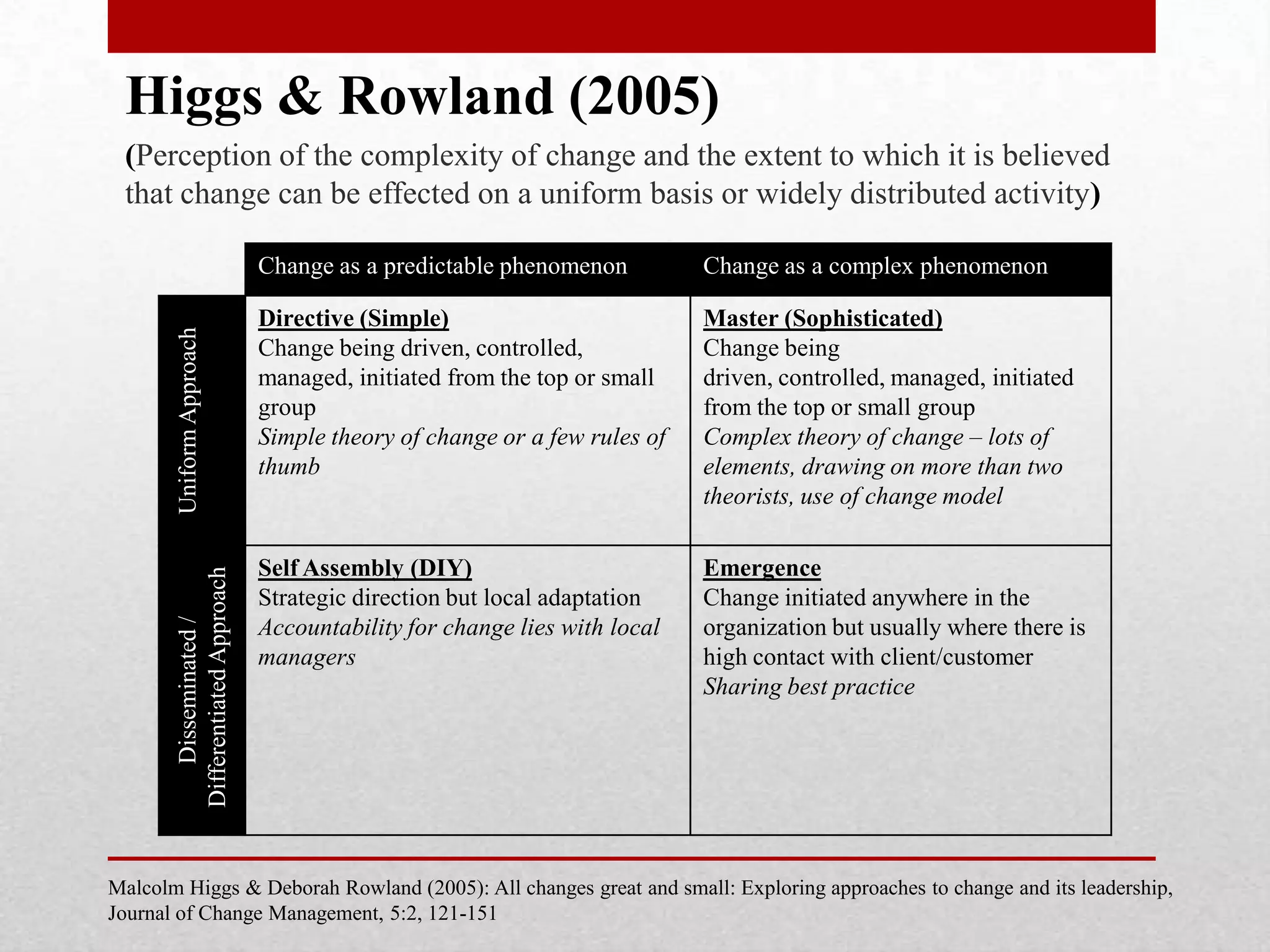
    Higgs & Rowland(2005) (Perception of the complexity of change and the extent to which it is believed that change can be effected on a uniform basis or widely distributed activity) Change as a predictable phenomenon Change as a complex phenomenon Directive (Simple) Master (Sophisticated) Uniform Approach Change being driven, controlled, Change being managed, initiated from the top or small driven, controlled, managed, initiated group from the top or small group Simple theory of change or a few rules of Complex theory of change – lots of thumb elements, drawing on more than two theorists, use of change model Self Assembly (DIY) Emergence Differentiated Approach Strategic direction but local adaptation Change initiated anywhere in the Disseminated / Accountability for change lies with local organization but usually where there is managers high contact with client/customer Sharing best practice Malcolm Higgs & Deborah Rowland (2005): All changes great and small: Exploring approaches to change and its leadership, Journal of Change Management, 5:2, 121-151
  • 3.
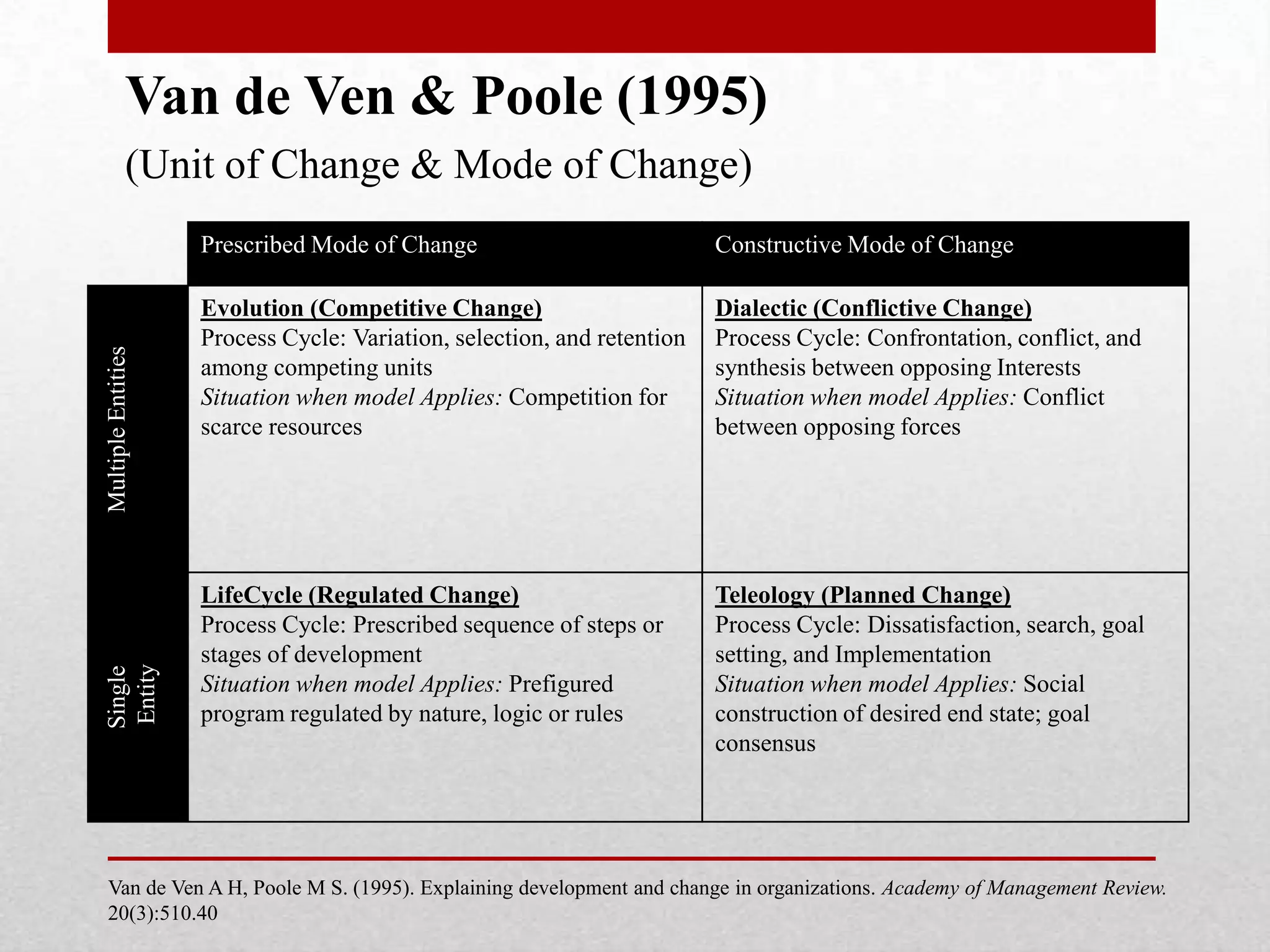
    Van de Ven& Poole (1995) (Unit of Change & Mode of Change) Prescribed Mode of Change Constructive Mode of Change Evolution (Competitive Change) Dialectic (Conflictive Change) Process Cycle: Variation, selection, and retention Process Cycle: Confrontation, conflict, and Multiple Entities among competing units synthesis between opposing Interests Situation when model Applies: Competition for Situation when model Applies: Conflict scarce resources between opposing forces LifeCycle (Regulated Change) Teleology (Planned Change) Process Cycle: Prescribed sequence of steps or Process Cycle: Dissatisfaction, search, goal stages of development setting, and Implementation Entity Single Situation when model Applies: Prefigured Situation when model Applies: Social program regulated by nature, logic or rules construction of desired end state; goal consensus Van de Ven A H, Poole M S. (1995). Explaining development and change in organizations. Academy of Management Review. 20(3):510.40
  • 4.
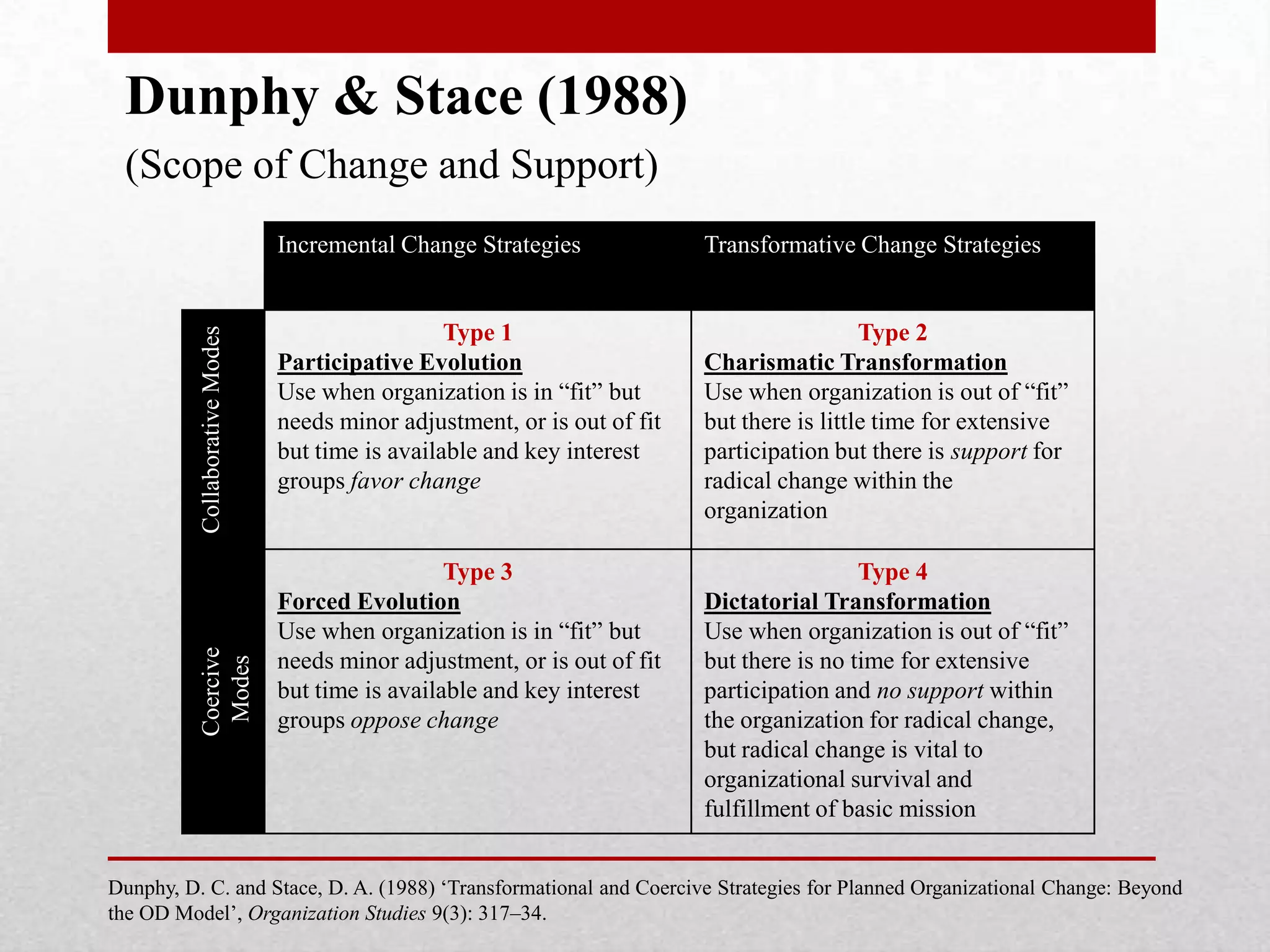
    Dunphy & Stace(1988) (Scope of Change and Support) Incremental Change Strategies Transformative Change Strategies Type 1 Type 2 Collaborative Modes Participative Evolution Charismatic Transformation Use when organization is in “fit” but Use when organization is out of “fit” needs minor adjustment, or is out of fit but there is little time for extensive but time is available and key interest participation but there is support for groups favor change radical change within the organization Type 3 Type 4 Forced Evolution Dictatorial Transformation Use when organization is in “fit” but Use when organization is out of “fit” Coercive needs minor adjustment, or is out of fit but there is no time for extensive Modes but time is available and key interest participation and no support within groups oppose change the organization for radical change, but radical change is vital to organizational survival and fulfillment of basic mission Dunphy, D. C. and Stace, D. A. (1988) „Transformational and Coercive Strategies for Planned Organizational Change: Beyond the OD Model‟, Organization Studies 9(3): 317–34.