Black Feminist Thought
Ain’t I a Woman?


               ..."That man over there says that women need to be
              helped into carriages, and lifted over ditches, and to
              have the best place everywhere. Nobody helps me
              any best place. And ain't I a woman?..."Look at me!
              Look at my arm. I have plowed, I have planted and I
              have gathered into barns. And no man could head
              me. And ain't I a woman?" ..."I could work as much,
              and eat as much as man - when I could get it - and
              bear the lash as well! And ain't I a woman? I have
              borne children and seen most of them sold into
              slavery, and when I cried out with a mother's grief,
              none but Jesus heard me. And ain't I a woman?"
 1797 –1883
“Shall it any longer be said of the daughters of Africa,
                                   They have no ambition, they have no force?

                                   By no means.

                                   Let every female heart become united…..”


     Maria Stewart
        (1803 –1879)
African American public speaker,
abolitionist, and feminist
“The colored girl… is not known and hence not
believed in; she belongs to a race that is
designated by the term “problem,” and she lives
beneath the shadow of that problem which
envelopes and obscures her.”


                                                  Fannie Barrier Williams
                                                           (1855 –1944)
                                                  African American Educator and
                                                  women's rights activist
Other Voices of the Past
The Dimensions of Oppression
Economic Dimension: The exploitation of Black women’s labor
essential to U.S. capitalism – the “iron pots and kettles” symbolizing
Black women’s long-standing ghettoization in service occupations.

Political Dimension: Forbidding Black women to vote, excluding
from public office, and withholding equitable treatment in the
criminal justice system all substantiate the political subordination
of Black women.

Ideological Dimension: Negative stereotypes applied to African-
American women have been fundamental to Black women’s
oppression.
The Development of Black Feminist Thought
  Discovering, Reinterpreting, & Analyzing the works of individual U.S.
  Black women thinkers (locating unrecognized and unheralded
  works, scattered and long out of print)

  Discovering, Reinterpreting, & Analyzing the ideas of subgroups
  within the larger collectivity of U.S. Black women who have been
  silenced

  Reinterpreting existing works through new theoretical frameworks

  Searching for its expression in alternative institutional locations and
  among women who are not commonly perceived as intellectuals
  (the concept of intellectual must be deconstructed)

  Collaboration leadership among those who participate in the diverse
  forms that Black women’s communities now take.
Why U.S. Black Feminist Thought
Black women’s subordination within Intersecting oppressions of race, class, gender,
sexuality and nation.

Diverse responses to common challenges with Black feminism: No homogenous
Black woman’s standpoint exist. Many factors explain diverse responses (social class
differences, sexuality signals, and varying ethnic and citizenship statuses.

Black feminism occurs through an ongoing dialogue whereby actions and thought
inform one another .

Black feminist intellectuals are central to Black feminist thought: Black feminist
scholars in studying oppression among black women are less likely to walk away
when the obstacles seem overwhelming or when he rewards for staying diminish.

Black feminism is dynamic and changing: The changing social conditions that
confront African-American women stimulate the need for new Black feminist
analyses of the common differences that characterize U.S Black womanhood.

Black feminism is part of a wider struggle for human dignity, empowerment, and
social justice.
And so our mothers and
grandmothers have, more often
than not anonymously, handed on
the creative spark, the seed of the
flower they themselves never
hoped to see - or like a sealed
letter they could not plainly read.


                                      Alice Walker
                                      Author, Poet
Look at the Stars


                           Shawna R. Kimbrell      Michelle Obama           Oprah Winfrey             Maya Angelou
 Toni Morrison                                                        Richest African American          Writer
                           First Black Woman          First Lady
 Nobel Prize in Literature                                            in the 20th Century        Presidential Medal of Freedom
                           Fighter Pilot


Aretha Franklin            Condoleezza Rice        Halle Berry          Dr. Mae Jemison         Serena Williams
                                                                                          World No. 1 Woman Tennis Player
Queen of Soul     First African-American woman First Black Woman to     First Black Woman           (July, 2002)
                          Secretary of State       win the Oscar             Astronaut
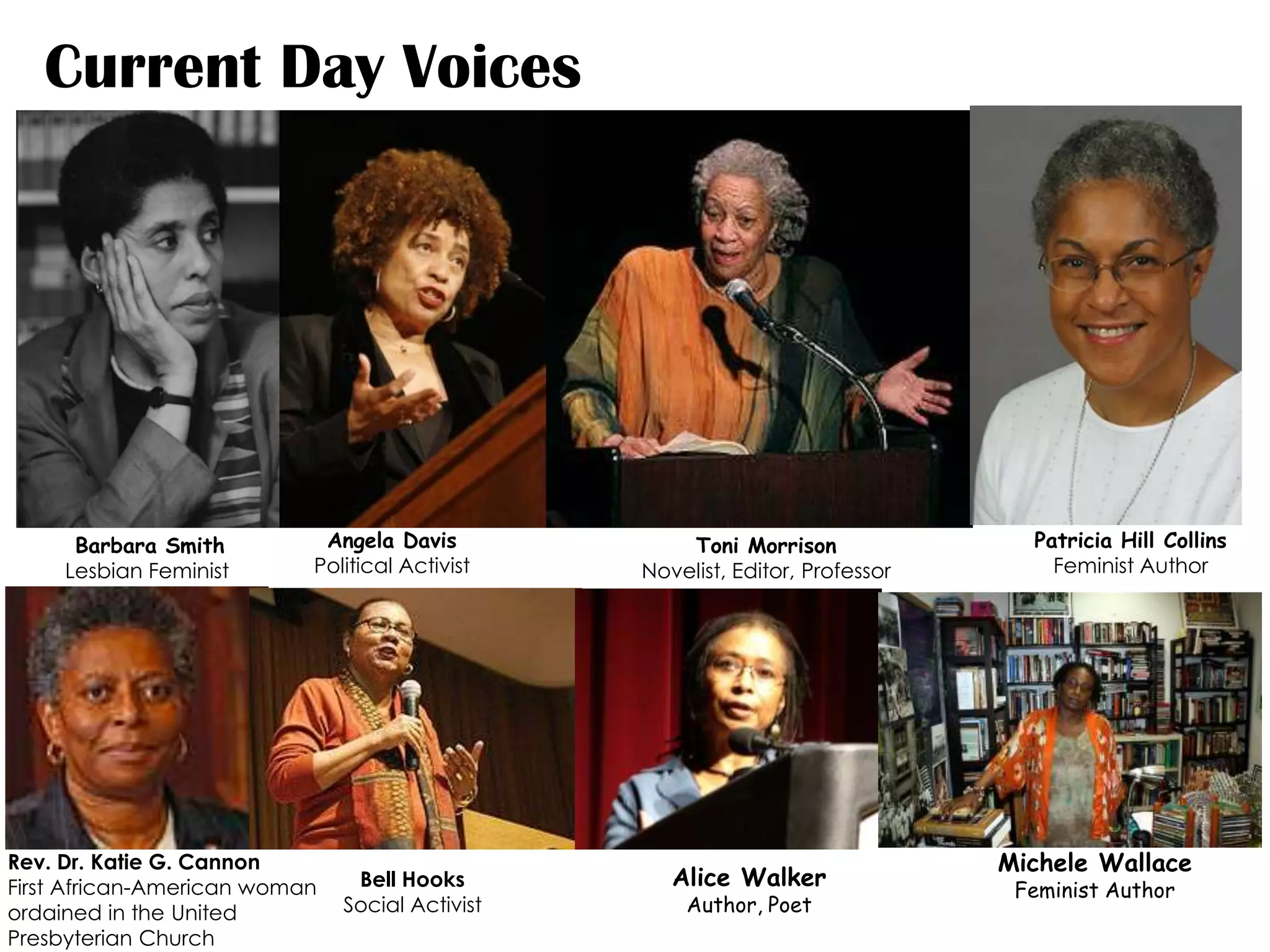
Current Day Voices


      Barbara Smith         Angela Davis             Toni Morrison               Patricia Hill Collins
     Lesbian Feminist      Political Activist    Novelist, Editor, Professor       Feminist Author


Rev. Dr. Katie G. Cannon                                                       Michele Wallace
First African-American woman    Bell Hooks          Alice Walker                Feminist Author
ordained in the United         Social Activist       Author, Poet
Presbyterian Church
Jump at the Sun


  Mama exhorted her
  children at every opportunity
  to 'jump at the sun.'

  We might not land on
  the sun, but at least we would
  get off the ground.


               - Zora Neale Hurston

Black feminist thought

  • 1.
  • 2.
    Ain’t I aWoman? ..."That man over there says that women need to be helped into carriages, and lifted over ditches, and to have the best place everywhere. Nobody helps me any best place. And ain't I a woman?..."Look at me! Look at my arm. I have plowed, I have planted and I have gathered into barns. And no man could head me. And ain't I a woman?" ..."I could work as much, and eat as much as man - when I could get it - and bear the lash as well! And ain't I a woman? I have borne children and seen most of them sold into slavery, and when I cried out with a mother's grief, none but Jesus heard me. And ain't I a woman?" 1797 –1883
  • 3.
    “Shall it anylonger be said of the daughters of Africa, They have no ambition, they have no force? By no means. Let every female heart become united…..” Maria Stewart (1803 –1879) African American public speaker, abolitionist, and feminist
  • 4.
    “The colored girl…is not known and hence not believed in; she belongs to a race that is designated by the term “problem,” and she lives beneath the shadow of that problem which envelopes and obscures her.” Fannie Barrier Williams (1855 –1944) African American Educator and women's rights activist
  • 5.
  • 6.
    The Dimensions ofOppression Economic Dimension: The exploitation of Black women’s labor essential to U.S. capitalism – the “iron pots and kettles” symbolizing Black women’s long-standing ghettoization in service occupations. Political Dimension: Forbidding Black women to vote, excluding from public office, and withholding equitable treatment in the criminal justice system all substantiate the political subordination of Black women. Ideological Dimension: Negative stereotypes applied to African- American women have been fundamental to Black women’s oppression.
  • 7.
    The Development ofBlack Feminist Thought Discovering, Reinterpreting, & Analyzing the works of individual U.S. Black women thinkers (locating unrecognized and unheralded works, scattered and long out of print) Discovering, Reinterpreting, & Analyzing the ideas of subgroups within the larger collectivity of U.S. Black women who have been silenced Reinterpreting existing works through new theoretical frameworks Searching for its expression in alternative institutional locations and among women who are not commonly perceived as intellectuals (the concept of intellectual must be deconstructed) Collaboration leadership among those who participate in the diverse forms that Black women’s communities now take.
  • 8.
    Why U.S. BlackFeminist Thought Black women’s subordination within Intersecting oppressions of race, class, gender, sexuality and nation. Diverse responses to common challenges with Black feminism: No homogenous Black woman’s standpoint exist. Many factors explain diverse responses (social class differences, sexuality signals, and varying ethnic and citizenship statuses. Black feminism occurs through an ongoing dialogue whereby actions and thought inform one another . Black feminist intellectuals are central to Black feminist thought: Black feminist scholars in studying oppression among black women are less likely to walk away when the obstacles seem overwhelming or when he rewards for staying diminish. Black feminism is dynamic and changing: The changing social conditions that confront African-American women stimulate the need for new Black feminist analyses of the common differences that characterize U.S Black womanhood. Black feminism is part of a wider struggle for human dignity, empowerment, and social justice.
  • 9.
    And so ourmothers and grandmothers have, more often than not anonymously, handed on the creative spark, the seed of the flower they themselves never hoped to see - or like a sealed letter they could not plainly read. Alice Walker Author, Poet
  • 10.
    Look at theStars Shawna R. Kimbrell Michelle Obama Oprah Winfrey Maya Angelou Toni Morrison Richest African American Writer First Black Woman First Lady Nobel Prize in Literature in the 20th Century Presidential Medal of Freedom Fighter Pilot Aretha Franklin Condoleezza Rice Halle Berry Dr. Mae Jemison Serena Williams World No. 1 Woman Tennis Player Queen of Soul First African-American woman First Black Woman to First Black Woman (July, 2002) Secretary of State win the Oscar Astronaut
  • 11.
    Current Day Voices Barbara Smith Angela Davis Toni Morrison Patricia Hill Collins Lesbian Feminist Political Activist Novelist, Editor, Professor Feminist Author Rev. Dr. Katie G. Cannon Michele Wallace First African-American woman Bell Hooks Alice Walker Feminist Author ordained in the United Social Activist Author, Poet Presbyterian Church
  • 12.
    Jump at theSun Mama exhorted her children at every opportunity to 'jump at the sun.' We might not land on the sun, but at least we would get off the ground. - Zora Neale Hurston