The Five-dimensional Field: Sound
Prepared by
Ms Rijitha. R (M.A, M.Phil., SET)
Assistant Professor
Department of Electronic Media
Sound
“Sound is the input we take most for granted when watching a flick. We
take the explosions, gunshots, and thunderstorms as simple recordings
when there is a whole set of technicians and technologies put in play to
give you a sense of what a Jedi light saber sounds like in action.”
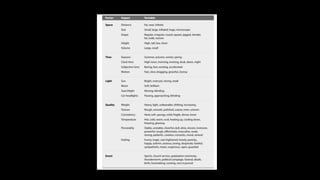
The key aspects of the five dimensional
field are as follows:
• Sound and noise – Sound and Noise are both made via audible
vibrations. The main difference between these two factors are that,
sounds sole purpose is communicate a message and noise is random
and certainly unwanted.
• Video and film sound- Within film and television sound is especially
important, as programmes these days are based on reality, therefore,
majority of the story is told through the dialogue. In many films even
the year is set through dialogue and the momentum in horror films is
created via sound effects. This creates “the world as an audiovisual
environment.”
The key aspects of the five dimensional
field are as follows:
• Literal and nonliteral sounds- Literal and nonliteral sound refers to
on screen and off screen sounds, for example non literal sound is when
you can see a car on screen, however the audience can hear traffic,
which is not visual on screen; and literal is seeing a handy man on
screen drilling into the wall and the audience can hear the drill.
• The information function of sound- in other words is the form of all
speech used, within film and television, i.e dialogue, narration and
direct address.
The key aspects of the five dimensional
field are as follows:
• The outer orientation functions of sound- ”The outer orientation
functions of sound include orientation in space, in time, to situation, and to
external event conditions.” Sound can be used to identify the location or
environment of a specific scene, such as downtown, countryside, city.
• The inner orientation functions of sound- ”The inner orientation
functions of sound include mood, internal condition, and energy.
• Music is one of the most efficient aesthetic elements to create a specific
mood or describe an internal condition. Music and nonliteral sounds are
often used to provide additional energy for a scene
• The structural functions of sound- One of the essential functions of
sound, is to ensure that the sounds or music rhythm is running parallel with
the rhythm of the scene.
Two Types of SOUND:
• DIEGETIC (from inside the DIEGESIS- (a narrative or plot, typically
in a film) refers to sound that BOTH the audience and the characters
can hear. This would be sound effects or music played in the scene.
• NON-DIEGETIC refers to sound that ONLY the audience can hear.
Typically, this would be Soundtrack music – played for effect, to build
tension in the audience but not part of the scene itself
The Importance of Sound
• 90% of a motion picture is sound.
• Picture is far less important than the sound.
• The audience can only look at one picture at a time. Yet the audience
can hear dozens of distinct sounds all at the same time and separate
and process all that information... if it is done correctly.
Using Sound in Film
As sound editor Marvin M. Kerner says in The Art of the Sound Effects
Editor, "the function of sound is three-fold":
1. To simulate reality.
• The simulation of reality can be something as small but distinctive as the
sound of a door opening and closing on the Starship Enterprise, to the
extremely complex creation of a language for the Star Wars series' Ewoks.
1. To add or create something off scene that is not really there.
2. To help the director create a mood.
• Besides setting the mood, sound can introduce important elements of the
plot, or even intentionally confuse or mislead audiences.
Types of Sound in TV & Film
1. Dialogue
2. Ambient or Natural Sound
3. Additional Dialogue Recording (ADR)
4. Narration
5. Sound Effects (SFX)
6. Score
7. Soundtrack
Types of Sound in TV & Film
1. Dialogue- The sound of people talking while onscreen.
2. Ambient or Natural Sound- Background noise in a scene.
3. Additional Dialogue Recording (ADR)- Dialogue recorded after the movie is done shooting.
4. Narration
5. Sound Effects (SFX)- Any sounds that are created for the movie, such as footsteps, alien sounds, wind,
etc.
6. Score- Original music that is created for the film and plays at different points throughout the movie.
7. Soundtrack- Music included in your film that wasn’t created specifically for the film (for example, a
song by a popular artist)
Terms to Know
Cue sheet: a list of all the necessary sound effects, along with their
"cues"—time code and/or film footage signals that indicate when the sound
begins and ends
Incidental: casual, everyday sounds. Special sound effects that aren't
necessarily "special."
Mixing console: a machine capable of taking in several different sounds,
then mixing them at different levels to create a single, unified sound
Reverberation: a reechoed sound which fades until it becomes inaudible
Rough cut: the "first draft" of a film
Score: the background music throughout a film
Splash tank: a container filled with water for wet sound effects
Walla: the film industry term for background crowd noises in a movie
END

The five-dimensional field - Sound

  • 1.
    The Five-dimensional Field:Sound Prepared by Ms Rijitha. R (M.A, M.Phil., SET) Assistant Professor Department of Electronic Media
  • 2.
    Sound “Sound is theinput we take most for granted when watching a flick. We take the explosions, gunshots, and thunderstorms as simple recordings when there is a whole set of technicians and technologies put in play to give you a sense of what a Jedi light saber sounds like in action.”
  • 3.
    The key aspectsof the five dimensional field are as follows: • Sound and noise – Sound and Noise are both made via audible vibrations. The main difference between these two factors are that, sounds sole purpose is communicate a message and noise is random and certainly unwanted. • Video and film sound- Within film and television sound is especially important, as programmes these days are based on reality, therefore, majority of the story is told through the dialogue. In many films even the year is set through dialogue and the momentum in horror films is created via sound effects. This creates “the world as an audiovisual environment.”
  • 4.
    The key aspectsof the five dimensional field are as follows: • Literal and nonliteral sounds- Literal and nonliteral sound refers to on screen and off screen sounds, for example non literal sound is when you can see a car on screen, however the audience can hear traffic, which is not visual on screen; and literal is seeing a handy man on screen drilling into the wall and the audience can hear the drill. • The information function of sound- in other words is the form of all speech used, within film and television, i.e dialogue, narration and direct address.
  • 5.
    The key aspectsof the five dimensional field are as follows: • The outer orientation functions of sound- ”The outer orientation functions of sound include orientation in space, in time, to situation, and to external event conditions.” Sound can be used to identify the location or environment of a specific scene, such as downtown, countryside, city. • The inner orientation functions of sound- ”The inner orientation functions of sound include mood, internal condition, and energy. • Music is one of the most efficient aesthetic elements to create a specific mood or describe an internal condition. Music and nonliteral sounds are often used to provide additional energy for a scene • The structural functions of sound- One of the essential functions of sound, is to ensure that the sounds or music rhythm is running parallel with the rhythm of the scene.
  • 6.
    Two Types ofSOUND: • DIEGETIC (from inside the DIEGESIS- (a narrative or plot, typically in a film) refers to sound that BOTH the audience and the characters can hear. This would be sound effects or music played in the scene. • NON-DIEGETIC refers to sound that ONLY the audience can hear. Typically, this would be Soundtrack music – played for effect, to build tension in the audience but not part of the scene itself
  • 7.
    The Importance ofSound • 90% of a motion picture is sound. • Picture is far less important than the sound. • The audience can only look at one picture at a time. Yet the audience can hear dozens of distinct sounds all at the same time and separate and process all that information... if it is done correctly.
  • 8.
    Using Sound inFilm As sound editor Marvin M. Kerner says in The Art of the Sound Effects Editor, "the function of sound is three-fold": 1. To simulate reality. • The simulation of reality can be something as small but distinctive as the sound of a door opening and closing on the Starship Enterprise, to the extremely complex creation of a language for the Star Wars series' Ewoks. 1. To add or create something off scene that is not really there. 2. To help the director create a mood. • Besides setting the mood, sound can introduce important elements of the plot, or even intentionally confuse or mislead audiences.
  • 9.
    Types of Soundin TV & Film 1. Dialogue 2. Ambient or Natural Sound 3. Additional Dialogue Recording (ADR) 4. Narration 5. Sound Effects (SFX) 6. Score 7. Soundtrack
  • 10.
    Types of Soundin TV & Film 1. Dialogue- The sound of people talking while onscreen. 2. Ambient or Natural Sound- Background noise in a scene. 3. Additional Dialogue Recording (ADR)- Dialogue recorded after the movie is done shooting. 4. Narration 5. Sound Effects (SFX)- Any sounds that are created for the movie, such as footsteps, alien sounds, wind, etc. 6. Score- Original music that is created for the film and plays at different points throughout the movie. 7. Soundtrack- Music included in your film that wasn’t created specifically for the film (for example, a song by a popular artist)
  • 11.
    Terms to Know Cuesheet: a list of all the necessary sound effects, along with their "cues"—time code and/or film footage signals that indicate when the sound begins and ends Incidental: casual, everyday sounds. Special sound effects that aren't necessarily "special." Mixing console: a machine capable of taking in several different sounds, then mixing them at different levels to create a single, unified sound Reverberation: a reechoed sound which fades until it becomes inaudible Rough cut: the "first draft" of a film Score: the background music throughout a film Splash tank: a container filled with water for wet sound effects Walla: the film industry term for background crowd noises in a movie
  • 13.