Freddie Goring
 Film   & Television Genres: Viral Videos
 - (YouTube, Podcast, Blogging), Adverts, Films
 (Different Genres - Horror, Action, Romance,
 Comedy, etc.), Cartoons, Television, Short
 Films, Game Shows, Online Games, GIF
 Pictures, Webcam, Animation, Trailers,
 Gaming (PS3, Xbox, Wii, PC, etc.), Music
 Videos, News, Documentaries, Live Theatre
 Recordings, Billboards, Infomercials etc.
 Instrumentation:  The use of instruments &
  vocals in a piece, the instruments used.
 Tempo: The speed at which a piece of music
  is played.
 Dynamics: The volume of which a piece of
  music is played.
 Rhythm: A pattern of sound often used to
  accompany a main melody as a beat.
 Melody: The main body of a piece of music,
  the leading instrument's piece.
 Texture: The quality of a sound, how 'clear' a
  piece can sound, how music is put together,
  layers. One instrument playing is
  'monophonic', lots of instruments together
  would be 'polyphonic'.
 Harmony/Key: The combination of sounds
  put together to sound well structured, often
  used in duets.
 Structure: The music organised in layers, the
  intro, verses and choruses, and finally the
  outro. Solos are often in pieces of music too.
 Technology/SFX: Real or artificial sounds that
  are added to a piece of music or sound in
  order to create atmosphere/mood or to
  support the event occurring.
 Sound  Effects (SFX) – Sound effects can be
  sourced from places like libraries, or they
  can be recorded by hand. E.g recording
  traffic.
 Voice Over – Voice-over is a production
  technique where a voice that is not part of
  the narrative (non-diegetic) is used in a
  radio, television production, filmmaking,
  theatre, or other presentations. The voice-
  over may be spoken by someone who appears
  elsewhere in the production.
 Dialogue  – Dialogue can be recorded during
  production, or can even be produced in post
  production by dubbing.
 Dubbing – Dubbing is when the voice that is
  required in the production is recorded after
  it has been filmed.
 Underscore – Non-diagetic sound that is used
  in post production to enhance the narrative
  or story of the sequence.
 Non Diagetic – Not part of the action, it put
  in during post production.
 Diagetic – The sound that can be heard on
  screen.
The Simpson’s Opening Sequence:

http://www.youtube.com/watch?v=DX1iplQQJ
  To
Instruments     SFX:
  include:
                • Car screeching
 Voice
                • Squawking bird
 Wood winds
                • Saw
 Piano
                • Chalk on Chalkboard
 Trumpets
                • School Bell
 Trombones
 Saxophones
 Flutes etc.
http://www.youtube.com/watch?v=0URj-sgL2hs


  Sound Components Used:
  Voiceover
  Dubbing
  Underscore
  Non Diegetic and Diegetic sounds
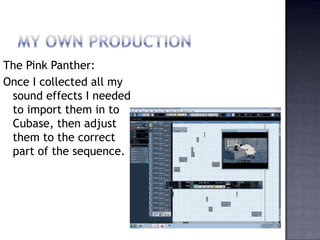
The Pink Panther:
Once I collected all my
 sound effects I needed
 to import them in to
 Cubase, then adjust
 them to the correct
 part of the sequence.
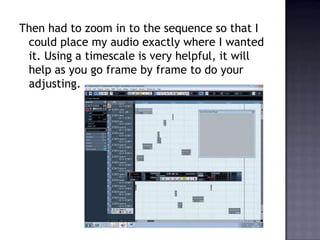
Then had to zoom in to the sequence so that I
 could place my audio exactly where I wanted
 it. Using a timescale is very helpful, it will
 help as you go frame by frame to do your
 adjusting.
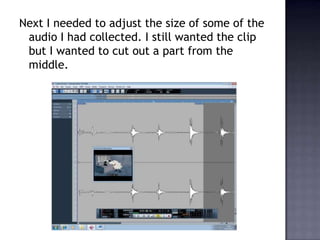
Next I needed to adjust the size of some of the
 audio I had collected. I still wanted the clip
 but I wanted to cut out a part from the
 middle.
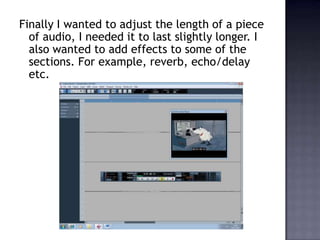
Finally I wanted to adjust the length of a piece
  of audio, I needed it to last slightly longer. I
  also wanted to add effects to some of the
  sections. For example, reverb, echo/delay
  etc.
An introduction to sound & moving image

An introduction to sound & moving image

  • 1.
  • 2.
     Film & Television Genres: Viral Videos - (YouTube, Podcast, Blogging), Adverts, Films (Different Genres - Horror, Action, Romance, Comedy, etc.), Cartoons, Television, Short Films, Game Shows, Online Games, GIF Pictures, Webcam, Animation, Trailers, Gaming (PS3, Xbox, Wii, PC, etc.), Music Videos, News, Documentaries, Live Theatre Recordings, Billboards, Infomercials etc.
  • 3.
     Instrumentation: The use of instruments & vocals in a piece, the instruments used.  Tempo: The speed at which a piece of music is played.  Dynamics: The volume of which a piece of music is played.  Rhythm: A pattern of sound often used to accompany a main melody as a beat.  Melody: The main body of a piece of music, the leading instrument's piece.
  • 4.
     Texture: Thequality of a sound, how 'clear' a piece can sound, how music is put together, layers. One instrument playing is 'monophonic', lots of instruments together would be 'polyphonic'.  Harmony/Key: The combination of sounds put together to sound well structured, often used in duets.  Structure: The music organised in layers, the intro, verses and choruses, and finally the outro. Solos are often in pieces of music too.  Technology/SFX: Real or artificial sounds that are added to a piece of music or sound in order to create atmosphere/mood or to support the event occurring.
  • 5.
     Sound Effects (SFX) – Sound effects can be sourced from places like libraries, or they can be recorded by hand. E.g recording traffic.  Voice Over – Voice-over is a production technique where a voice that is not part of the narrative (non-diegetic) is used in a radio, television production, filmmaking, theatre, or other presentations. The voice- over may be spoken by someone who appears elsewhere in the production.
  • 6.
     Dialogue – Dialogue can be recorded during production, or can even be produced in post production by dubbing.  Dubbing – Dubbing is when the voice that is required in the production is recorded after it has been filmed.  Underscore – Non-diagetic sound that is used in post production to enhance the narrative or story of the sequence.  Non Diagetic – Not part of the action, it put in during post production.  Diagetic – The sound that can be heard on screen.
  • 7.
    The Simpson’s OpeningSequence: http://www.youtube.com/watch?v=DX1iplQQJ To
  • 8.
    Instruments SFX: include: • Car screeching  Voice • Squawking bird  Wood winds • Saw  Piano • Chalk on Chalkboard  Trumpets • School Bell  Trombones  Saxophones  Flutes etc.
  • 9.
    http://www.youtube.com/watch?v=0URj-sgL2hs SoundComponents Used: Voiceover Dubbing Underscore Non Diegetic and Diegetic sounds
  • 10.
    The Pink Panther: OnceI collected all my sound effects I needed to import them in to Cubase, then adjust them to the correct part of the sequence.
  • 11.
    Then had tozoom in to the sequence so that I could place my audio exactly where I wanted it. Using a timescale is very helpful, it will help as you go frame by frame to do your adjusting.
  • 12.
    Next I neededto adjust the size of some of the audio I had collected. I still wanted the clip but I wanted to cut out a part from the middle.
  • 13.
    Finally I wantedto adjust the length of a piece of audio, I needed it to last slightly longer. I also wanted to add effects to some of the sections. For example, reverb, echo/delay etc.