Filipino Dance
Honoring Filipino National
Artists in Dance
Legends
Table of Content
1. Introduction
Philippine Dance Heritage
National Artists for Dance
2. Francisca Reyes Aquino
Background
Achievements
Legacy
3.Leonor Orosa-Goquingco
Background
Achievements
Legacy
4. Lucrecia Reyes Urtula
Background
Achievements
Legacy
5. Ramon Obusan
Background
Achievements
Legacy
6. Conclusion
Honoring the National Artists
Inspiring Future Generations
Preserving Philippine
Dance Heritage
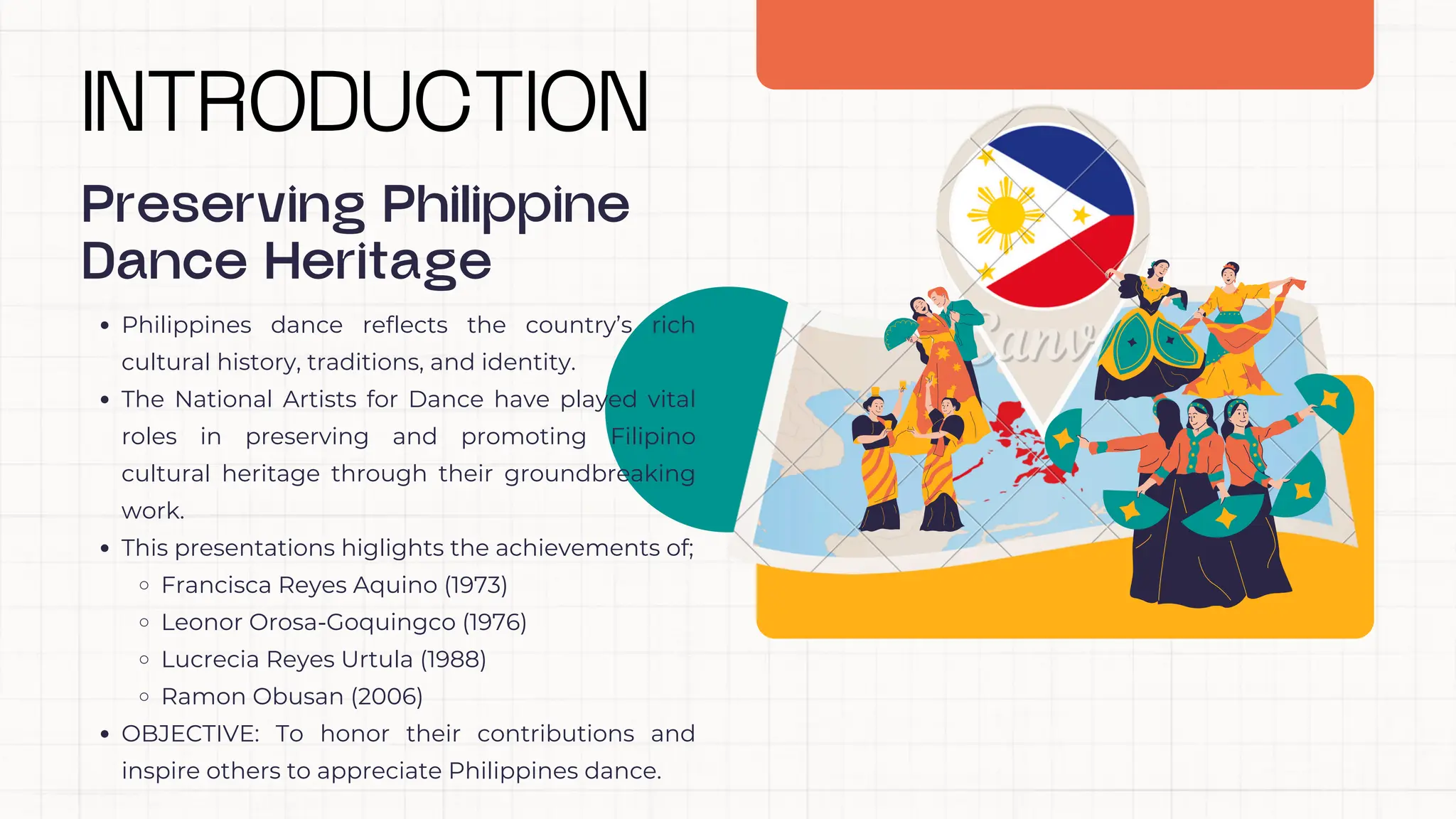
Philippines dance reflects the country’s rich
cultural history, traditions, and identity.
The National Artists for Dance have played vital
roles in preserving and promoting Filipino
cultural heritage through their groundbreaking
work.
This presentations higlights the achievements of;
Francisca Reyes Aquino (1973)
Leonor Orosa-Goquingco (1976)
Lucrecia Reyes Urtula (1988)
Ramon Obusan (2006)
OBJECTIVE: To honor their contributions and
inspire others to appreciate Philippines dance.
INTRODUCTION
Francisca Reyes Aquino
(1973): Mother of Philippine Folk
Dance
Background
Born in 1899 in Bocaue, Bulacan.
Earned a degree in Physical Education
from the University of the Philippines.
Devoted her life to documenting and
teaching Philippine folk dances.
Achievements
Published Philippine Folk Dances and
Games in 1926
Researched regional dances such as
Tinikling, Carinosa, and Pandanggo sa
Ilaw.
Introduced these dances internationally.
Francisca Reyes Aquino
(1973): Mother of Philippine Folk
Dance
Legacy
Preserved Traditional dances that
might have been lost to
modernization.
Recognized as the first National
Artist for Dance.
Born in 1917 in Jolo, Sulu.
A gofted dancer, choreographer, and
writer.
Studied at St. Scholastica’s College
and the American Conservatory of
Music.
Background
Leonor Orosa-Goquingco
(1976): Trailblazer of
Philippine Theater Dance
Leonor Orosa-Goquingco
(1976): Trailblazer of
Philippine Theater Dance Known as the “Mother of Philippine Theater
Dances”
Choreographed innovative dance
productions blending folk and modern
dance.
Works include Dance Panorama and The
Elements.
Achievements
Legacy
Opened new avenues for contemporary
Filipino dance.
Elevated dance to a theater art form in the
Philippines.
Born in 1929 in Iloilo City
Earned a degree in Physical Education and specialized
in Filipino folk dance.
Became the director of the Baynihan Philippine
National Folk Dance Company.
Researched traditional dances, especially those of
indigenous communities.
Choreographed iconic performaces such as Singkil,
Pangalay, and Kalinga.
Represented the Philippines in numerous international
events.
Background
Achievements
Lucrecia Reyes Urtula
(1988): Preserver of Filipino
Folk Dance Heritage
Lucrecia Reyes Urtula
(1988): Preserver of Filipino
Folk Dance Heritage
Brought Philippine folk dance to the global
stage.
Inspired future generations to take pride in
their cultural heritage.
Legacy
Ramon Obusan
(2006): The Archivist of Philippine
Dance
Born in 1938 in Legazpi City,
Albay.
A graduate of Marine Biology
but shifted to cultural
preservation.
Founded the Ramon Obusan
Folkloric Group in 1971
Background
Documented and preserved over 50
ethnic dances and rituals.
Choreographed works like Sayaw sa
Obando and Water, Fire, and Life.
Known for his authentic approach,
working directly with indigenous
communities.
Achievements Legacy
Preserved the essence of Filipino
traditions through dance.
His group remains a cultural
ambassador of the Philippines.
Honoring Our National Artists
Conclusion
These National Artist have safeguarded Filipino
culture through their works.
Their efforts have inspired pride in Philippine
dance traditions and innovation.
A reminder to continue preserving and
celebrating our heritage.
Thank You!
For Your Attention

Filipino-Dance-Legends_112748 CPAR subject.pdf

  • 1.
    Filipino Dance Honoring FilipinoNational Artists in Dance Legends
  • 2.
    Table of Content 1.Introduction Philippine Dance Heritage National Artists for Dance 2. Francisca Reyes Aquino Background Achievements Legacy 3.Leonor Orosa-Goquingco Background Achievements Legacy 4. Lucrecia Reyes Urtula Background Achievements Legacy 5. Ramon Obusan Background Achievements Legacy 6. Conclusion Honoring the National Artists Inspiring Future Generations
  • 3.
    Preserving Philippine Dance Heritage Philippinesdance reflects the country’s rich cultural history, traditions, and identity. The National Artists for Dance have played vital roles in preserving and promoting Filipino cultural heritage through their groundbreaking work. This presentations higlights the achievements of; Francisca Reyes Aquino (1973) Leonor Orosa-Goquingco (1976) Lucrecia Reyes Urtula (1988) Ramon Obusan (2006) OBJECTIVE: To honor their contributions and inspire others to appreciate Philippines dance. INTRODUCTION
  • 4.
    Francisca Reyes Aquino (1973):Mother of Philippine Folk Dance Background Born in 1899 in Bocaue, Bulacan. Earned a degree in Physical Education from the University of the Philippines. Devoted her life to documenting and teaching Philippine folk dances. Achievements Published Philippine Folk Dances and Games in 1926 Researched regional dances such as Tinikling, Carinosa, and Pandanggo sa Ilaw. Introduced these dances internationally.
  • 5.
    Francisca Reyes Aquino (1973):Mother of Philippine Folk Dance Legacy Preserved Traditional dances that might have been lost to modernization. Recognized as the first National Artist for Dance.
  • 6.
    Born in 1917in Jolo, Sulu. A gofted dancer, choreographer, and writer. Studied at St. Scholastica’s College and the American Conservatory of Music. Background Leonor Orosa-Goquingco (1976): Trailblazer of Philippine Theater Dance
  • 7.
    Leonor Orosa-Goquingco (1976): Trailblazerof Philippine Theater Dance Known as the “Mother of Philippine Theater Dances” Choreographed innovative dance productions blending folk and modern dance. Works include Dance Panorama and The Elements. Achievements Legacy Opened new avenues for contemporary Filipino dance. Elevated dance to a theater art form in the Philippines.
  • 8.
    Born in 1929in Iloilo City Earned a degree in Physical Education and specialized in Filipino folk dance. Became the director of the Baynihan Philippine National Folk Dance Company. Researched traditional dances, especially those of indigenous communities. Choreographed iconic performaces such as Singkil, Pangalay, and Kalinga. Represented the Philippines in numerous international events. Background Achievements Lucrecia Reyes Urtula (1988): Preserver of Filipino Folk Dance Heritage
  • 9.
    Lucrecia Reyes Urtula (1988):Preserver of Filipino Folk Dance Heritage Brought Philippine folk dance to the global stage. Inspired future generations to take pride in their cultural heritage. Legacy
  • 10.
    Ramon Obusan (2006): TheArchivist of Philippine Dance Born in 1938 in Legazpi City, Albay. A graduate of Marine Biology but shifted to cultural preservation. Founded the Ramon Obusan Folkloric Group in 1971 Background Documented and preserved over 50 ethnic dances and rituals. Choreographed works like Sayaw sa Obando and Water, Fire, and Life. Known for his authentic approach, working directly with indigenous communities. Achievements Legacy Preserved the essence of Filipino traditions through dance. His group remains a cultural ambassador of the Philippines.
  • 11.
    Honoring Our NationalArtists Conclusion These National Artist have safeguarded Filipino culture through their works. Their efforts have inspired pride in Philippine dance traditions and innovation. A reminder to continue preserving and celebrating our heritage.
  • 12.