Retail Institutions
Marketing 7
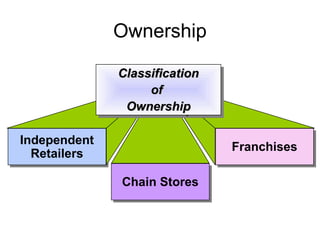
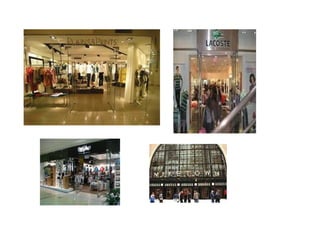
Ownership
Independent
Retailers
Independent
Retailers
Chain StoresChain Stores
FranchisesFranchises
ClassificationClassification
ofof
OwnershipOwnership
ClassificationClassification
ofof
OwnershipOwnership
Types of Retailing
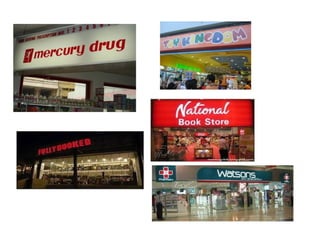
1. Food Retailer
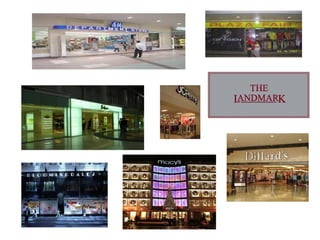
2. General Merchandise
Retailers
3. Nonstore Retailers
4. Service Retailing
Food Retailers
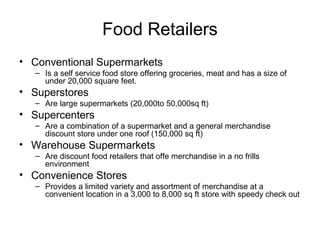
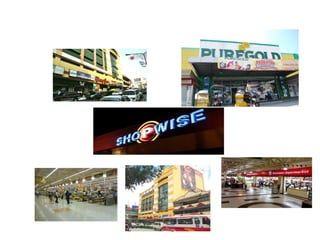
• Conventional Supermarkets
– Is a self service food store offering groceries, meat and has a size of
under 20,000 square feet.
• Superstores
– Are large supermarkets (20,000to 50,000sq ft)
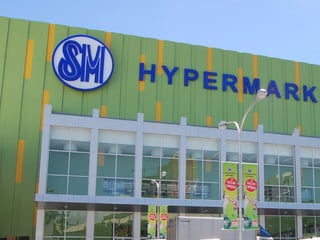
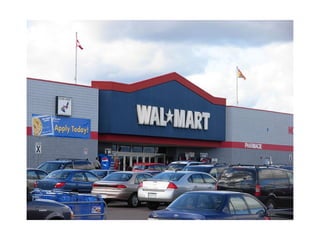
• Supercenters
– Are a combination of a supermarket and a general merchandise
discount store under one roof (150,000 sq ft)
• Warehouse Supermarkets
– Are discount food retailers that offe merchandise in a no frills
environment
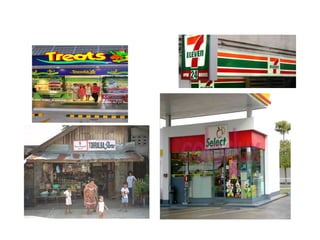
• Convenience Stores
– Provides a limited variety and assortment of merchandise at a
convenient location in a 3,000 to 8,000 sq ft store with speedy check out
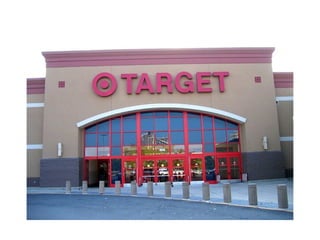
General Merchandise Retail Stores
• Department stores
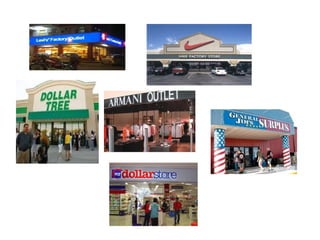
• Discount Stores
• Specialty Stores
• Category Specialists / Killers
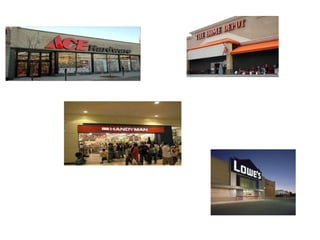
• Home Improvement Centers
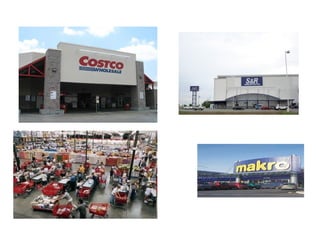
• Warehouse Clubs
• Off Retailers Retailers
Catalogue retailing
communicates via a catalogue (!) – history in rural communities –
growth is slowing
Direct-mail
communicates using letters/brochures – history in rural communities
Direct Sell
retailing communicates through personal, face-to-face contact-
stagnant growth
TV Home Shopping
communicates via TV(!) – growth is stagnant
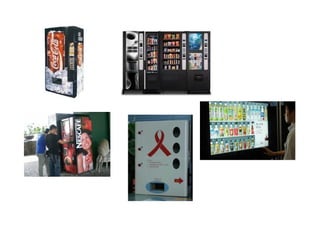
Vending Machines – growth is stagnant
Status of non-electronic non-store retailing
Shopping Comparison – Major Marketing
Difference for Customer Relationship
(from retailer’s perspective)
In-store visit
• Only captures
customer information
if the customer buys
something
• If the customer walks
out of the store, no
way of re-connecting
with them
On-line visit
• Can see which
items/categories a
customer views, even
if they do not buy
anything
• Can get back in touch
with the customer
with suggested
merchandise based
on customer’s on-line
journey through their
site
What Can You Buy Now
on the Internet?
 Not much and it isn’t easy
 Successful Internet retailers
­ Dell, Gateway Computers ( + software)
­ Amazon.Com
­ Travel Services
­ Gifts - 1-800-FLOWERS
­ Niche Products – Beauty products, wine
Factors Affecting the
Diffusion of an Innovation
• Ease with which the innovation can be tried
out
– On-line access
• Perceived risks of adoption
– Security, Privacy
• Perceived benefits compared to present
alternatives (going to store or buying from
catalogs)
Internet Applications for
Store-based Retailers
• Building Brand Name and Store Image
– Limited Reach and Frequency
– Rational Versus Emotional Appeals
– Managing Virtual Communities
• Pre-Shopping Information
• Selling Merchandise
Store-based Retailers Vs.
Electronic Retail Entrepreneurs
• Knowledge of Retailing
– Assortment Planning
– Distribution Systems
• Reputation
• Customer Database
• Convenient Locations for Picking Up,
Returning
• Established Vendor Relationships
Winners and Losers
• Catalog Retailers Are Well Positioned
• Most Vendors Will Not Be Able to Effectively
Selling Directly to Consumers
• Store-Based Retailers Have Strong Potential
But Need to Exploit the Unique Benefits of
Internet – Personalization – “Mass
Customization”
Wholesaling
• the activity of selling to buyers for resale
or to further their own business
operations.
• It refers to the marketing activities
associated with selling products to
purchasers that resell the products, use
them to make another product, or use
them to conduct business activities.
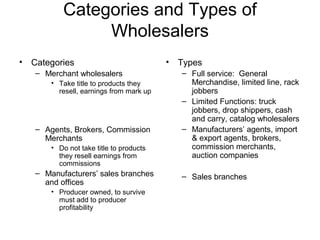
Categories and Types of
Wholesalers
• Categories
– Merchant wholesalers
• Take title to products they
resell, earnings from mark up
– Agents, Brokers, Commission
Merchants
• Do not take title to products
they resell earnings from
commissions
– Manufacturers’ sales branches
and offices
• Producer owned, to survive
must add to producer
profitability
• Types
– Full service: General
Merchandise, limited line, rack
jobbers
– Limited Functions: truck
jobbers, drop shippers, cash
and carry, catalog wholesalers
– Manufacturers’ agents, import
& export agents, brokers,
commission merchants,
auction companies
– Sales branches

Types of retailing

  • 1.
  • 2.
  • 3.
    Types of Retailing 1.Food Retailer 2. General Merchandise Retailers 3. Nonstore Retailers 4. Service Retailing
  • 4.
    Food Retailers • ConventionalSupermarkets – Is a self service food store offering groceries, meat and has a size of under 20,000 square feet. • Superstores – Are large supermarkets (20,000to 50,000sq ft) • Supercenters – Are a combination of a supermarket and a general merchandise discount store under one roof (150,000 sq ft) • Warehouse Supermarkets – Are discount food retailers that offe merchandise in a no frills environment • Convenience Stores – Provides a limited variety and assortment of merchandise at a convenient location in a 3,000 to 8,000 sq ft store with speedy check out
  • 11.
    General Merchandise RetailStores • Department stores • Discount Stores • Specialty Stores • Category Specialists / Killers • Home Improvement Centers • Warehouse Clubs • Off Retailers Retailers
  • 17.
    Catalogue retailing communicates viaa catalogue (!) – history in rural communities – growth is slowing Direct-mail communicates using letters/brochures – history in rural communities Direct Sell retailing communicates through personal, face-to-face contact- stagnant growth TV Home Shopping communicates via TV(!) – growth is stagnant Vending Machines – growth is stagnant Status of non-electronic non-store retailing
  • 21.
    Shopping Comparison –Major Marketing Difference for Customer Relationship (from retailer’s perspective) In-store visit • Only captures customer information if the customer buys something • If the customer walks out of the store, no way of re-connecting with them On-line visit • Can see which items/categories a customer views, even if they do not buy anything • Can get back in touch with the customer with suggested merchandise based on customer’s on-line journey through their site
  • 22.
    What Can YouBuy Now on the Internet?  Not much and it isn’t easy  Successful Internet retailers ­ Dell, Gateway Computers ( + software) ­ Amazon.Com ­ Travel Services ­ Gifts - 1-800-FLOWERS ­ Niche Products – Beauty products, wine
  • 23.
    Factors Affecting the Diffusionof an Innovation • Ease with which the innovation can be tried out – On-line access • Perceived risks of adoption – Security, Privacy • Perceived benefits compared to present alternatives (going to store or buying from catalogs)
  • 24.
    Internet Applications for Store-basedRetailers • Building Brand Name and Store Image – Limited Reach and Frequency – Rational Versus Emotional Appeals – Managing Virtual Communities • Pre-Shopping Information • Selling Merchandise
  • 25.
    Store-based Retailers Vs. ElectronicRetail Entrepreneurs • Knowledge of Retailing – Assortment Planning – Distribution Systems • Reputation • Customer Database • Convenient Locations for Picking Up, Returning • Established Vendor Relationships
  • 26.
    Winners and Losers •Catalog Retailers Are Well Positioned • Most Vendors Will Not Be Able to Effectively Selling Directly to Consumers • Store-Based Retailers Have Strong Potential But Need to Exploit the Unique Benefits of Internet – Personalization – “Mass Customization”
  • 27.
    Wholesaling • the activityof selling to buyers for resale or to further their own business operations. • It refers to the marketing activities associated with selling products to purchasers that resell the products, use them to make another product, or use them to conduct business activities.
  • 28.
    Categories and Typesof Wholesalers • Categories – Merchant wholesalers • Take title to products they resell, earnings from mark up – Agents, Brokers, Commission Merchants • Do not take title to products they resell earnings from commissions – Manufacturers’ sales branches and offices • Producer owned, to survive must add to producer profitability • Types – Full service: General Merchandise, limited line, rack jobbers – Limited Functions: truck jobbers, drop shippers, cash and carry, catalog wholesalers – Manufacturers’ agents, import & export agents, brokers, commission merchants, auction companies – Sales branches