VADODARA INSTITUTE OF ENGINEERING
KOTAMBI-391510
VADODARA
ACTIVE LEARNING ASSIIGMENT
TYPES OF LAMP
MADE BY:
PATELTWINKLE (13ELEE160)
KARANSIGH PANCHAL (13ELEE156)
BARIYA PARESH (13ELEE157)
PATEL BHARGAV (13ELEE164)
SUBJECT:ELEMENTS OF ELECTRICAL ENGG.
SUBJECECODE:2110005
DISCIPLINE:EE-2
BE-1
-GUIDED BY:
SHANKAR NOTANI
TYPES OF LAMP
 Incandescent
 Halogen lamp
 Fluorescent lamp
 Compact Fluorescent Lamps
 High-Intensity Discharge Lamps
 Low-Pressure Sodium Lamps
 LED (Light Emitting Diodes)
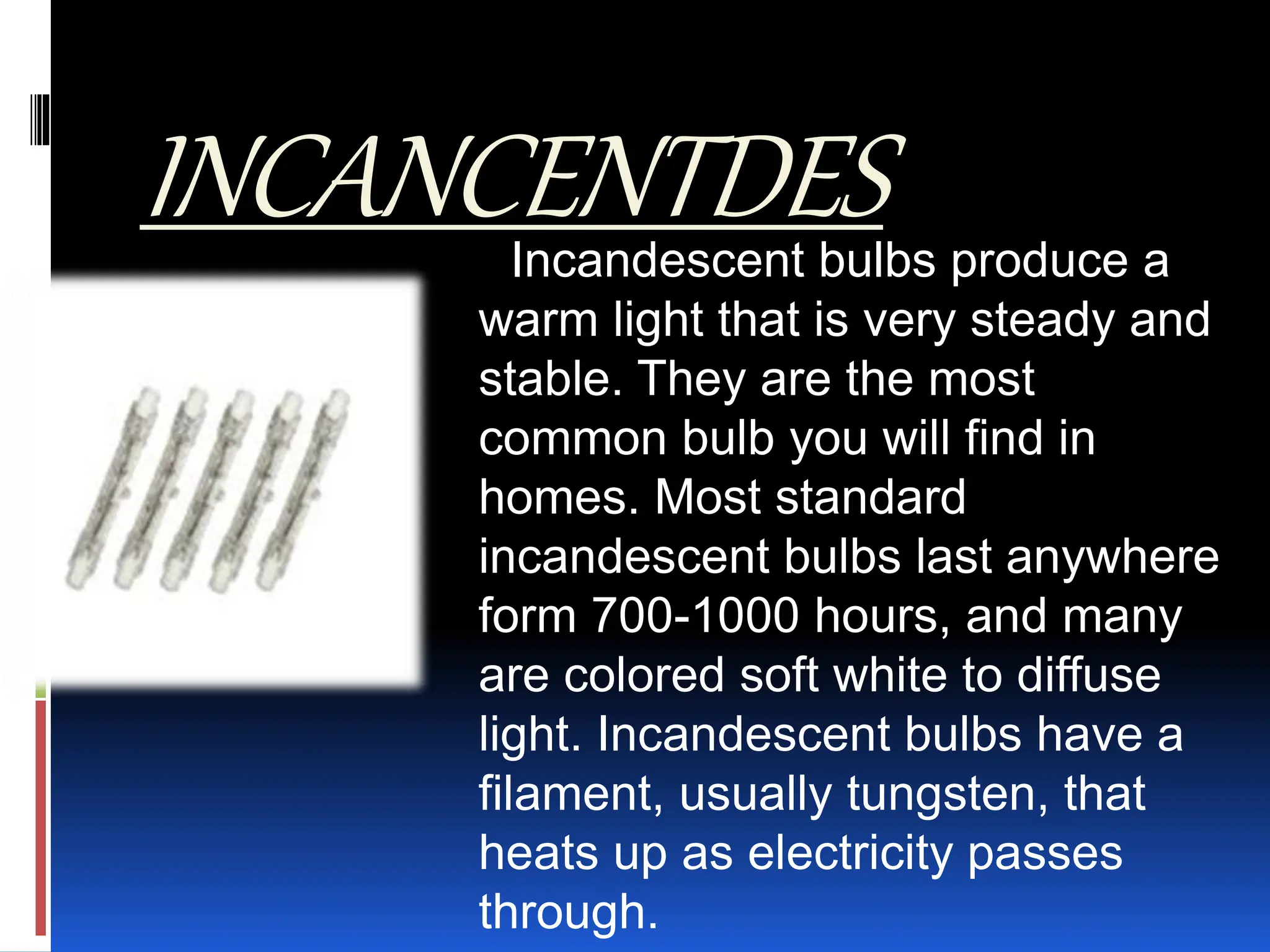
INCANCENTDES
Incandescent bulbs produce a
warm light that is very steady and
stable. They are the most
common bulb you will find in
homes. Most standard
incandescent bulbs last anywhere
form 700-1000 hours, and many
are colored soft white to diffuse
light. Incandescent bulbs have a
filament, usually tungsten, that
heats up as electricity passes
through.
While the main result of an
incandescent bulb is heat, it makes quite
a lot of light as a byproduct. Incandescent
bulbs are the most inefficient bulb
because most of the energy used to
produce light is actually used to produce
heat. Because this heat makes the
filament fragile, many bulbs burn out at
the end of their life when a sudden surge
of power (such as the flick of a switch to
turn them on) breaks the filament.
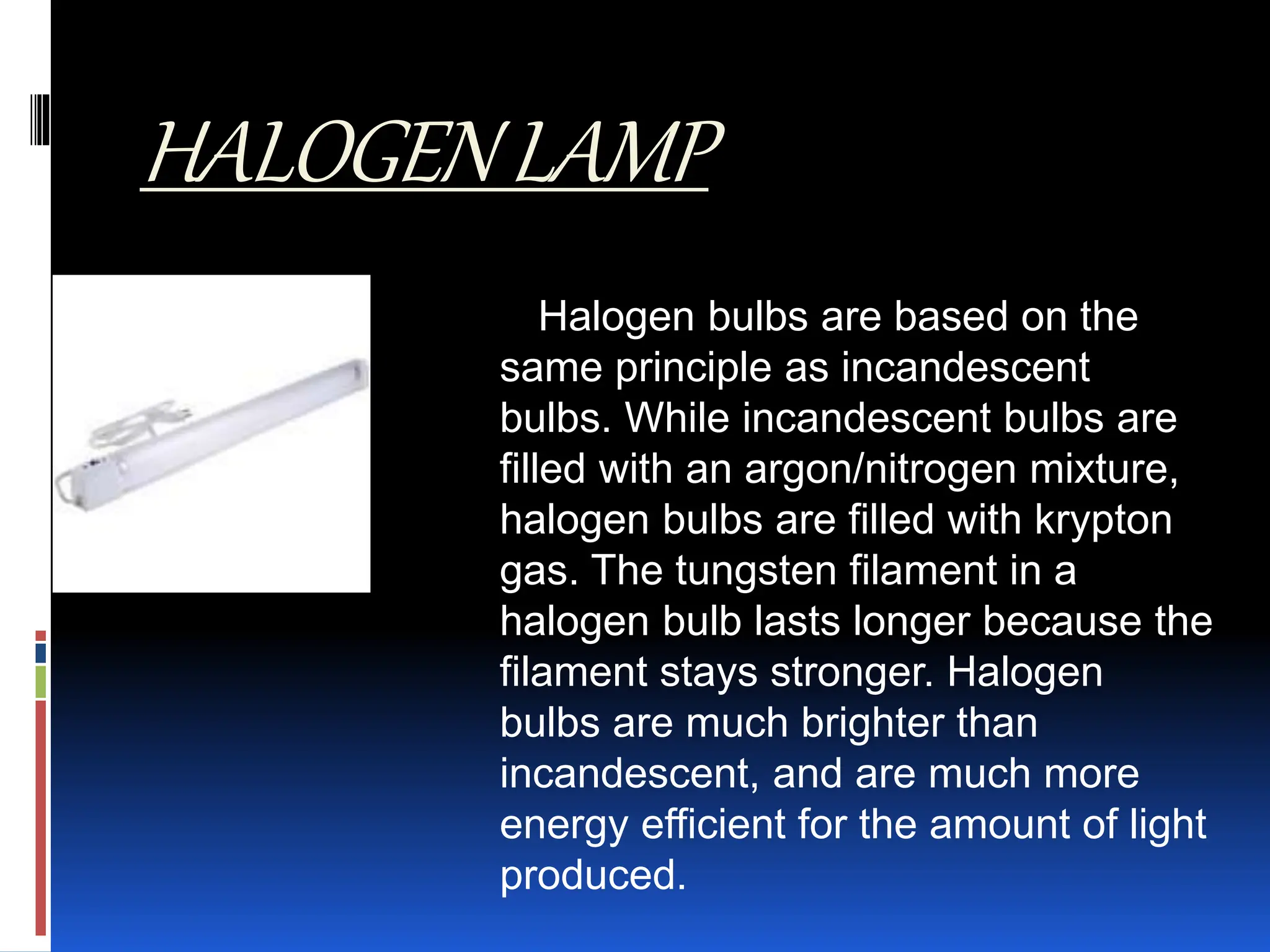
HALOGENLAMP
Halogen bulbs are based on the
same principle as incandescent
bulbs. While incandescent bulbs are
filled with an argon/nitrogen mixture,
halogen bulbs are filled with krypton
gas. The tungsten filament in a
halogen bulb lasts longer because the
filament stays stronger. Halogen
bulbs are much brighter than
incandescent, and are much more
energy efficient for the amount of light
produced.
Halogen bulbs can get very hot, and
must be placed in areas without
flammable materials nearby. They
have a life of a little bit longer than an
incandescent and must not be
touched because the oils from fingers
weakens the glass and can cause the
bulb to explode.
USE OF HALOGEN
LAMP
Use a halogen bulb when more
light than an incandescent can
produce is needed. Halogens
produce a light that is more similar
to daylight and can be used to
generate light for crafts and hobbies.
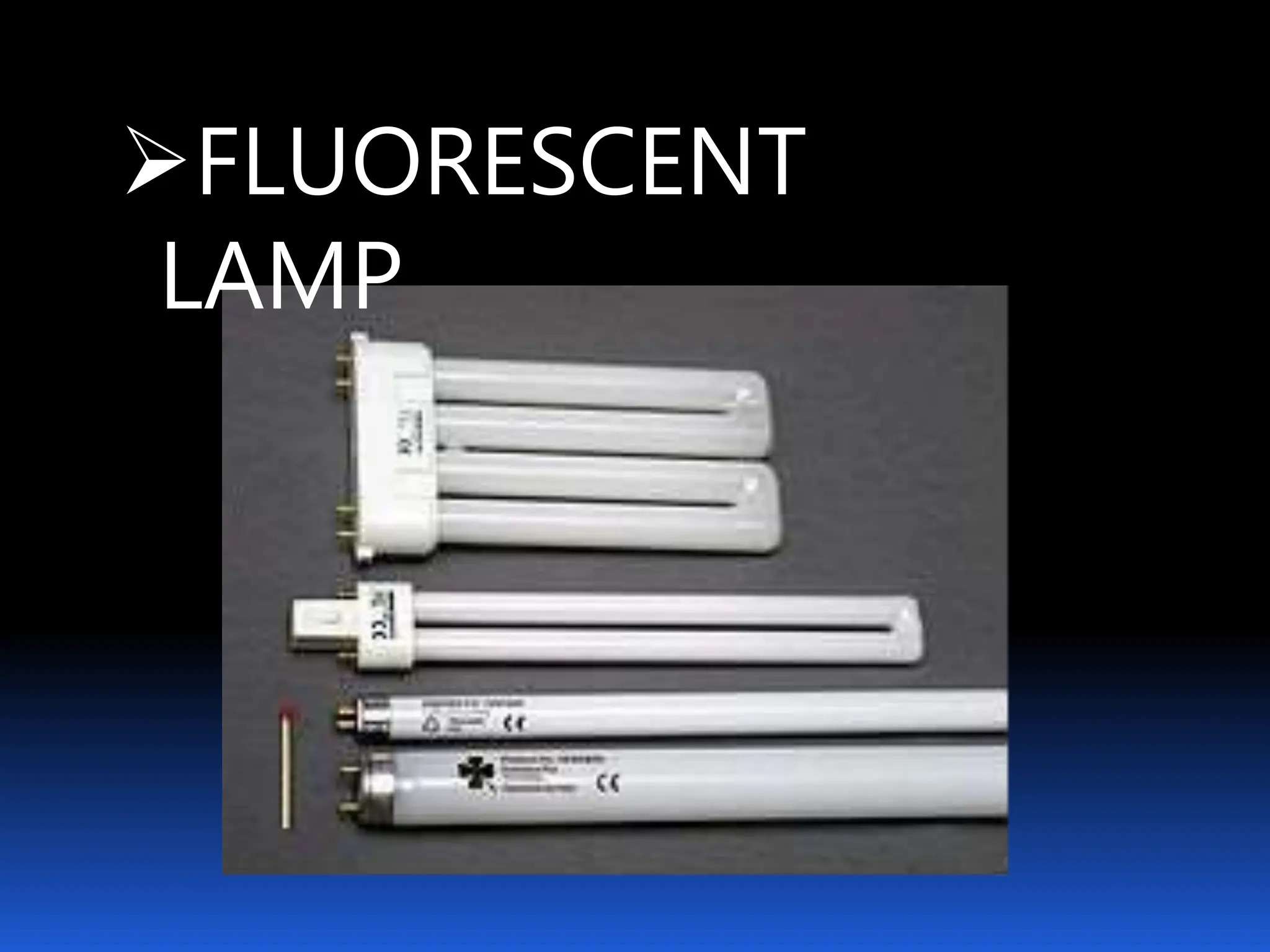
FLUORESCENTLAMP
A fluorescent lamp or fluorescent tube is a low
pressure mercury-vapor gas-discharge lamp that uses
fluorescence to produce visible light. An electric current
in the gas excites mercury vapor which produces short-
wave ultraviolet light that then causes a phosphor
coating on the inside of the bulb to fluoresce, producing
visible light. A fluorescent lamp converts electrical power
into useful light much more efficiently than incandescent
lamps. The luminous efficacy of a fluorescent light bulb
can exceed 100 lumens per watt, several times the
efficacy of an incandescent bulb with comparable light
output.
Fluorescent lamp fixtures are more costly than
incandescent lamps because they require a ballast to
regulate the current through the lamp, but the lower
energy cost typically offsets the higher initial cost.
The compact fluorescent lamp is now available in
the same popular sizes as incandescent and is used
as an energy-saving alternative in homes.
Because they contain mercury, many fluorescent
lamps are classified as hazardous waste. The United
States Environmental Protection Agency recommends
that fluorescent lamps be segregated from general
waste for recycling or safe disposal.[3]
CONSTRUCTION
FLUORESCENT
LAMP
USEOFFLUORESCNTLAMP
Fluorescent lights should be used when a
large amount of light is needed and where
heating up the room is undesirable. They are
very good for use in garages, basements and
workshops. True day light OTT lights can be
used for jewelry making and suggestions for
using them are found in my guide on
planning your jewelry workstation.
LED(lightemittingdiode)
LED bulbs are the light of the future. They do
not have a filament and can give off nearly
white light. While they don't produce enough
light to compete with CFL bulbs, they
consume the least amount of electricity and
produce the least amount of heat. LED bulbs
have a very long life span and since LED
technology is advancing rapidly, they should
be the light of choice for residential
applications in the near future.
LED bulbs can come in a wide variety
of colors and can be used when
colored accent lighting is needed.
Because of the large initial cost, but
low operating cost and long life, LED
lights are being used more and more
to replace incandescent bulbs every
day.

types of lamps classification and applications

  • 1.
    VADODARA INSTITUTE OFENGINEERING KOTAMBI-391510 VADODARA ACTIVE LEARNING ASSIIGMENT TYPES OF LAMP MADE BY: PATELTWINKLE (13ELEE160) KARANSIGH PANCHAL (13ELEE156) BARIYA PARESH (13ELEE157) PATEL BHARGAV (13ELEE164) SUBJECT:ELEMENTS OF ELECTRICAL ENGG. SUBJECECODE:2110005 DISCIPLINE:EE-2 BE-1 -GUIDED BY: SHANKAR NOTANI
  • 2.
    TYPES OF LAMP Incandescent  Halogen lamp  Fluorescent lamp  Compact Fluorescent Lamps  High-Intensity Discharge Lamps  Low-Pressure Sodium Lamps  LED (Light Emitting Diodes)
  • 3.
    INCANCENTDES Incandescent bulbs producea warm light that is very steady and stable. They are the most common bulb you will find in homes. Most standard incandescent bulbs last anywhere form 700-1000 hours, and many are colored soft white to diffuse light. Incandescent bulbs have a filament, usually tungsten, that heats up as electricity passes through.
  • 4.
    While the mainresult of an incandescent bulb is heat, it makes quite a lot of light as a byproduct. Incandescent bulbs are the most inefficient bulb because most of the energy used to produce light is actually used to produce heat. Because this heat makes the filament fragile, many bulbs burn out at the end of their life when a sudden surge of power (such as the flick of a switch to turn them on) breaks the filament.
  • 5.
    HALOGENLAMP Halogen bulbs arebased on the same principle as incandescent bulbs. While incandescent bulbs are filled with an argon/nitrogen mixture, halogen bulbs are filled with krypton gas. The tungsten filament in a halogen bulb lasts longer because the filament stays stronger. Halogen bulbs are much brighter than incandescent, and are much more energy efficient for the amount of light produced.
  • 6.
    Halogen bulbs canget very hot, and must be placed in areas without flammable materials nearby. They have a life of a little bit longer than an incandescent and must not be touched because the oils from fingers weakens the glass and can cause the bulb to explode.
  • 7.
    USE OF HALOGEN LAMP Usea halogen bulb when more light than an incandescent can produce is needed. Halogens produce a light that is more similar to daylight and can be used to generate light for crafts and hobbies.
  • 8.
    FLUORESCENTLAMP A fluorescent lampor fluorescent tube is a low pressure mercury-vapor gas-discharge lamp that uses fluorescence to produce visible light. An electric current in the gas excites mercury vapor which produces short- wave ultraviolet light that then causes a phosphor coating on the inside of the bulb to fluoresce, producing visible light. A fluorescent lamp converts electrical power into useful light much more efficiently than incandescent lamps. The luminous efficacy of a fluorescent light bulb can exceed 100 lumens per watt, several times the efficacy of an incandescent bulb with comparable light output.
  • 9.
    Fluorescent lamp fixturesare more costly than incandescent lamps because they require a ballast to regulate the current through the lamp, but the lower energy cost typically offsets the higher initial cost. The compact fluorescent lamp is now available in the same popular sizes as incandescent and is used as an energy-saving alternative in homes. Because they contain mercury, many fluorescent lamps are classified as hazardous waste. The United States Environmental Protection Agency recommends that fluorescent lamps be segregated from general waste for recycling or safe disposal.[3]
  • 10.
  • 11.
  • 12.
    USEOFFLUORESCNTLAMP Fluorescent lights shouldbe used when a large amount of light is needed and where heating up the room is undesirable. They are very good for use in garages, basements and workshops. True day light OTT lights can be used for jewelry making and suggestions for using them are found in my guide on planning your jewelry workstation.
  • 13.
    LED(lightemittingdiode) LED bulbs arethe light of the future. They do not have a filament and can give off nearly white light. While they don't produce enough light to compete with CFL bulbs, they consume the least amount of electricity and produce the least amount of heat. LED bulbs have a very long life span and since LED technology is advancing rapidly, they should be the light of choice for residential applications in the near future.
  • 14.
    LED bulbs cancome in a wide variety of colors and can be used when colored accent lighting is needed. Because of the large initial cost, but low operating cost and long life, LED lights are being used more and more to replace incandescent bulbs every day.