Download to read offline
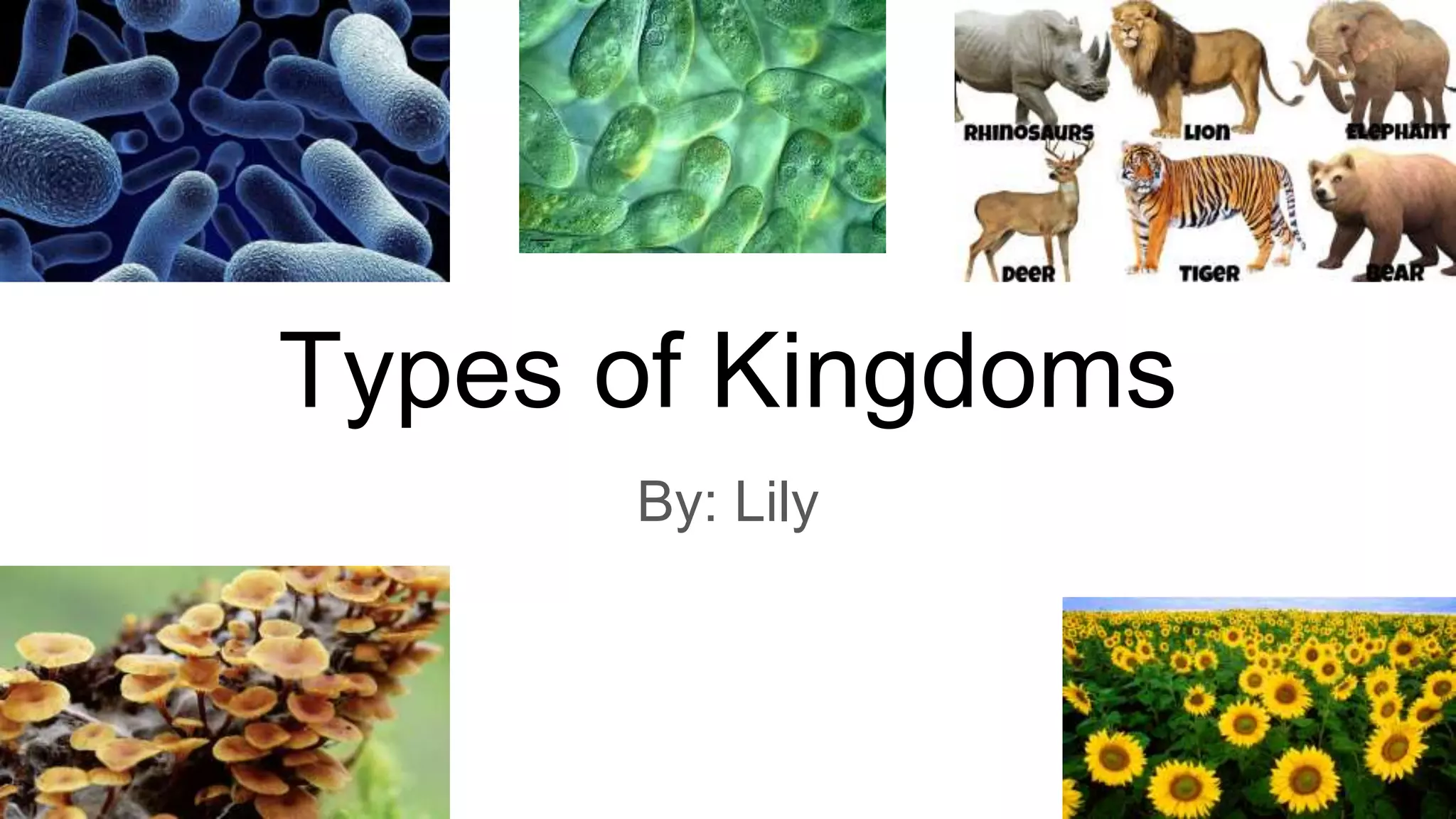


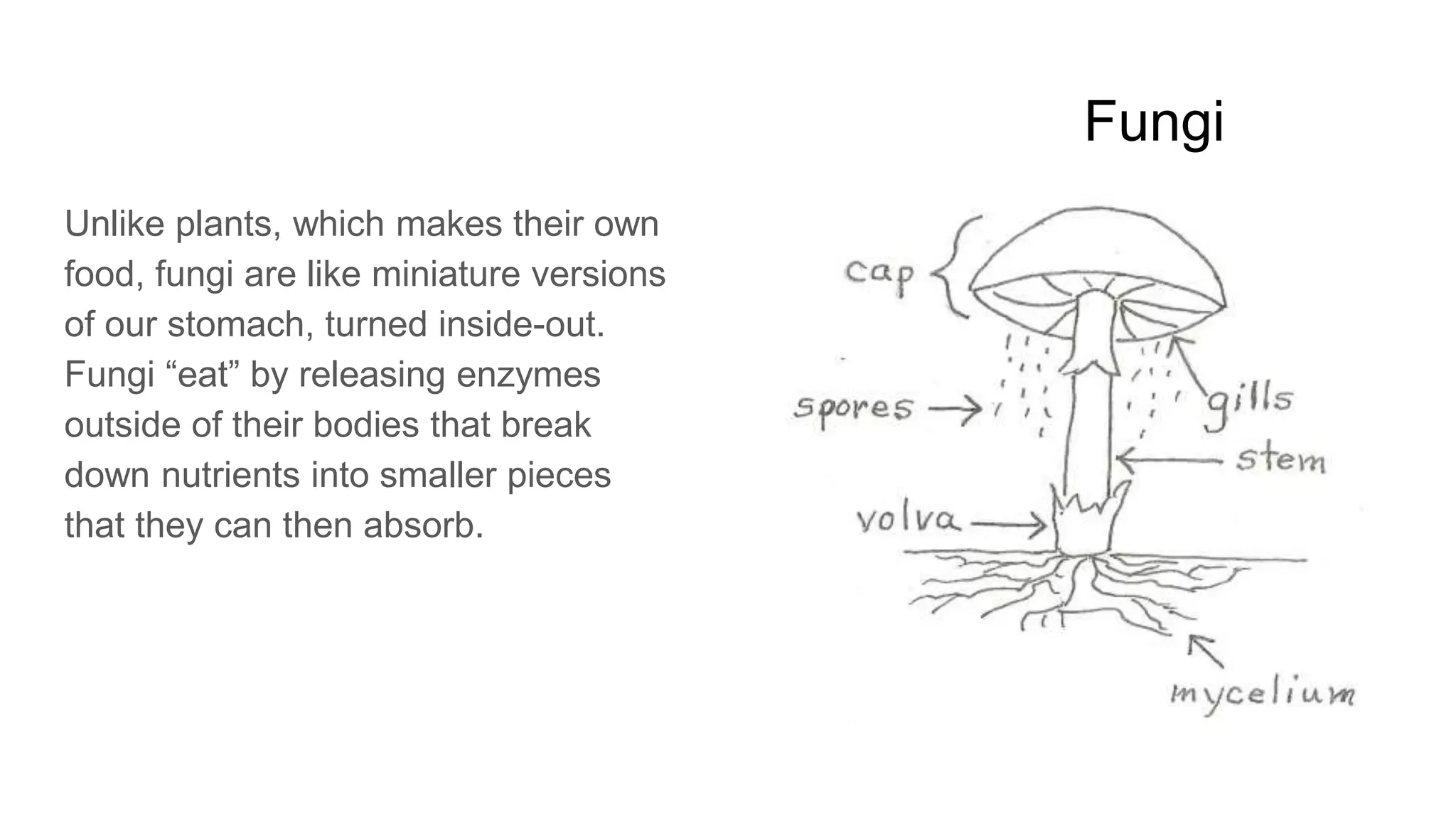


There are five kingdoms of life: plants, animals, fungi, bacteria, and protists. Plants are divided into vascular and nonvascular types, with vascular plants having tissues to transport food and water. Animals are split into vertebrates and invertebrates, with vertebrates containing mammals, reptiles, fish and birds. Fungi absorb nutrients from the environment using external enzymes, unlike plants which produce their own food. Bacteria are microscopic single-celled organisms found everywhere, some causing disease. Protists exhibit characteristics of both plants and animals as single-celled photosynthesizers or consumers.


![Fungi[1]](https://cdn.slidesharecdn.com/ss_thumbnails/fungi1-121031071432-phpapp02-thumbnail.jpg?width=640&height=640&fit=bounds)


