TYPES OF 
DOCUMENTARIES AND 
GENRE ANALYSIS 
A DOCUMENTARY’S MAIN PURPOSE IS TO 
DOCUMENT INFORMATION AND INFORM 
AS WELL AS ENTERTAIN.
DOCUMENTARY 
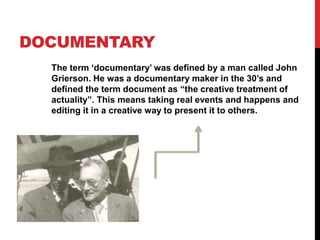
The term ‘documentary’ was defined by a man called John 
Grierson. He was a documentary maker in the 30’s and 
defined the term document as “the creative treatment of 
actuality”. This means taking real events and happens and 
editing it in a creative way to present it to others.
The key elements of a documentary can be broken down into 
5 areas, these being the following: 
- Observation 
- Interview 
- Dramatisation 
- Mise-en-scene 
- Exposition 
FEATURES OF A DOCUMENTARY
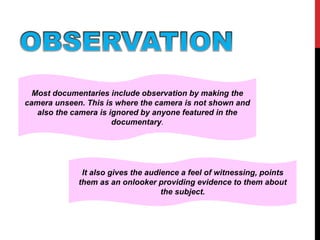
Most documentaries include observation by making the 
camera unseen. This is where the camera is not shown and 
also the camera is ignored by anyone featured in the 
documentary. 
It also gives the audience a feel of witnessing, points 
them as an onlooker providing evidence to them about 
the subject.
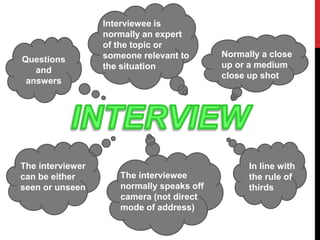
Questions 
and 
answers 
The interviewer 
can be either 
seen or unseen 
Interviewee is 
normally an expert 
of the topic or 
someone relevant to 
the situation 
Normally a close 
up or a medium 
close up shot 
In line with 
the rule of 
thirds 
The interviewee 
normally speaks off 
camera (not direct 
mode of address)
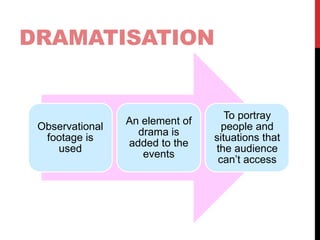
DRAMATISATION 
Observational 
footage is 
used 
An element of 
drama is 
added to the 
events 
To portray 
people and 
situations that 
the audience 
can’t access
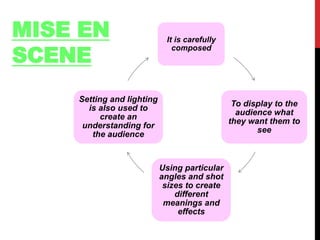
MISE EN 
SCENE 
It is carefully 
composed 
To display to the 
audience what 
they want them to 
see 
Using particular 
angles and shot 
sizes to create 
different 
meanings and 
effects 
Setting and lighting 
is also used to 
create an 
understanding for 
the audience
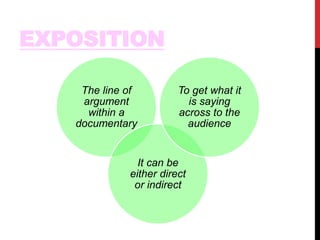
EXPOSITION 
The line of 
argument 
within a 
documentary 
To get what it 
is saying 
across to the 
audience 
It can be 
either direct 
or indirect
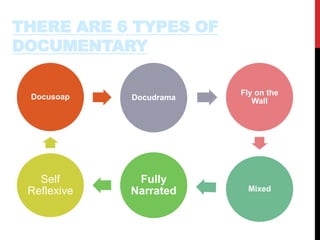
THERE ARE 6 TYPES OF 
DOCUMENTARY 
Docudrama 
Fly on the 
Wall 
Mixed 
Fully 
Narrated 
Docusoap 
Self 
Reflexive
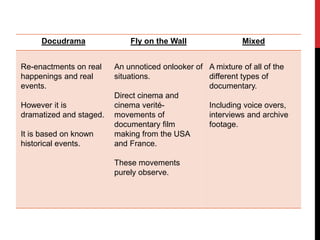
Docudrama Fly on the Wall Mixed 
Re-enactments on real 
happenings and real 
events. 
However it is 
dramatized and staged. 
It is based on known 
historical events. 
An unnoticed onlooker of 
situations. 
Direct cinema and 
cinema verité-movements 
of 
documentary film 
making from the USA 
and France. 
These movements 
purely observe. 
A mixture of all of the 
different types of 
documentary. 
Including voice overs, 
interviews and archive 
footage.
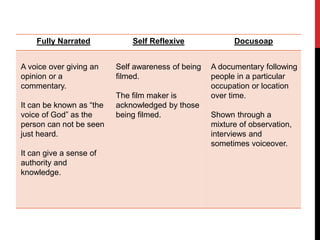
Fully Narrated Self Reflexive Docusoap 
A voice over giving an 
opinion or a 
commentary. 
It can be known as “the 
voice of God” as the 
person can not be seen 
just heard. 
It can give a sense of 
authority and 
knowledge. 
Self awareness of being 
filmed. 
The film maker is 
acknowledged by those 
being filmed. 
A documentary following 
people in a particular 
occupation or location 
over time. 
Shown through a 
mixture of observation, 
interviews and 
sometimes voiceover.
EXAMPLES OF THESE 
TYPES: 
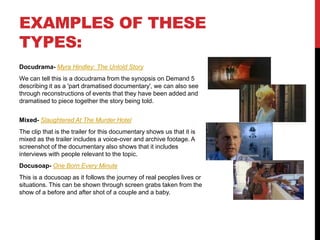
Docudrama- Myra Hindley: The Untold Story 
We can tell this is a docudrama from the synopsis on Demand 5 
describing it as a 'part dramatised documentary', we can also see 
through reconstructions of events that they have been added and 
dramatised to piece together the story being told. 
Mixed- Slaughtered At The Murder Hotel 
The clip that is the trailer for this documentary shows us that it is 
mixed as the trailer includes a voice-over and archive footage. A 
screenshot of the documentary also shows that it includes 
interviews with people relevant to the topic. 
Docusoap- One Born Every Minute 
This is a docusoap as it follows the journey of real peoples lives or 
situations. This can be shown through screen grabs taken from the 
show of a before and after shot of a couple and a baby.
MORE EXAMPLES: 
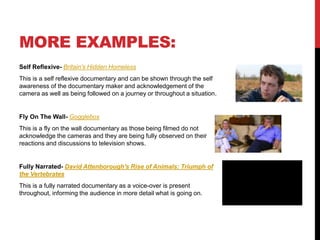
Self Reflexive- Britain's Hidden Homeless 
This is a self reflexive documentary and can be shown through the self 
awareness of the documentary maker and acknowledgement of the 
camera as well as being followed on a journey or throughout a situation. 
Fly On The Wall- Gogglebox 
This is a fly on the wall documentary as those being filmed do not 
acknowledge the cameras and they are being fully observed on their 
reactions and discussions to television shows. 
Fully Narrated- David Attenborough's Rise of Animals: Triumph of 
the Vertebrates 
This is a fully narrated documentary as a voice-over is present 
throughout, informing the audience in more detail what is going on.

Types of Documentary

  • 1.
    TYPES OF DOCUMENTARIESAND GENRE ANALYSIS A DOCUMENTARY’S MAIN PURPOSE IS TO DOCUMENT INFORMATION AND INFORM AS WELL AS ENTERTAIN.
  • 2.
    DOCUMENTARY The term‘documentary’ was defined by a man called John Grierson. He was a documentary maker in the 30’s and defined the term document as “the creative treatment of actuality”. This means taking real events and happens and editing it in a creative way to present it to others.
  • 3.
    The key elementsof a documentary can be broken down into 5 areas, these being the following: - Observation - Interview - Dramatisation - Mise-en-scene - Exposition FEATURES OF A DOCUMENTARY
  • 4.
    Most documentaries includeobservation by making the camera unseen. This is where the camera is not shown and also the camera is ignored by anyone featured in the documentary. It also gives the audience a feel of witnessing, points them as an onlooker providing evidence to them about the subject.
  • 5.
    Questions and answers The interviewer can be either seen or unseen Interviewee is normally an expert of the topic or someone relevant to the situation Normally a close up or a medium close up shot In line with the rule of thirds The interviewee normally speaks off camera (not direct mode of address)
  • 6.
    DRAMATISATION Observational footageis used An element of drama is added to the events To portray people and situations that the audience can’t access
  • 7.
    MISE EN SCENE It is carefully composed To display to the audience what they want them to see Using particular angles and shot sizes to create different meanings and effects Setting and lighting is also used to create an understanding for the audience
  • 8.
    EXPOSITION The lineof argument within a documentary To get what it is saying across to the audience It can be either direct or indirect
  • 9.
    THERE ARE 6TYPES OF DOCUMENTARY Docudrama Fly on the Wall Mixed Fully Narrated Docusoap Self Reflexive
  • 10.
    Docudrama Fly onthe Wall Mixed Re-enactments on real happenings and real events. However it is dramatized and staged. It is based on known historical events. An unnoticed onlooker of situations. Direct cinema and cinema verité-movements of documentary film making from the USA and France. These movements purely observe. A mixture of all of the different types of documentary. Including voice overs, interviews and archive footage.
  • 11.
    Fully Narrated SelfReflexive Docusoap A voice over giving an opinion or a commentary. It can be known as “the voice of God” as the person can not be seen just heard. It can give a sense of authority and knowledge. Self awareness of being filmed. The film maker is acknowledged by those being filmed. A documentary following people in a particular occupation or location over time. Shown through a mixture of observation, interviews and sometimes voiceover.
  • 12.
    EXAMPLES OF THESE TYPES: Docudrama- Myra Hindley: The Untold Story We can tell this is a docudrama from the synopsis on Demand 5 describing it as a 'part dramatised documentary', we can also see through reconstructions of events that they have been added and dramatised to piece together the story being told. Mixed- Slaughtered At The Murder Hotel The clip that is the trailer for this documentary shows us that it is mixed as the trailer includes a voice-over and archive footage. A screenshot of the documentary also shows that it includes interviews with people relevant to the topic. Docusoap- One Born Every Minute This is a docusoap as it follows the journey of real peoples lives or situations. This can be shown through screen grabs taken from the show of a before and after shot of a couple and a baby.
  • 13.
    MORE EXAMPLES: SelfReflexive- Britain's Hidden Homeless This is a self reflexive documentary and can be shown through the self awareness of the documentary maker and acknowledgement of the camera as well as being followed on a journey or throughout a situation. Fly On The Wall- Gogglebox This is a fly on the wall documentary as those being filmed do not acknowledge the cameras and they are being fully observed on their reactions and discussions to television shows. Fully Narrated- David Attenborough's Rise of Animals: Triumph of the Vertebrates This is a fully narrated documentary as a voice-over is present throughout, informing the audience in more detail what is going on.