GENRE ANALYSIS Samantha Fairclough
INTRODUCTION TO 
DOCUMENTARIES 
The purpose to a documentary is to document an 
aspect of reality. They also: inform, investigate, 
educate and entertain. They are factual and subject 
specific with an exposition (argument/clear point), 
facts and different styles. 
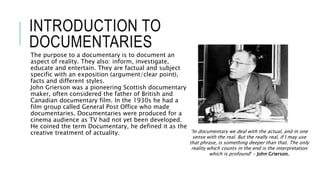
John Grierson was a pioneering Scottish documentary 
maker, often considered the father of British and 
Canadian documentary film. In the 1930s he had a 
film group called General Post Office who made 
documentaries. Documentaries were produced for a 
cinema audience as TV had not yet been developed. 
He coined the term Documentary, he defined it as the 
creative treatment of actuality. “In documentary we deal with the actual, and in one 

sense with the real. But the really real, if I may use 
that phrase, is something deeper than that. The only 
reality which counts in the end is the interpretation 
which is profound” – John Grierson.
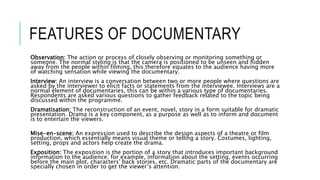
FEATURES OF DOCUMENTARY 
Observation: The action or process of closely observing or monitoring something or 
someone. The normal styling is that the camera is positioned to be unseen and hidden 
away from the people within filming, this therefore equates to the audience having more 
of watching sensation while viewing the documentary. 
Interview: An interview is a conversation between two or more people where questions are 
asked by the interviewer to elicit facts or statements from the interviewee. Interviews are a 
normal element of documentaries, this can be within a various type of documentaries. 
Respondents are asked various questions to gather feedback related to the topic being 
discussed within the programme. 
Dramatisation: The reconstruction of an event, novel, story in a form suitable for dramatic 
presentation. Drama is a key component, as a purpose as well as to inform and document 
is to entertain the viewers. 
Mise-en-scene: An expression used to describe the design aspects of a theatre or film 
production, which essentially means visual theme or telling a story. Costumes, lighting, 
setting, props and actors help create the drama. 
Exposition: The exposition is the portion of a story that introduces important background 
information to the audience; for example, information about the setting, events occurring 
before the main plot, characters' back stories, etc. Dramatic parts of the documentary are 
specially chosen in order to get the viewer’s attention.
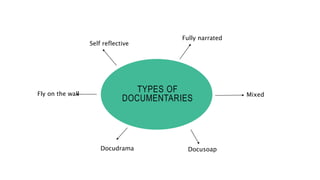
TYPES OF 
Fully narrated 
Self reflective 
Fly on the wall Mixed 
DOCUMENTARIES 
Docudrama Docusoap
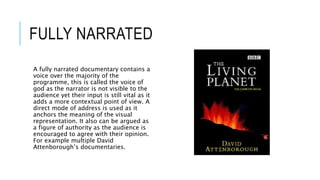
FULLY NARRATED 
A fully narrated documentary contains a 
voice over the majority of the 
programme, this is called the voice of 
god as the narrator is not visible to the 
audience yet their input is still vital as it 
adds a more contextual point of view. A 
direct mode of address is used as it 
anchors the meaning of the visual 
representation. It also can be argued as 
a figure of authority as the audience is 
encouraged to agree with their opinion. 
For example multiple David 
Attenborough’s documentaries.
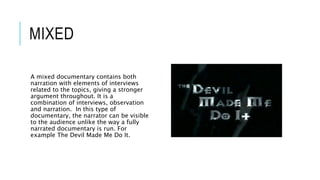
MIXED 
A mixed documentary contains both 
narration with elements of interviews 
related to the topics, giving a stronger 
argument throughout. It is a 
combination of interviews, observation 
and narration. In this type of 
documentary, the narrator can be visible 
to the audience unlike the way a fully 
narrated documentary is run. For 
example The Devil Made Me Do It.
FLY ON THE WALL 
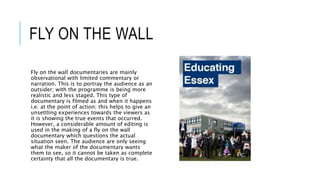
Fly on the wall documentaries are mainly 
observational with limited commentary or 
narration. This is to portray the audience as an 
outsider; with the programme is being more 
realistic and less staged. This type of 
documentary is filmed as and when it happens 
i.e. at the point of action; this helps to give an 
unsettling experiences towards the viewers as 
it is showing the true events that occurred. 
However, a considerable amount of editing is 
used in the making of a fly on the wall 
documentary which questions the actual 
situation seen. The audience are only seeing 
what the maker of the documentary wants 
them to see, so it cannot be taken as complete 
certainty that all the documentary is true.
DOCUDRAMA 
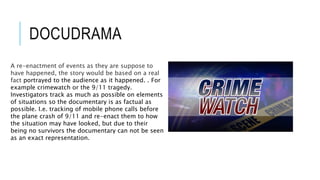
A re-enactment of events as they are suppose to 
have happened, the story would be based on a real 
fact portrayed to the audience as it happened. . For 
example crimewatch or the 9/11 tragedy. 
Investigators track as much as possible on elements 
of situations so the documentary is as factual as 
possible. I.e. tracking of mobile phone calls before 
the plane crash of 9/11 and re-enact them to how 
the situation may have looked, but due to their 
being no survivors the documentary can not be seen 
as an exact representation.
DOCUSOAP 
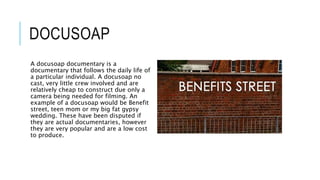
A docusoap documentary is a 
documentary that follows the daily life of 
a particular individual. A docusoap no 
cast, very little crew involved and are 
relatively cheap to construct due only a 
camera being needed for filming. An 
example of a docusoap would be Benefit 
street, teen mom or my big fat gypsy 
wedding. These have been disputed if 
they are actual documentaries, however 
they are very popular and are a low cost 
to produce.
SELF REFLECTIVE 
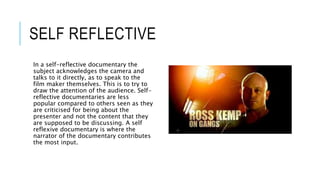
In a self-reflective documentary the 
subject acknowledges the camera and 
talks to it directly, as to speak to the 
film maker themselves. This is to try to 
draw the attention of the audience. Self-reflective 
documentaries are less 
popular compared to others seen as they 
are criticised for being about the 
presenter and not the content that they 
are supposed to be discussing. A self 
reflexive documentary is where the 
narrator of the documentary contributes 
the most input.

Genre analysis

  • 1.
  • 2.
    INTRODUCTION TO DOCUMENTARIES The purpose to a documentary is to document an aspect of reality. They also: inform, investigate, educate and entertain. They are factual and subject specific with an exposition (argument/clear point), facts and different styles. John Grierson was a pioneering Scottish documentary maker, often considered the father of British and Canadian documentary film. In the 1930s he had a film group called General Post Office who made documentaries. Documentaries were produced for a cinema audience as TV had not yet been developed. He coined the term Documentary, he defined it as the creative treatment of actuality. “In documentary we deal with the actual, and in one sense with the real. But the really real, if I may use that phrase, is something deeper than that. The only reality which counts in the end is the interpretation which is profound” – John Grierson.
  • 3.
    FEATURES OF DOCUMENTARY Observation: The action or process of closely observing or monitoring something or someone. The normal styling is that the camera is positioned to be unseen and hidden away from the people within filming, this therefore equates to the audience having more of watching sensation while viewing the documentary. Interview: An interview is a conversation between two or more people where questions are asked by the interviewer to elicit facts or statements from the interviewee. Interviews are a normal element of documentaries, this can be within a various type of documentaries. Respondents are asked various questions to gather feedback related to the topic being discussed within the programme. Dramatisation: The reconstruction of an event, novel, story in a form suitable for dramatic presentation. Drama is a key component, as a purpose as well as to inform and document is to entertain the viewers. Mise-en-scene: An expression used to describe the design aspects of a theatre or film production, which essentially means visual theme or telling a story. Costumes, lighting, setting, props and actors help create the drama. Exposition: The exposition is the portion of a story that introduces important background information to the audience; for example, information about the setting, events occurring before the main plot, characters' back stories, etc. Dramatic parts of the documentary are specially chosen in order to get the viewer’s attention.
  • 4.
    TYPES OF Fullynarrated Self reflective Fly on the wall Mixed DOCUMENTARIES Docudrama Docusoap
  • 5.
    FULLY NARRATED Afully narrated documentary contains a voice over the majority of the programme, this is called the voice of god as the narrator is not visible to the audience yet their input is still vital as it adds a more contextual point of view. A direct mode of address is used as it anchors the meaning of the visual representation. It also can be argued as a figure of authority as the audience is encouraged to agree with their opinion. For example multiple David Attenborough’s documentaries.
  • 6.
    MIXED A mixeddocumentary contains both narration with elements of interviews related to the topics, giving a stronger argument throughout. It is a combination of interviews, observation and narration. In this type of documentary, the narrator can be visible to the audience unlike the way a fully narrated documentary is run. For example The Devil Made Me Do It.
  • 7.
    FLY ON THEWALL Fly on the wall documentaries are mainly observational with limited commentary or narration. This is to portray the audience as an outsider; with the programme is being more realistic and less staged. This type of documentary is filmed as and when it happens i.e. at the point of action; this helps to give an unsettling experiences towards the viewers as it is showing the true events that occurred. However, a considerable amount of editing is used in the making of a fly on the wall documentary which questions the actual situation seen. The audience are only seeing what the maker of the documentary wants them to see, so it cannot be taken as complete certainty that all the documentary is true.
  • 8.
    DOCUDRAMA A re-enactmentof events as they are suppose to have happened, the story would be based on a real fact portrayed to the audience as it happened. . For example crimewatch or the 9/11 tragedy. Investigators track as much as possible on elements of situations so the documentary is as factual as possible. I.e. tracking of mobile phone calls before the plane crash of 9/11 and re-enact them to how the situation may have looked, but due to their being no survivors the documentary can not be seen as an exact representation.
  • 9.
    DOCUSOAP A docusoapdocumentary is a documentary that follows the daily life of a particular individual. A docusoap no cast, very little crew involved and are relatively cheap to construct due only a camera being needed for filming. An example of a docusoap would be Benefit street, teen mom or my big fat gypsy wedding. These have been disputed if they are actual documentaries, however they are very popular and are a low cost to produce.
  • 10.
    SELF REFLECTIVE Ina self-reflective documentary the subject acknowledges the camera and talks to it directly, as to speak to the film maker themselves. This is to try to draw the attention of the audience. Self-reflective documentaries are less popular compared to others seen as they are criticised for being about the presenter and not the content that they are supposed to be discussing. A self reflexive documentary is where the narrator of the documentary contributes the most input.