AS MEDIA STUDIES
FOUNDATION
PORTFOLIO FILM
OPENING SEQUENCE
CODES &
CONVENTIONS
Mima Micic
INTRODUCTION
My main task, in addition to making a film opening sequence and many other tasks that go along
with it, includes researching the film opening sequence codes and conventions. Unlike the
preliminary assignment, I will be working on it by myself. I prefer being independant and making
all final decisions alone.
The purpose of a film opening sequence is to introduce the audience to the genre of the movie
and establish the setting, indicate the mood and visual aspects of the film, amongst other
elements. This can be done by using certain types of shots, sounds and soundtracks and character
introduction.
It also enables companies to present their title, key production and cast.
There are many ways for directors to accomplish such things from the very start of the film, which
include an establishing shot, narration and flashbacks. All of these aspects are used to draw people
in and keep them hooked from the beginning and also target the fans of the specific genre. The
opening sequence needs to reflect the films tone and mood as well as present it in the best light
possible and set the expectations for events that happen later in it.
● Studio
● Titles
● Themes and topics
● Establishing the genre
● Character introduction
● Narration
● Sound
● Enigma
● Credits
● Flashback
● Establishing shot
● Action & chase scene
● Animation
ELEMENTS OF
THE FILM
OPENING
SEQUENCE
(COMPOSITIONAL
AND GRAPHICAL
CODES &
CONVENTIONS):
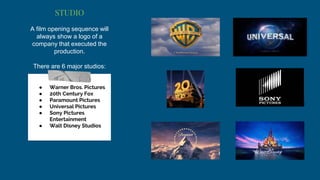
STUDIO
● Warner Bros. Pictures
● 20th Century Fox
● Paramount Pictures
● Universal Pictures
● Sony Pictures
Entertainment
● Walt Disney Studios
A film opening sequence will
always show a logo of a
company that executed the
production.
There are 6 major studios:
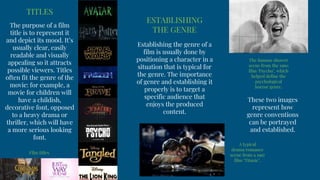
TITLES
The purpose of a film
title is to represent it
and depict its mood. It’s
usually clear, easily
readable and visually
appealing so it attracts
possible viewers. Titles
often fit the genre of the
movie: for example, a
movie for children will
have a childish,
decorative font, opposed
to a heavy drama or
thriller, which will have
a more serious looking
font.
Film titles
ESTABLISHING
THE GENRE
Establishing the genre of a
film is usually done by
positioning a character in a
situation that is typical for
the genre. The importance
of genre and establishing it
properly is to target a
specific audience that
enjoys the produced
content.
The famous shower
scene from the 1960
film ‘Psycho’, which
helped define the
psychological
horror genre.
These two images
represent how
genre conventions
can be portrayed
and established.
A typical
drama/romance
scene from a 1997
film ‘Titanic’.
CHARACTER
INTRODUCTION
During the opening sequence,
main characters can be
introduced which signifies their
importance for the plot.
However, in some films the main
characters aren’t introduced in
the opening sequence, which
creates the effect of mystery
surrounding the character.
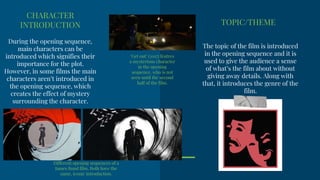
Different opening sequences of a
James Bond film. Both have the
same, iconic introduction.
TOPIC/THEME
The topic of the film is introduced
in the opening sequence and it is
used to give the audience a sense
of what’s the film about without
giving away details. Along with
that, it introduces the genre of the
film.
‘Get out’ (2017) feutres
a mysterious character
in the opening
sequence, who is not
seen until the second
half of the film.
NARRATION
● Diegetic sound- a sound
which has a source on
screen, such as dialogue,
footsteps, gunshots etc.
these sounds are heard by
the characters in the film, as
they are internal sounds of
it.
● Non-diegetic sound- these
are the sounds that have
been added during the
editing stage, such as
soundtrack and sounds used
to create a certain
atmosphere. It makes the
film more powerful and
leaves an impact on the
audience.
Narration in films is used to
make them more interesting
and appealing to the
audience. It can also help the
audience get a better
understanding of the full
story, as it further explains
and gives additional
information about the plot
and characters. It is an easy
way of immediately
involving the audience and
engaging them in the story.
SOUNDS
Opening sequences
usually contain
sounds that will set
the scene and help
convey the genre and
expectations of the
film.
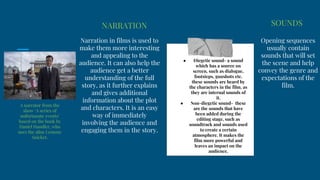
A narrator from the
show ‘A series of
unfortunate events’
based on the book by
Daniel Handler, who
uses the alias Lemony
Snicket.
ENIGMA
Enigma codes in opening
sequences are used to
intrigue the audience
and create a sense of
mysterious tension. It
hooks the audience from
the very beginning and
makes them wonder and
question what happens
later in the film, so they
have a desire to keep
watching.
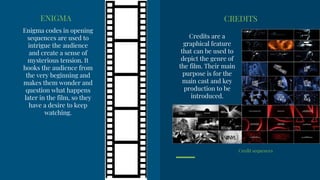
CREDITS
Credits are a
graphical feature
that can be used to
depict the genre of
the film. Their main
purpose is for the
main cast and key
production to be
introduced.
Credit sequences
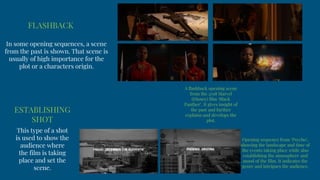
FLASHBACK
In some opening sequences, a scene
from the past is shown. That scene is
usually of high importance for the
plot or a characters origin.
ESTABLISHING
SHOT
This type of a shot
is used to show the
audience where
the film is taking
place and set the
scene.
Opening sequence from ‘Psycho’,
showing the landscape and time of
the events taking place while also
establishing the atmosphere and
mood of the film. It indicates the
genre and intrigues the audience.
A flashback opening scene
from the 2018 Marvel
(Disney) film ‘Black
Panther’. It gives insight of
the past and further
explains and develops the
plot.
ACTION & CHASE
SCENE
If containing an action or
chase scene in the
opening sequence, the
film will start off with a
fast pace, establishing
the action genre while
intriguing the audience
and making them
wonder about the events
that might follow.
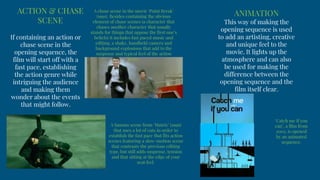
A famous scene from ‘Matrix’ (1999)
that uses a lot of cuts in order to
establish the fast pace that fits action
scenes featuring a slow-motion scene
that contrasts the previous editing
type, but still adds suspense, tension
and that sitting at the edge of your
seat feel.
A chase scene in the movie ‘Point Break’
(1991). Besides containing the obvious
element of chase scenes (a character that
chases another character that usually
stands for things that oppose the first one’s
beliefs) it includes fast paced music and
editing, a shaky, handheld camera and
background explosions that add to the
suspense and typical feel of the action
genre.
ANIMATION
This way of making the
opening sequence is used
to add an artisting, creative
and unique feel to the
movie. It lights up the
atmosphere and can also
be used for making the
difference between the
opening sequence and the
film itself clear.
‘Catch me if you
can’, a film from
2002, is opened
by an animated
sequence.

Film Opening Sequence Codes & Conventions

  • 1.
    AS MEDIA STUDIES FOUNDATION PORTFOLIOFILM OPENING SEQUENCE CODES & CONVENTIONS Mima Micic
  • 2.
    INTRODUCTION My main task,in addition to making a film opening sequence and many other tasks that go along with it, includes researching the film opening sequence codes and conventions. Unlike the preliminary assignment, I will be working on it by myself. I prefer being independant and making all final decisions alone. The purpose of a film opening sequence is to introduce the audience to the genre of the movie and establish the setting, indicate the mood and visual aspects of the film, amongst other elements. This can be done by using certain types of shots, sounds and soundtracks and character introduction. It also enables companies to present their title, key production and cast. There are many ways for directors to accomplish such things from the very start of the film, which include an establishing shot, narration and flashbacks. All of these aspects are used to draw people in and keep them hooked from the beginning and also target the fans of the specific genre. The opening sequence needs to reflect the films tone and mood as well as present it in the best light possible and set the expectations for events that happen later in it.
  • 3.
    ● Studio ● Titles ●Themes and topics ● Establishing the genre ● Character introduction ● Narration ● Sound ● Enigma ● Credits ● Flashback ● Establishing shot ● Action & chase scene ● Animation ELEMENTS OF THE FILM OPENING SEQUENCE (COMPOSITIONAL AND GRAPHICAL CODES & CONVENTIONS):
  • 4.
    STUDIO ● Warner Bros.Pictures ● 20th Century Fox ● Paramount Pictures ● Universal Pictures ● Sony Pictures Entertainment ● Walt Disney Studios A film opening sequence will always show a logo of a company that executed the production. There are 6 major studios:
  • 5.
    TITLES The purpose ofa film title is to represent it and depict its mood. It’s usually clear, easily readable and visually appealing so it attracts possible viewers. Titles often fit the genre of the movie: for example, a movie for children will have a childish, decorative font, opposed to a heavy drama or thriller, which will have a more serious looking font. Film titles ESTABLISHING THE GENRE Establishing the genre of a film is usually done by positioning a character in a situation that is typical for the genre. The importance of genre and establishing it properly is to target a specific audience that enjoys the produced content. The famous shower scene from the 1960 film ‘Psycho’, which helped define the psychological horror genre. These two images represent how genre conventions can be portrayed and established. A typical drama/romance scene from a 1997 film ‘Titanic’.
  • 6.
    CHARACTER INTRODUCTION During the openingsequence, main characters can be introduced which signifies their importance for the plot. However, in some films the main characters aren’t introduced in the opening sequence, which creates the effect of mystery surrounding the character. Different opening sequences of a James Bond film. Both have the same, iconic introduction. TOPIC/THEME The topic of the film is introduced in the opening sequence and it is used to give the audience a sense of what’s the film about without giving away details. Along with that, it introduces the genre of the film. ‘Get out’ (2017) feutres a mysterious character in the opening sequence, who is not seen until the second half of the film.
  • 7.
    NARRATION ● Diegetic sound-a sound which has a source on screen, such as dialogue, footsteps, gunshots etc. these sounds are heard by the characters in the film, as they are internal sounds of it. ● Non-diegetic sound- these are the sounds that have been added during the editing stage, such as soundtrack and sounds used to create a certain atmosphere. It makes the film more powerful and leaves an impact on the audience. Narration in films is used to make them more interesting and appealing to the audience. It can also help the audience get a better understanding of the full story, as it further explains and gives additional information about the plot and characters. It is an easy way of immediately involving the audience and engaging them in the story. SOUNDS Opening sequences usually contain sounds that will set the scene and help convey the genre and expectations of the film. A narrator from the show ‘A series of unfortunate events’ based on the book by Daniel Handler, who uses the alias Lemony Snicket.
  • 8.
    ENIGMA Enigma codes inopening sequences are used to intrigue the audience and create a sense of mysterious tension. It hooks the audience from the very beginning and makes them wonder and question what happens later in the film, so they have a desire to keep watching. CREDITS Credits are a graphical feature that can be used to depict the genre of the film. Their main purpose is for the main cast and key production to be introduced. Credit sequences
  • 9.
    FLASHBACK In some openingsequences, a scene from the past is shown. That scene is usually of high importance for the plot or a characters origin. ESTABLISHING SHOT This type of a shot is used to show the audience where the film is taking place and set the scene. Opening sequence from ‘Psycho’, showing the landscape and time of the events taking place while also establishing the atmosphere and mood of the film. It indicates the genre and intrigues the audience. A flashback opening scene from the 2018 Marvel (Disney) film ‘Black Panther’. It gives insight of the past and further explains and develops the plot.
  • 10.
    ACTION & CHASE SCENE Ifcontaining an action or chase scene in the opening sequence, the film will start off with a fast pace, establishing the action genre while intriguing the audience and making them wonder about the events that might follow. A famous scene from ‘Matrix’ (1999) that uses a lot of cuts in order to establish the fast pace that fits action scenes featuring a slow-motion scene that contrasts the previous editing type, but still adds suspense, tension and that sitting at the edge of your seat feel. A chase scene in the movie ‘Point Break’ (1991). Besides containing the obvious element of chase scenes (a character that chases another character that usually stands for things that oppose the first one’s beliefs) it includes fast paced music and editing, a shaky, handheld camera and background explosions that add to the suspense and typical feel of the action genre. ANIMATION This way of making the opening sequence is used to add an artisting, creative and unique feel to the movie. It lights up the atmosphere and can also be used for making the difference between the opening sequence and the film itself clear. ‘Catch me if you can’, a film from 2002, is opened by an animated sequence.