Presented by
Details of Construction
Types of Brick Bonding
Faisal Faruque Rafat
Dept. of Civil Engineering
Rajshahi University of Engineering
and Technology
English Bond
Image Source: Near Water Tank, RUET
This bond consists of alternate course of headers and stretchers. This is
considered to be the strongest bond.
Application:
1. Use in garden landscaping for screen walls.
2. Use as a decorative bond.
Flemish Bond
Image Source: Internet
In this arrangement of bonding brickwork, each course consists of
alternate headers and stretchers.
Application:
1. Use in feature structures.
2. Rarely use today on new modern buildings.
3. Suitable for garden walling.
Image Source: Architecture building, RUET
In this type of bonding all the bicks are laid as stretchers. The overlap is
usually of half brick.
Application:
1. Used often in garden walls.
2. Used in short durability structure.
3. Used for structural bonding.
Stretching Bond
Garden Wall Bond
Image Source: Architecture building, RUET
This type of bond is suitably adopted for one brick thick wall which
may act as a garden wall or a boundary wall.
There are two types of garden wall.
a. English garden wall bond.
b. Flemish garden wall bond.
Application:
1. Used in garden wall or boundary wall.
Flemish Garden Wall Bond
Image Source: Architecture building, RUET
This consists of alternate course composed of one header to three
or sometimes even five stretchers in series throughout the length
of the courses..
Application:
1. Used as garden wall.
Facing Bond
Image Source: Rajshahi College
This bond consists of an arrangement of bricks that are heading
course comes after several stretching courses.
Application:
1. Used as the outer facing of cavity walls.
2. Used as boundary walls.
Raking Bond
Image Source: Internet
This is a bond in brick work in which the bonding bricks are laid at
any angle other than zero or ninety degrees.
Thre are two types of raking bond.
a. Herring bond: In this arrangement of brick work, bricks are laid
in course inclined at 45 degrees in two directions from the
center.
b. Diagonal bond: In this bond, the bricks are placed end to end in
such a way that extreme corners of the series remain in contact
with the stretchers.
Application:
1. Used for brick pavings.
Dutch Bond
Image Source: Architecture building, RUET
This bond is a modification of the old english cross bond and consists
of alternate courses of headers and stretchers.
In this arrangement of brick work, each stretching course starts at
the quoin with a three quarter batand every alternate stretching
course has a header placed next to the three quarter bat provided
at the quoin.
English Cross Bond
Image Source: Motor Garage, RUET
This is similar to english bond and consists of alternate courses of
headers and stretchers. This bond is sufficiently strong and bears a
good elevation.
However, in this bond, queen closer are introducednext to quoin
headers and each alternate heading course has header
placednext to quoin stretcher
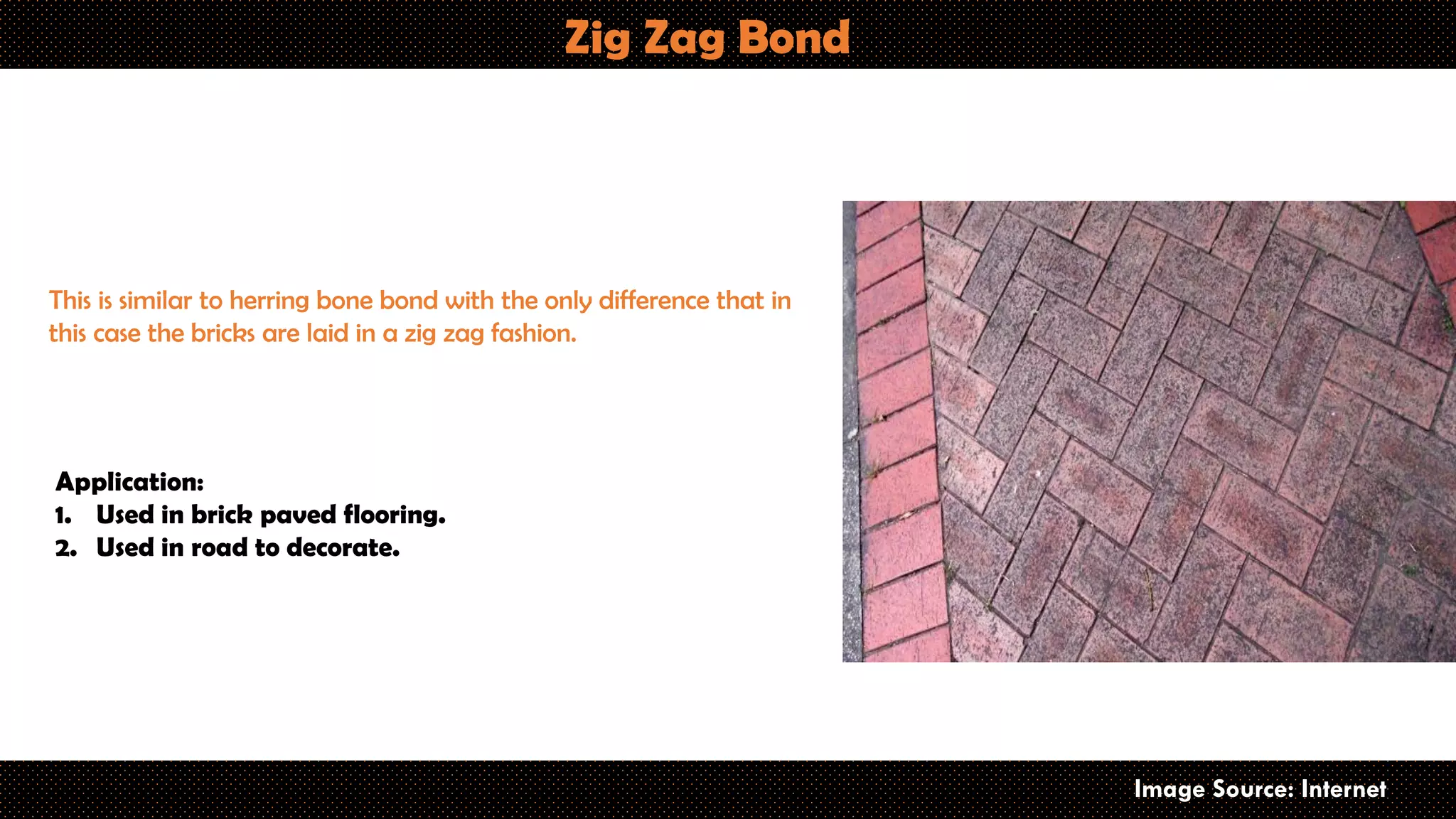
Zig Zag Bond
Image Source: Internet
This is similar to herring bone bond with the only difference that in
this case the bricks are laid in a zig zag fashion.
Application:
1. Used in brick paved flooring.
2. Used in road to decorate.
Thank you
for your kind attention

Types of Brick Bonding

  • 1.
    Presented by Details ofConstruction Types of Brick Bonding Faisal Faruque Rafat Dept. of Civil Engineering Rajshahi University of Engineering and Technology
  • 2.
    English Bond Image Source:Near Water Tank, RUET This bond consists of alternate course of headers and stretchers. This is considered to be the strongest bond. Application: 1. Use in garden landscaping for screen walls. 2. Use as a decorative bond.
  • 3.
    Flemish Bond Image Source:Internet In this arrangement of bonding brickwork, each course consists of alternate headers and stretchers. Application: 1. Use in feature structures. 2. Rarely use today on new modern buildings. 3. Suitable for garden walling.
  • 4.
    Image Source: Architecturebuilding, RUET In this type of bonding all the bicks are laid as stretchers. The overlap is usually of half brick. Application: 1. Used often in garden walls. 2. Used in short durability structure. 3. Used for structural bonding. Stretching Bond
  • 5.
    Garden Wall Bond ImageSource: Architecture building, RUET This type of bond is suitably adopted for one brick thick wall which may act as a garden wall or a boundary wall. There are two types of garden wall. a. English garden wall bond. b. Flemish garden wall bond. Application: 1. Used in garden wall or boundary wall.
  • 6.
    Flemish Garden WallBond Image Source: Architecture building, RUET This consists of alternate course composed of one header to three or sometimes even five stretchers in series throughout the length of the courses.. Application: 1. Used as garden wall.
  • 7.
    Facing Bond Image Source:Rajshahi College This bond consists of an arrangement of bricks that are heading course comes after several stretching courses. Application: 1. Used as the outer facing of cavity walls. 2. Used as boundary walls.
  • 8.
    Raking Bond Image Source:Internet This is a bond in brick work in which the bonding bricks are laid at any angle other than zero or ninety degrees. Thre are two types of raking bond. a. Herring bond: In this arrangement of brick work, bricks are laid in course inclined at 45 degrees in two directions from the center. b. Diagonal bond: In this bond, the bricks are placed end to end in such a way that extreme corners of the series remain in contact with the stretchers. Application: 1. Used for brick pavings.
  • 9.
    Dutch Bond Image Source:Architecture building, RUET This bond is a modification of the old english cross bond and consists of alternate courses of headers and stretchers. In this arrangement of brick work, each stretching course starts at the quoin with a three quarter batand every alternate stretching course has a header placed next to the three quarter bat provided at the quoin.
  • 10.
    English Cross Bond ImageSource: Motor Garage, RUET This is similar to english bond and consists of alternate courses of headers and stretchers. This bond is sufficiently strong and bears a good elevation. However, in this bond, queen closer are introducednext to quoin headers and each alternate heading course has header placednext to quoin stretcher
  • 11.
    Zig Zag Bond ImageSource: Internet This is similar to herring bone bond with the only difference that in this case the bricks are laid in a zig zag fashion. Application: 1. Used in brick paved flooring. 2. Used in road to decorate.
  • 12.
    Thank you for yourkind attention