TYPE OF INTERNET
CONNECTIVITY
Rahul kundu
6th sem, IT
contents
 Introduction
 Methods of connectivity
introduction
 There are various type of connectivity to get
hook on to internet.
 They all can be broadly classified into following
category:-
 Gateway access
 Dial up connection
 Leased connection
 DSL
 Cable modem connection
 VSAT
 Method of connectivity to
internet
 Gateway access:-
• Gateway access is also known as level-one
connection.
• It is the access to the internet from a network,
which is not on the internet.
• The gateway allows the 2 different types of
networks to “talk” to each other. but the users
of the gateway internet have limited access to
the internet.
• They might not be able to use all the tools
available on internet. The local internet
service provider normally defines this
limitation.
 Dial up connection:-
• ‘dial up’ connection is also known as level 2
connection.
• This provides connection to internet through a
dial up terminal connection.
• The computer which provides internet access
is known as ‘host’ & the computer that
receives the access is ‘client’ or ‘terminal’.
• The client computer uses modem to access a
‘host’ & acts as if it is a terminal directly
connected to that host.
• 56k modem access is now widely available &
supported by most ISPs.
• It allows user to surf the web at 56 kbps with
graphics. So this type of connection is also
known as ‘remote modem access’ connection.
• In dial-up connection to internet host carries
all the command that are typed on a client
machine & forward them to internet.
• It also receives the data or information from
the internet on behalf of the client & passes it
to them. The client computer acts as a ‘dump’
terminal connected to remote host.
• This type of connection can further be divided
into 3 categories:-
• Shell account-
In this type of internet connection
the user will get only textural matter of a webpage.
This connection doesn’t support graphics display
shell account were the only type of internet access
available.
• TCP/IP connection-
Today’s graphical WWW browsers
provide easier access with multimedia sound & picture. The
major difference between shell & TCP/IP account is that ,
shell account can only display text & doesn’t support
graphics display, whereasTCP/IP can display both.
• ISDN-
integrated services digital network offers
internet connectivity at speeds of up to 128 kbps through
the use of digital phone lines. ISDN is a dial-up service
that has been provided by telephone companies for many
years.
 Leased connection:-
 Leased connection is also known as direct
internet access or level 3 connection.
 It is the secure dedicated & most expensive
level of internet connection.
 With leased connection, your computer is
dedicatedly & directly connected to the
internet using high speed transmission lines.
it is on-line 24 hours a day, 7 days a week.
 DSL connection:-
 Digital subscriber line (DSL) is a family of
technologies that provides digital data
transmission over the wires of a local telephone
network.
 DSL originally stood for digital subscriber loop.
 In telecommunication marketing , the terms
DSL is widely understood to mean asymmetric
digital subscriber line(ADSL), the most
commonly installed DSL technology.
 DSL service is delivered simultaneously with
wired telephone service on the same telephone
line. This is possible because DSL uses higher
frequency bands for data separated by filtering.
 The data bit rate of consumer DSL service
typically ranges from 256 Kbit/s to 40 Mbit/s in
the direction to the customer, depending on
DSL technology line conditions & service-level
implementation.
 Cable modem connection:-
 A cable modem is a type of network bridge &
modem that provides bi-directional data
communication via radio frequency channels on
a HFC & RFoG infrastructure.
 Cable modems are primarily used to deliver
broadband internet access in the from of cable
internet, taking advantage of the high
bandwidth of a HFC & RFoG network.
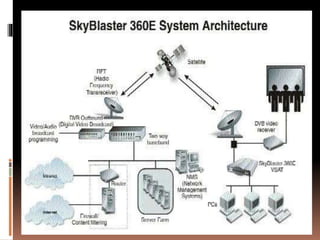
 VSAT:-
 VSAT short form “very small aperture
terminal”, An earthbound station used in
satellite communications of data, voice &
video signal, excluding broadcast television.
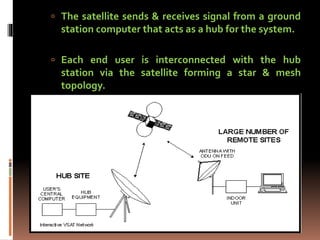
 A VSAT consists of 2 parts, a transceiver that is
placed outdoors in direct line of sight to the
satellite & a device that is placed indoors to
interface the transceiver with the end user’s
communications device, such as a PC.
 The transceiver receives or sends a signal to a
satellite transponder in the sky.
 The satellite sends & receives signal from a ground
station computer that acts as a hub for the system.
 Each end user is interconnected with the hub
station via the satellite forming a star & mesh
topology.
 The hub controls the entire operation of the
network.
 For one end user to communicate with another,
each transmission has to first go to the hub
station that then retransmit it via the satellite
to the other end user’sVSAT
THANK YOU
Rahul kundu
6th sem, IT

Type of internet connectivity

  • 1.
  • 2.
  • 3.
    introduction  There arevarious type of connectivity to get hook on to internet.  They all can be broadly classified into following category:-  Gateway access  Dial up connection  Leased connection  DSL  Cable modem connection  VSAT
  • 5.
     Method ofconnectivity to internet  Gateway access:- • Gateway access is also known as level-one connection. • It is the access to the internet from a network, which is not on the internet. • The gateway allows the 2 different types of networks to “talk” to each other. but the users of the gateway internet have limited access to the internet.
  • 6.
    • They mightnot be able to use all the tools available on internet. The local internet service provider normally defines this limitation.
  • 7.
     Dial upconnection:- • ‘dial up’ connection is also known as level 2 connection. • This provides connection to internet through a dial up terminal connection. • The computer which provides internet access is known as ‘host’ & the computer that receives the access is ‘client’ or ‘terminal’.
  • 8.
    • The clientcomputer uses modem to access a ‘host’ & acts as if it is a terminal directly connected to that host. • 56k modem access is now widely available & supported by most ISPs. • It allows user to surf the web at 56 kbps with graphics. So this type of connection is also known as ‘remote modem access’ connection.
  • 9.
    • In dial-upconnection to internet host carries all the command that are typed on a client machine & forward them to internet. • It also receives the data or information from the internet on behalf of the client & passes it to them. The client computer acts as a ‘dump’ terminal connected to remote host.
  • 10.
    • This typeof connection can further be divided into 3 categories:- • Shell account- In this type of internet connection the user will get only textural matter of a webpage. This connection doesn’t support graphics display shell account were the only type of internet access available.
  • 11.
    • TCP/IP connection- Today’sgraphical WWW browsers provide easier access with multimedia sound & picture. The major difference between shell & TCP/IP account is that , shell account can only display text & doesn’t support graphics display, whereasTCP/IP can display both. • ISDN- integrated services digital network offers internet connectivity at speeds of up to 128 kbps through the use of digital phone lines. ISDN is a dial-up service that has been provided by telephone companies for many years.
  • 12.
     Leased connection:- Leased connection is also known as direct internet access or level 3 connection.  It is the secure dedicated & most expensive level of internet connection.  With leased connection, your computer is dedicatedly & directly connected to the internet using high speed transmission lines. it is on-line 24 hours a day, 7 days a week.
  • 13.
     DSL connection:- Digital subscriber line (DSL) is a family of technologies that provides digital data transmission over the wires of a local telephone network.  DSL originally stood for digital subscriber loop.  In telecommunication marketing , the terms DSL is widely understood to mean asymmetric digital subscriber line(ADSL), the most commonly installed DSL technology.
  • 14.
     DSL serviceis delivered simultaneously with wired telephone service on the same telephone line. This is possible because DSL uses higher frequency bands for data separated by filtering.  The data bit rate of consumer DSL service typically ranges from 256 Kbit/s to 40 Mbit/s in the direction to the customer, depending on DSL technology line conditions & service-level implementation.
  • 15.
     Cable modemconnection:-  A cable modem is a type of network bridge & modem that provides bi-directional data communication via radio frequency channels on a HFC & RFoG infrastructure.  Cable modems are primarily used to deliver broadband internet access in the from of cable internet, taking advantage of the high bandwidth of a HFC & RFoG network.
  • 16.
     VSAT:-  VSATshort form “very small aperture terminal”, An earthbound station used in satellite communications of data, voice & video signal, excluding broadcast television.  A VSAT consists of 2 parts, a transceiver that is placed outdoors in direct line of sight to the satellite & a device that is placed indoors to interface the transceiver with the end user’s communications device, such as a PC.  The transceiver receives or sends a signal to a satellite transponder in the sky.
  • 17.
     The satellitesends & receives signal from a ground station computer that acts as a hub for the system.  Each end user is interconnected with the hub station via the satellite forming a star & mesh topology.
  • 18.
     The hubcontrols the entire operation of the network.  For one end user to communicate with another, each transmission has to first go to the hub station that then retransmit it via the satellite to the other end user’sVSAT
  • 19.