PRESENTED BY,
DEEPAK DEVRAJ
GEORGE M PAUL
SHAMEER PARAKKAL
STEPHIN DOMEY
SNEHA M LIBU
TITTU ANNA STEPHEN
INTRODUCTION
 INTERNET CONNECTIVITY IS A NECESSITY

Typical issues that need to be clarified:

• Method

• Quantity

• Security measures
CONTENTS
• DIAL-UP CONNECTION

• ISDN

• SATELLITE CONNECTION

• DSL

• CABLE MODEM

• WI-FI

• WLAN

• WIMAX
DIAL – UP CONNECTION
•   Dial-up access is really just like a phone connection

• Connection through modem and a public telephone network.

• It uses analog telephone lines

• Encoding & Decoding of analog signals is done by modem

•   Using a dial-up line to transmit data is similar to using the

    telephone to make a call

• Speed is only 56 kbps
PROCESS OF DIAL-UP
1. The client computer modem dials the preprogrammed
   phone number
2. Verification of user’s account by ISP
3. Connection is established and data can be transmitted.
4. When either modem hangs up, the communication
   ends.
ADVANTAGES

• Low cost

• Safety

• Availability

DISADVANTAGES

• Low Speed

• Requires phone line

• Route busy
ISDN
• Integrated Services Digital Network

• Standard for digital telecommunications that allows fast digital
  dialup connections

• It put together speech and information on the same line

• An ISDN line can provide two data channels each operating at
  64kbps

• ISDN service is available where the distance from the client to
  the exchange is under 55 km
ADVANTAGES

• Multiple digital channels

• Speedy establishment of connection

• It can be used for other activities like

   – videoconferencing

   – remote network maintenance

DISADVANTAGE

• It is very costly than the other typical telephone system
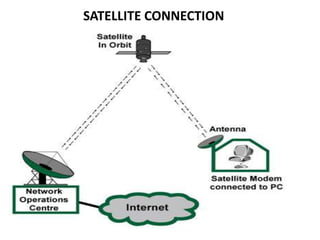
SATELLITE CONNECTION
• Internet access provided through satellites

• Data is being sent from the satellite to a user's equipment and then

   translated and decoded.

• Delivered through satellite dish

• Equipment required-mini dish satellite receiver and satellite modem

• It is one of the high-speed option available today

• Upload speed-128 kbps

• Download speed-400 kbps

• Satellite internet providers has a FAP(Fair Access Policy)
ADVANTAGES

• High speed internet access

• Does not tie up with local phone service or
  cable TV subscription

• Connection speed is not affected by phone or
  cable wiring
DISADVANTAGES
• More expensive than DSL and cable
• Large setup fee. Expensive equipment upfront. Has to be set
  up by trained technician.
• Short delay of signal transmission may affect real time
  applications
• Fair access policy limits the ability to download large files in
  reasonable amount of time
• Connection speed is slower than DSL and cable
• Weather problem. In severe snowstorms and heavy rain, users
  may experience signal fade
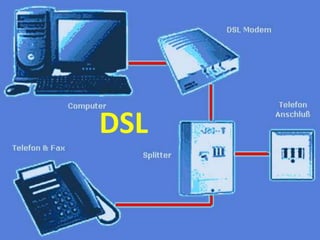
DSL
DSL
• Digital Subscriber Line

• High-speed data service that works over POTS copper
  telephone lines

• Uses a different part of the frequency spectrum than analog
  voice signals

• DSL Internet speeds started out at 960 Kbps download & 120
  Kbps upload.

• Price not much more than the price of dial up, but twice the
  speed .
Two types of DSL

ADSL:-
• Type of DSL that provides different bandwidths in the
  upstream and downstream directions

• It can support downstream bandwidths of up to 8
  mbps and upstream bandwidths of 1.5 mbps

• Eg:- RADSL, VDSL.
SDSL:-
• Equal bandwidth for upstream and downstream
  activities
• More popularly used in business
• It can offer 1.5 Mbps both for download and upload
• Egs:- HDSL and SHDSL
ADVANTAGES
• DSL simultaneously keeps your Internet
  connection and phone lines open
• Downloads are faster than uploads
• DSL uses the existing wiring infrastructure of
  your telephone lines
• DSL is secure
• It is always on
DISADVANTAGES
• DSL efficiency is related to distance
• Large amount of uploading is not possible
• DSL is limited to a certain perimeter
• No standardization
• Compared to dial up ,it is expensive
CABLE MODEM
CABLE MODEM
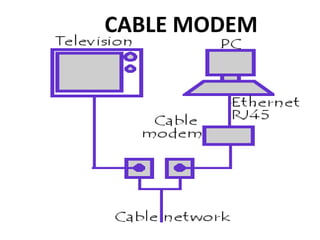
• Cable modems provide Internet access using the same cables
  that transmit cable television

• Cable modems are primarily used to deliver broadband
  internet access in the form of cable internet

• Cable modem connections are faster than dial-up and DSL
  connections.

• Connection speed fluctuate depending on the number of
  people using the service at the same time.
ADVANTAGES
• High connection speed
• Convenient
• Does not affect your phone line
• Connection speed is not affected by the distance from
  ISP operation center
• Easy setup with self installation kit
DISADVANTAGES
• Higher price than dialup and DSL connection
• Higher security risk than dialup or DSL
• Not available to all cable TV networks
• Bandwidth is shared over the same cable line
• Connection speed is affected by the number of people
  using the internet at the same time in your
  neighborhood
WI-FI
• Wireless Fidelity

• Vic Hayes has been named as father of Wi-Fi

• Big internet buzz word & growing very rapidly

• Wi-Fi usually requires the ISP to invest quite a bit in

  transceivers

• Practical range is about 90 meters (300 feet) from the

  transceiver using normal powered transmitters

• At least 7 or more end users can be sharing the same master

  transceiver & still each be able to get up to 1544 Kbps.
ADVANTAGES

• Flexible working
• Reduced set up cost
• Avoid deterioration with time
• Eliminate re-configuring computers
• Password and security
DISADVANTAGES

• Signal strength sensitivity
• Climatic conditions
WLAN
• Wireless Local Area Network
• Provide wireless network communication over short
  distances
• Uses radio or infrared signals instead of traditional network
  cabling
• Built by attaching a device called the access point
• IEEE 802.11 is the foremost standard for wireless LANs
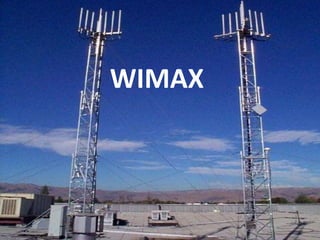
WIMAX
WiMax
• Worldwide Interoperability of Microwave Access
• Broadband wireless access technique
• Offers fast broadband connections over long distance
• Range of up to 30 miles
• Improves non-line-of-sight performance
• Great advantage to rural communities where cable & DSL
  wasn't available & to developing nations
ADVANTAGES
• Wimax coverage
• Wimax high speed
• Multi-functionality within Wimax Technology


DISADVANTAGES
• Lack of quality

• Wimax range

• Wimax bandwidth

• High cost
Methods of connecting internet

Methods of connecting internet

  • 1.
    PRESENTED BY, DEEPAK DEVRAJ GEORGEM PAUL SHAMEER PARAKKAL STEPHIN DOMEY SNEHA M LIBU TITTU ANNA STEPHEN
  • 2.
    INTRODUCTION INTERNET CONNECTIVITYIS A NECESSITY Typical issues that need to be clarified: • Method • Quantity • Security measures
  • 3.
    CONTENTS • DIAL-UP CONNECTION •ISDN • SATELLITE CONNECTION • DSL • CABLE MODEM • WI-FI • WLAN • WIMAX
  • 4.
    DIAL – UPCONNECTION • Dial-up access is really just like a phone connection • Connection through modem and a public telephone network. • It uses analog telephone lines • Encoding & Decoding of analog signals is done by modem • Using a dial-up line to transmit data is similar to using the telephone to make a call • Speed is only 56 kbps
  • 5.
    PROCESS OF DIAL-UP 1.The client computer modem dials the preprogrammed phone number 2. Verification of user’s account by ISP 3. Connection is established and data can be transmitted. 4. When either modem hangs up, the communication ends.
  • 6.
    ADVANTAGES • Low cost •Safety • Availability DISADVANTAGES • Low Speed • Requires phone line • Route busy
  • 8.
    ISDN • Integrated ServicesDigital Network • Standard for digital telecommunications that allows fast digital dialup connections • It put together speech and information on the same line • An ISDN line can provide two data channels each operating at 64kbps • ISDN service is available where the distance from the client to the exchange is under 55 km
  • 9.
    ADVANTAGES • Multiple digitalchannels • Speedy establishment of connection • It can be used for other activities like – videoconferencing – remote network maintenance DISADVANTAGE • It is very costly than the other typical telephone system
  • 10.
  • 11.
    SATELLITE CONNECTION • Internetaccess provided through satellites • Data is being sent from the satellite to a user's equipment and then translated and decoded. • Delivered through satellite dish • Equipment required-mini dish satellite receiver and satellite modem • It is one of the high-speed option available today • Upload speed-128 kbps • Download speed-400 kbps • Satellite internet providers has a FAP(Fair Access Policy)
  • 12.
    ADVANTAGES • High speedinternet access • Does not tie up with local phone service or cable TV subscription • Connection speed is not affected by phone or cable wiring
  • 13.
    DISADVANTAGES • More expensivethan DSL and cable • Large setup fee. Expensive equipment upfront. Has to be set up by trained technician. • Short delay of signal transmission may affect real time applications • Fair access policy limits the ability to download large files in reasonable amount of time • Connection speed is slower than DSL and cable • Weather problem. In severe snowstorms and heavy rain, users may experience signal fade
  • 14.
  • 15.
    DSL • Digital SubscriberLine • High-speed data service that works over POTS copper telephone lines • Uses a different part of the frequency spectrum than analog voice signals • DSL Internet speeds started out at 960 Kbps download & 120 Kbps upload. • Price not much more than the price of dial up, but twice the speed .
  • 16.
    Two types ofDSL ADSL:- • Type of DSL that provides different bandwidths in the upstream and downstream directions • It can support downstream bandwidths of up to 8 mbps and upstream bandwidths of 1.5 mbps • Eg:- RADSL, VDSL.
  • 17.
    SDSL:- • Equal bandwidthfor upstream and downstream activities • More popularly used in business • It can offer 1.5 Mbps both for download and upload • Egs:- HDSL and SHDSL
  • 18.
    ADVANTAGES • DSL simultaneouslykeeps your Internet connection and phone lines open • Downloads are faster than uploads • DSL uses the existing wiring infrastructure of your telephone lines • DSL is secure • It is always on
  • 19.
    DISADVANTAGES • DSL efficiencyis related to distance • Large amount of uploading is not possible • DSL is limited to a certain perimeter • No standardization • Compared to dial up ,it is expensive
  • 20.
  • 21.
    CABLE MODEM • Cablemodems provide Internet access using the same cables that transmit cable television • Cable modems are primarily used to deliver broadband internet access in the form of cable internet • Cable modem connections are faster than dial-up and DSL connections. • Connection speed fluctuate depending on the number of people using the service at the same time.
  • 22.
    ADVANTAGES • High connectionspeed • Convenient • Does not affect your phone line • Connection speed is not affected by the distance from ISP operation center • Easy setup with self installation kit
  • 23.
    DISADVANTAGES • Higher pricethan dialup and DSL connection • Higher security risk than dialup or DSL • Not available to all cable TV networks • Bandwidth is shared over the same cable line • Connection speed is affected by the number of people using the internet at the same time in your neighborhood
  • 25.
    WI-FI • Wireless Fidelity •Vic Hayes has been named as father of Wi-Fi • Big internet buzz word & growing very rapidly • Wi-Fi usually requires the ISP to invest quite a bit in transceivers • Practical range is about 90 meters (300 feet) from the transceiver using normal powered transmitters • At least 7 or more end users can be sharing the same master transceiver & still each be able to get up to 1544 Kbps.
  • 26.
    ADVANTAGES • Flexible working •Reduced set up cost • Avoid deterioration with time • Eliminate re-configuring computers • Password and security DISADVANTAGES • Signal strength sensitivity • Climatic conditions
  • 27.
    WLAN • Wireless LocalArea Network • Provide wireless network communication over short distances • Uses radio or infrared signals instead of traditional network cabling • Built by attaching a device called the access point • IEEE 802.11 is the foremost standard for wireless LANs
  • 28.
  • 29.
    WiMax • Worldwide Interoperabilityof Microwave Access • Broadband wireless access technique • Offers fast broadband connections over long distance • Range of up to 30 miles • Improves non-line-of-sight performance • Great advantage to rural communities where cable & DSL wasn't available & to developing nations
  • 30.
    ADVANTAGES • Wimax coverage •Wimax high speed • Multi-functionality within Wimax Technology DISADVANTAGES • Lack of quality • Wimax range • Wimax bandwidth • High cost