By Gabrielle McGough
   Goals: Helping people learn more about
    either themselves or other people who have
    Type 1 Diabetes.
   Objectives: Discussing what Type 1 Diabetes
    is and what we should do to help people who
    have it.
   Audience: All ages and both genders should
    learn about this disease.
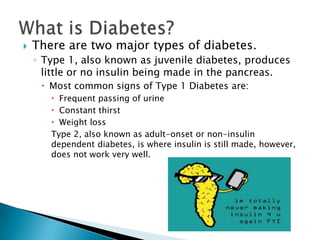
   There are two major types of diabetes.
    ◦ Type 1, also known as juvenile diabetes, produces
      little or no insulin being made in the pancreas.
      Most common signs of Type 1 Diabetes are:
        Frequent passing of urine
        Constant thirst
        Weight loss
       Type 2, also known as adult-onset or non-insulin
       dependent diabetes, is where insulin is still made, however,
       does not work very well.
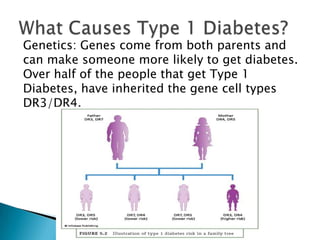
Genetics: Genes come from both parents and
can make someone more likely to get diabetes.
Over half of the people that get Type 1
Diabetes, have inherited the gene cell types
DR3/DR4.
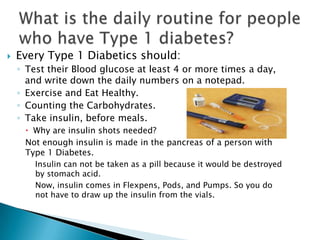
   Every Type 1 Diabetics should:
    ◦ Test their Blood glucose at least 4 or more times a day,
      and write down the daily numbers on a notepad.
    ◦ Exercise and Eat Healthy.
    ◦ Counting the Carbohydrates.
    ◦ Take insulin, before meals.
      Why are insulin shots needed?
     Not enough insulin is made in the pancreas of a person with
     Type 1 Diabetes.
        Insulin can not be taken as a pill because it would be destroyed
        by stomach acid.
        Now, insulin comes in Flexpens, Pods, and Pumps. So you do
        not have to draw up the insulin from the vials.
When it comes to people with Type 1 Diabetes,
 here are some signs that we should look out
 for:
 Skin Paleness                        Sweating
 Emotional Changes           Frequent Urinating
 Shaking/Tingling on hands and feet Thirst
 Impaired or Blurred Vision
 Drowsiness
 Hunger
Mostly, these listed signs are from how much
 insulin Type 1 Diabetics use.
   If a person you know who has Type 1 Diabetes,
    here are some ways to help:
    ◦ If they have a very low number, pass out or even drop
      down, give them the glucagon, call 9-1-1. NOTE: Type 1
      Diabetics may have seizures if numbers are at a
      dangerous low range.
    ◦ If they have just a low number, give them something that
      will boost up their blood glucose number at normal
      range. Retest about fifteen minutes or until they feel at
      normal range.
    ◦ If number is at high range, have drink some water, or
      draw up some insulin to bring numbers down at normal
      range.
    ◦ If number is very high, have them test for ketones in the
      bathroom. Have them drink plenty of water, draw up
      some insulin if necessary.
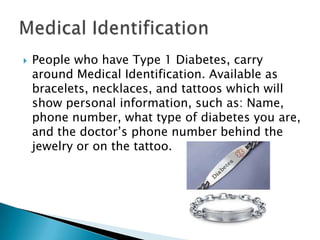
   People who have Type 1 Diabetes, carry
    around Medical Identification. Available as
    bracelets, necklaces, and tattoos which will
    show personal information, such as: Name,
    phone number, what type of diabetes you are,
    and the doctor’s phone number behind the
    jewelry or on the tattoo.
   Having Type 1 Diabetes is nothing to grieve
    about, however, when it comes to crazy blood
    glucose numbers is no laughing matter!
   http://www.youtube.com/watch?v=kojNsT1e
                       _aU

Type 1 diabetes

  • 1.
  • 2.
    Goals: Helping people learn more about either themselves or other people who have Type 1 Diabetes.  Objectives: Discussing what Type 1 Diabetes is and what we should do to help people who have it.  Audience: All ages and both genders should learn about this disease.
  • 3.
    There are two major types of diabetes. ◦ Type 1, also known as juvenile diabetes, produces little or no insulin being made in the pancreas.  Most common signs of Type 1 Diabetes are:  Frequent passing of urine  Constant thirst  Weight loss Type 2, also known as adult-onset or non-insulin dependent diabetes, is where insulin is still made, however, does not work very well.
  • 4.
    Genetics: Genes comefrom both parents and can make someone more likely to get diabetes. Over half of the people that get Type 1 Diabetes, have inherited the gene cell types DR3/DR4.
  • 5.
    Every Type 1 Diabetics should: ◦ Test their Blood glucose at least 4 or more times a day, and write down the daily numbers on a notepad. ◦ Exercise and Eat Healthy. ◦ Counting the Carbohydrates. ◦ Take insulin, before meals.  Why are insulin shots needed? Not enough insulin is made in the pancreas of a person with Type 1 Diabetes. Insulin can not be taken as a pill because it would be destroyed by stomach acid. Now, insulin comes in Flexpens, Pods, and Pumps. So you do not have to draw up the insulin from the vials.
  • 6.
    When it comesto people with Type 1 Diabetes, here are some signs that we should look out for: Skin Paleness Sweating Emotional Changes Frequent Urinating Shaking/Tingling on hands and feet Thirst Impaired or Blurred Vision Drowsiness Hunger Mostly, these listed signs are from how much insulin Type 1 Diabetics use.
  • 7.
    If a person you know who has Type 1 Diabetes, here are some ways to help: ◦ If they have a very low number, pass out or even drop down, give them the glucagon, call 9-1-1. NOTE: Type 1 Diabetics may have seizures if numbers are at a dangerous low range. ◦ If they have just a low number, give them something that will boost up their blood glucose number at normal range. Retest about fifteen minutes or until they feel at normal range. ◦ If number is at high range, have drink some water, or draw up some insulin to bring numbers down at normal range. ◦ If number is very high, have them test for ketones in the bathroom. Have them drink plenty of water, draw up some insulin if necessary.
  • 8.
    People who have Type 1 Diabetes, carry around Medical Identification. Available as bracelets, necklaces, and tattoos which will show personal information, such as: Name, phone number, what type of diabetes you are, and the doctor’s phone number behind the jewelry or on the tattoo.
  • 9.
    Having Type 1 Diabetes is nothing to grieve about, however, when it comes to crazy blood glucose numbers is no laughing matter!
  • 10.
    http://www.youtube.com/watch?v=kojNsT1e _aU