BULIMIA NERVOSA
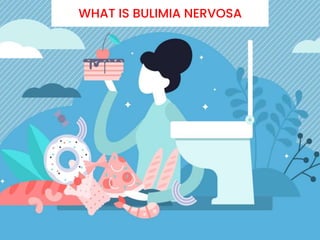
WHAT IS BULIMIA NERVOSA
● A serious eating disorder marked by bingeing,
followed by methods to avoid weight gain.
● Bulimia Nervosa is a severe mental disorder.
● Bulimia nervosa was first described in 1979 by British
psychiatrist Gerald Russell as a "chronic phase of
anorexia nervosa" in which patients overeat and then
use compensatory mechanisms, such as self-
induced vomiting, laxatives, or prolonged periods of
starvation.
● It affects people of all ages. Patients of bulimia are
always in conflict between, the desire to eat more and
to stay in shape. They cannot suppress their desire to
eat more and feel guilty afterwards.
CAUSES
CAUSES OF BULIMIA NERVOSA
● The definite cause of bulimia is not known, though
there may be numerous factors that may contribute
in the development of this mental disorder.
● Psychological, environmental, genetic and cultural
factors may contribute in the development of
bulimia nervosa.
● Ways for people with bulimia to feel more in control
of their lives and ease.
● Stress and Anxiety. There is no single known cause of
bulimia.
● The disorder is most common in adolescent girls
and young women.
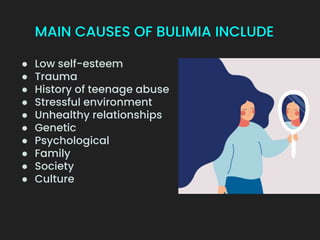
MAIN CAUSES OF BULIMIA INCLUDE
● Low self-esteem
● Trauma
● History of teenage abuse
● Stressful environment
● Unhealthy relationships
● Genetic
● Psychological
● Family
● Society
● Culture
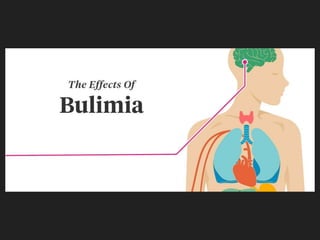
EFFECTS OF BULIMIA NERVOSA
● The patients of bulimia nervosa put their body at
extreme risk of getting several diseases. The most
harmful effect of this eating disorder is dehydration.
● Forced vomiting causes the imbalance of electrolytes
in the body by lowering the level of potassium in the
body.
● Low level of potassium may even lead to other
diseases like, irregular heartbeat, kidney failure.
Chronic low levels of potassium may even cause
sudden death.
SYMPTOMS OF BULIMIA NERVOSA
The signs and symptoms of Bulimia
Nervosa can be divided into three
categories:-
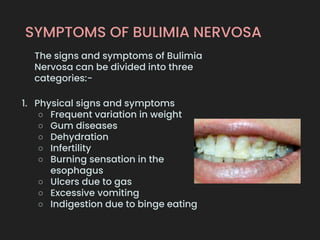
1. Physical signs and symptoms
○ Frequent variation in weight
○ Gum diseases
○ Dehydration
○ Infertility
○ Burning sensation in the
esophagus
○ Ulcers due to gas
○ Excessive vomiting
○ Indigestion due to binge eating
SYMPTOMS OF BULIMIA NERVOSA
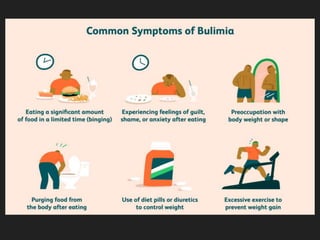
2. Binge eating signs and symptoms
● Eating in secrecy
● Disappearance of food
● No control over eating
● Episodes of excessive or no eating at all
3. Purging signs and symptoms
● Stench of vomit
● Doing heavy exercise
● Taking laxatives, diuretics or enemas after
binge eating
● Eluding to the bathroom
TREATMENTS FOR BULIMIA NERVOSA
● The first step towards the treatment of this eating
disorder is to admit you have a mental problem and
there is a need for medical consultation, reducing the
symptoms of bulimia nervosa.
● Mental health doctor may use a combination of
medication and therapy to tackle this eating disorder.
Therapy may be provided to fight negative thoughts,
resolving mental issues, and breaking the binge-purge
cycle.
THE END

Bulimia

  • 1.
  • 2.
  • 3.
    ● A seriouseating disorder marked by bingeing, followed by methods to avoid weight gain. ● Bulimia Nervosa is a severe mental disorder. ● Bulimia nervosa was first described in 1979 by British psychiatrist Gerald Russell as a "chronic phase of anorexia nervosa" in which patients overeat and then use compensatory mechanisms, such as self- induced vomiting, laxatives, or prolonged periods of starvation. ● It affects people of all ages. Patients of bulimia are always in conflict between, the desire to eat more and to stay in shape. They cannot suppress their desire to eat more and feel guilty afterwards.
  • 4.
  • 5.
    CAUSES OF BULIMIANERVOSA ● The definite cause of bulimia is not known, though there may be numerous factors that may contribute in the development of this mental disorder. ● Psychological, environmental, genetic and cultural factors may contribute in the development of bulimia nervosa. ● Ways for people with bulimia to feel more in control of their lives and ease. ● Stress and Anxiety. There is no single known cause of bulimia. ● The disorder is most common in adolescent girls and young women.
  • 6.
    MAIN CAUSES OFBULIMIA INCLUDE ● Low self-esteem ● Trauma ● History of teenage abuse ● Stressful environment ● Unhealthy relationships ● Genetic ● Psychological ● Family ● Society ● Culture
  • 8.
    EFFECTS OF BULIMIANERVOSA ● The patients of bulimia nervosa put their body at extreme risk of getting several diseases. The most harmful effect of this eating disorder is dehydration. ● Forced vomiting causes the imbalance of electrolytes in the body by lowering the level of potassium in the body. ● Low level of potassium may even lead to other diseases like, irregular heartbeat, kidney failure. Chronic low levels of potassium may even cause sudden death.
  • 10.
    SYMPTOMS OF BULIMIANERVOSA The signs and symptoms of Bulimia Nervosa can be divided into three categories:- 1. Physical signs and symptoms ○ Frequent variation in weight ○ Gum diseases ○ Dehydration ○ Infertility ○ Burning sensation in the esophagus ○ Ulcers due to gas ○ Excessive vomiting ○ Indigestion due to binge eating
  • 11.
    SYMPTOMS OF BULIMIANERVOSA 2. Binge eating signs and symptoms ● Eating in secrecy ● Disappearance of food ● No control over eating ● Episodes of excessive or no eating at all 3. Purging signs and symptoms ● Stench of vomit ● Doing heavy exercise ● Taking laxatives, diuretics or enemas after binge eating ● Eluding to the bathroom
  • 13.
    TREATMENTS FOR BULIMIANERVOSA ● The first step towards the treatment of this eating disorder is to admit you have a mental problem and there is a need for medical consultation, reducing the symptoms of bulimia nervosa. ● Mental health doctor may use a combination of medication and therapy to tackle this eating disorder. Therapy may be provided to fight negative thoughts, resolving mental issues, and breaking the binge-purge cycle.
  • 14.