Presented By: Latoya Andrews
   What is diabetes?
   What are the different each type of diabetes?
   How are diabetes diagnosis and what are the
    symptoms.?
   Who are affected by diabetes.?
   What is lifestyle of a diabetic?
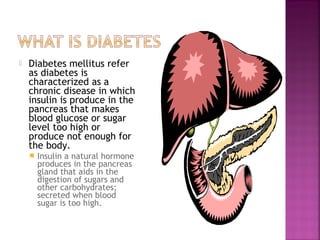
   Diabetes mellitus refer
    as diabetes is
    characterized as a
    chronic disease in which
    insulin is produce in the
    pancreas that makes
    blood glucose or sugar
    level too high or
    produce not enough for
    the body.
       Insulin a natural hormone
        produces in the pancreas
        gland that aids in the
        digestion of sugars and
        other carbohydrates;
        secreted when blood
        sugar is too high.
   Prediabetes
        blood glucose level are higher than normal but not yet
         diagnose as Type 2.
   Type 1
         usually develop in children; the body does not
         produce insulin
   Type 2
        The most common diabetes; the body does not
         produce enough insulin or ignore insulin
   Gestational
        diagnosed during pregnancy
   Excess thirst
   Blurry vision
   Frequent urination
   Extreme Fatigue
   Weight loss
     In some cases Type 2 may exhibit no symptoms because the process of
      becoming a diabetic slow.
     After many years of diabetes can cause serious health problems may
      occur:
           Kidney damage
           Poor blood circulation leads to amputation
           Sexual function
           Heart disease
           Stroke
           High blood pressure
           Nervous system disease
           Blindness
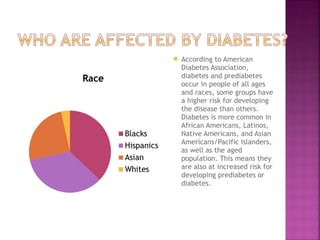
   According to American
    Diabetes Association,
    diabetes and prediabetes
    occur in people of all ages
    and races, some groups have
    a higher risk for developing
    the disease than others.
    Diabetes is more common in
    African Americans, Latinos,
    Native Americans, and Asian
    Americans/Pacific Islanders,
    as well as the aged
    population. This means they
    are also at increased risk for
    developing prediabetes or
    diabetes.
Hate this!!!!!!


   There three different
    types of test to
    determine diabetes.
        The A1C test
        The fasting plasma glucose
         test (FPG)
         The oral glucose
         tolerance test (OGTT)
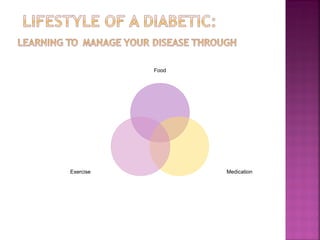
Food


Exercise          Medication
   When it comes to diabetes managing the disease and
    staying at the target blood sugar level can help you live a
    long and healthy life.
       Individual who has diabetes should have a plan that consist of
        Food, Exercise and Medication
           Food
            ď‚— Keep to schedule
            ď‚— Make every meal well balanced
            ď‚— Eat the right amount of foods
            ď‚— Coordinate your meals and medication
Lifestyle of a Diabetic
   Exercise
     Talk to your doctor about an exercise plan
     Keep an exercise schedule know you number
     Check your blood sugar level
     Stay hydrated
     Be prepared
Lifestyle of a Diabetic
   Medication
     Storeinsulin properly
     Report problems to your doctor
     Be cautious with new medications
Remember your in Control
A Healthy Life is A Better Life

Getting to know diabetes

  • 1.
  • 2.
     What is diabetes?  What are the different each type of diabetes?  How are diabetes diagnosis and what are the symptoms.?  Who are affected by diabetes.?  What is lifestyle of a diabetic?
  • 3.
     Diabetes mellitus refer as diabetes is characterized as a chronic disease in which insulin is produce in the pancreas that makes blood glucose or sugar level too high or produce not enough for the body.  Insulin a natural hormone produces in the pancreas gland that aids in the digestion of sugars and other carbohydrates; secreted when blood sugar is too high.
  • 4.
     Prediabetes  blood glucose level are higher than normal but not yet diagnose as Type 2.  Type 1  usually develop in children; the body does not produce insulin  Type 2  The most common diabetes; the body does not produce enough insulin or ignore insulin  Gestational  diagnosed during pregnancy
  • 5.
     Excess thirst  Blurry vision  Frequent urination  Extreme Fatigue  Weight loss  In some cases Type 2 may exhibit no symptoms because the process of becoming a diabetic slow.  After many years of diabetes can cause serious health problems may occur:  Kidney damage  Poor blood circulation leads to amputation  Sexual function  Heart disease  Stroke  High blood pressure  Nervous system disease  Blindness
  • 6.
     According to American Diabetes Association, diabetes and prediabetes occur in people of all ages and races, some groups have a higher risk for developing the disease than others. Diabetes is more common in African Americans, Latinos, Native Americans, and Asian Americans/Pacific Islanders, as well as the aged population. This means they are also at increased risk for developing prediabetes or diabetes.
  • 7.
    Hate this!!!!!!  There three different types of test to determine diabetes.  The A1C test  The fasting plasma glucose test (FPG)   The oral glucose tolerance test (OGTT)
  • 8.
    Food Exercise Medication
  • 9.
     When it comes to diabetes managing the disease and staying at the target blood sugar level can help you live a long and healthy life.  Individual who has diabetes should have a plan that consist of Food, Exercise and Medication  Food  Keep to schedule  Make every meal well balanced  Eat the right amount of foods  Coordinate your meals and medication
  • 10.
    Lifestyle of aDiabetic  Exercise  Talk to your doctor about an exercise plan  Keep an exercise schedule know you number  Check your blood sugar level  Stay hydrated  Be prepared
  • 11.
    Lifestyle of aDiabetic  Medication  Storeinsulin properly  Report problems to your doctor  Be cautious with new medications
  • 12.
    Remember your inControl A Healthy Life is A Better Life