


IBUS2301:
International Business Management
Tutorial #2, March 17 and 18
Chapter 6: International Trade Theory
Tutor: Preston Teeter, p.teeter@business.uq.edu.au
IBUS2301:
Int’l Business Mgmt
Outline
• Case analysis: Logitech
• Mercantilism vs. Free Trade
• Comparative Advantage & Heckscher-Ohlin
• Product Life-Cycle & New Trade Theory
IBUS2301:
Int’l Business Mgmt
CASE ANALYSIS: LOGITECH
IBUS2301:
Int’l Business Mgmt
Logitech
First, read the three questions related to the case.
Questions for your presentation:
1. How would you begin your presentation?
2. What secondary research would you conduct? From what
sources?
3. How would you engage your audience?
Note: following are some example slides to help you generate ideas. They are
NOT an example of a complete presentation.
IBUS2301:
Int’l Business Mgmt
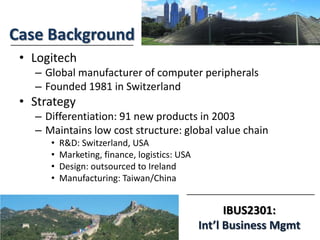
Case Background
• Logitech
– Global manufacturer of computer peripherals
– Founded 1981 in Switzerland
• Strategy
– Differentiation: 91 new products in 2003
– Maintains low cost structure: global value chain
• R&D: Switzerland, USA
• Marketing, finance, logistics: USA
• Design: outsourced to Ireland
• Manufacturing: Taiwan/China
Source: www.logitech.com
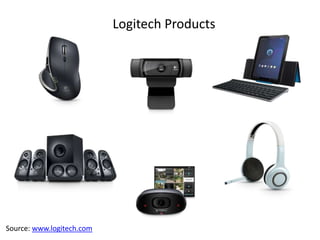
Logitech Products
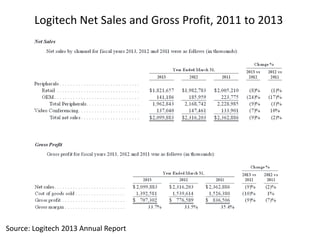
Source: Logitech 2013 Annual Report
Logitech Net Sales and Gross Profit, 2011 to 2013
IBUS2301:
Int’l Business Mgmt
Logitech
Q.1 – Use one or more international trade theories to
explain Logitech’s global operations. Why does the
company manufacture in China and Taiwan, undertake
basic R&D in California and Switzerland, design
products in Ireland, and coordinate marketing and
operations from California?
IBUS2301:
Int’l Business Mgmt
Global
Operations
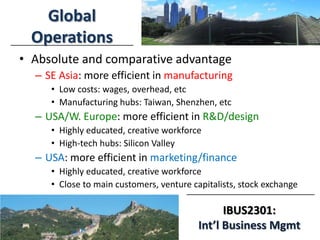
• Absolute and comparative advantage
– SE Asia: more efficient in manufacturing
• Low costs: wages, overhead, etc
• Manufacturing hubs: Taiwan, Shenzhen, etc
– USA/W. Europe: more efficient in R&D/design
• Highly educated, creative workforce
• High-tech hubs: Silicon Valley
– USA: more efficient in marketing/finance
• Highly educated, creative workforce
• Close to main customers, venture capitalists, stock exchange
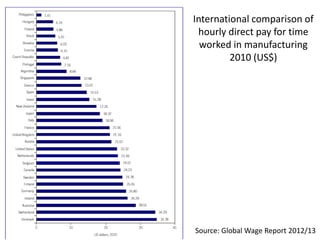
Source: Global Wage Report 2012/13
International comparison of
hourly direct pay for time
worked in manufacturing
2010 (US$)
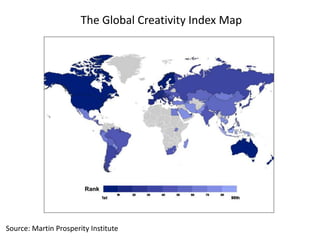
Source: Martin Prosperity Institute
The Global Creativity Index Map
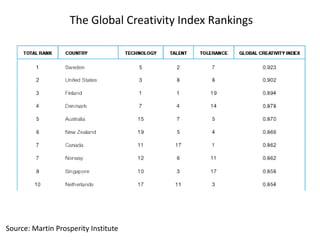
Source: Martin Prosperity Institute
The Global Creativity Index Rankings
IBUS2301:
Int’l Business Mgmt
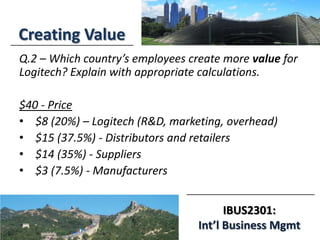
Creating Value
Q.2 – Which country’s employees create more value for
Logitech? Explain with appropriate calculations.
$40 - Price
• $8 (20%) – Logitech (R&D, marketing, overhead)
• $15 (37.5%) - Distributors and retailers
• $14 (35%) - Suppliers
• $3 (7.5%) - Manufacturers
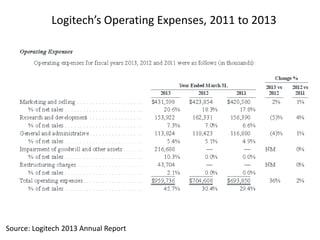
Source: Logitech 2013 Annual Report
Logitech’s Operating Expenses, 2011 to 2013
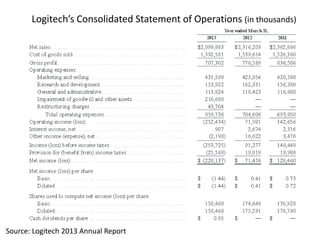
Source: Logitech 2013 Annual Report
Logitech’s Consolidated Statement of Operations (in thousands)
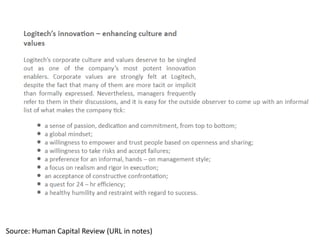
Source: Human Capital Review (URL in notes)
IBUS2301:
Int’l Business Mgmt
Employment
Effects
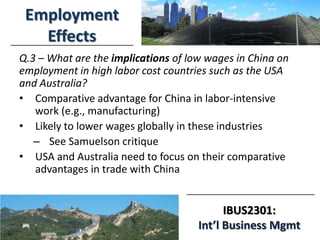
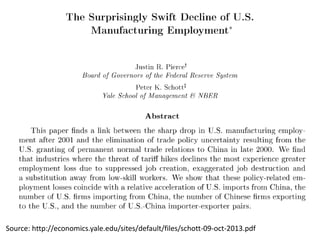
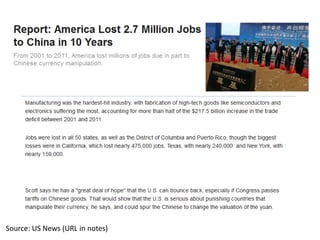
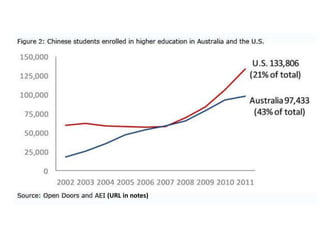
Q.3 – What are the implications of low wages in China on
employment in high labor cost countries such as the USA
and Australia?
• Comparative advantage for China in labor-intensive
work (e.g., manufacturing)
• Likely to lower wages globally in these industries
– See Samuelson critique
• USA and Australia need to focus on their comparative
advantages in trade with China
Source: http://economics.yale.edu/sites/default/files/schott-09-oct-2013.pdf
Source: US News (URL in notes)
(URL in notes)
IBUS2301:
Int’l Business Mgmt
MERCANTILISM VS. FREE TRADE
IBUS2301:
Int’l Business Mgmt
Mercantilism
vs. Free Trade
Mercantilism
• 1500s
• Best interest to
maintain trade surplus
• Advocates gov’t
intervention
Free Trade
• 1700s
• Specialize under
absolute advantage
• Laissez-faire
What is the argument here? When and how did these
ideas develop?
IBUS2301:
Int’l Business Mgmt
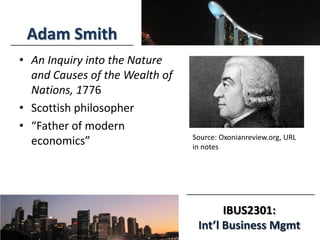
Adam Smith
• An Inquiry into the Nature
and Causes of the Wealth of
Nations, 1776
• Scottish philosopher
• “Father of modern
economics” Source: Oxonianreview.org, URL
in notes
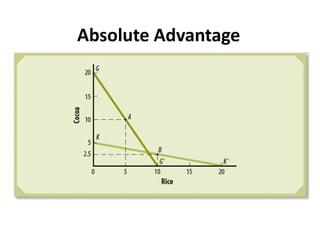
Absolute Advantage
Mercantilism or
Free Trade?
Source: Sydney Morning Herald (URL in notes)
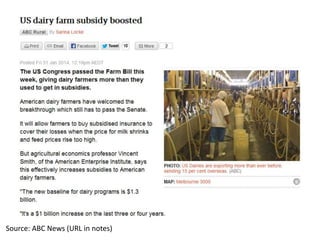
Source: ABC News (URL in notes)
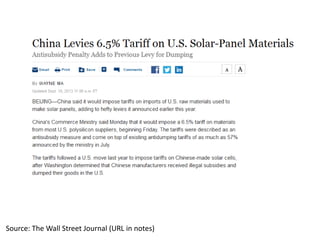
Source: The Wall Street Journal (URL in notes)
IBUS2301:
Int’l Business Mgmt
COMPARATIVE ADVANTAGE &
HECKSCHER-OHLIN THEORY
IBUS2301:
Int’l Business Mgmt
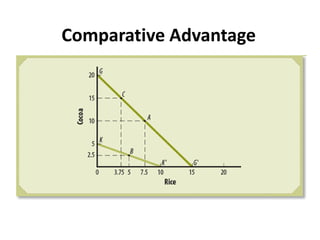
Comparative
Advantage
How does the theory of comparative advantage
differ from absolute advantage? Where did
this theory originate?
• Countries should specialize in the goods and
services it produces most efficiently, even if
this means buying goods from countries that it
could produce more efficiently itself
IBUS2301:
Int’l Business Mgmt
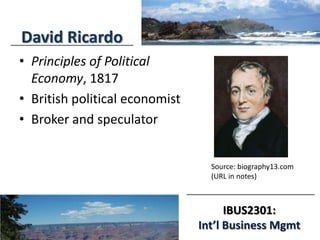
David Ricardo
• Principles of Political
Economy, 1817
• British political economist
• Broker and speculator
Source: biography13.com
(URL in notes)
Comparative Advantage
Source: IMHE (URL in notes)
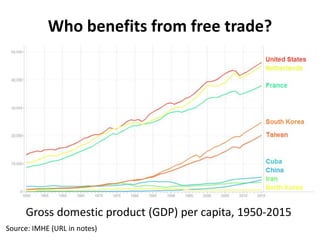
Who benefits from free trade?
Gross domestic product (GDP) per capita, 1950-2015
IBUS2301:
Int’l Business Mgmt
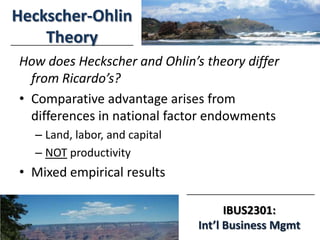
Heckscher-Ohlin
Theory
How does Heckscher and Ohlin’s theory differ
from Ricardo’s?
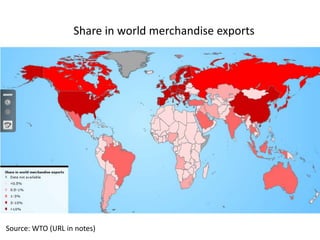
• Comparative advantage arises from
differences in national factor endowments
– Land, labor, and capital
– NOT productivity
• Mixed empirical results
Source: WTO (URL in notes)
Share in world merchandise exports
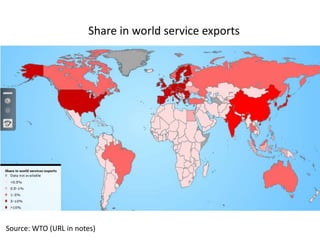
Source: WTO (URL in notes)
Share in world service exports
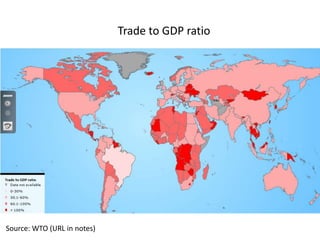
Source: WTO (URL in notes)
Trade to GDP ratio
IBUS2301:
Int’l Business Mgmt
PRODUCT LIFE-CYCLE AND
NEW TRADE THEORY
3/18/2014
IBUS2301:
Int’l Business Mgmt
Product Life-
Cycle Theory
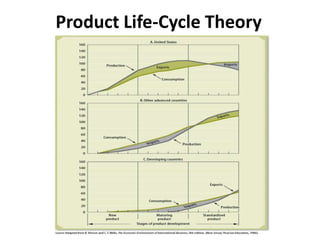
When did this theory develop? What does it
propose?
• Raymond Vernon in the 1960s, USA
• Explains shift from a product being export-
driven to being import-driven
• Becoming less relevant in recent years
Product Life-Cycle Theory
3/18/2014
IBUS2301:
Int’l Business Mgmt
New Trade
Theory
What does the New Trade Theory propose?
• Economies of scale have important
implications for international trade
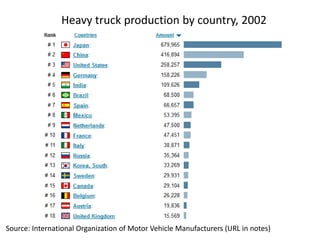
• Some industries may be only able to support a
small number of companies
• First-mover advantage provides rationale for
government intervention
Source: International Organization of Motor Vehicle Manufacturers (URL in notes)
Heavy truck production by country, 2002
Questions?

IBUS2301 - Tutorial #2 - Chapter 6 - International Trade Theory

Editor's Notes

  • #24 http://www.oxonianreview.org/wp/adam-smith-a-moral-philosopher/
  • #32 http://biography13.com/david-ricardo-biography-profile-childhood-personal-life.html