Understanding Essential Safety
Concepts
Basic Safety Terms and Rules
Purpose
o To introduce key safety terms and rules that ensure a safe working
environment.
o Importance of safety in various environments (workplace, home,
public spaces).
Safety Rules - General Guidelines
 Rule 1: Always be aware of your surroundings.
 Rule 2: Follow all posted safety signs and instructions.
 Rule 3: Report unsafe conditions immediately.
 Rule 4: Know emergency procedures and exits.
 Rule 5: Use the right tools and equipment for the job.
Key Safety Terms
 Hazard: A potential source of harm or adverse health effect.
 Risk: The likelihood of a hazard causing harm.
 Incident: An event that could lead to an accident or injury.
 Accident: An unplanned event that results in injury or damage.
 PPE (Personal Protective Equipment): Gear designed to protect the wearer from
specific hazards (e.g., helmets, gloves, goggles).
Understanding difference between basic terminology
Hazard & Risk :
Hazard
•Definition: A hazard is anything that has the potential to cause harm.
•Example: A wet floor in a supermarket is a hazard because it can cause someone to slip and
fall.
Risk
•Definition: Risk is the likelihood (probability) that the hazard will cause harm and the
severity of the harm.
•Example: The risk of slipping on the wet floor is high if many people are walking through
that area and the floor remains wet without any warning signs. The severity of the risk
would depend on factors like how hard someone might fall and the potential injuries.
Incident & Accident
Incident and accident are terms often used interchangeably, but they have distinct meanings,
especially in workplace safety contexts.
1. Incident
An incident refers to any unplanned event or occurrence that could potentially cause harm,
damage, or disruption. It includes both accidents (which result in harm or damage) and near-
misses (where no harm or damage occurs but had the potential to).
•Key Points:
• May or may not result in injury or damage.
• Includes near-misses.
• Often used to encompass a broader range of events, both harmful and non-harmful.
•Example:
• A worker notices a loose wire that could have caused a trip but fixes it before anyone gets hurt.
This is an incident because it had the potential to cause harm but didn’t.
2. Accident
An accident is a specific type of incident that results in actual harm, injury, or damage to property.
•Key Points:
• Always results in injury, harm, or damage.
• Typically more severe in nature compared to a near-miss.
•Example:
• A worker trips over a loose wire and breaks their arm. This is an accident because it resulted in an
injury.
Summary
•Incident: Broader term, includes both harmful (accidents) and non-harmful (near-misses) events.
•Accident: A subset of incidents, specifically those that cause harm or damage.
Another Example
Hazard: A chemical spill in a laboratory.
Risk: The risk depends on factors like whether people are exposed to the
chemical, if they are wearing protective equipment, and the toxicity of
the chemical.
PPE - Personal Protective Equipment
 Importance of PPE:
o Protects against physical, chemical, and biological hazards.
 Common PPE Types:
o Helmets, safety glasses, earplugs, gloves, safety shoes, respiratory
masks.
Fire Safety Rules
 Rule 1: Know the location of fire extinguishers.
 Rule 2: Never block emergency exits.
 Rule 3: Participate in fire drills and know evacuation routes.
 Rule 4: Keep flammable materials away from heat sources.
Electrical Safety Rules
 Rule 1: Never overload power outlets.
 Rule 2: Inspect electrical cords for damage before use.
 Rule 3: Keep electrical devices away from water.
 Rule 4: Turn off electrical equipment before servicing.
Workplace Safety Tips
 Tip 1: Maintain a clean and organized workspace.
 Tip 2: Lift heavy objects properly—use your legs, not your back.
 Tip 3: Take regular breaks to avoid fatigue.
 Tip 4: Stay hydrated and eat healthily.
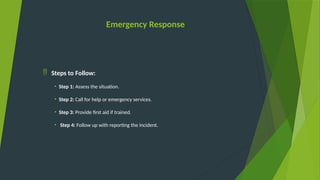
Emergency Response
 Steps to Follow:
• Step 1: Assess the situation.
• Step 2: Call for help or emergency services.
• Step 3: Provide first aid if trained.
• Step 4: Follow up with reporting the incident.
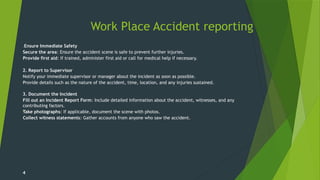
Work Place Accident reporting
1. Ensure Immediate Safety
•
Secure the area: Ensure the accident scene is safe to prevent further injuries.
•
Provide first aid: If trained, administer first aid or call for medical help if necessary.
2. Report to Supervisor
•
Notify your immediate supervisor or manager about the incident as soon as possible.
•
Provide details such as the nature of the accident, time, location, and any injuries sustained.
3. Document the Incident
•
Fill out an Incident Report Form: Include detailed information about the accident, witnesses, and any
contributing factors.
•
Take photographs: If applicable, document the scene with photos.
•
Collect witness statements: Gather accounts from anyone who saw the accident.
4
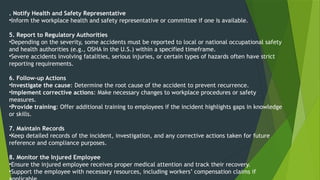
. Notify Health and Safety Representative
•Inform the workplace health and safety representative or committee if one is available.
5. Report to Regulatory Authorities
•Depending on the severity, some accidents must be reported to local or national occupational safety
and health authorities (e.g., OSHA in the U.S.) within a specified timeframe.
•Severe accidents involving fatalities, serious injuries, or certain types of hazards often have strict
reporting requirements.
6. Follow-up Actions
•Investigate the cause: Determine the root cause of the accident to prevent recurrence.
•Implement corrective actions: Make necessary changes to workplace procedures or safety
measures.
•Provide training: Offer additional training to employees if the incident highlights gaps in knowledge
or skills.
7. Maintain Records
•Keep detailed records of the incident, investigation, and any corrective actions taken for future
reference and compliance purposes.
8. Monitor the Injured Employee
•Ensure the injured employee receives proper medical attention and track their recovery.
•Support the employee with necessary resources, including workers’ compensation claims if

Safety Training for any manufacturing organization

  • 1.
  • 2.
    Purpose o To introducekey safety terms and rules that ensure a safe working environment. o Importance of safety in various environments (workplace, home, public spaces).
  • 3.
    Safety Rules -General Guidelines  Rule 1: Always be aware of your surroundings.  Rule 2: Follow all posted safety signs and instructions.  Rule 3: Report unsafe conditions immediately.  Rule 4: Know emergency procedures and exits.  Rule 5: Use the right tools and equipment for the job.
  • 4.
    Key Safety Terms Hazard: A potential source of harm or adverse health effect.  Risk: The likelihood of a hazard causing harm.  Incident: An event that could lead to an accident or injury.  Accident: An unplanned event that results in injury or damage.  PPE (Personal Protective Equipment): Gear designed to protect the wearer from specific hazards (e.g., helmets, gloves, goggles).
  • 5.
    Understanding difference betweenbasic terminology Hazard & Risk : Hazard •Definition: A hazard is anything that has the potential to cause harm. •Example: A wet floor in a supermarket is a hazard because it can cause someone to slip and fall. Risk •Definition: Risk is the likelihood (probability) that the hazard will cause harm and the severity of the harm. •Example: The risk of slipping on the wet floor is high if many people are walking through that area and the floor remains wet without any warning signs. The severity of the risk would depend on factors like how hard someone might fall and the potential injuries.
  • 6.
    Incident & Accident Incidentand accident are terms often used interchangeably, but they have distinct meanings, especially in workplace safety contexts. 1. Incident An incident refers to any unplanned event or occurrence that could potentially cause harm, damage, or disruption. It includes both accidents (which result in harm or damage) and near- misses (where no harm or damage occurs but had the potential to). •Key Points: • May or may not result in injury or damage. • Includes near-misses. • Often used to encompass a broader range of events, both harmful and non-harmful. •Example: • A worker notices a loose wire that could have caused a trip but fixes it before anyone gets hurt. This is an incident because it had the potential to cause harm but didn’t.
  • 7.
    2. Accident An accidentis a specific type of incident that results in actual harm, injury, or damage to property. •Key Points: • Always results in injury, harm, or damage. • Typically more severe in nature compared to a near-miss. •Example: • A worker trips over a loose wire and breaks their arm. This is an accident because it resulted in an injury. Summary •Incident: Broader term, includes both harmful (accidents) and non-harmful (near-misses) events. •Accident: A subset of incidents, specifically those that cause harm or damage.
  • 8.
    Another Example Hazard: Achemical spill in a laboratory. Risk: The risk depends on factors like whether people are exposed to the chemical, if they are wearing protective equipment, and the toxicity of the chemical.
  • 9.
    PPE - PersonalProtective Equipment  Importance of PPE: o Protects against physical, chemical, and biological hazards.  Common PPE Types: o Helmets, safety glasses, earplugs, gloves, safety shoes, respiratory masks.
  • 10.
    Fire Safety Rules Rule 1: Know the location of fire extinguishers.  Rule 2: Never block emergency exits.  Rule 3: Participate in fire drills and know evacuation routes.  Rule 4: Keep flammable materials away from heat sources.
  • 11.
    Electrical Safety Rules Rule 1: Never overload power outlets.  Rule 2: Inspect electrical cords for damage before use.  Rule 3: Keep electrical devices away from water.  Rule 4: Turn off electrical equipment before servicing.
  • 12.
    Workplace Safety Tips Tip 1: Maintain a clean and organized workspace.  Tip 2: Lift heavy objects properly—use your legs, not your back.  Tip 3: Take regular breaks to avoid fatigue.  Tip 4: Stay hydrated and eat healthily.
  • 13.
    Emergency Response  Stepsto Follow: • Step 1: Assess the situation. • Step 2: Call for help or emergency services. • Step 3: Provide first aid if trained. • Step 4: Follow up with reporting the incident.
  • 14.
    Work Place Accidentreporting 1. Ensure Immediate Safety • Secure the area: Ensure the accident scene is safe to prevent further injuries. • Provide first aid: If trained, administer first aid or call for medical help if necessary. 2. Report to Supervisor • Notify your immediate supervisor or manager about the incident as soon as possible. • Provide details such as the nature of the accident, time, location, and any injuries sustained. 3. Document the Incident • Fill out an Incident Report Form: Include detailed information about the accident, witnesses, and any contributing factors. • Take photographs: If applicable, document the scene with photos. • Collect witness statements: Gather accounts from anyone who saw the accident. 4
  • 15.
    . Notify Healthand Safety Representative •Inform the workplace health and safety representative or committee if one is available. 5. Report to Regulatory Authorities •Depending on the severity, some accidents must be reported to local or national occupational safety and health authorities (e.g., OSHA in the U.S.) within a specified timeframe. •Severe accidents involving fatalities, serious injuries, or certain types of hazards often have strict reporting requirements. 6. Follow-up Actions •Investigate the cause: Determine the root cause of the accident to prevent recurrence. •Implement corrective actions: Make necessary changes to workplace procedures or safety measures. •Provide training: Offer additional training to employees if the incident highlights gaps in knowledge or skills. 7. Maintain Records •Keep detailed records of the incident, investigation, and any corrective actions taken for future reference and compliance purposes. 8. Monitor the Injured Employee •Ensure the injured employee receives proper medical attention and track their recovery. •Support the employee with necessary resources, including workers’ compensation claims if