Core 01 – Health, Safety and
Welfare in Construction and
Associated Industries
Fire and Emergency Procedures.
Tutor Copy
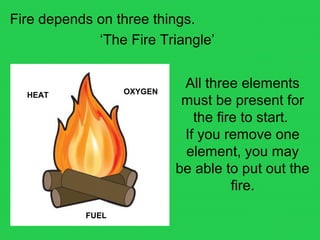
Fire depends on three things.
‘The Fire Triangle’
HEAT OXYGEN
FUEL
All three elements
must be present for
the fire to start.
If you remove one
element, you may
be able to put out the
fire.
Fuel
Can be anything that will burn, wood, paper,
plastics, furniture. Flammable liquid, paint, spirits,
gas etc.
Oxygen
It is in air in normal conditions and will allow the fire
to burn.
Heat
A minimum temperature is needed, but a naked
flame, match or spark is sufficient to start a fire
especially if it is in contact with something which will
burn.
Ways to reduce fire risks and
harm to people:
• Do not smoke at work.
• All electrical appliances must be maintained.
• Keep work areas tidy and free from debris.
• Remove any combustible material and store in a safe place.
• Only store flammable materials in metal cupboards.
• Have fire points.
• Have set procedures for fire and evacuation.
• Display signs and notices so that people know what to do.
• Test fire alarms regularly.
• Train employees in the use of fire extinguishers.
COLOUR OF LABEL
USED
CONTENTS TYPE/S OF FIRE TO BE USED ON
RED WATER WOOD, PAPER, TEXTILES,
FABRICS
BLUE DRY
POWDER
FOR USE ON FLAMABLE
GASES / ELECTRIC
CREAM FOAM FOR USE ON FLAMMABLE
LIQUIDS
BLACK CO² LIVE ELECTRICAL &
FLAMMABLE LIQUID
FIRE
BLANKET
FIRE
BLANKET
USED TO SMOTHER SMALL
ISOLATED FIRES SUCH AS
CHIP PAN, OR USE TO WRAP
AROUND A PERSON WHOSE
CLOTHING IS ON FIRE.
If you discover a fire what do you do?
• Raise the alarm.
• If is safe to do so close doors and windows to
prevent spreading.
• Evacuate the area, go to your assembly
point.
• Fight the fire, if you have been trained to do
so, but avoid endangering your life.
• Fight fire with fire extinguisher, fire blanket,
water or sand as appropriate.
Only persons who are fully trained
should carry out the fighting of fires.
Fire fighting should not continue if:
• The fire becomes too dangerous.
• There is a possibility that any escape
route might be cut off.
• The fire continues to spread and
become out of control.
• There are gas cylinders or other highly
flammable materials in the area that
cannot be remove or protected.
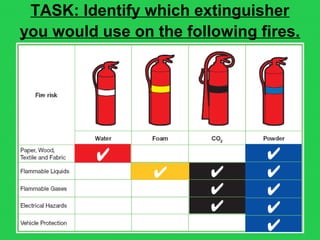
TASK: Identify which extinguisher
you would use on the following fires.
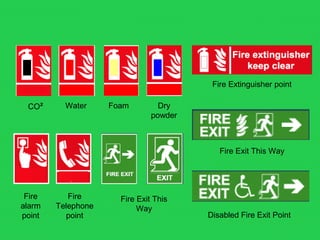
CO² Water Dry
powder
Foam
Fire
alarm
point
Fire
Telephone
point
Fire Exit This
Way
Fire Extinguisher point
Disabled Fire Exit Point
Fire Exit This Way
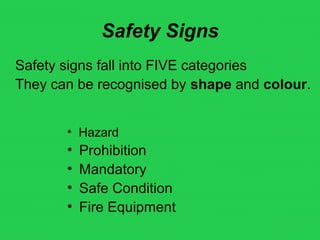
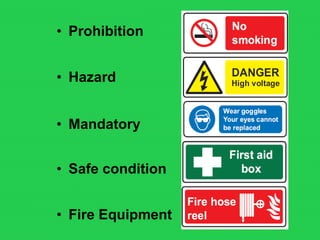
Safety signs fall into FIVE categories
They can be recognised by shape and colour.
• Hazard
• Prohibition
• Mandatory
• Safe Condition
• Fire Equipment
Safety Signs
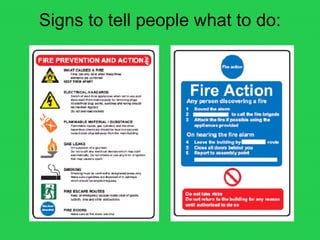
Signs to tell people what to do:
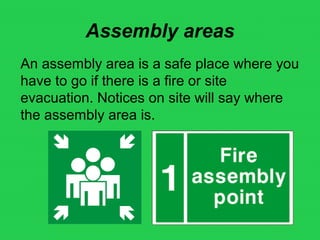
Assembly areas
An assembly area is a safe place where you
have to go if there is a fire or site
evacuation. Notices on site will say where
the assembly area is.
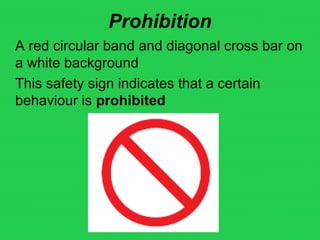
Prohibition
A red circular band and diagonal cross bar on
a white background
This safety sign indicates that a certain
behaviour is prohibited
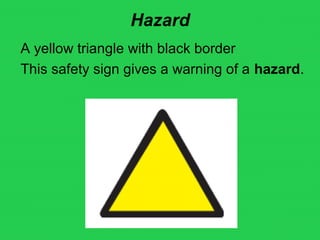
Hazard
A yellow triangle with black border
This safety sign gives a warning of a hazard.
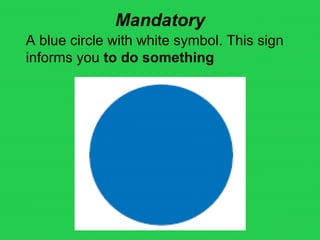
Mandatory
A blue circle with white symbol. This sign
informs you to do something
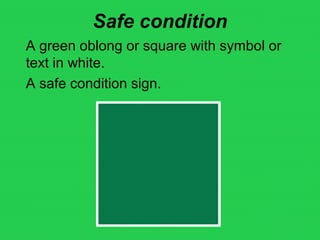
Safe condition
A green oblong or square with symbol or
text in white.
A safe condition sign.
• Prohibition
• Hazard
• Mandatory
• Safe condition
• Fire Equipment

Tutor core 01 fire and safety signs

  • 1.
    Core 01 –Health, Safety and Welfare in Construction and Associated Industries Fire and Emergency Procedures.
  • 2.
  • 3.
    Fire depends onthree things. ‘The Fire Triangle’ HEAT OXYGEN FUEL All three elements must be present for the fire to start. If you remove one element, you may be able to put out the fire.
  • 4.
    Fuel Can be anythingthat will burn, wood, paper, plastics, furniture. Flammable liquid, paint, spirits, gas etc. Oxygen It is in air in normal conditions and will allow the fire to burn. Heat A minimum temperature is needed, but a naked flame, match or spark is sufficient to start a fire especially if it is in contact with something which will burn.
  • 5.
    Ways to reducefire risks and harm to people: • Do not smoke at work. • All electrical appliances must be maintained. • Keep work areas tidy and free from debris. • Remove any combustible material and store in a safe place. • Only store flammable materials in metal cupboards. • Have fire points. • Have set procedures for fire and evacuation. • Display signs and notices so that people know what to do. • Test fire alarms regularly. • Train employees in the use of fire extinguishers.
  • 6.
    COLOUR OF LABEL USED CONTENTSTYPE/S OF FIRE TO BE USED ON RED WATER WOOD, PAPER, TEXTILES, FABRICS BLUE DRY POWDER FOR USE ON FLAMABLE GASES / ELECTRIC CREAM FOAM FOR USE ON FLAMMABLE LIQUIDS BLACK CO² LIVE ELECTRICAL & FLAMMABLE LIQUID FIRE BLANKET FIRE BLANKET USED TO SMOTHER SMALL ISOLATED FIRES SUCH AS CHIP PAN, OR USE TO WRAP AROUND A PERSON WHOSE CLOTHING IS ON FIRE.
  • 7.
    If you discovera fire what do you do? • Raise the alarm. • If is safe to do so close doors and windows to prevent spreading. • Evacuate the area, go to your assembly point. • Fight the fire, if you have been trained to do so, but avoid endangering your life. • Fight fire with fire extinguisher, fire blanket, water or sand as appropriate. Only persons who are fully trained should carry out the fighting of fires.
  • 8.
    Fire fighting shouldnot continue if: • The fire becomes too dangerous. • There is a possibility that any escape route might be cut off. • The fire continues to spread and become out of control. • There are gas cylinders or other highly flammable materials in the area that cannot be remove or protected.
  • 9.
    TASK: Identify whichextinguisher you would use on the following fires.
  • 10.
    CO² Water Dry powder Foam Fire alarm point Fire Telephone point FireExit This Way Fire Extinguisher point Disabled Fire Exit Point Fire Exit This Way
  • 11.
    Safety signs fallinto FIVE categories They can be recognised by shape and colour. • Hazard • Prohibition • Mandatory • Safe Condition • Fire Equipment Safety Signs
  • 12.
    Signs to tellpeople what to do:
  • 13.
    Assembly areas An assemblyarea is a safe place where you have to go if there is a fire or site evacuation. Notices on site will say where the assembly area is.
  • 14.
    Prohibition A red circularband and diagonal cross bar on a white background This safety sign indicates that a certain behaviour is prohibited
  • 15.
    Hazard A yellow trianglewith black border This safety sign gives a warning of a hazard.
  • 16.
    Mandatory A blue circlewith white symbol. This sign informs you to do something
  • 17.
    Safe condition A greenoblong or square with symbol or text in white. A safe condition sign.
  • 18.
    • Prohibition • Hazard •Mandatory • Safe condition • Fire Equipment