TURRET PUNCHING
Turret Punching
   is a process, where work piece are punched to
    make a desired hole of a metal sheet.
   it is a CNC machine used for performing
    punching (a turret puncher) to a material such
    us sheet of metal or plastic .
   Turret punching is a cold work process. This
    entails that material properties remain
    unchanged as they are not exposed to thermal
    impact during machining.
Process
 The Turret Punching process produces shapes
 by selectively removing material from sheet
 metals. These sheets are clamped into the
 machine on a table that is programmed to
 move to a specific X/Y location within the
 matrix of the machine. The correct punch
 shape and size is selected at the turret and the
 machine actuates the punch to produce the
 desired hole.
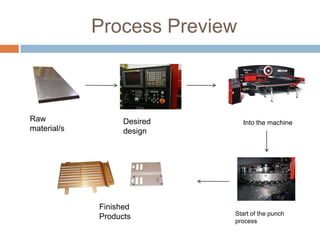
Process Preview


Raw                Desired     Into the machine
material/s         design


             Finished
                             Start of the punch
             Products
                             process
Punching characteristics
   Punching is the most cost effective process of
    making holes in strip or sheet metal for
    average to high fabrication
   It is able to create multiple shaped holes
   Creates a burnished region roll-over, and die
    break on sidewall of the resulting hole
Materials supported
Sheet Metals including:

   Aluminum
   Galvanized Steel
   Carbon Steel
   Stainless Steel
   Brass
   Bronze
   Copper
   Monel
   Plastic
Advantage/s
   Fast and accurate over and over again without
    variation.
   Take a less time of work than the manual
    punching machine.
   CNC punching machines commonly handle up
    to 1200 hits per minute and many have
    automated loading systems allowing for
    continuous operation.
   All kinds of metal can be turret punched, also
    hard stainless spring steel and some polymere
    types can be turret punched.
Disadvantage/s
   A turret punching machine is an expensive
    machine
   It cannot punch a metal with a thickness of
    6mm.
   Occupies large space in the work area.
   Warping may occur if many holes are punched
    or much material is removed from the sheet
Application

Turret punching ppt

  • 1.
  • 2.
    Turret Punching  is a process, where work piece are punched to make a desired hole of a metal sheet.  it is a CNC machine used for performing punching (a turret puncher) to a material such us sheet of metal or plastic .  Turret punching is a cold work process. This entails that material properties remain unchanged as they are not exposed to thermal impact during machining.
  • 3.
    Process The TurretPunching process produces shapes by selectively removing material from sheet metals. These sheets are clamped into the machine on a table that is programmed to move to a specific X/Y location within the matrix of the machine. The correct punch shape and size is selected at the turret and the machine actuates the punch to produce the desired hole.
  • 4.
    Process Preview Raw Desired Into the machine material/s design Finished Start of the punch Products process
  • 5.
    Punching characteristics  Punching is the most cost effective process of making holes in strip or sheet metal for average to high fabrication  It is able to create multiple shaped holes  Creates a burnished region roll-over, and die break on sidewall of the resulting hole
  • 6.
    Materials supported Sheet Metalsincluding:  Aluminum  Galvanized Steel  Carbon Steel  Stainless Steel  Brass  Bronze  Copper  Monel  Plastic
  • 7.
    Advantage/s  Fast and accurate over and over again without variation.  Take a less time of work than the manual punching machine.  CNC punching machines commonly handle up to 1200 hits per minute and many have automated loading systems allowing for continuous operation.  All kinds of metal can be turret punched, also hard stainless spring steel and some polymere types can be turret punched.
  • 8.
    Disadvantage/s  A turret punching machine is an expensive machine  It cannot punch a metal with a thickness of 6mm.  Occupies large space in the work area.  Warping may occur if many holes are punched or much material is removed from the sheet
  • 9.