PRESENTATION BY
CONTENTS
• Definition
• Epidemiology
• Etiology
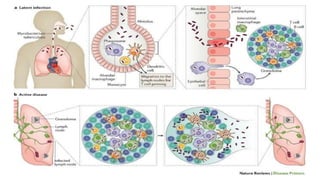
• Pathophysiology
• Classification
• Clinical Presentation
• Diagnosis
• Management
• Model Case Presentation
DEFINITION
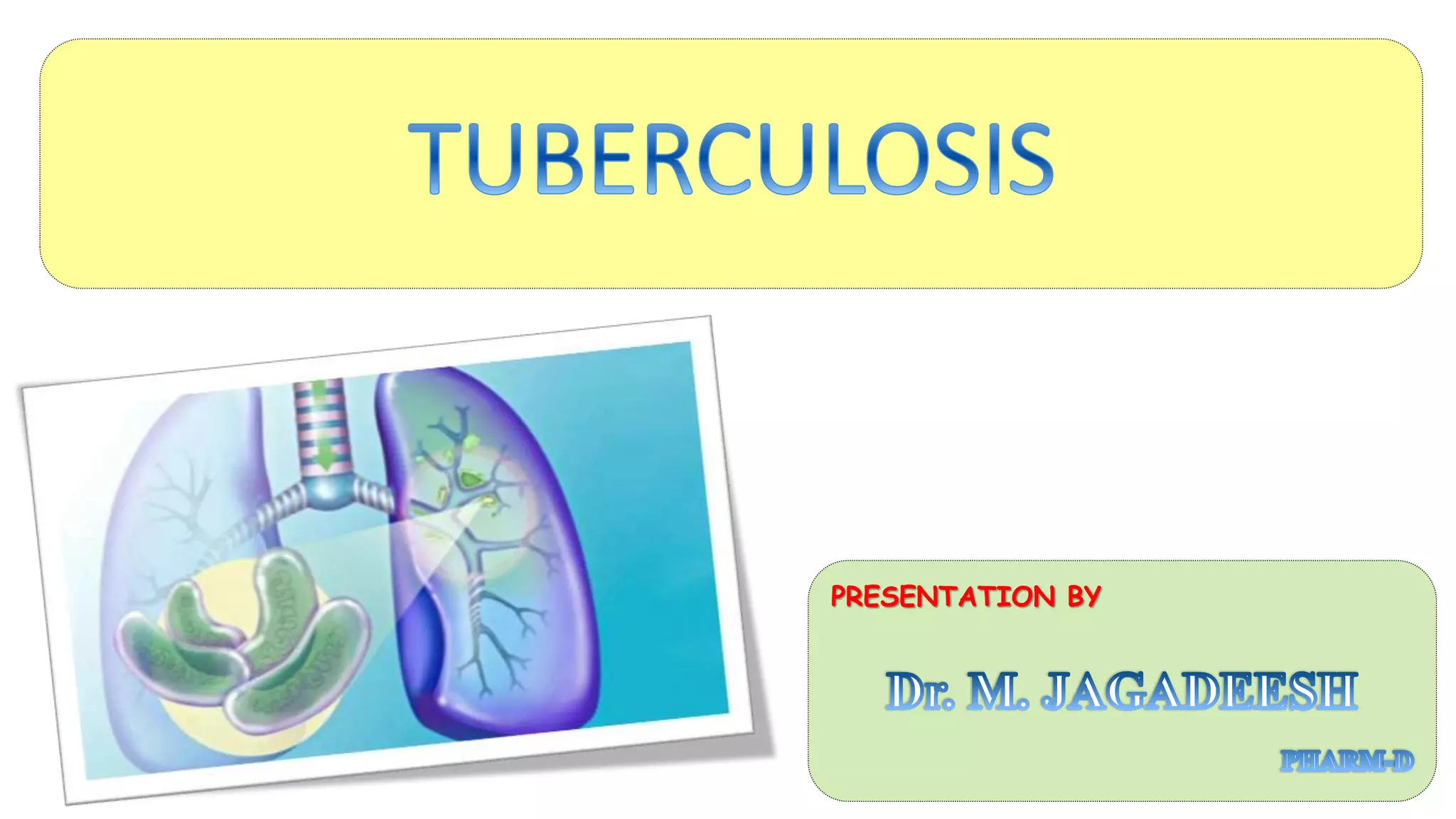
Tuberculosis is the infectious disease primarily affecting lung parenchyma is
most often caused by MYCOBACTERIUM TUBERCULOSIS. It may spread to
any part of the body including meninges, kidney, bones and lymph nodes.
- Round nodule/Swelling
- Condition
“Tubercle”
“Osis”
EPIDEMIOLOGY
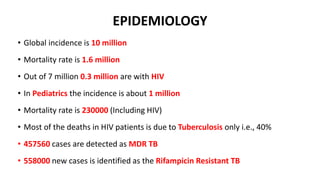
• Global incidence is 10 million
• Mortality rate is 1.6 million
• Out of 7 million 0.3 million are with HIV
• In Pediatrics the incidence is about 1 million
• Mortality rate is 230000 (Including HIV)
• Most of the deaths in HIV patients is due to Tuberculosis only i.e., 40%
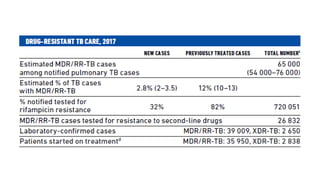
• 457560 cases are detected as MDR TB
• 558000 new cases is identified as the Rifampicin Resistant TB
INDIA COUNTRY PROFILE
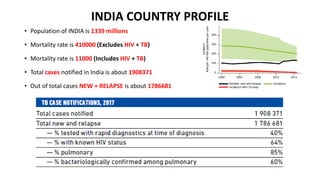
• Population of INDIA is 1339 millions
• Mortality rate is 410000 (Excludes HIV + TB)
• Mortality rate is 11000 (Includes HIV + TB)
• Total cases notified in India is about 1908371
• Out of total cases NEW + RELAPSE is about 1786681
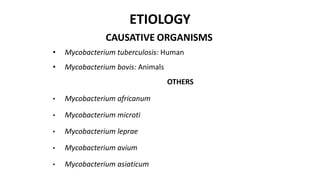
ETIOLOGY
CAUSATIVE ORGANISMS
• Mycobacterium tuberculosis: Human
• Mycobacterium bovis: Animals
OTHERS
• Mycobacterium africanum
• Mycobacterium microti
• Mycobacterium leprae
• Mycobacterium avium
• Mycobacterium asiaticum
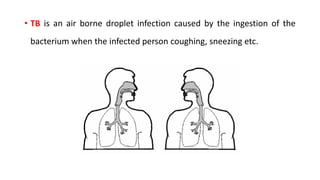
• TB is an air borne droplet infection caused by the ingestion of the
bacterium when the infected person coughing, sneezing etc.
KOCH’S DISEASE : TUBERCULOSIS
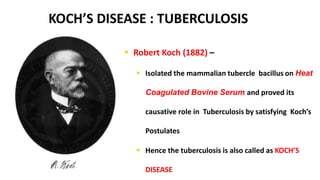
 Robert Koch (1882) –
 Isolated the mammalian tubercle bacillus on Heat
Coagulated Bovine Serum and proved its
causative role in Tuberculosis by satisfying Koch’s
Postulates
 Hence the tuberculosis is also called as KOCH’S
DISEASE
Characteristics of MYCOBACTERIUM TUBERCULOSIS
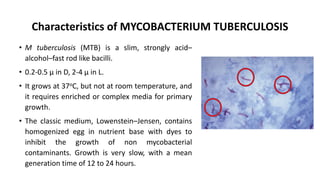
• M tuberculosis (MTB) is a slim, strongly acid–
alcohol–fast rod like bacilli.
• 0.2-0.5 μ in D, 2-4 μ in L.
• It grows at 37oC, but not at room temperature, and
it requires enriched or complex media for primary
growth.
• The classic medium, Lowenstein–Jensen, contains
homogenized egg in nutrient base with dyes to
inhibit the growth of non mycobacterial
contaminants. Growth is very slow, with a mean
generation time of 12 to 24 hours.
P
A
T
H
O
P
H
Y
S
I
O
L
O
G
Y
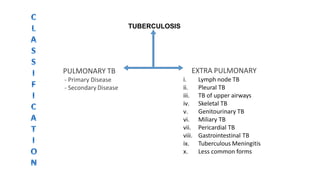
TUBERCULOSIS
PULMONARY TB
- Primary Disease
- Secondary Disease
EXTRA PULMONARY
i. Lymph node TB
ii. Pleural TB
iii. TB of upper airways
iv. Skeletal TB
v. Genitourinary TB
vi. Miliary TB
vii. Pericardial TB
viii. Gastrointestinal TB
ix. Tuberculous Meningitis
x. Less common forms
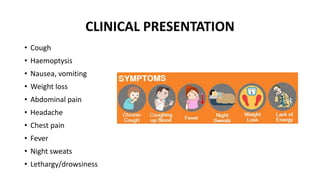
CLINICAL PRESENTATION
• Cough
• Haemoptysis
• Nausea, vomiting
• Weight loss
• Abdominal pain
• Headache
• Chest pain
• Fever
• Night sweats
• Lethargy/drowsiness
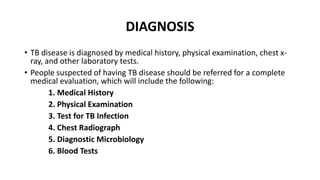
• TB disease is diagnosed by medical history, physical examination, chest x-
ray, and other laboratory tests.
• People suspected of having TB disease should be referred for a complete
medical evaluation, which will include the following:
1. Medical History
2. Physical Examination
3. Test for TB Infection
4. Chest Radiograph
5. Diagnostic Microbiology
6. Blood Tests
DIAGNOSIS
PHYSICAL EXAMINATION
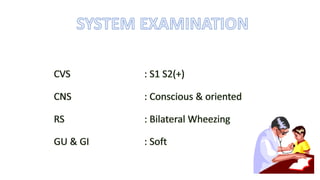
• Dullness to chest percussion
• Auscultation revealed vocal fremitus sound
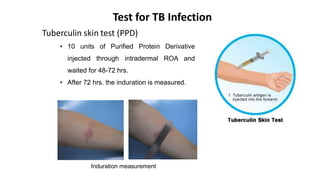
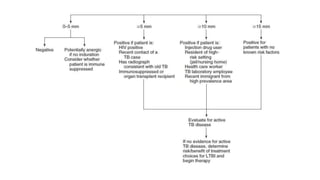
Tuberculin skin test (PPD)
• 10 units of Purified Protein Derivative
injected through intradermal ROA and
waited for 48-72 hrs.
• After 72 hrs. the induration is measured.
Induration measurement
Test for TB Infection
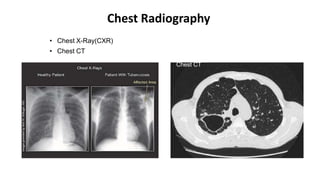
Chest Radiography
• Chest X-Ray(CXR)
• Chest CT
Chest CT
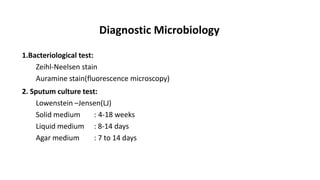
1.Bacteriological test:
Zeihl-Neelsen stain
Auramine stain(fluorescence microscopy)
2. Sputum culture test:
Lowenstein –Jensen(LJ)
Solid medium : 4-18 weeks
Liquid medium : 8-14 days
Agar medium : 7 to 14 days
Diagnostic Microbiology
Blood Tests
• CBP
• ESR
• PS Reading
• Differential Leucocyte Count
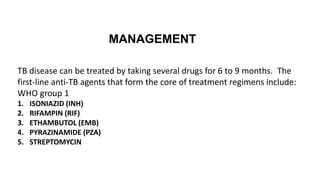
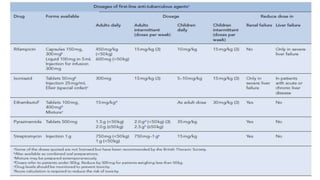
TB disease can be treated by taking several drugs for 6 to 9 months. The
first-line anti-TB agents that form the core of treatment regimens include:
WHO group 1
1. ISONIAZID (INH)
2. RIFAMPIN (RIF)
3. ETHAMBUTOL (EMB)
4. PYRAZINAMIDE (PZA)
5. STREPTOMYCIN
MANAGEMENT
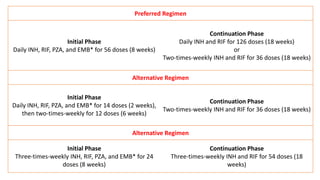
Preferred Regimen
Initial Phase
Daily INH, RIF, PZA, and EMB* for 56 doses (8 weeks)
Continuation Phase
Daily INH and RIF for 126 doses (18 weeks)
or
Two-times-weekly INH and RIF for 36 doses (18 weeks)
Alternative Regimen
Initial Phase
Daily INH, RIF, PZA, and EMB* for 14 doses (2 weeks),
then two-times-weekly for 12 doses (6 weeks)
Continuation Phase
Two-times-weekly INH and RIF for 36 doses (18 weeks)
Alternative Regimen
Initial Phase
Three-times-weekly INH, RIF, PZA, and EMB* for 24
doses (8 weeks)
Continuation Phase
Three-times-weekly INH and RIF for 54 doses (18
weeks)
THE SECOND-LINE ANTI-TB AGENTS
• Aminoglycosides (WHO group 2):
e.g., Amikacin (AMK), kanamycin (KM);
• Polypeptides (WHO group 2):
e.g., Capreomycin, viomycin, enviomycin;
• Fluoroquinolones (WHO group 3):
e.g., Ciprofloxacin (CIP), levofloxacin, moxifloxacin (MXF);
• Thioamides (WHO group 4):
e.g. Ethionamide, prothionamide
• Cycloserine (WHO group 4)
PREVENTION
• Isolation
• Ventilate the room
• Cover the mouth
• Wear mask
• Finish entire course of medication
• Vaccinations
NAME : XXX
AGE : 58 yrs.
GENDER : Female
WARD : General Medicine
DATE OF ADMISSION : 24/1/16
DATE OF DISCHARGE : 29/1/16
IP NO : 5574/15
CONSULTANT : Dr. D. Kantha Reddy M.B.B.S
Dr. P.N. Ravi Kumar Reddy M.D Pulmonologist
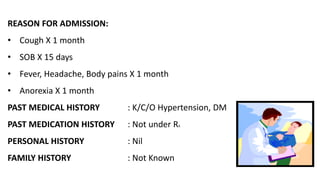
REASON FOR ADMISSION:
• Cough X 1 month
• SOB X 15 days
• Fever, Headache, Body pains X 1 month
• Anorexia X 1 month
PAST MEDICAL HISTORY : K/C/O Hypertension, DM
PAST MEDICATION HISTORY : Not under RX
PERSONAL HISTORY : Nil
FAMILY HISTORY : Not Known
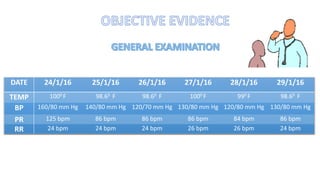
DATE 24/1/16 25/1/16 26/1/16 27/1/16 28/1/16 29/1/16
TEMP 1000 F 98.60 F 98.60 F 1000 F 990 F 98.60 F
BP 160/80 mm Hg 140/80 mm Hg 120/70 mm Hg 130/80 mm Hg 120/80 mm Hg 130/80 mm Hg
PR 125 bpm 86 bpm 86 bpm 86 bpm 84 bpm 86 bpm
RR 24 bpm 24 bpm 24 bpm 26 bpm 26 bpm 24 bpm
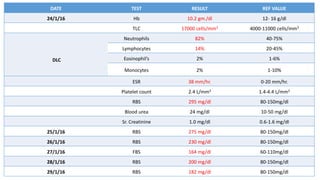
DATE TEST RESULT REF VALUE
24/1/16 Hb 10.2 gm./dl 12- 16 g/dl
TLC 17000 cells/mm3 4000-11000 cells/mm3
DLC
Neutrophils 82% 40-75%
Lymphocytes 14% 20-45%
Eosinophil’s 2% 1-6%
Monocytes 2% 1-10%
ESR 38 mm/hr. 0-20 mm/hr.
Platelet count 2.4 L/mm3 1.4-4.4 L/mm3
RBS 295 mg/dl 80-150mg/dl
Blood urea 24 mg/dl 10-50 mg/dl
Sr. Creatinine 1.0 mg/dl 0.6-1.6 mg/dl
25/1/16 RBS 275 mg/dl 80-150mg/dl
26/1/16 RBS 230 mg/dl 80-150mg/dl
27/1/16 FBS 164 mg/dl 60-110mg/dl
28/1/16 RBS 200 mg/dl 80-150mg/dl
29/1/16 RBS 182 mg/dl 80-150mg/dl
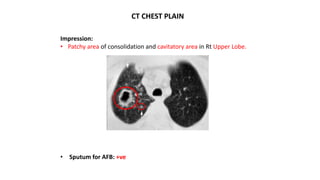
CT CHEST PLAIN
Impression:
• Patchy area of consolidation and cavitatory area in Rt Upper Lobe.
• Sputum for AFB: +ve
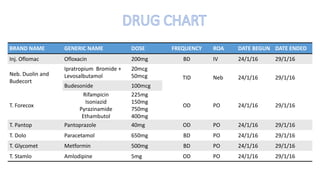
BRAND NAME GENERIC NAME DOSE FREQUENCY ROA DATE BEGUN DATE ENDED
Inj. Oflomac Ofloxacin 200mg BD IV 24/1/16 29/1/16
Neb. Duolin and
Budecort
Ipratropium Bromide +
Levosalbutamol
20mcg
50mcg TID Neb 24/1/16 29/1/16
Budesonide 100mcg
T. Forecox
Rifampicin
Isoniazid
Pyrazinamide
Ethambutol
225mg
150mg
750mg
400mg
OD PO 24/1/16 29/1/16
T. Pantop Pantoprazole 40mg OD PO 24/1/16 29/1/16
T. Dolo Paracetamol 650mg BD PO 24/1/16 29/1/16
T. Glycomet Metformin 500mg BD PO 24/1/16 29/1/16
T. Stamlo Amlodipine 5mg OD PO 24/1/16 29/1/16
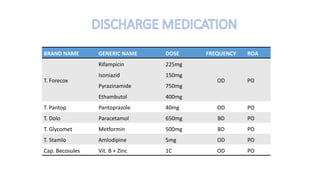
BRAND NAME GENERIC NAME DOSE FREQUENCY ROA
T. Forecox
Rifampicin
Isoniazid
Pyrazinamide
Ethambutol
225mg
150mg
750mg
400mg
OD PO
T. Pantop Pantoprazole 40mg OD PO
T. Dolo Paracetamol 650mg BD PO
T. Glycomet Metformin 500mg BD PO
T. Stamlo Amlodipine 5mg OD PO
Cap. Becosules Vit. B + Zinc 1C OD PO
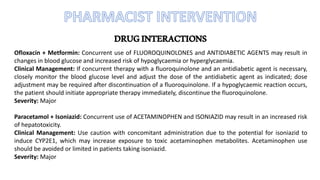
DRUGINTERACTIONS
Ofloxacin + Metformin: Concurrent use of FLUOROQUINOLONES and ANTIDIABETIC AGENTS may result in
changes in blood glucose and increased risk of hypoglycaemia or hyperglycaemia.
Clinical Management: If concurrent therapy with a fluoroquinolone and an antidiabetic agent is necessary,
closely monitor the blood glucose level and adjust the dose of the antidiabetic agent as indicated; dose
adjustment may be required after discontinuation of a fluoroquinolone. If a hypoglycaemic reaction occurs,
the patient should initiate appropriate therapy immediately, discontinue the fluoroquinolone.
Severity: Major
Paracetamol + Isoniazid: Concurrent use of ACETAMINOPHEN and ISONIAZID may result in an increased risk
of hepatotoxicity.
Clinical Management: Use caution with concomitant administration due to the potential for isoniazid to
induce CYP2E1, which may increase exposure to toxic acetaminophen metabolites. Acetaminophen use
should be avoided or limited in patients taking isoniazid.
Severity: Major
• Tuberculosis is the communicable disease which spreads through the
droplets of the infected person, characterized by the persistent
cough, cough with sputum, sudden weight loss, loss of apatite, chest
tightness and pain.
• Diabetes Mellitus is the endocrine disorder, which is characterized by
the hyperglycemia, frequent urination, excessive thrust, excessive
hunger.
• Hypertension is the persistent elevation of arterial blood pressure.
• Isolate the patient in a separate room.
• Advised to wear the face mask.
• Maintain hygienic environment.
• Cover your mouth while talking, coughing, sneezing, etc.
• Restrict salt usage.
• Take fiber rich food like wheat, oats, etc.
• Take Brown rice instead of normal rice.
• Avoid Sweets.
• Avoid Non-Vegetarian food.
• Avoid oil foods.
• Avoid spicy foods.
• Should not eat the banana, Mango, Custard apple, etc.
• Take medication without skipping dose.
• If any dose skipped next time don’t double the dose.
• Take medication with more water.
• Eat leafy vegetables like spinach, etc.
• Do regular exercise.
• Do mild to moderate walk daily.
• Keep your foot clean and dry.
• If any injury occurred consult physician immediately.
• If you feel any of dizziness consult physician, dizziness is due to the
hypoglycemia that is low blood glucose levels than the normal.
• Advised to monitor the blood glucose levels and blood pressure once in a
month.
• Urine may passed in orange color it is due to the Rifampicin.
Tuberculosis with a case presentation

Tuberculosis with a case presentation

  • 1.
  • 2.
    CONTENTS • Definition • Epidemiology •Etiology • Pathophysiology • Classification • Clinical Presentation • Diagnosis • Management • Model Case Presentation
  • 3.
    DEFINITION Tuberculosis is theinfectious disease primarily affecting lung parenchyma is most often caused by MYCOBACTERIUM TUBERCULOSIS. It may spread to any part of the body including meninges, kidney, bones and lymph nodes. - Round nodule/Swelling - Condition “Tubercle” “Osis”
  • 4.
    EPIDEMIOLOGY • Global incidenceis 10 million • Mortality rate is 1.6 million • Out of 7 million 0.3 million are with HIV • In Pediatrics the incidence is about 1 million • Mortality rate is 230000 (Including HIV) • Most of the deaths in HIV patients is due to Tuberculosis only i.e., 40% • 457560 cases are detected as MDR TB • 558000 new cases is identified as the Rifampicin Resistant TB
  • 5.
    INDIA COUNTRY PROFILE •Population of INDIA is 1339 millions • Mortality rate is 410000 (Excludes HIV + TB) • Mortality rate is 11000 (Includes HIV + TB) • Total cases notified in India is about 1908371 • Out of total cases NEW + RELAPSE is about 1786681
  • 7.
    ETIOLOGY CAUSATIVE ORGANISMS • Mycobacteriumtuberculosis: Human • Mycobacterium bovis: Animals OTHERS • Mycobacterium africanum • Mycobacterium microti • Mycobacterium leprae • Mycobacterium avium • Mycobacterium asiaticum
  • 8.
    • TB isan air borne droplet infection caused by the ingestion of the bacterium when the infected person coughing, sneezing etc.
  • 9.
    KOCH’S DISEASE :TUBERCULOSIS  Robert Koch (1882) –  Isolated the mammalian tubercle bacillus on Heat Coagulated Bovine Serum and proved its causative role in Tuberculosis by satisfying Koch’s Postulates  Hence the tuberculosis is also called as KOCH’S DISEASE
  • 10.
    Characteristics of MYCOBACTERIUMTUBERCULOSIS • M tuberculosis (MTB) is a slim, strongly acid– alcohol–fast rod like bacilli. • 0.2-0.5 μ in D, 2-4 μ in L. • It grows at 37oC, but not at room temperature, and it requires enriched or complex media for primary growth. • The classic medium, Lowenstein–Jensen, contains homogenized egg in nutrient base with dyes to inhibit the growth of non mycobacterial contaminants. Growth is very slow, with a mean generation time of 12 to 24 hours.
  • 11.
  • 13.
    TUBERCULOSIS PULMONARY TB - PrimaryDisease - Secondary Disease EXTRA PULMONARY i. Lymph node TB ii. Pleural TB iii. TB of upper airways iv. Skeletal TB v. Genitourinary TB vi. Miliary TB vii. Pericardial TB viii. Gastrointestinal TB ix. Tuberculous Meningitis x. Less common forms
  • 14.
    CLINICAL PRESENTATION • Cough •Haemoptysis • Nausea, vomiting • Weight loss • Abdominal pain • Headache • Chest pain • Fever • Night sweats • Lethargy/drowsiness
  • 15.
    • TB diseaseis diagnosed by medical history, physical examination, chest x- ray, and other laboratory tests. • People suspected of having TB disease should be referred for a complete medical evaluation, which will include the following: 1. Medical History 2. Physical Examination 3. Test for TB Infection 4. Chest Radiograph 5. Diagnostic Microbiology 6. Blood Tests DIAGNOSIS
  • 16.
    PHYSICAL EXAMINATION • Dullnessto chest percussion • Auscultation revealed vocal fremitus sound
  • 17.
    Tuberculin skin test(PPD) • 10 units of Purified Protein Derivative injected through intradermal ROA and waited for 48-72 hrs. • After 72 hrs. the induration is measured. Induration measurement Test for TB Infection
  • 19.
    Chest Radiography • ChestX-Ray(CXR) • Chest CT Chest CT
  • 20.
    1.Bacteriological test: Zeihl-Neelsen stain Auraminestain(fluorescence microscopy) 2. Sputum culture test: Lowenstein –Jensen(LJ) Solid medium : 4-18 weeks Liquid medium : 8-14 days Agar medium : 7 to 14 days Diagnostic Microbiology
  • 21.
    Blood Tests • CBP •ESR • PS Reading • Differential Leucocyte Count
  • 22.
    TB disease canbe treated by taking several drugs for 6 to 9 months. The first-line anti-TB agents that form the core of treatment regimens include: WHO group 1 1. ISONIAZID (INH) 2. RIFAMPIN (RIF) 3. ETHAMBUTOL (EMB) 4. PYRAZINAMIDE (PZA) 5. STREPTOMYCIN MANAGEMENT
  • 23.
    Preferred Regimen Initial Phase DailyINH, RIF, PZA, and EMB* for 56 doses (8 weeks) Continuation Phase Daily INH and RIF for 126 doses (18 weeks) or Two-times-weekly INH and RIF for 36 doses (18 weeks) Alternative Regimen Initial Phase Daily INH, RIF, PZA, and EMB* for 14 doses (2 weeks), then two-times-weekly for 12 doses (6 weeks) Continuation Phase Two-times-weekly INH and RIF for 36 doses (18 weeks) Alternative Regimen Initial Phase Three-times-weekly INH, RIF, PZA, and EMB* for 24 doses (8 weeks) Continuation Phase Three-times-weekly INH and RIF for 54 doses (18 weeks)
  • 25.
    THE SECOND-LINE ANTI-TBAGENTS • Aminoglycosides (WHO group 2): e.g., Amikacin (AMK), kanamycin (KM); • Polypeptides (WHO group 2): e.g., Capreomycin, viomycin, enviomycin; • Fluoroquinolones (WHO group 3): e.g., Ciprofloxacin (CIP), levofloxacin, moxifloxacin (MXF); • Thioamides (WHO group 4): e.g. Ethionamide, prothionamide • Cycloserine (WHO group 4)
  • 26.
    PREVENTION • Isolation • Ventilatethe room • Cover the mouth • Wear mask • Finish entire course of medication • Vaccinations
  • 27.
    NAME : XXX AGE: 58 yrs. GENDER : Female WARD : General Medicine DATE OF ADMISSION : 24/1/16 DATE OF DISCHARGE : 29/1/16 IP NO : 5574/15 CONSULTANT : Dr. D. Kantha Reddy M.B.B.S Dr. P.N. Ravi Kumar Reddy M.D Pulmonologist
  • 28.
    REASON FOR ADMISSION: •Cough X 1 month • SOB X 15 days • Fever, Headache, Body pains X 1 month • Anorexia X 1 month PAST MEDICAL HISTORY : K/C/O Hypertension, DM PAST MEDICATION HISTORY : Not under RX PERSONAL HISTORY : Nil FAMILY HISTORY : Not Known
  • 29.
    DATE 24/1/16 25/1/1626/1/16 27/1/16 28/1/16 29/1/16 TEMP 1000 F 98.60 F 98.60 F 1000 F 990 F 98.60 F BP 160/80 mm Hg 140/80 mm Hg 120/70 mm Hg 130/80 mm Hg 120/80 mm Hg 130/80 mm Hg PR 125 bpm 86 bpm 86 bpm 86 bpm 84 bpm 86 bpm RR 24 bpm 24 bpm 24 bpm 26 bpm 26 bpm 24 bpm
  • 32.
    DATE TEST RESULTREF VALUE 24/1/16 Hb 10.2 gm./dl 12- 16 g/dl TLC 17000 cells/mm3 4000-11000 cells/mm3 DLC Neutrophils 82% 40-75% Lymphocytes 14% 20-45% Eosinophil’s 2% 1-6% Monocytes 2% 1-10% ESR 38 mm/hr. 0-20 mm/hr. Platelet count 2.4 L/mm3 1.4-4.4 L/mm3 RBS 295 mg/dl 80-150mg/dl Blood urea 24 mg/dl 10-50 mg/dl Sr. Creatinine 1.0 mg/dl 0.6-1.6 mg/dl 25/1/16 RBS 275 mg/dl 80-150mg/dl 26/1/16 RBS 230 mg/dl 80-150mg/dl 27/1/16 FBS 164 mg/dl 60-110mg/dl 28/1/16 RBS 200 mg/dl 80-150mg/dl 29/1/16 RBS 182 mg/dl 80-150mg/dl
  • 33.
    CT CHEST PLAIN Impression: •Patchy area of consolidation and cavitatory area in Rt Upper Lobe. • Sputum for AFB: +ve
  • 36.
    BRAND NAME GENERICNAME DOSE FREQUENCY ROA DATE BEGUN DATE ENDED Inj. Oflomac Ofloxacin 200mg BD IV 24/1/16 29/1/16 Neb. Duolin and Budecort Ipratropium Bromide + Levosalbutamol 20mcg 50mcg TID Neb 24/1/16 29/1/16 Budesonide 100mcg T. Forecox Rifampicin Isoniazid Pyrazinamide Ethambutol 225mg 150mg 750mg 400mg OD PO 24/1/16 29/1/16 T. Pantop Pantoprazole 40mg OD PO 24/1/16 29/1/16 T. Dolo Paracetamol 650mg BD PO 24/1/16 29/1/16 T. Glycomet Metformin 500mg BD PO 24/1/16 29/1/16 T. Stamlo Amlodipine 5mg OD PO 24/1/16 29/1/16
  • 37.
    BRAND NAME GENERICNAME DOSE FREQUENCY ROA T. Forecox Rifampicin Isoniazid Pyrazinamide Ethambutol 225mg 150mg 750mg 400mg OD PO T. Pantop Pantoprazole 40mg OD PO T. Dolo Paracetamol 650mg BD PO T. Glycomet Metformin 500mg BD PO T. Stamlo Amlodipine 5mg OD PO Cap. Becosules Vit. B + Zinc 1C OD PO
  • 38.
    DRUGINTERACTIONS Ofloxacin + Metformin:Concurrent use of FLUOROQUINOLONES and ANTIDIABETIC AGENTS may result in changes in blood glucose and increased risk of hypoglycaemia or hyperglycaemia. Clinical Management: If concurrent therapy with a fluoroquinolone and an antidiabetic agent is necessary, closely monitor the blood glucose level and adjust the dose of the antidiabetic agent as indicated; dose adjustment may be required after discontinuation of a fluoroquinolone. If a hypoglycaemic reaction occurs, the patient should initiate appropriate therapy immediately, discontinue the fluoroquinolone. Severity: Major Paracetamol + Isoniazid: Concurrent use of ACETAMINOPHEN and ISONIAZID may result in an increased risk of hepatotoxicity. Clinical Management: Use caution with concomitant administration due to the potential for isoniazid to induce CYP2E1, which may increase exposure to toxic acetaminophen metabolites. Acetaminophen use should be avoided or limited in patients taking isoniazid. Severity: Major
  • 39.
    • Tuberculosis isthe communicable disease which spreads through the droplets of the infected person, characterized by the persistent cough, cough with sputum, sudden weight loss, loss of apatite, chest tightness and pain. • Diabetes Mellitus is the endocrine disorder, which is characterized by the hyperglycemia, frequent urination, excessive thrust, excessive hunger. • Hypertension is the persistent elevation of arterial blood pressure.
  • 40.
    • Isolate thepatient in a separate room. • Advised to wear the face mask. • Maintain hygienic environment. • Cover your mouth while talking, coughing, sneezing, etc. • Restrict salt usage. • Take fiber rich food like wheat, oats, etc. • Take Brown rice instead of normal rice. • Avoid Sweets. • Avoid Non-Vegetarian food. • Avoid oil foods. • Avoid spicy foods. • Should not eat the banana, Mango, Custard apple, etc. • Take medication without skipping dose. • If any dose skipped next time don’t double the dose. • Take medication with more water.
  • 41.
    • Eat leafyvegetables like spinach, etc. • Do regular exercise. • Do mild to moderate walk daily. • Keep your foot clean and dry. • If any injury occurred consult physician immediately. • If you feel any of dizziness consult physician, dizziness is due to the hypoglycemia that is low blood glucose levels than the normal. • Advised to monitor the blood glucose levels and blood pressure once in a month. • Urine may passed in orange color it is due to the Rifampicin.