

TRIANGULATION IN
RESEARCH
ATHIRA VM
NSS TRAINING COLLEGE
TRIANGULATION -MEANING
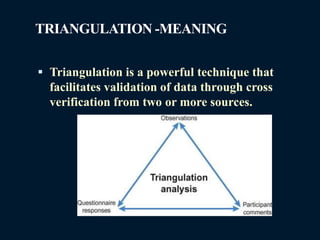
 Triangulation is a powerful technique that
facilitates validation of data through cross
verification from two or more sources.
TRIANGULATION-DEFINITION
 According to O’ Donoghue and Punch (2003),
triangulation is a “method of cross- checking
data from multiple sources to search for
regularities in the research data”.
 According to Schuh (2009), define
triangulation as “using multiple sources of
data, data collection method or both and
multiple investigators to collect data”.
PURPOSE OFTRIANGULATION
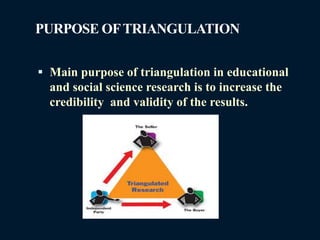
 Main purpose of triangulation in educational
and social science research is to increase the
credibility and validity of the results.
TYPES OFTRIANGULATION
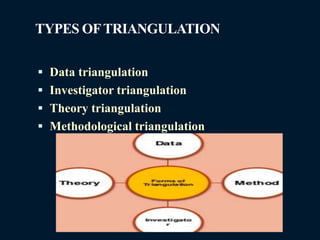
 Data triangulation
 Investigator triangulation
 Theory triangulation
 Methodological triangulation
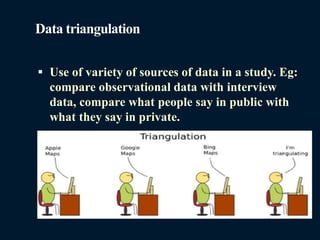
Data triangulation
 Use of variety of sources of data in a study. Eg:
compare observational data with interview
data, compare what people say in public with
what they say in private.
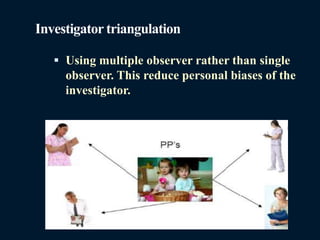
Investigator triangulation
 Using multiple observer rather than single
observer. This reduce personal biases of the
investigator.
Methodological triangulation
 Use of multiple method to study a single
problem. Eg: In survey, various subscale can
be used in one questionnaire, assessing
different aspects of a phenomenon .
with -in method, between method -Two or more researchers using same research
technique: One researcher using two or more research techniques:Two or more
researchers using two or more research techniques.
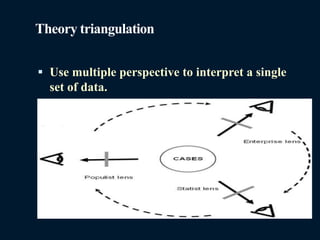
Theory triangulation
 Use multiple perspective to interpret a single
set of data.
TRIANGULATION
 ADVANTAGES
 Confidence
 Innovation
 Unique finding
 Clear innovations
 DISADVANTAGES
 Realism
 Time consuming
 Expensive
CONCLUSION
 Triangulation is a strategy that enhances the
quality of the research thereby ensuring that
the findings are reliable, dependable and valid.
 It helps to unveil the complexities of
phenomena under study and understand them
in depth rather than generalizing the findings
Triangulation ppt modified

Triangulation ppt modified

  • 1.
  • 2.
    TRIANGULATION -MEANING  Triangulationis a powerful technique that facilitates validation of data through cross verification from two or more sources.
  • 3.
    TRIANGULATION-DEFINITION  According toO’ Donoghue and Punch (2003), triangulation is a “method of cross- checking data from multiple sources to search for regularities in the research data”.  According to Schuh (2009), define triangulation as “using multiple sources of data, data collection method or both and multiple investigators to collect data”.
  • 4.
    PURPOSE OFTRIANGULATION  Mainpurpose of triangulation in educational and social science research is to increase the credibility and validity of the results.
  • 5.
    TYPES OFTRIANGULATION  Datatriangulation  Investigator triangulation  Theory triangulation  Methodological triangulation
  • 6.
    Data triangulation  Useof variety of sources of data in a study. Eg: compare observational data with interview data, compare what people say in public with what they say in private.
  • 7.
    Investigator triangulation  Usingmultiple observer rather than single observer. This reduce personal biases of the investigator.
  • 8.
    Methodological triangulation  Useof multiple method to study a single problem. Eg: In survey, various subscale can be used in one questionnaire, assessing different aspects of a phenomenon . with -in method, between method -Two or more researchers using same research technique: One researcher using two or more research techniques:Two or more researchers using two or more research techniques.
  • 9.
    Theory triangulation  Usemultiple perspective to interpret a single set of data.
  • 10.
    TRIANGULATION  ADVANTAGES  Confidence Innovation  Unique finding  Clear innovations  DISADVANTAGES  Realism  Time consuming  Expensive
  • 11.
    CONCLUSION  Triangulation isa strategy that enhances the quality of the research thereby ensuring that the findings are reliable, dependable and valid.  It helps to unveil the complexities of phenomena under study and understand them in depth rather than generalizing the findings