 The word ‘Transmission’ means the
whole of the mechanism that
transmits the power from the engine
crankshaft to the rear wheels,
providing the suitable variations of the
engine torque at the road wheels,
whenever required.
Manual transmission
Fully automatic Transmission
Semi-Automatic Transmission
Continuously Variable Transmission
Components of Manual Transmission:
Clutch
Gearbox
Differential
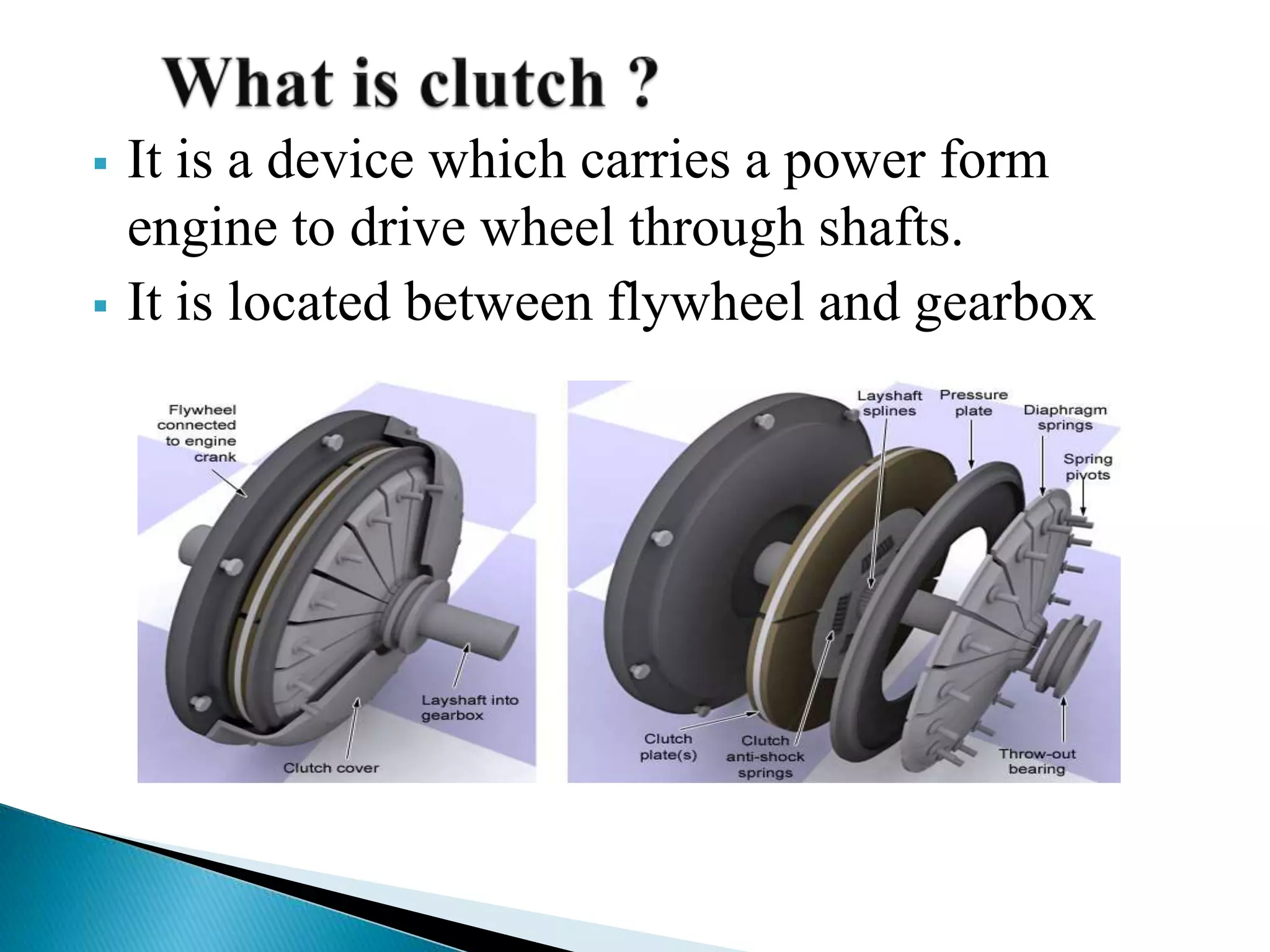
 It is a device which carries a power form
engine to drive wheel through shafts.
 It is located between flywheel and gearbox
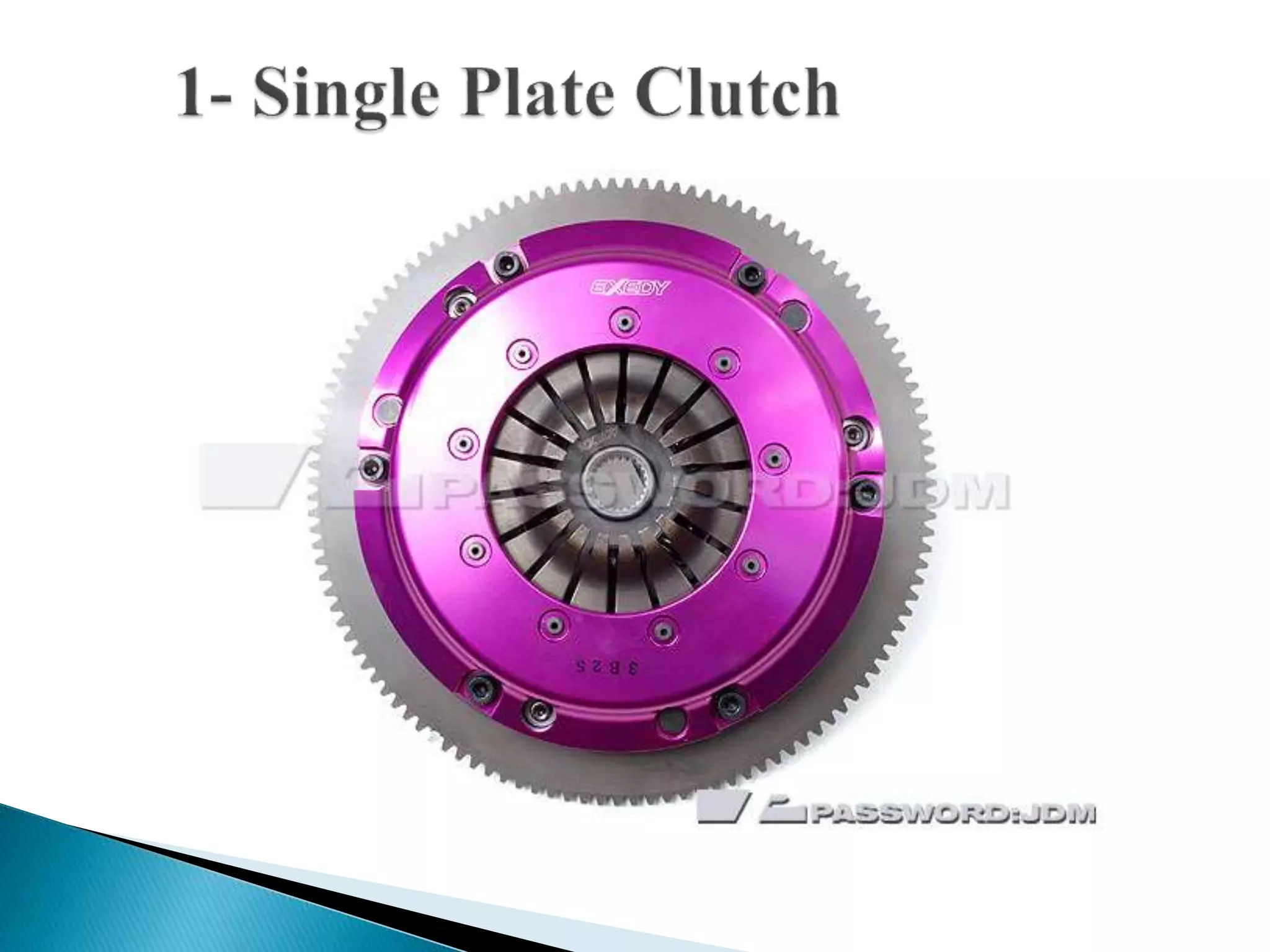
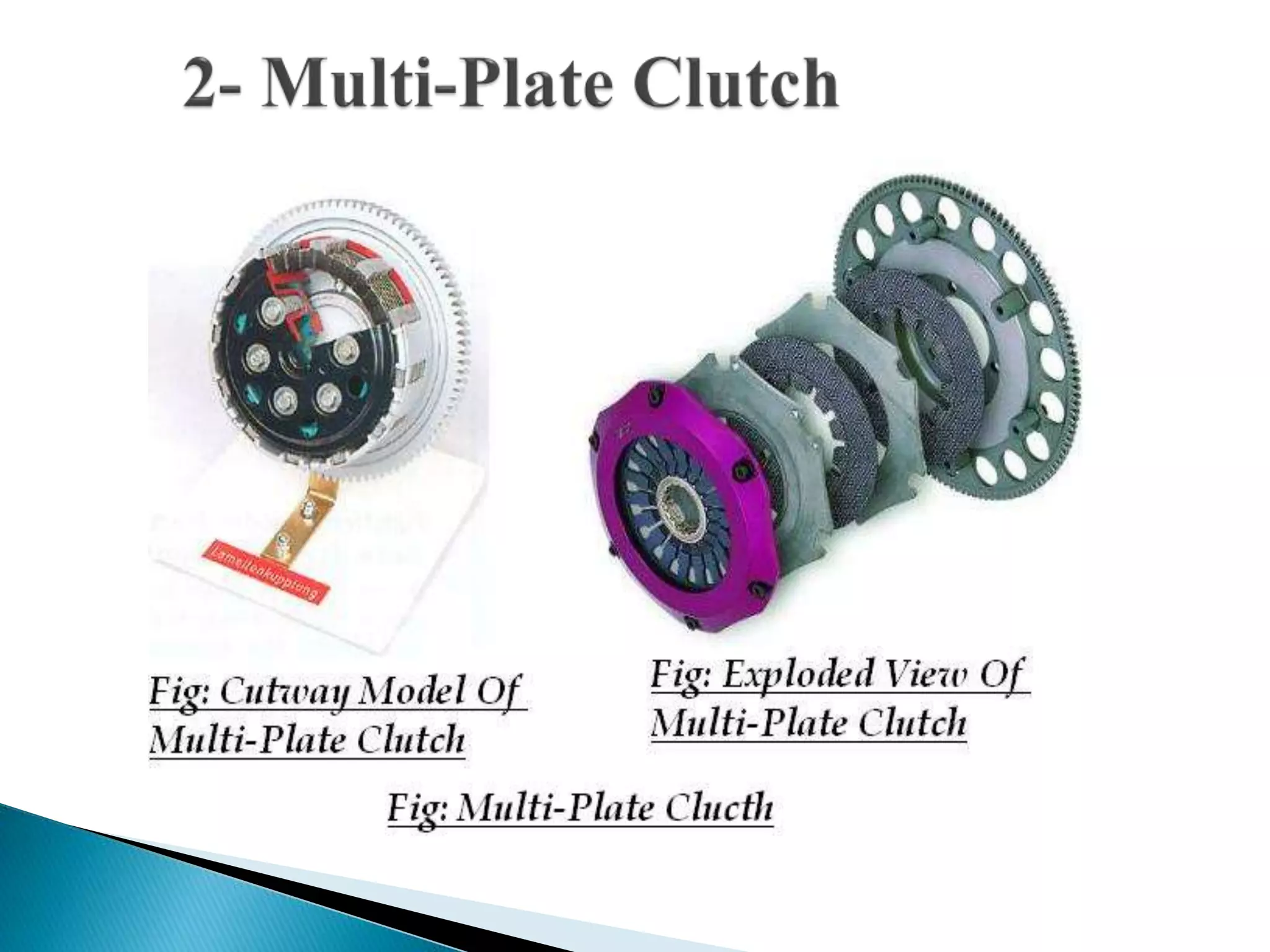
Types of
Clutches
Gearbox
 It is the ratio of the no. of teeth on the driven
wheel to no. of teeth on the driver wheel or the
speed of rotation of the driver to the driven .
 For example:
Gear ratio: G=(20/10)=2:1
(smaller gear is the driver)
20
Teeth 10
Teeth
 Constant mesh type
 Synchromesh type
 Sliding mesh type
 Oldest and the simplest type of transmission
 Spur gears were used
 Main shaft gears splined to the main shaft
 Gear shift is achieved by sliding the gears on
main shaft
 Low mechanical efficiency
 Noisy operation
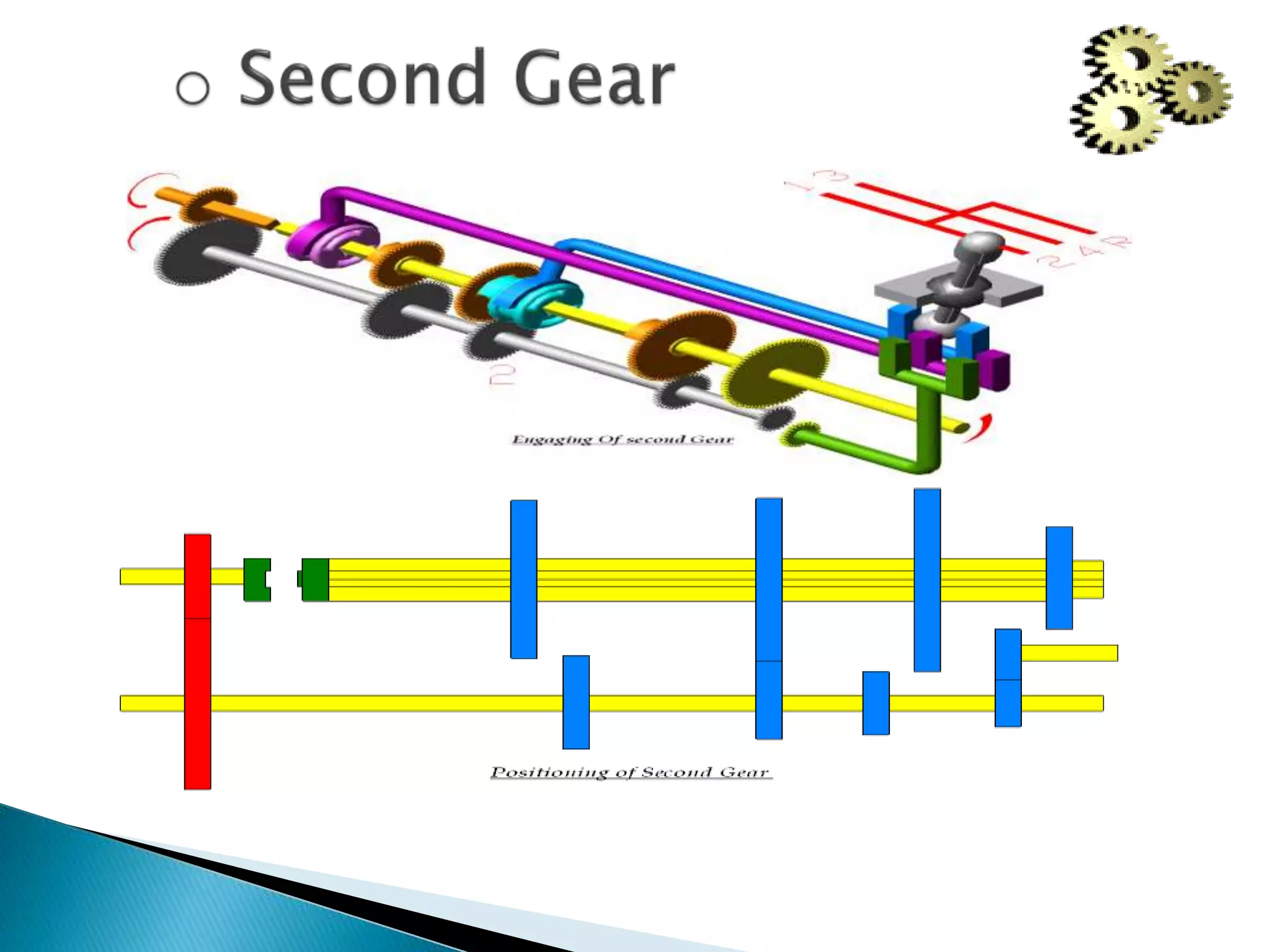
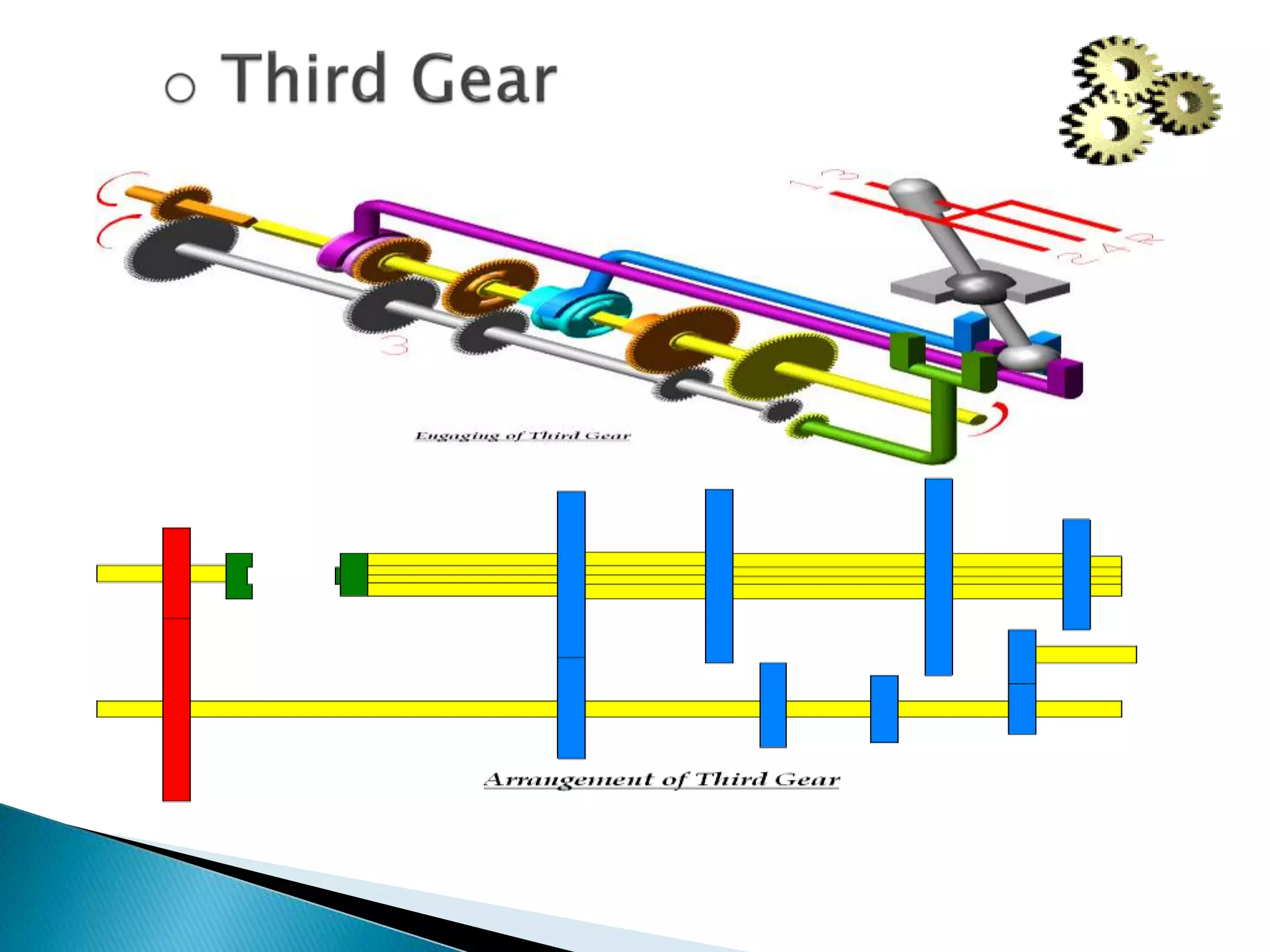
 The gears on the main shaft and lay shaft are
in constant mesh
 Main shaft gears are free to rotate
 Gear engagement is achieved by dog clutches
splined to the main shaft
 Helical gears are used
 Gears are in constant mesh
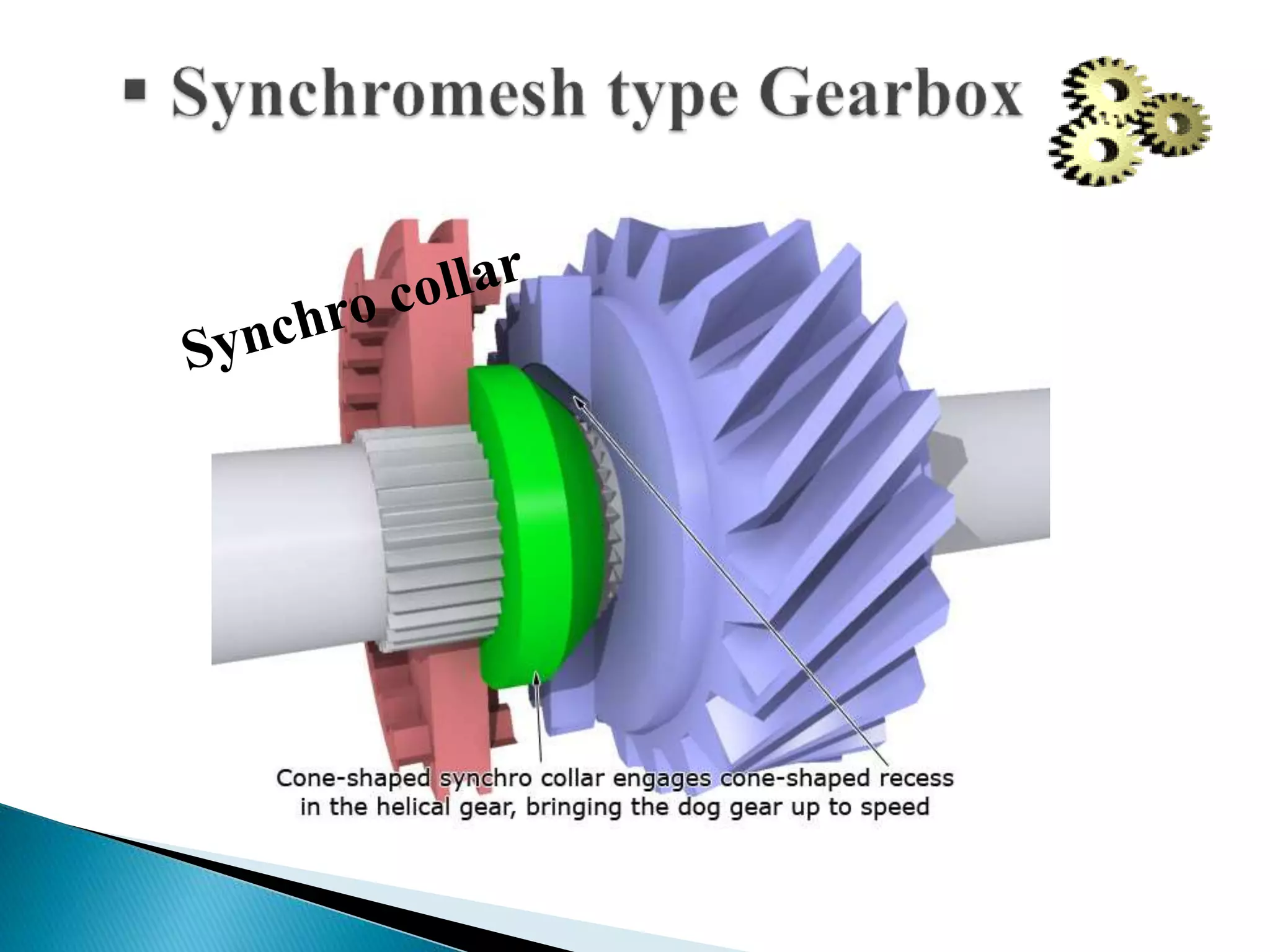
 Instead of dog clutch synchroniser unit is used
 Each pair of gear has one synchroniser unit
 Gears are first brought into frictional contact
which equalizes their speed after which the
actual engagement takes place
 Differential is a mechanism which provide
different speed to tyres at cornering.
 It provides equal torque on both tyre not
power.
 From the differential, power is transmitted to
the rear axles and from there to the wheels .
 Open Differential
 Limited-Slip Differential
 Locking Differential
 Auto Limited-Slip Differential
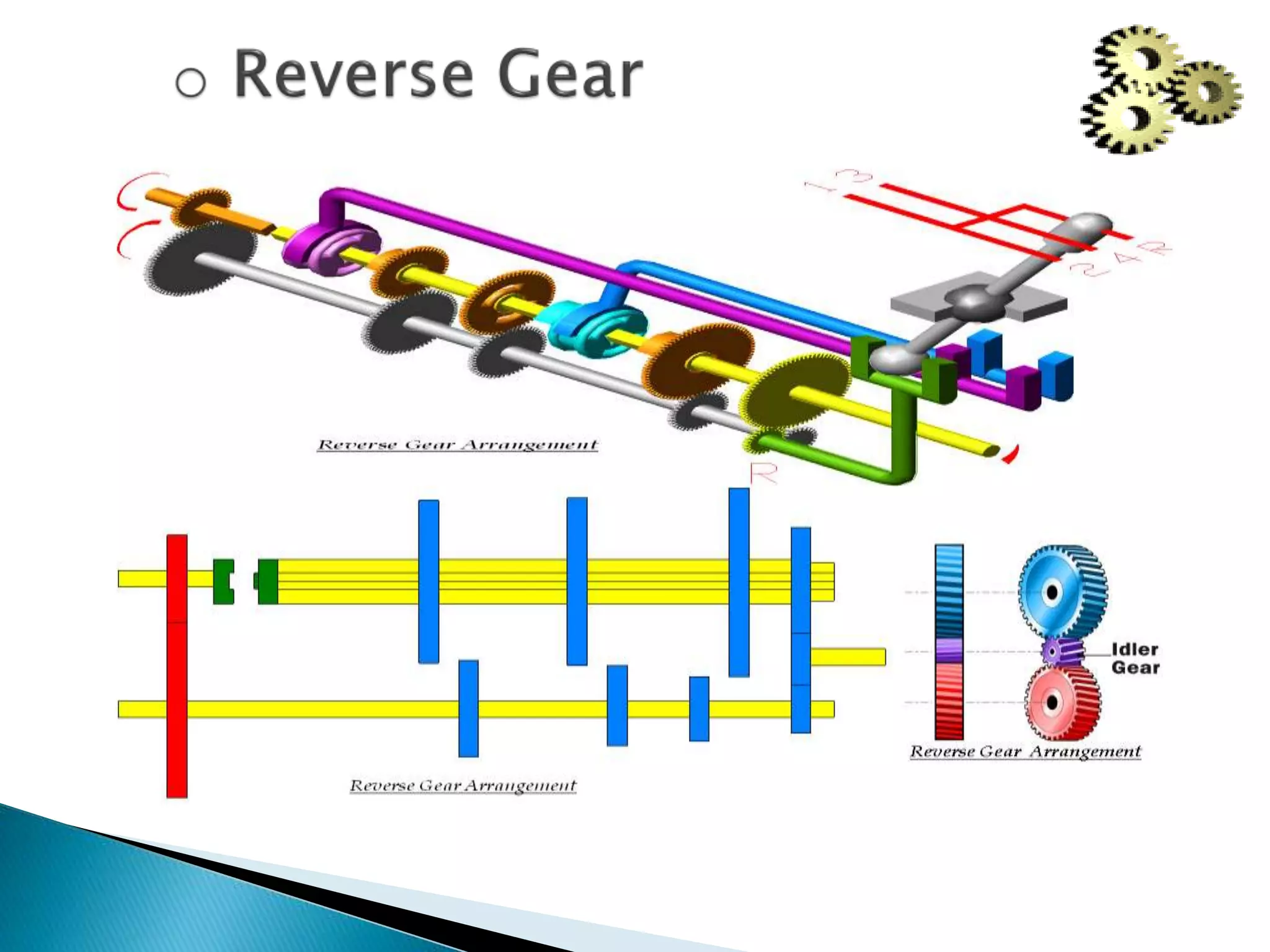
Transmission System

Transmission System

  • 2.
     The word‘Transmission’ means the whole of the mechanism that transmits the power from the engine crankshaft to the rear wheels, providing the suitable variations of the engine torque at the road wheels, whenever required.
  • 4.
    Manual transmission Fully automaticTransmission Semi-Automatic Transmission Continuously Variable Transmission
  • 5.
    Components of ManualTransmission: Clutch Gearbox Differential
  • 6.
     It isa device which carries a power form engine to drive wheel through shafts.  It is located between flywheel and gearbox
  • 10.
  • 16.
  • 18.
     It isthe ratio of the no. of teeth on the driven wheel to no. of teeth on the driver wheel or the speed of rotation of the driver to the driven .  For example: Gear ratio: G=(20/10)=2:1 (smaller gear is the driver) 20 Teeth 10 Teeth
  • 19.
     Constant meshtype  Synchromesh type  Sliding mesh type
  • 29.
     Oldest andthe simplest type of transmission  Spur gears were used  Main shaft gears splined to the main shaft  Gear shift is achieved by sliding the gears on main shaft  Low mechanical efficiency  Noisy operation
  • 30.
     The gearson the main shaft and lay shaft are in constant mesh  Main shaft gears are free to rotate  Gear engagement is achieved by dog clutches splined to the main shaft  Helical gears are used
  • 31.
     Gears arein constant mesh  Instead of dog clutch synchroniser unit is used  Each pair of gear has one synchroniser unit  Gears are first brought into frictional contact which equalizes their speed after which the actual engagement takes place
  • 33.
     Differential isa mechanism which provide different speed to tyres at cornering.  It provides equal torque on both tyre not power.  From the differential, power is transmitted to the rear axles and from there to the wheels .
  • 34.
     Open Differential Limited-Slip Differential  Locking Differential  Auto Limited-Slip Differential