Presented by:
Saad Mohammad Araf
ID: WUB 11/13/32/1092
Department of Mechatronics Engineering
World University of Bangladesh.
Contents:
 Introduction.
 Objectives.
 Methodology.
 Discussion.
 Conclusion.
Introduction:
Transmission system:
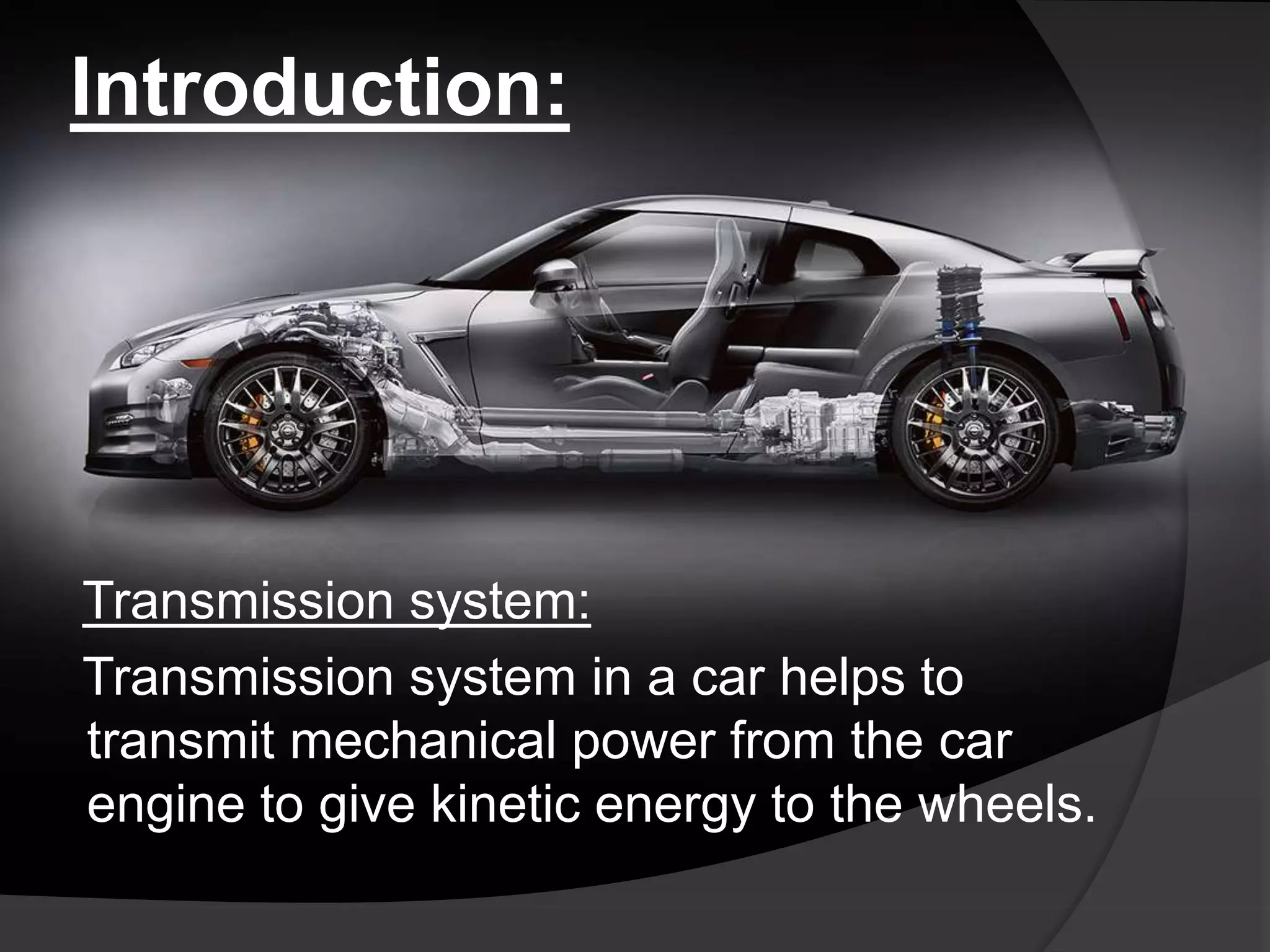
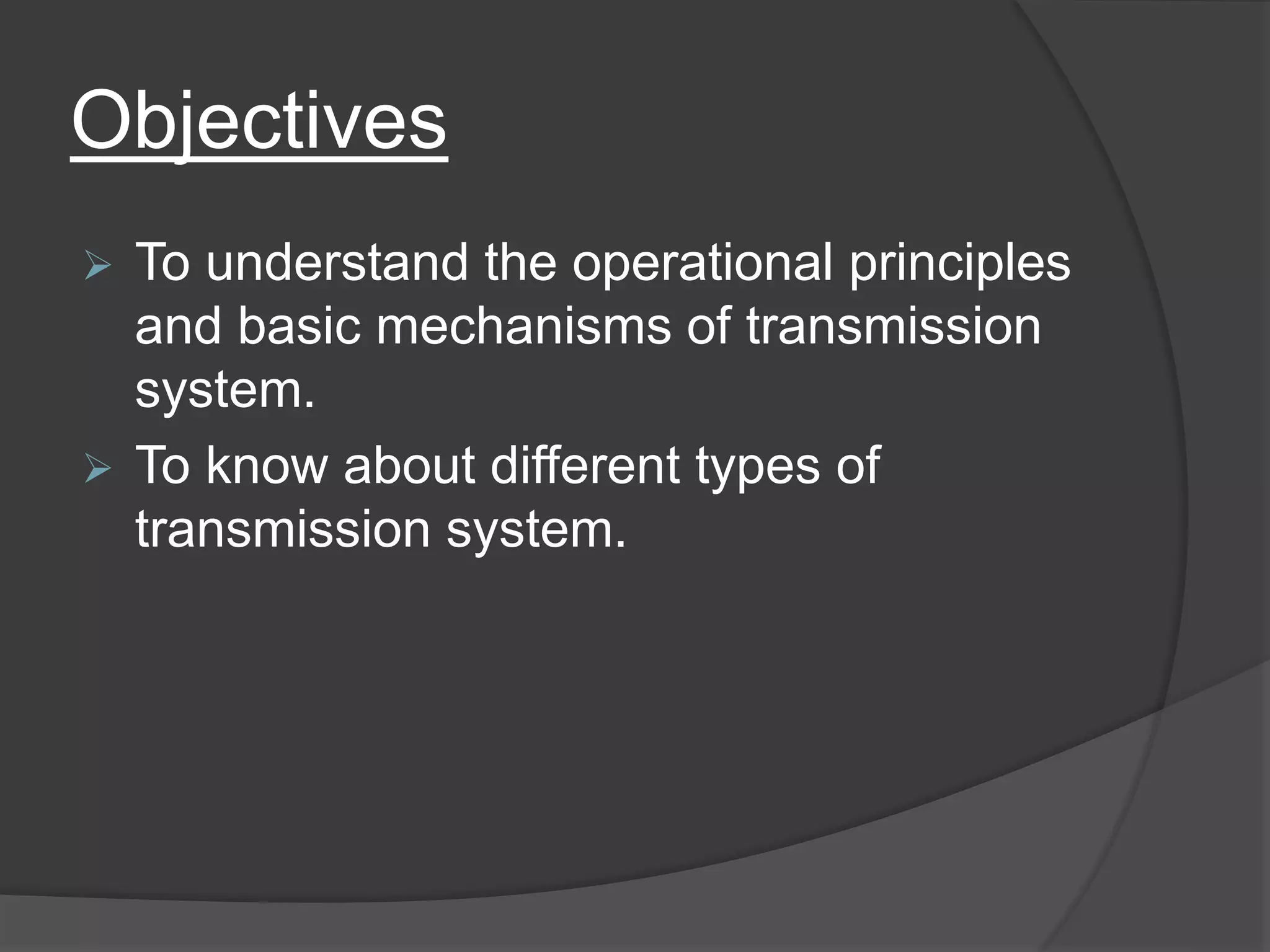
Transmission system in a car helps to
transmit mechanical power from the car
engine to give kinetic energy to the wheels.
Objectives
 To understand the operational principles
and basic mechanisms of transmission
system.
 To know about different types of
transmission system.
Methodology:
Purposes by Transmission
system:
• Provides the
mechanical
advantages.
• Provides speed
variation as required.
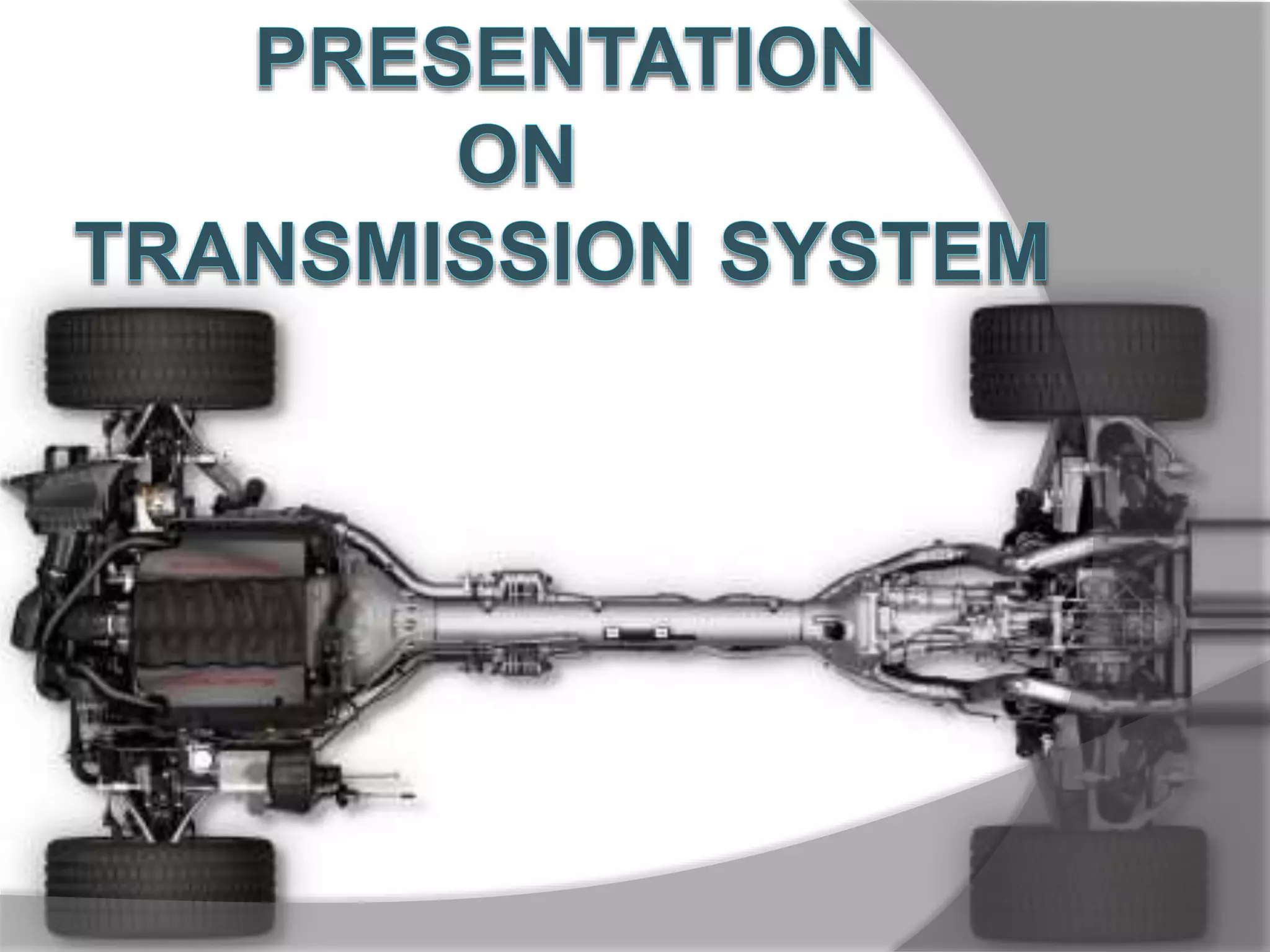
Figure: Transmission system.
Methodology:
Automobile Layout:
 Front-wheel-drive layout.
 Rear-wheel-drive layout.
 Four-wheel-drive layout.
Methodology:
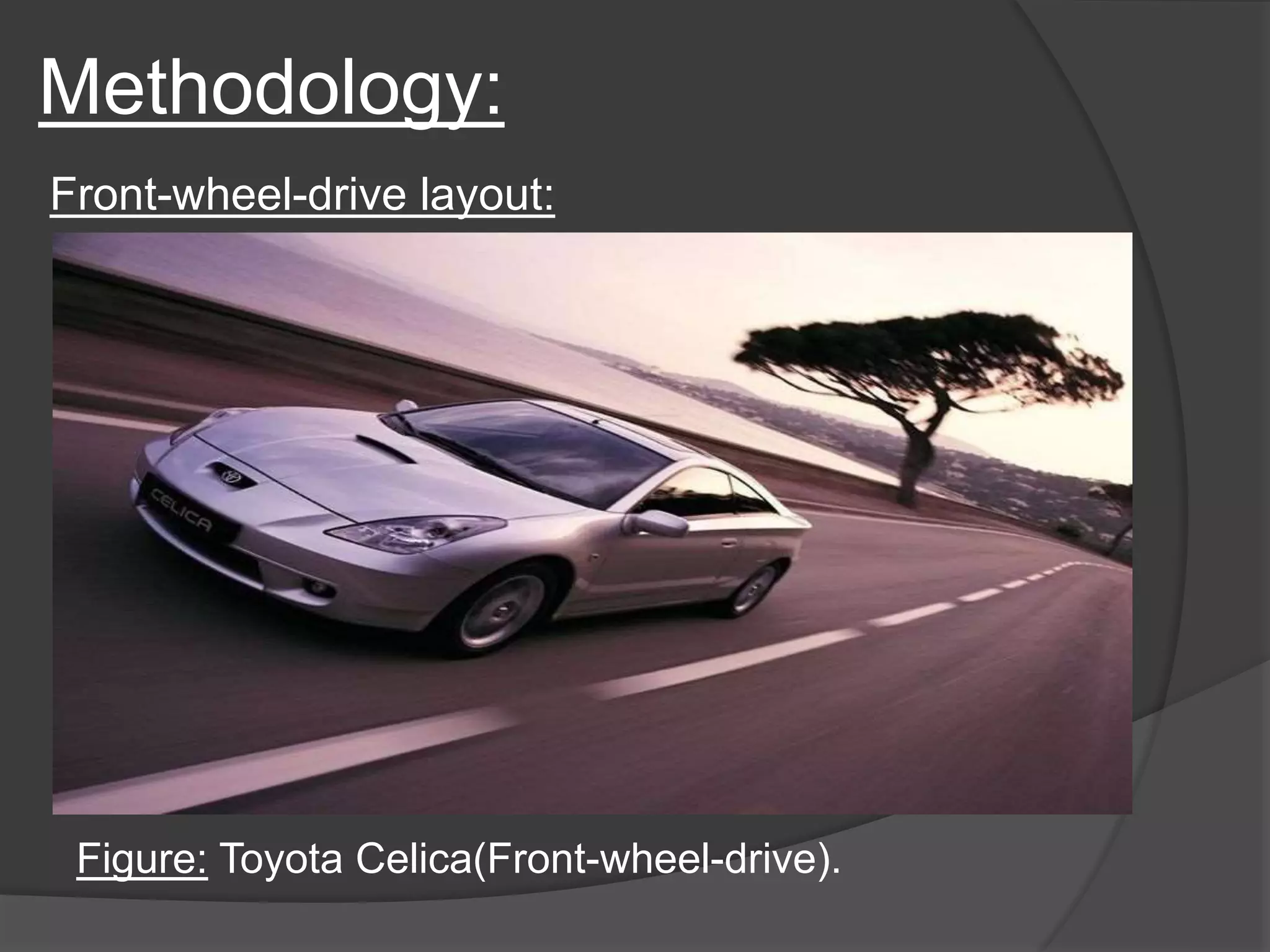
Front-wheel-drive layout:
Figure: Toyota Celica(Front-wheel-drive).
Methodology:
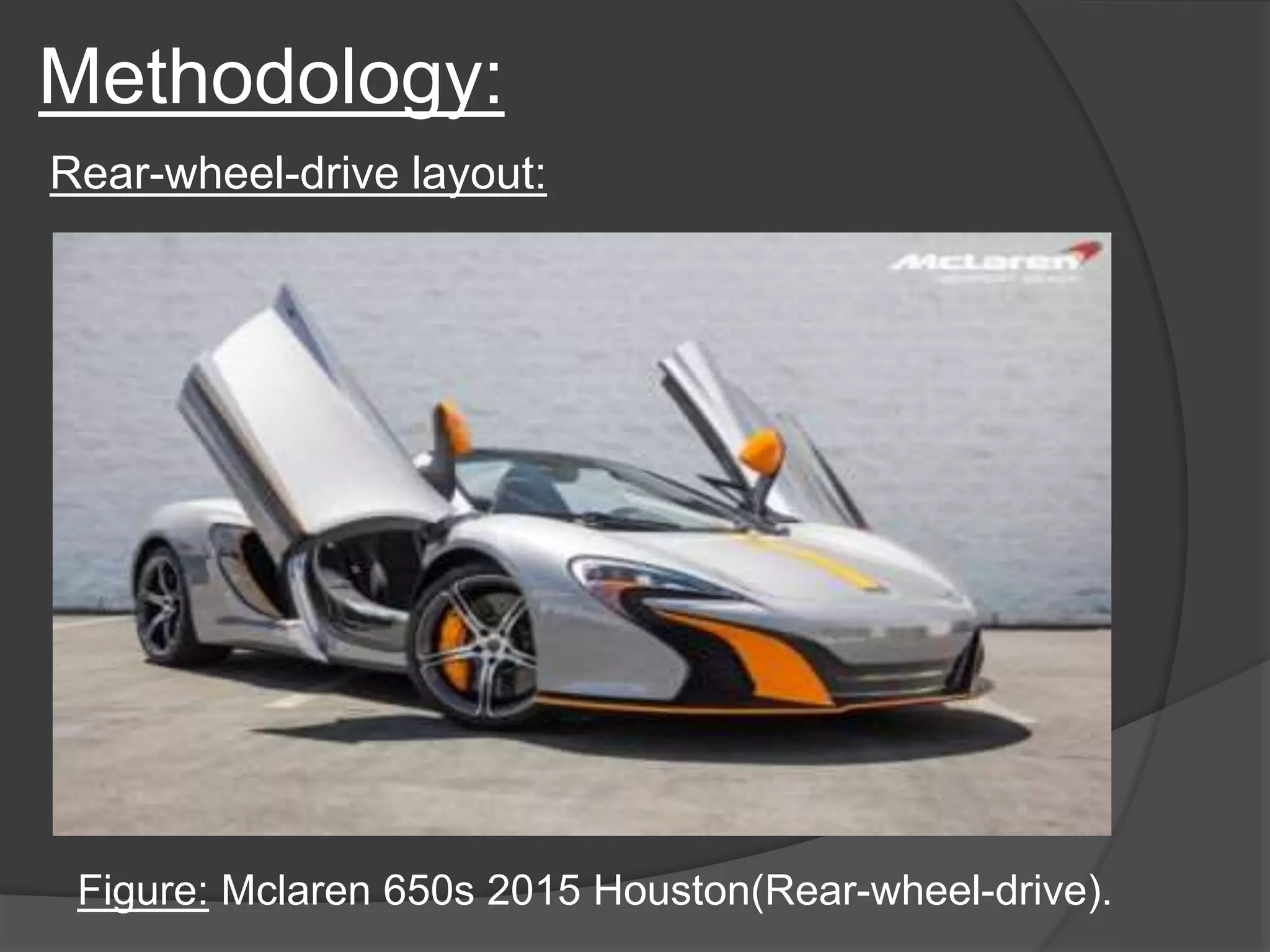
Rear-wheel-drive layout:
Figure: Mclaren 650s 2015 Houston(Rear-wheel-drive).
Methodology:
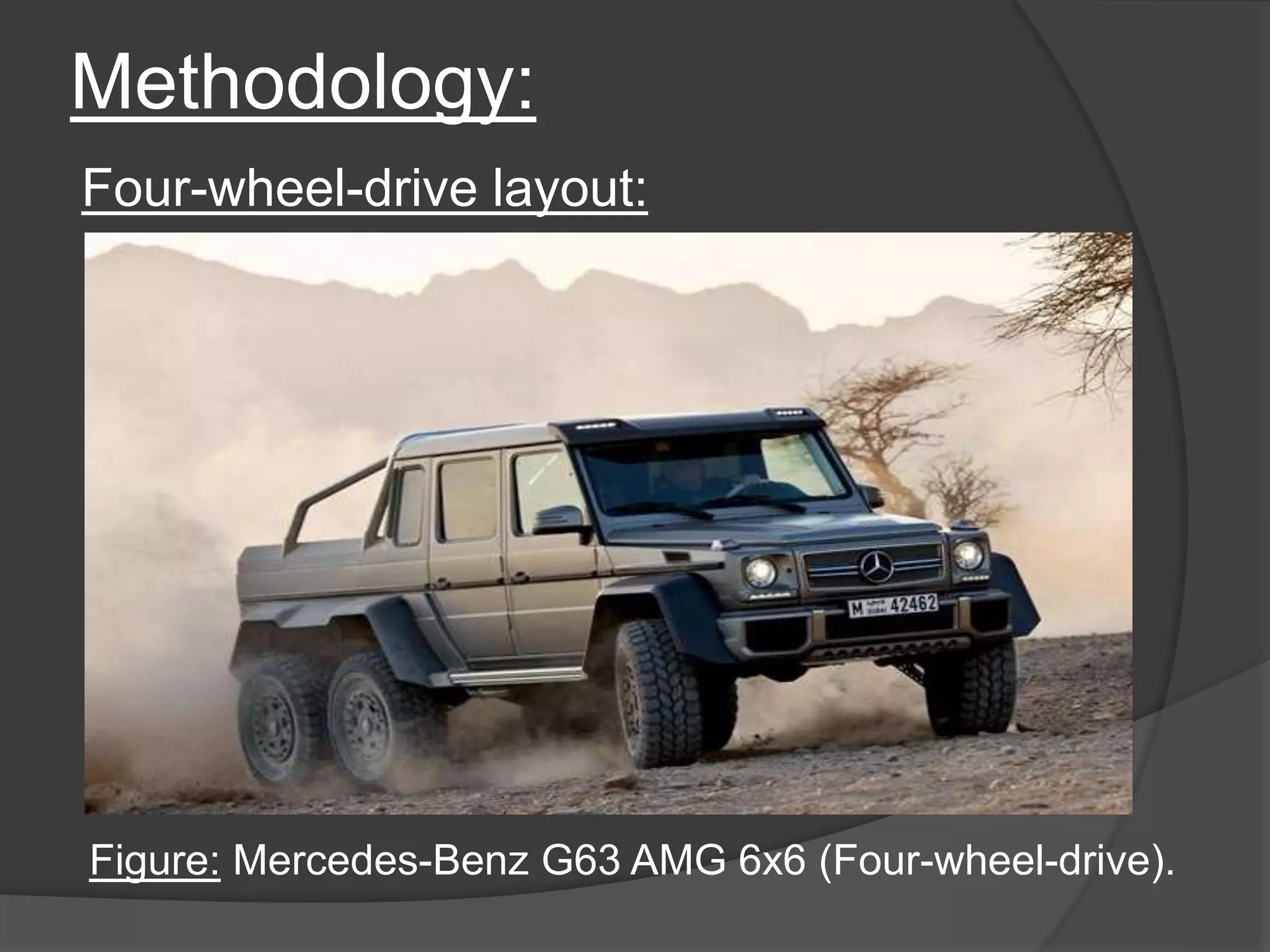
Four-wheel-drive layout:
Figure: Mercedes-Benz G63 AMG 6x6 (Four-wheel-drive).
Methodology:
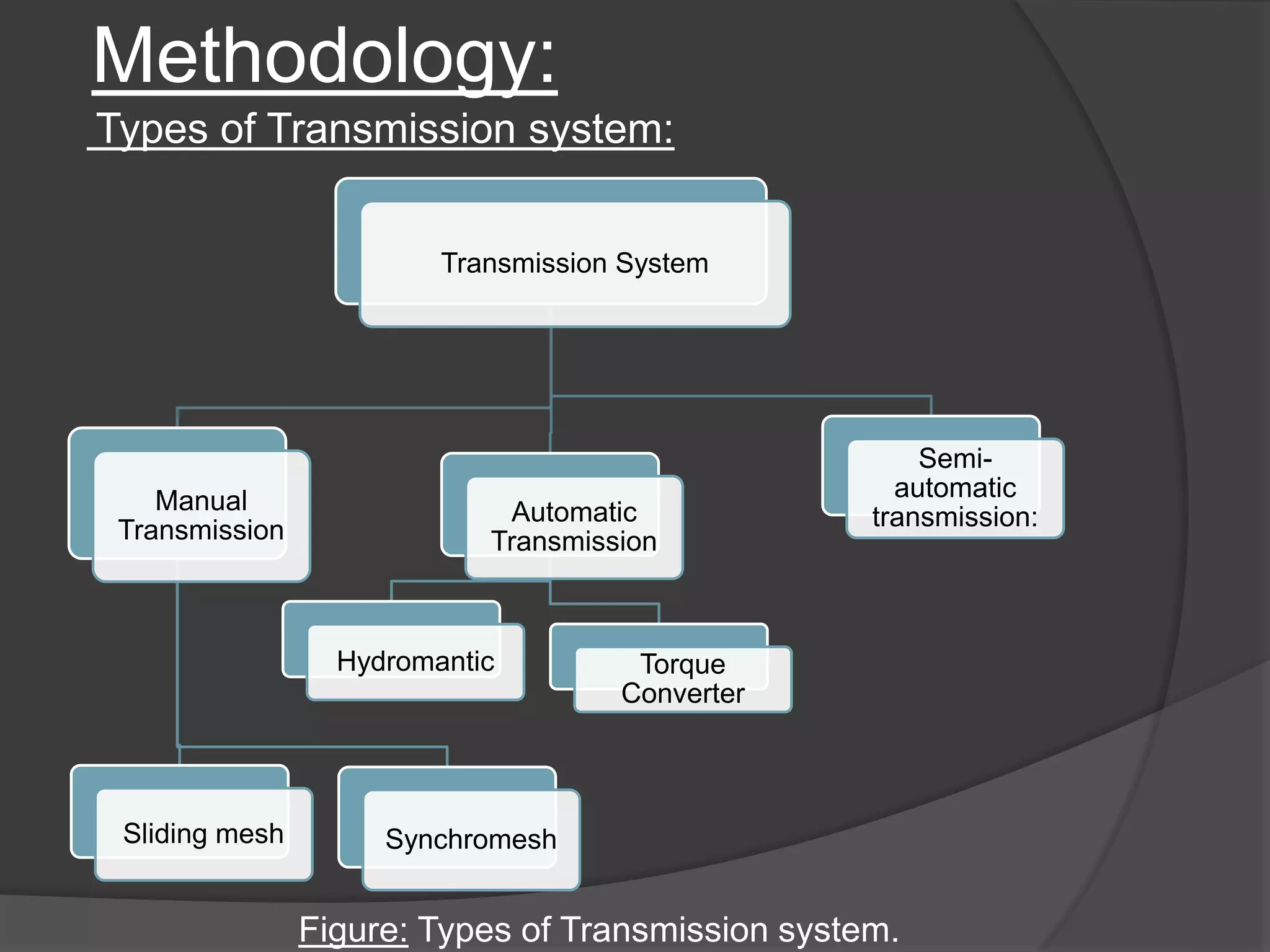
Transmission System
Manual
Transmission
Sliding mesh Synchromesh
Semi-
automatic
transmission:Automatic
Transmission
Hydromantic Torque
Converter
Types of Transmission system:
Figure: Types of Transmission system.
Methodology:
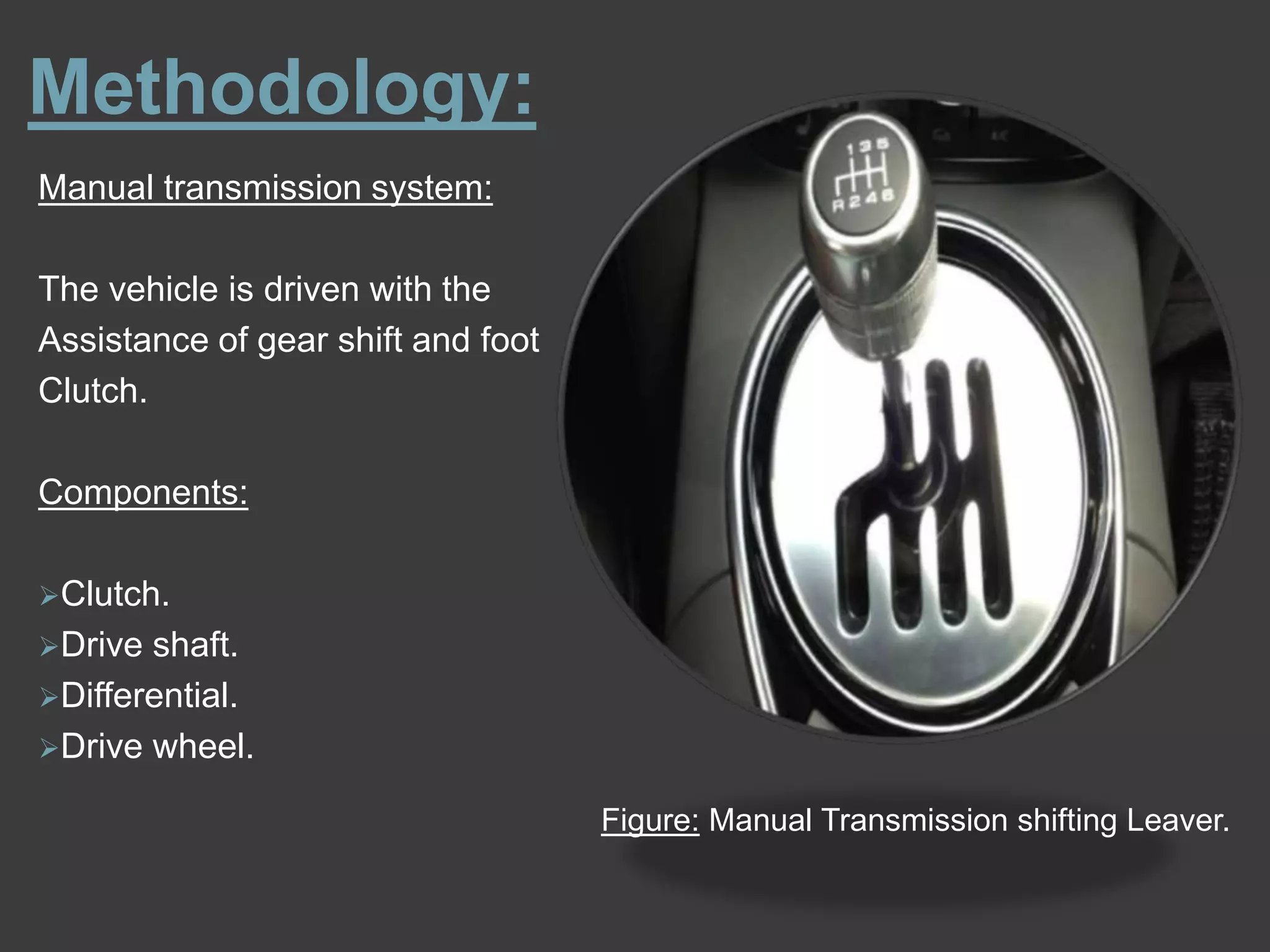
Manual transmission system:
The vehicle is driven with the
Assistance of gear shift and foot
Clutch.
Components:
Clutch.
Drive shaft.
Differential.
Drive wheel.
Figure: Manual Transmission shifting Leaver.
Methodology
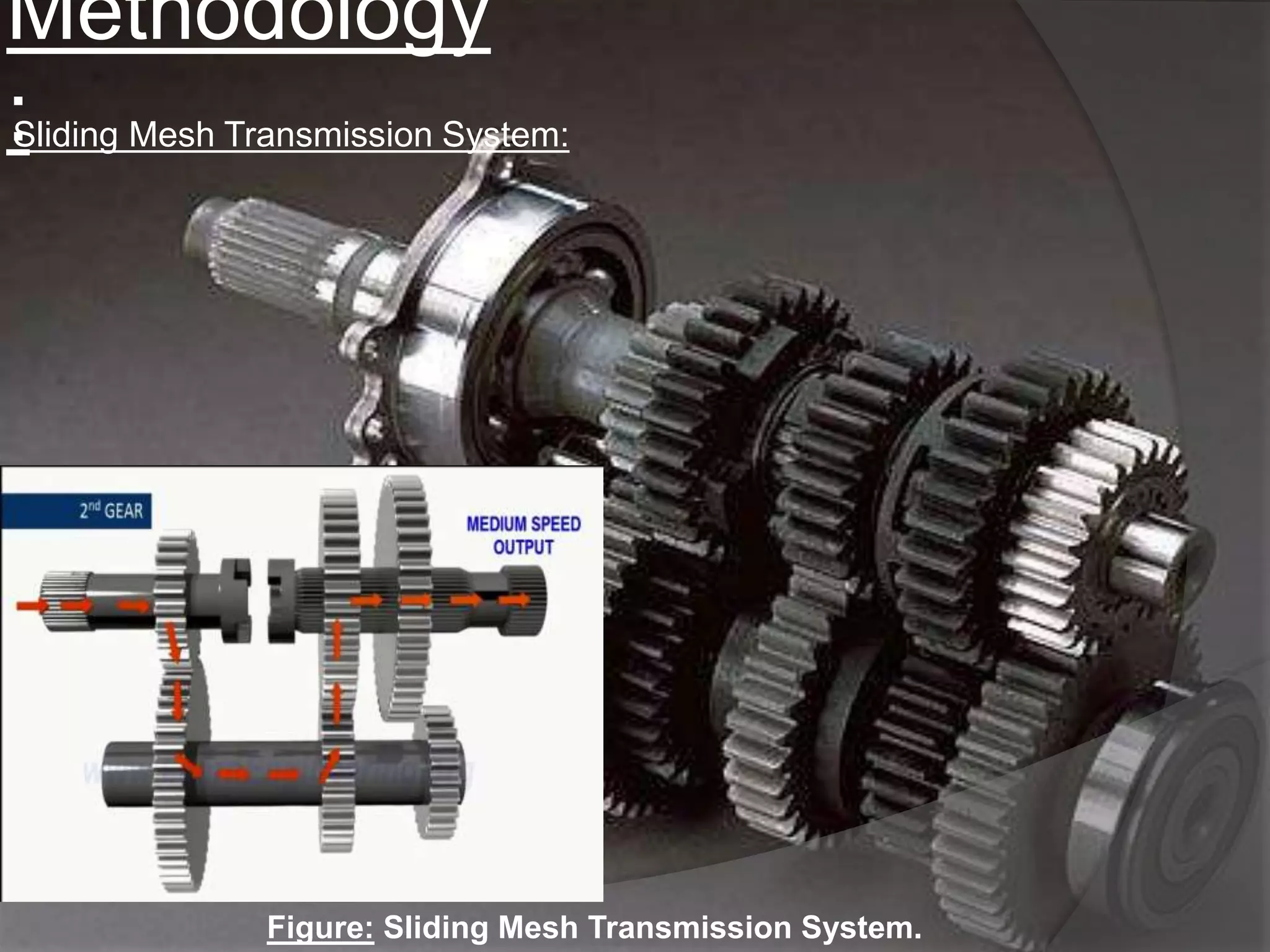
:Sliding Mesh Transmission System:
Figure: Sliding Mesh Transmission System.
Methodology:
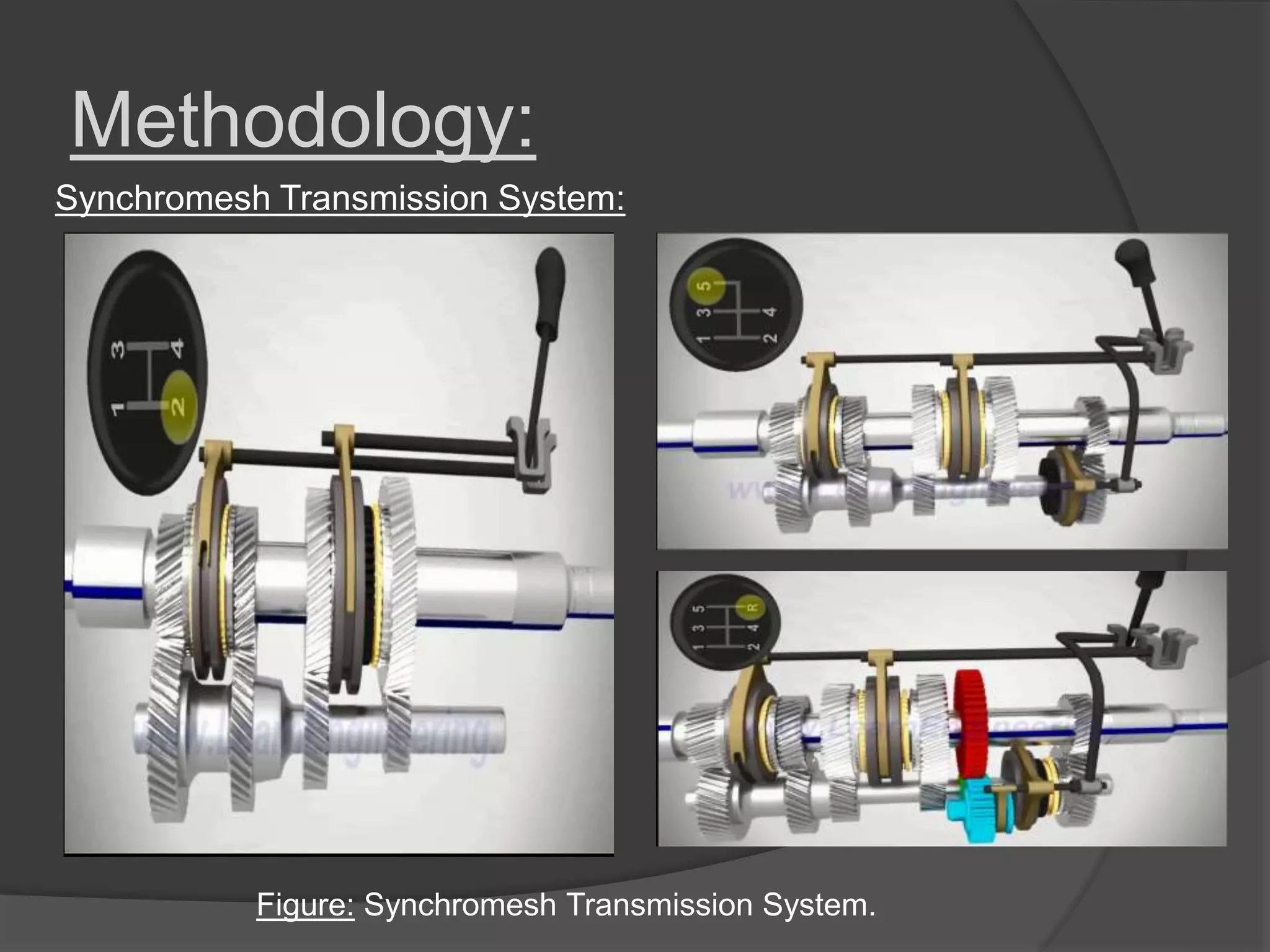
Figure: Synchromesh Transmission System.
Synchromesh Transmission System:
Methodology:
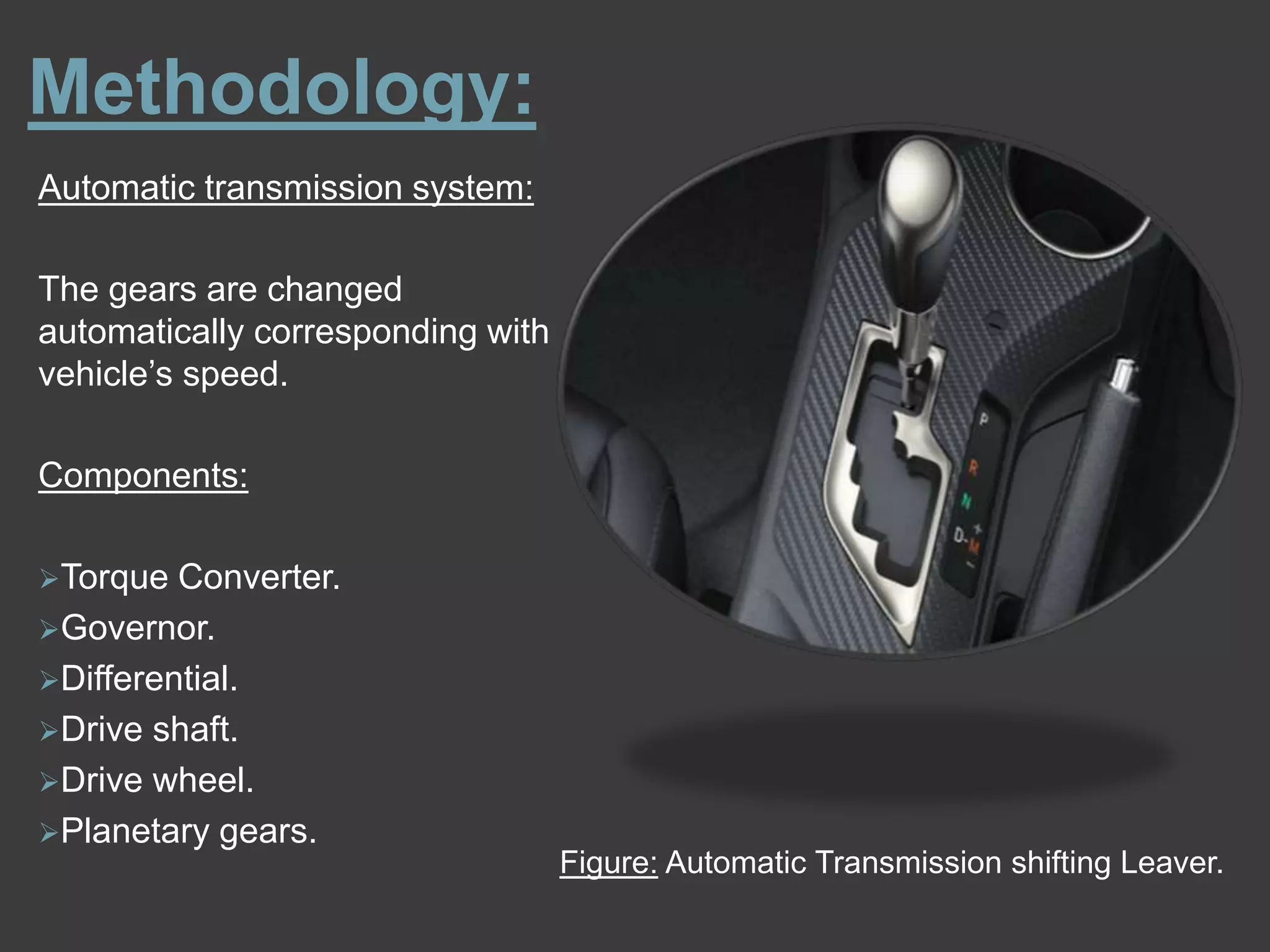
Automatic transmission system:
The gears are changed
automatically corresponding with
vehicle’s speed.
Components:
Torque Converter.
Governor.
Differential.
Drive shaft.
Drive wheel.
Planetary gears.
Figure: Automatic Transmission shifting Leaver.
Methodology:
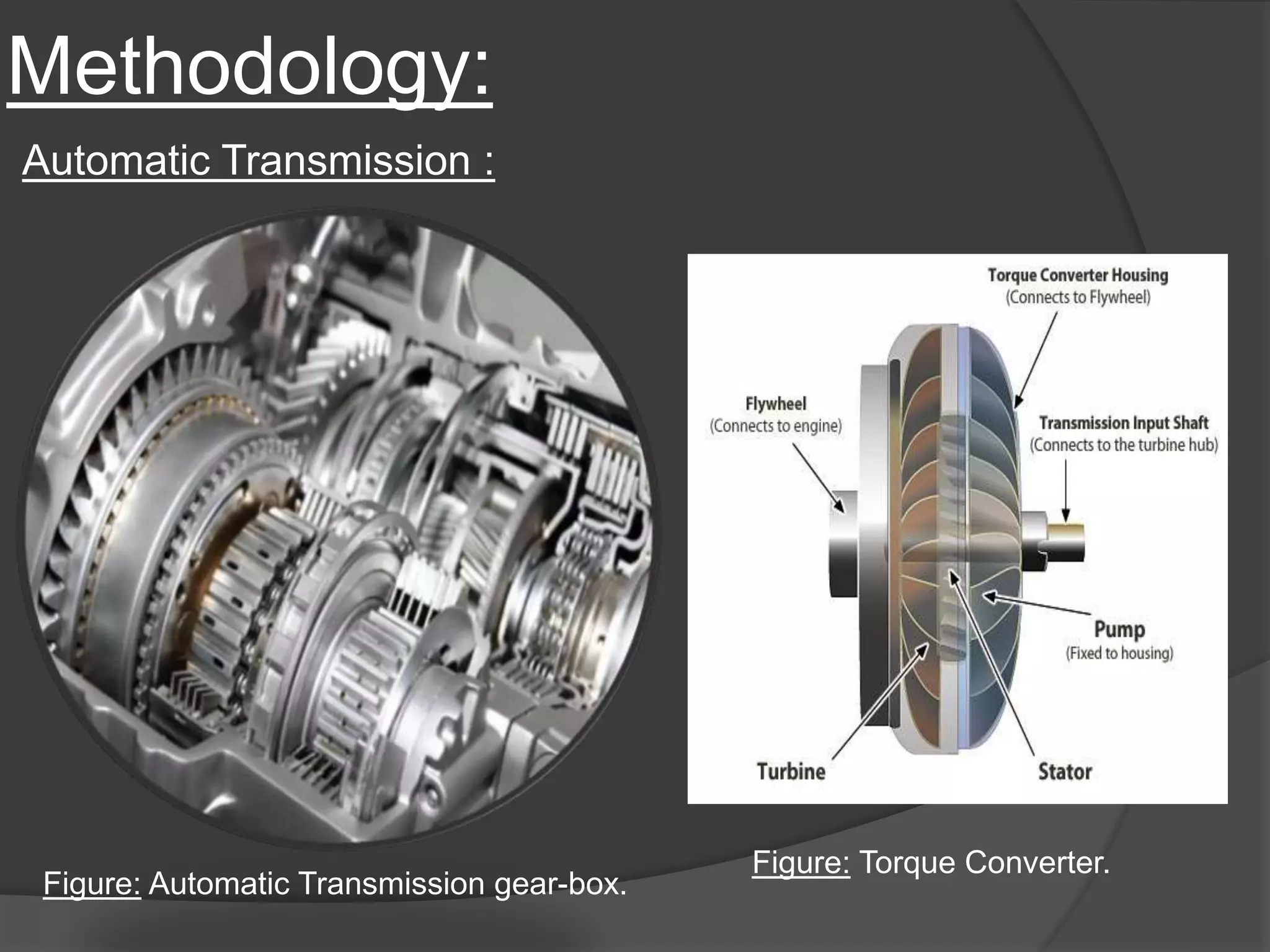
Figure: Automatic Transmission gear-box.
Figure: Torque Converter.
Automatic Transmission :
Methodology:
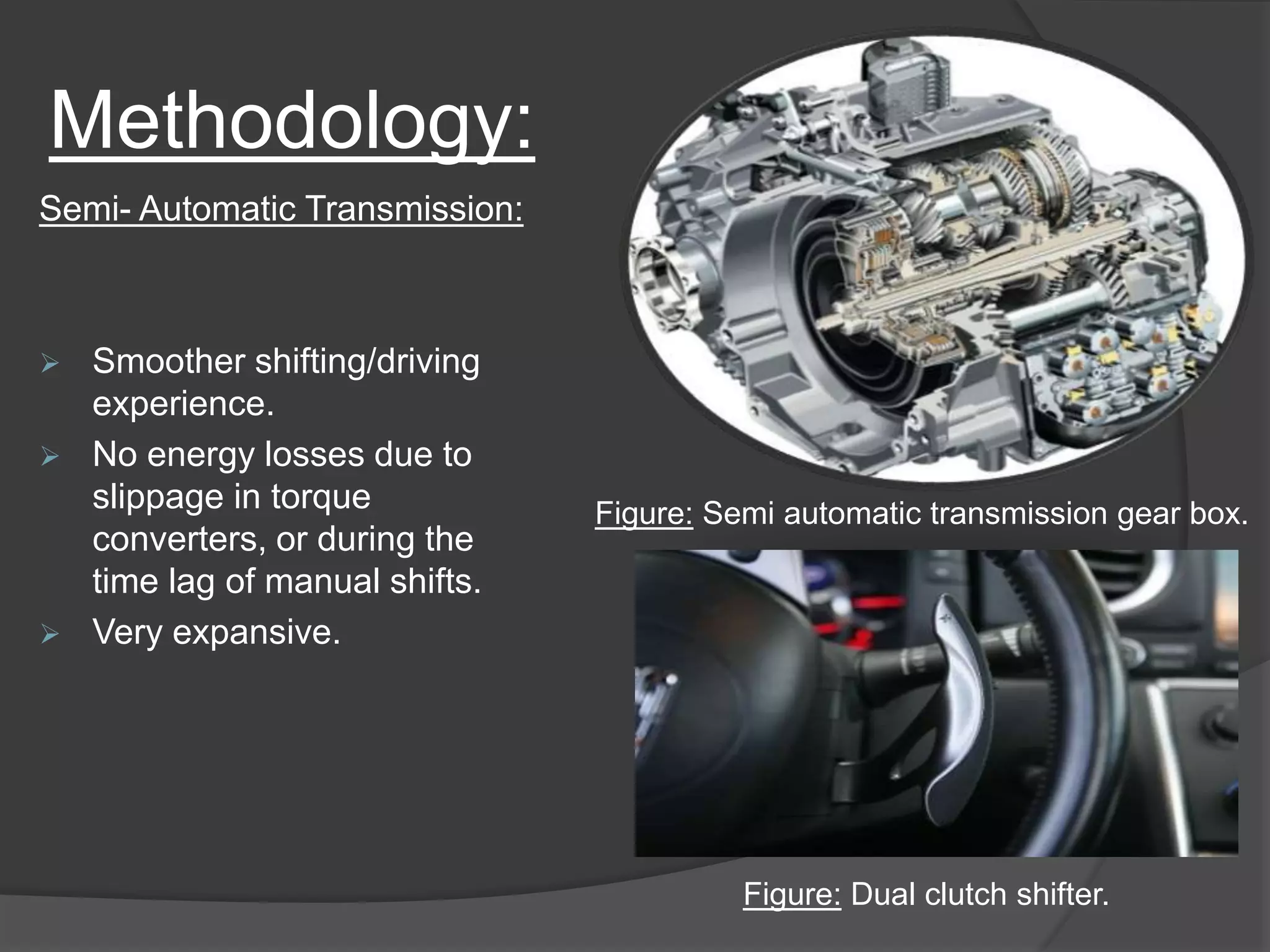
Semi- Automatic Transmission:
 Smoother shifting/driving
experience.
 No energy losses due to
slippage in torque
converters, or during the
time lag of manual shifts.
 Very expansive.
Figure: Semi automatic transmission gear box.
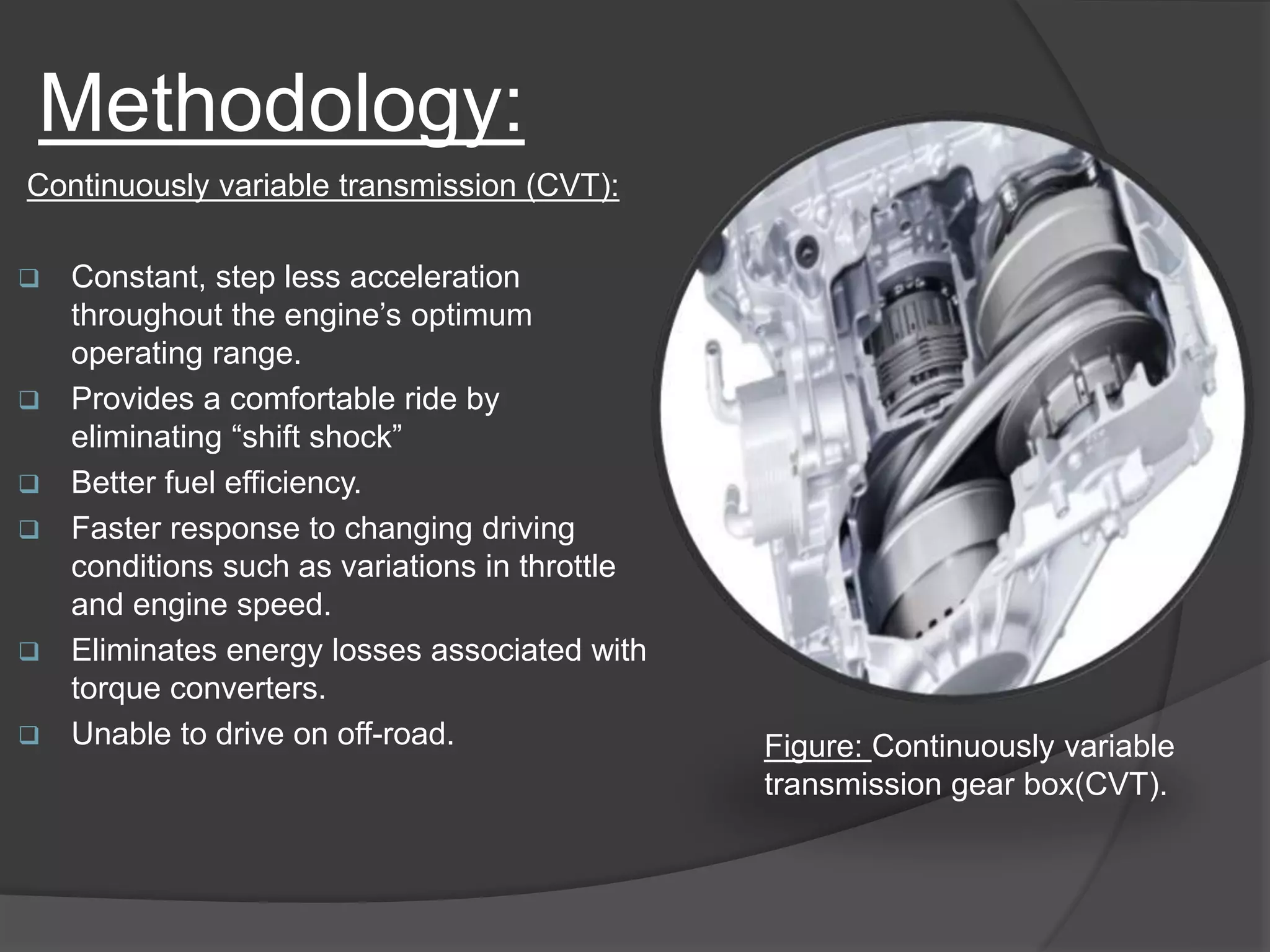
Figure: Dual clutch shifter.
Methodology:
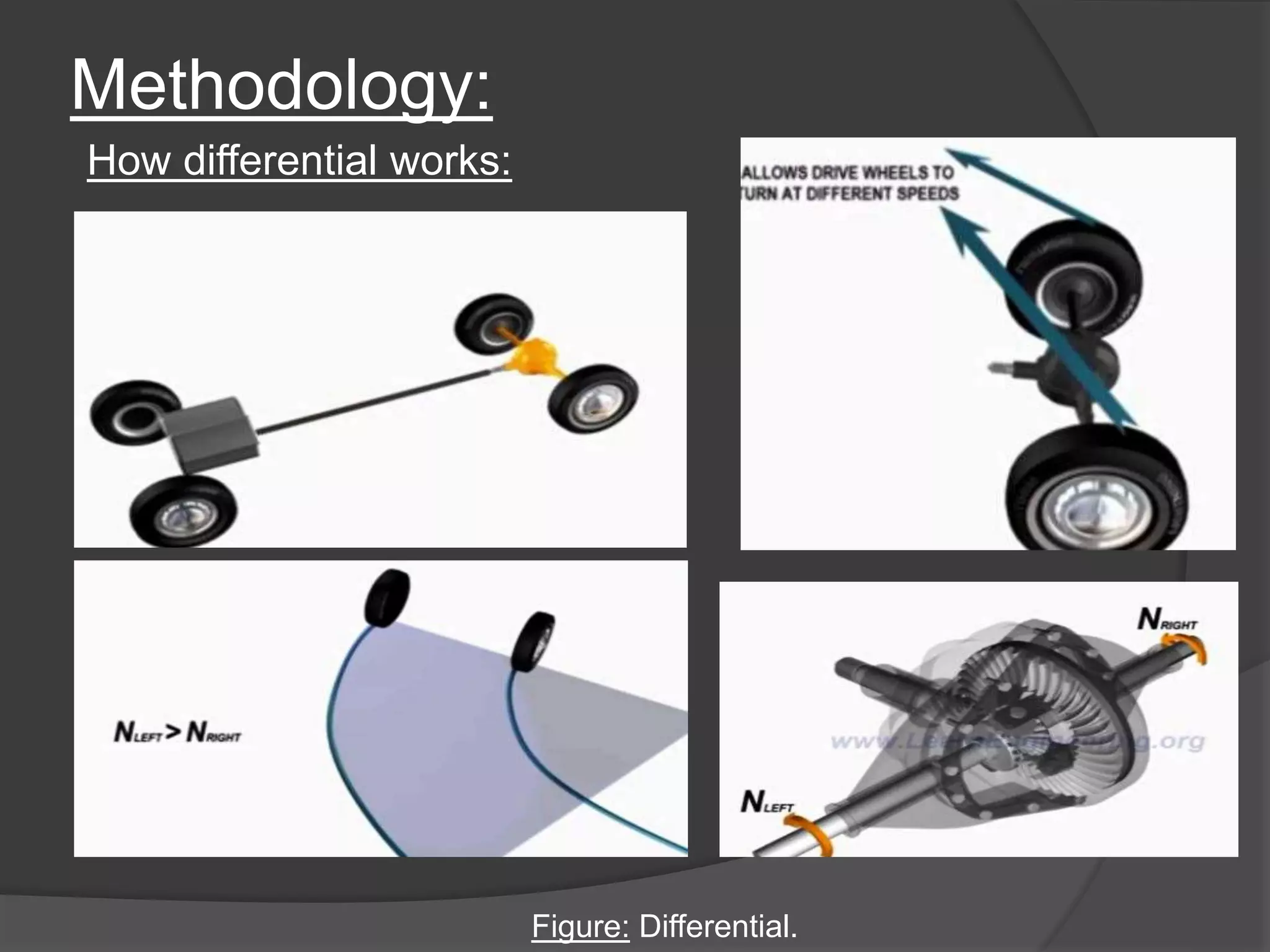
Continuously variable transmission (CVT):
 Constant, step less acceleration
throughout the engine’s optimum
operating range.
 Provides a comfortable ride by
eliminating “shift shock”
 Better fuel efficiency.
 Faster response to changing driving
conditions such as variations in throttle
and engine speed.
 Eliminates energy losses associated with
torque converters.
 Unable to drive on off-road. Figure: Continuously variable
transmission gear box(CVT).
Methodology:
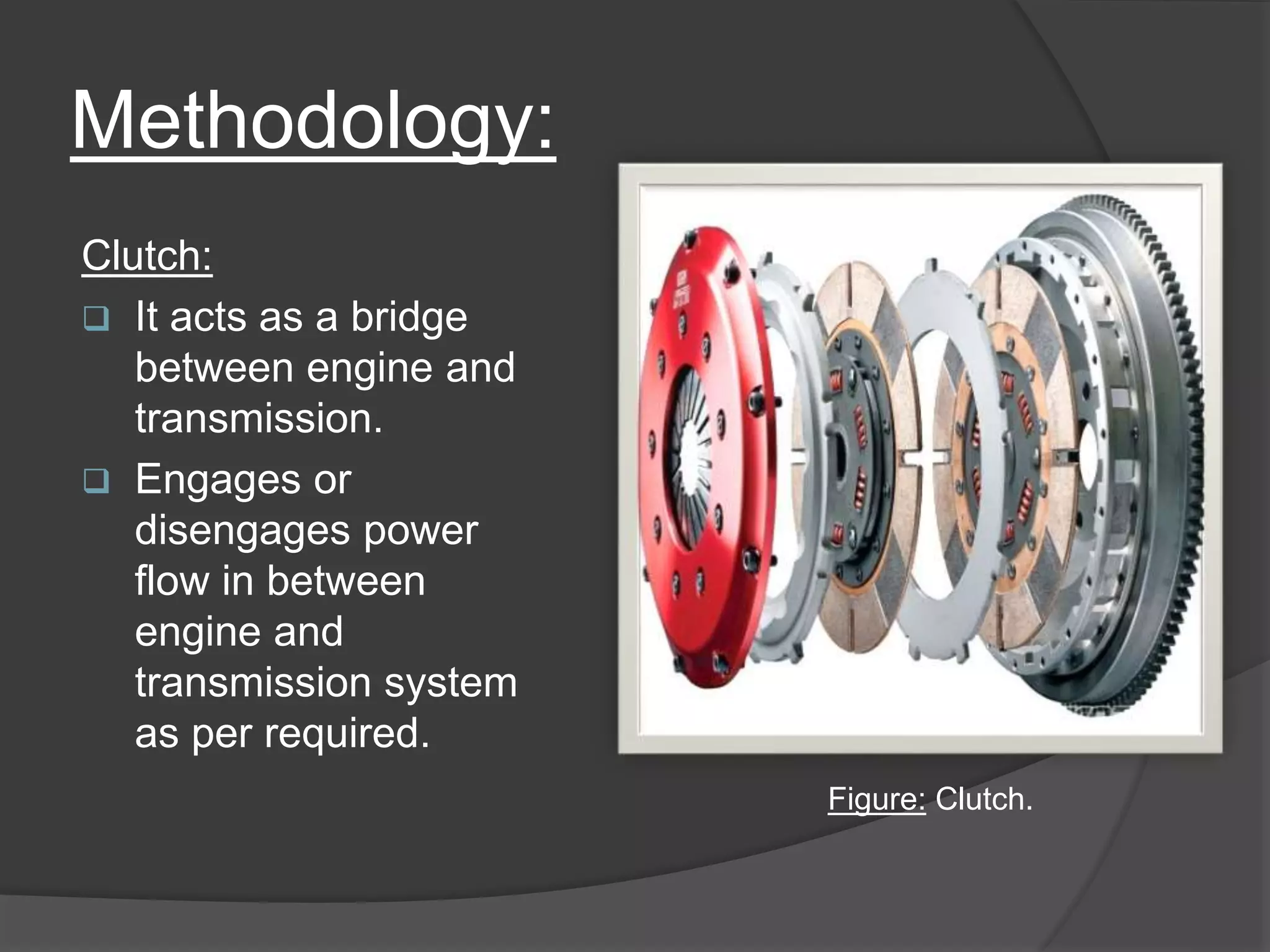
Figure: Differential.
How differential works:
Methodology:
Clutch:
 It acts as a bridge
between engine and
transmission.
 Engages or
disengages power
flow in between
engine and
transmission system
as per required.
Figure: Clutch.
Methodology:
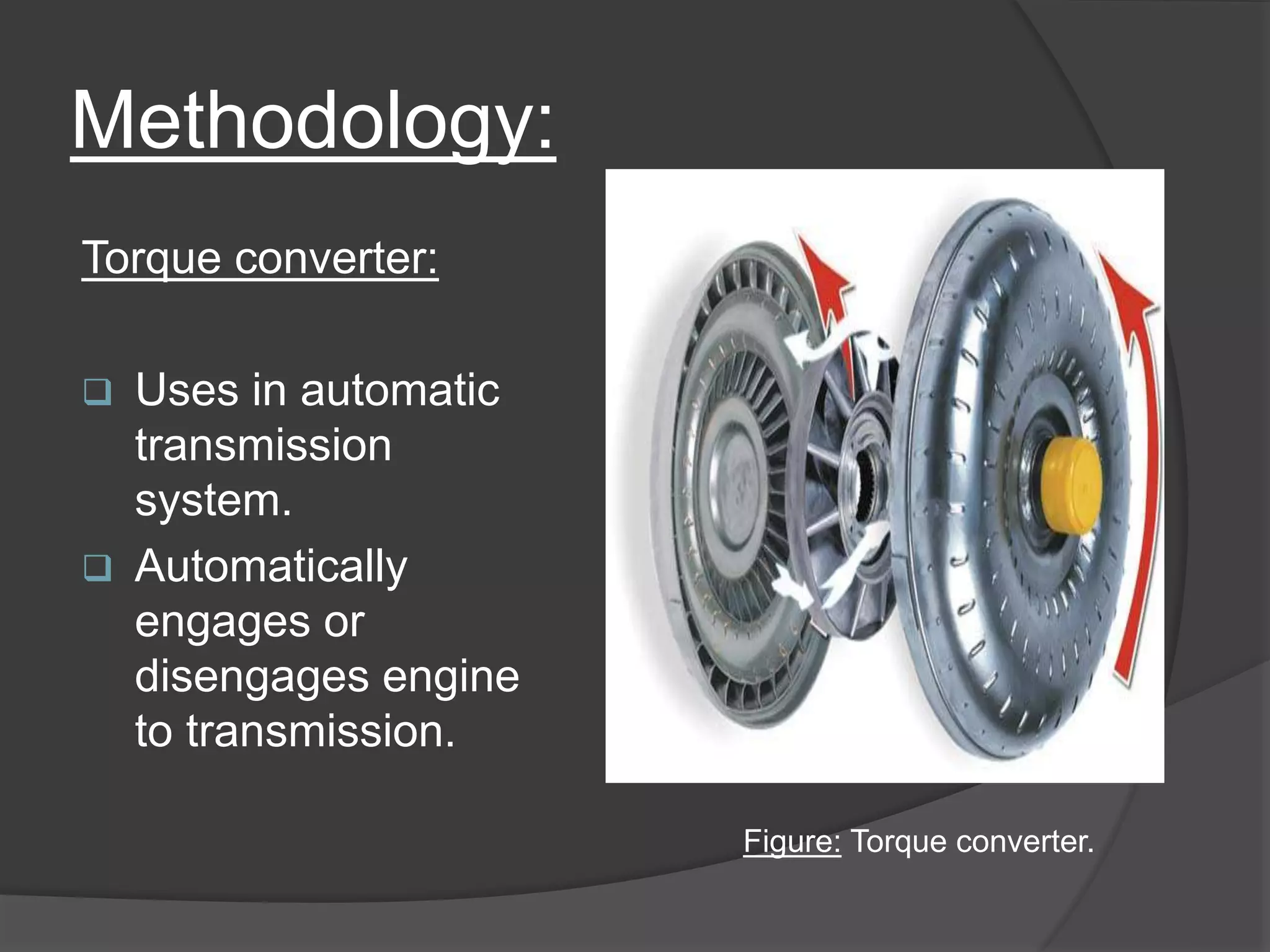
Torque converter:
 Uses in automatic
transmission
system.
 Automatically
engages or
disengages engine
to transmission.
Figure: Torque converter.
Methodology:
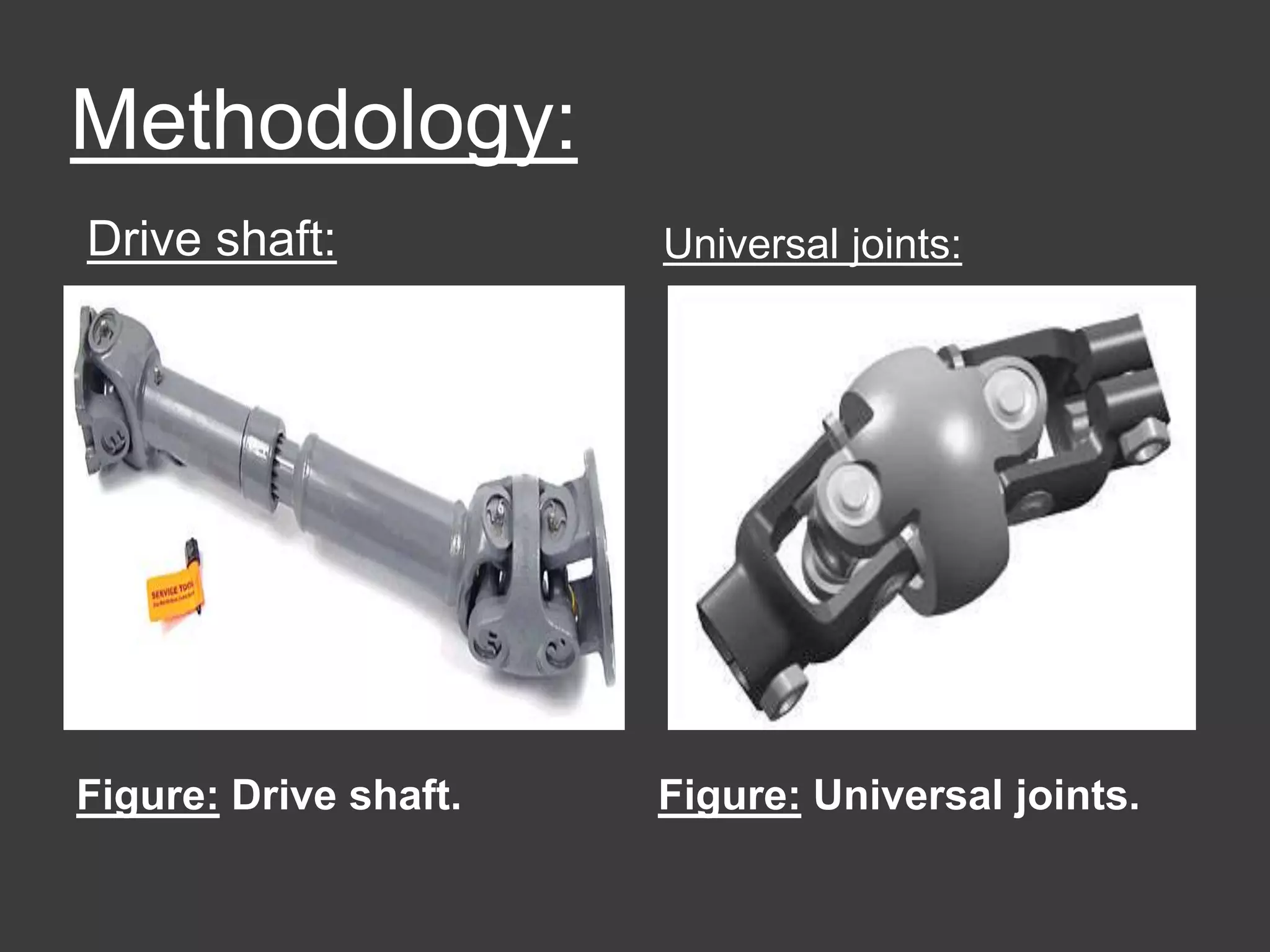
Figure: Drive shaft. Figure: Universal joints.
Universal joints:Drive shaft:
Discussion:
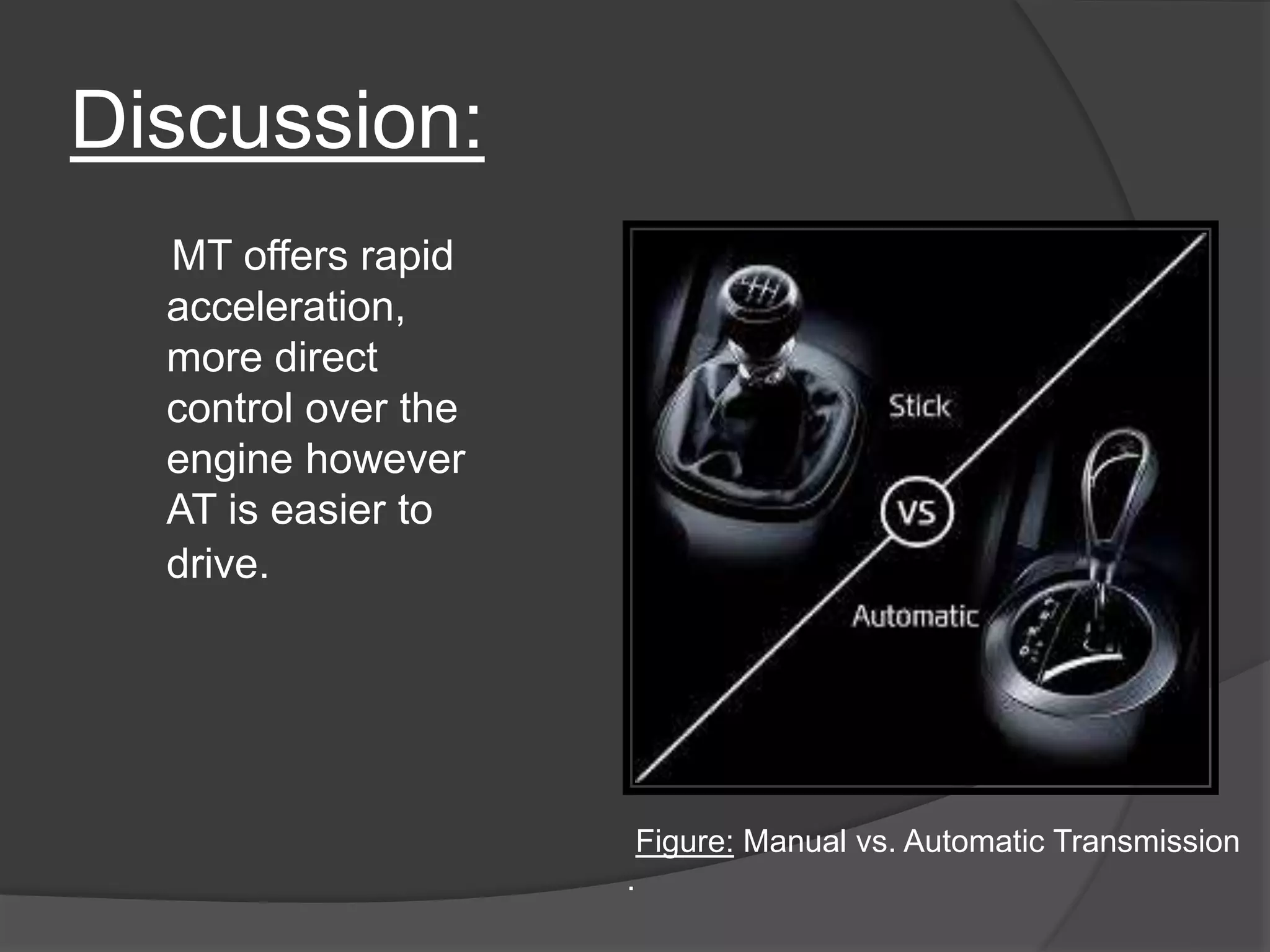
MT offers rapid
acceleration,
more direct
control over the
engine however
AT is easier to
drive.
Figure: Manual vs. Automatic Transmission
.
Conclusion:
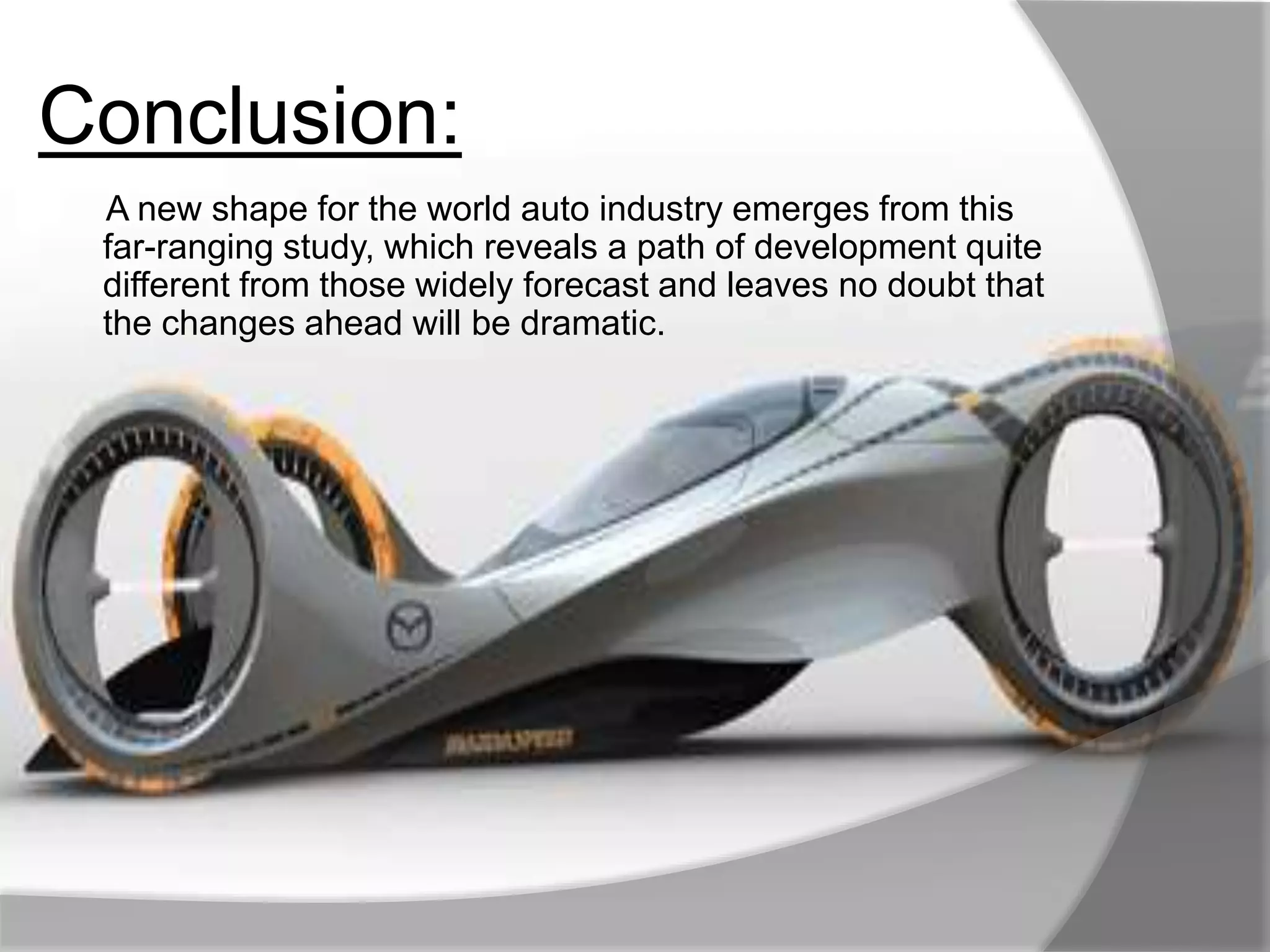
A new shape for the world auto industry emerges from this
far-ranging study, which reveals a path of development quite
different from those widely forecast and leaves no doubt that
the changes ahead will be dramatic.
ANY
QUESTIONS?

Presentation on Transmission System