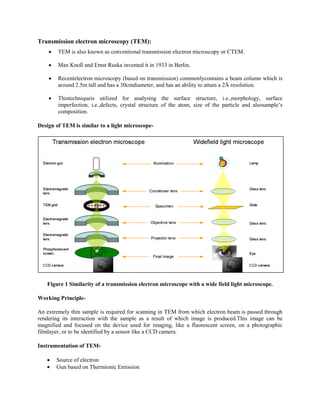
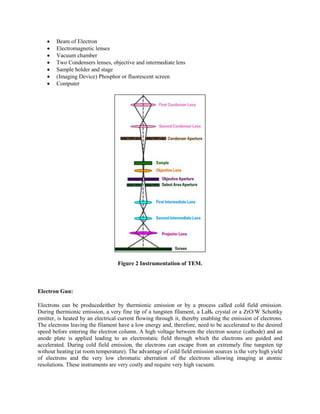
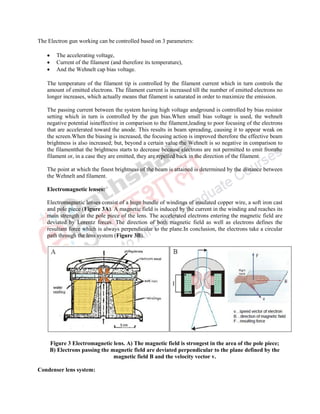
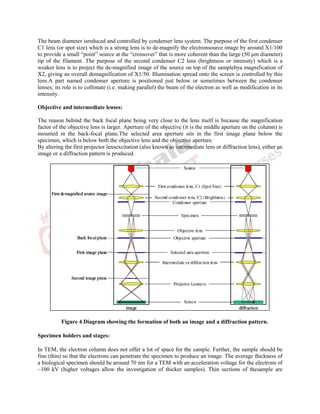
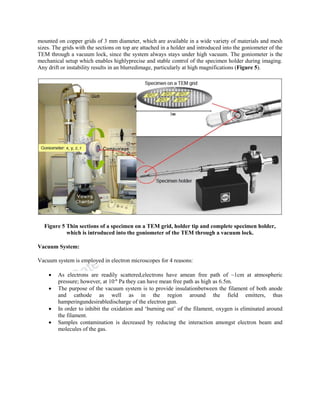
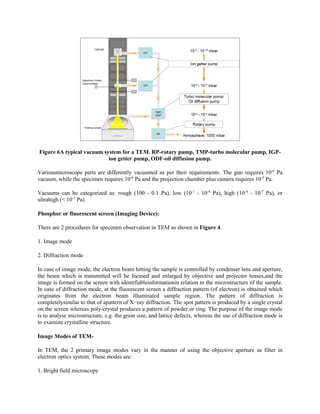
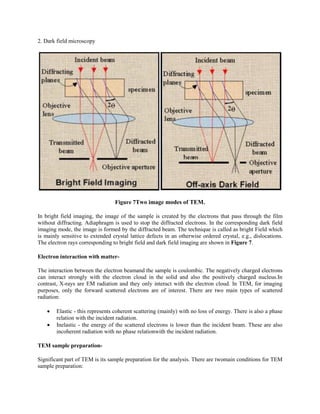
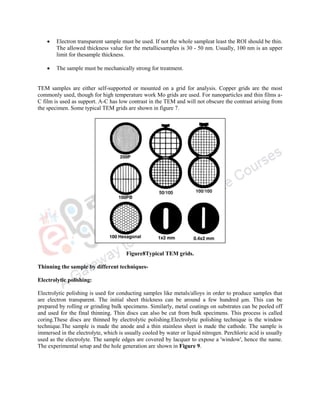
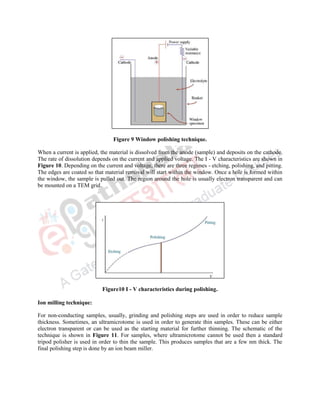
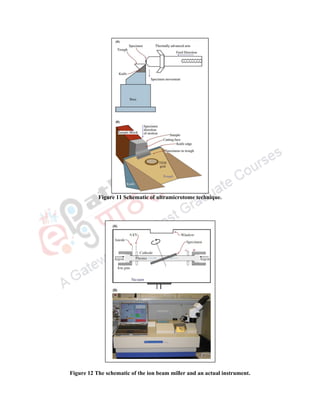
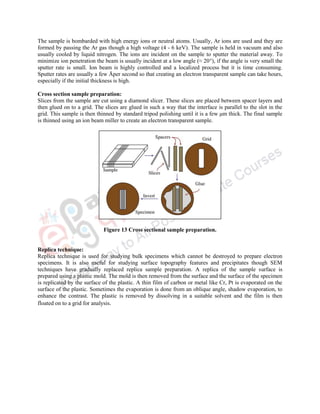
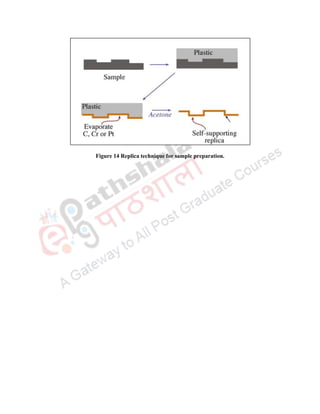
Transmission Electron Microscopy (TEM) is a technique invented in 1933 for analyzing the morphology, defects, and composition of samples by passing an electron beam through extremely thin specimens. It involves complex instrumentation including electron sources, lenses, and a vacuum system to achieve high-resolution imaging, and employs techniques such as bright field and dark field microscopy for image formation. Proper sample preparation is critical, requiring electron transparency and mechanical strength, and various methods like electrolytic polishing and ion milling are used to achieve suitable samples for analysis.