Transforming principle
(Griffith’s Experiment)
DNA- a genetic material
By-Dr R K Upadhyay
PGT, Biology
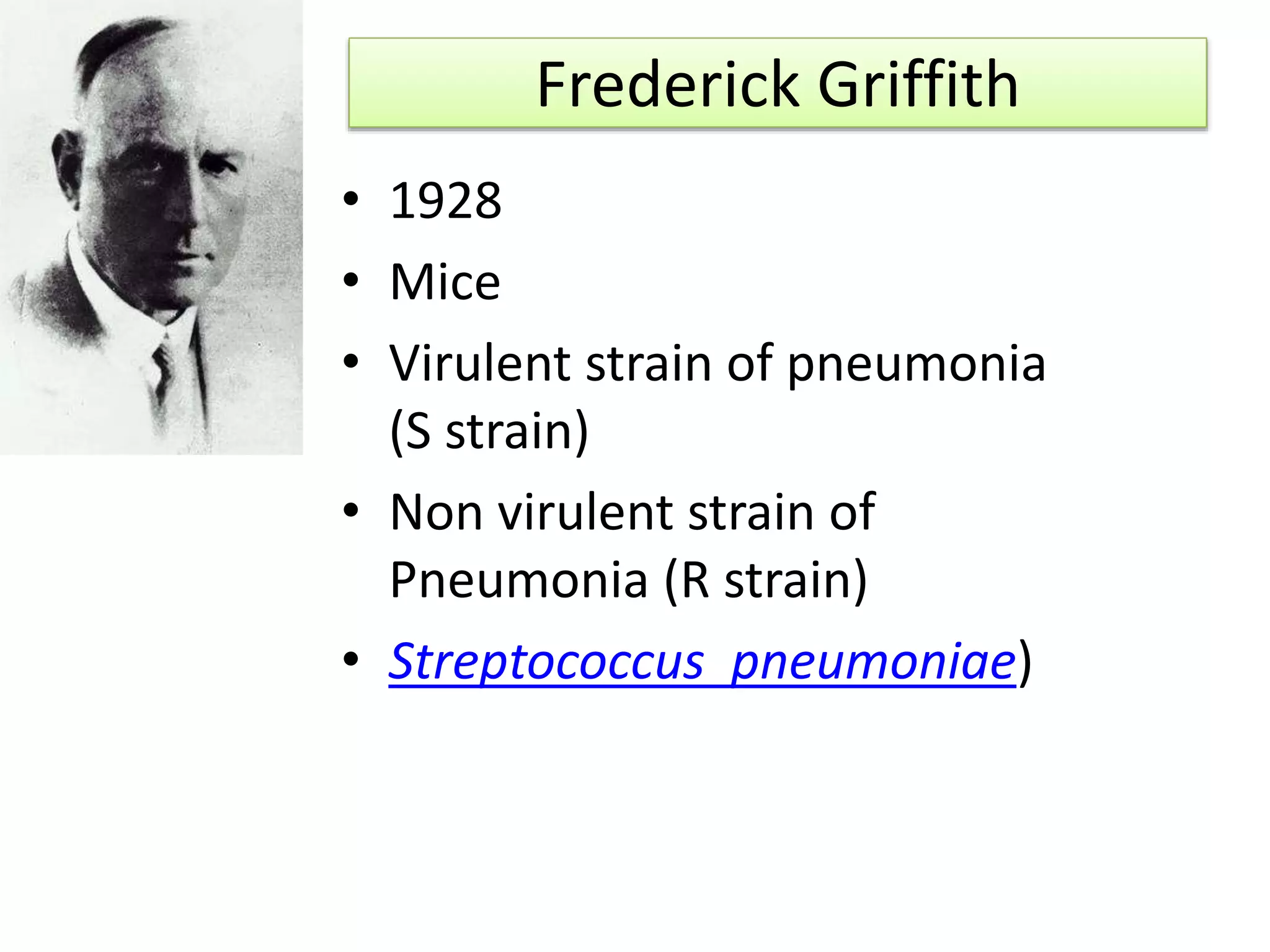
Frederick Griffith
• 1928
• Mice
• Virulent strain of pneumonia
(S strain)
• Non virulent strain of
Pneumonia (R strain)
• Streptococcus pneumoniae)
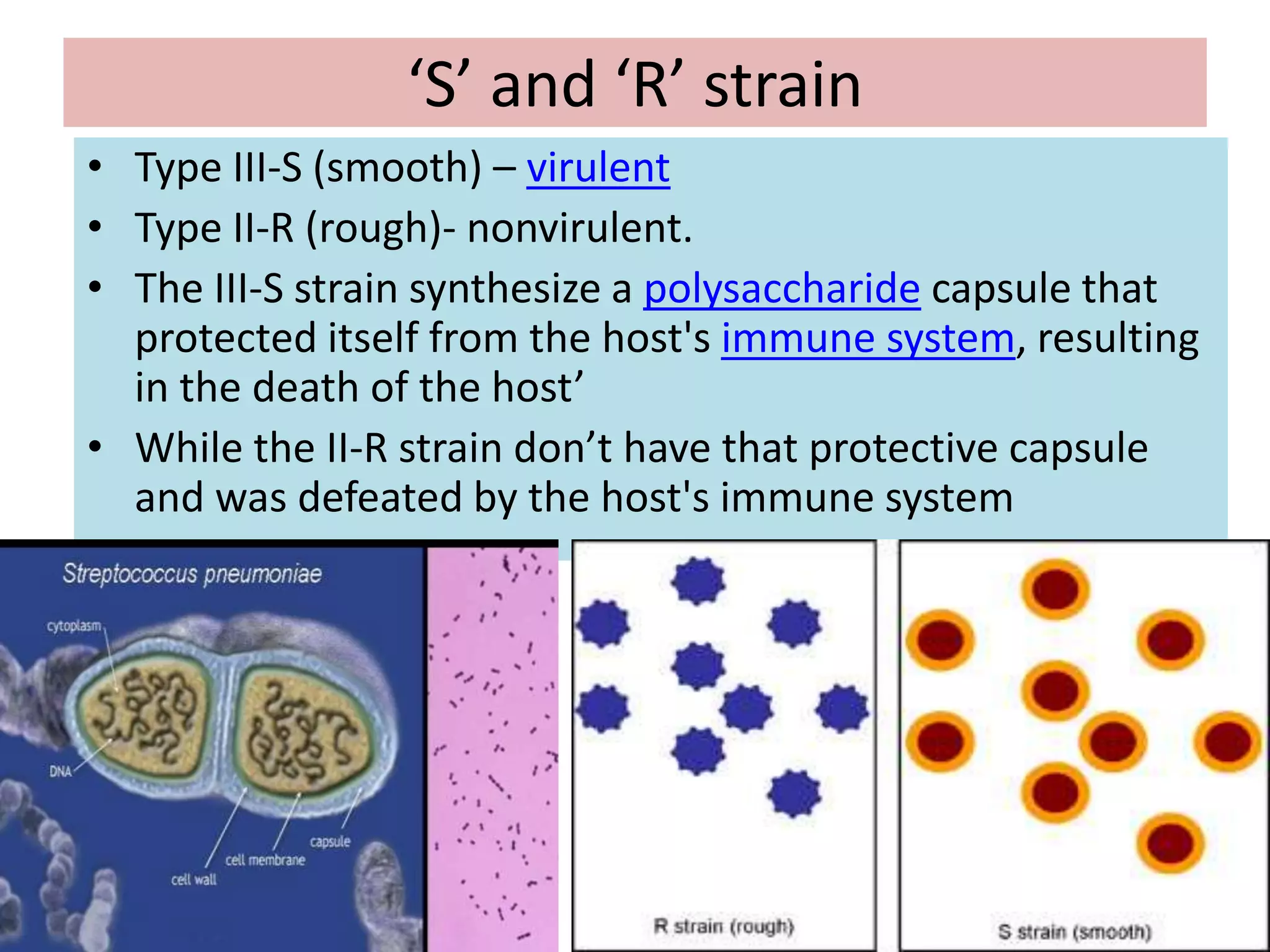
‘S’ and ‘R’ strain
• Type III-S (smooth) – virulent
• Type II-R (rough)- nonvirulent.
• The III-S strain synthesize a polysaccharide capsule that
protected itself from the host's immune system, resulting
in the death of the host’
• While the II-R strain don’t have that protective capsule
and was defeated by the host's immune system
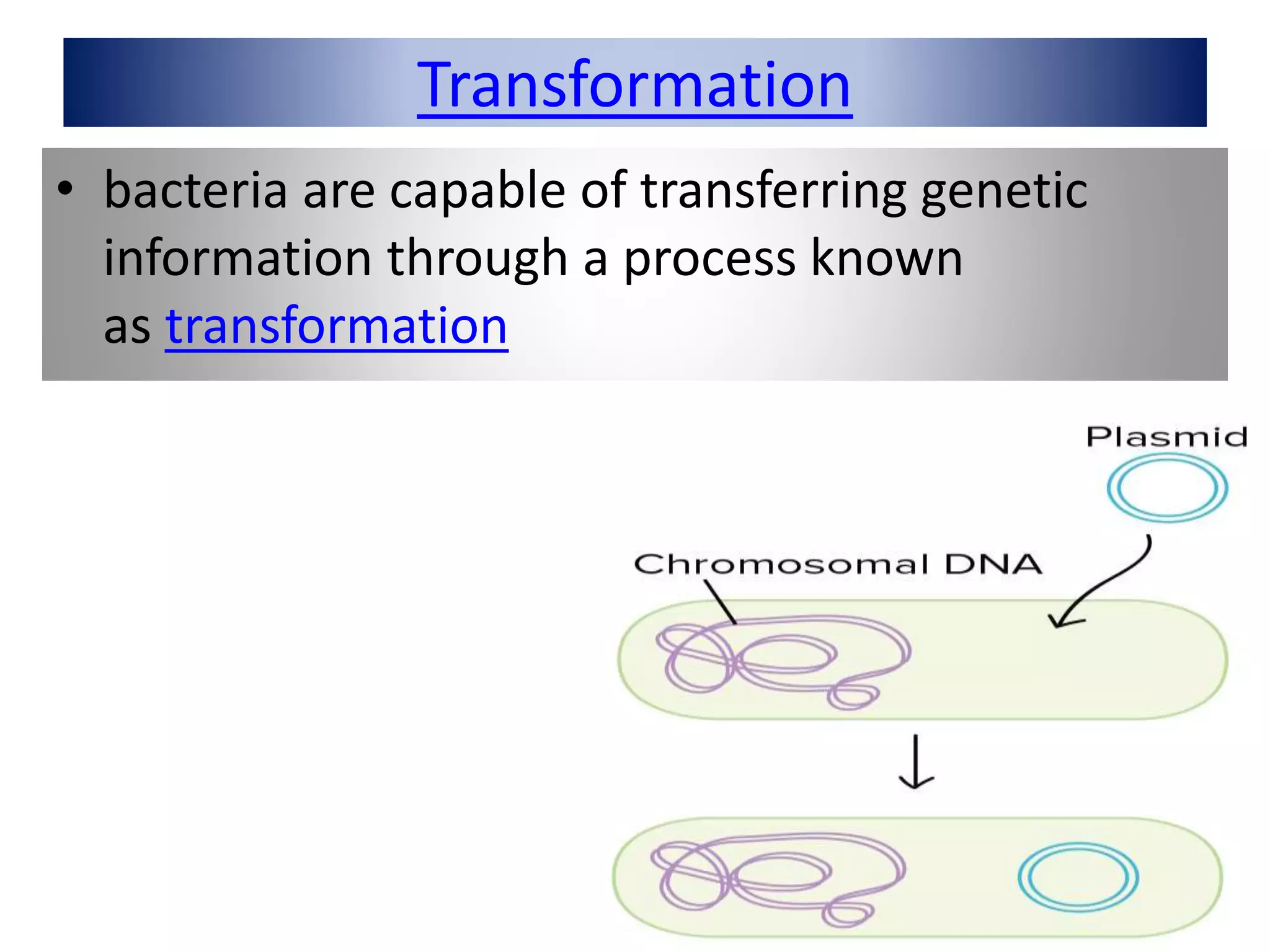
Transformation
• bacteria are capable of transferring genetic
information through a process known
as transformation
Griffith experiment
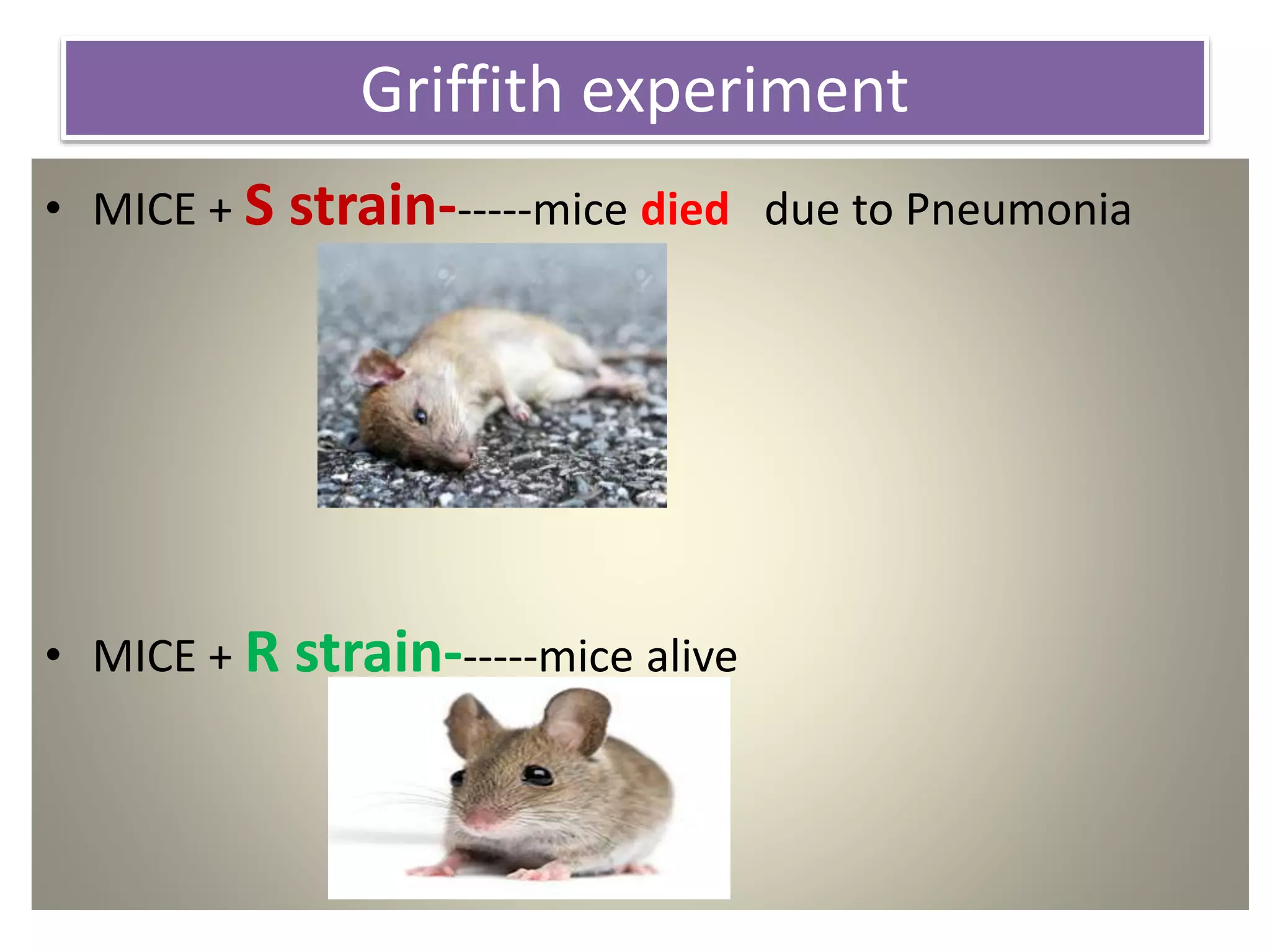
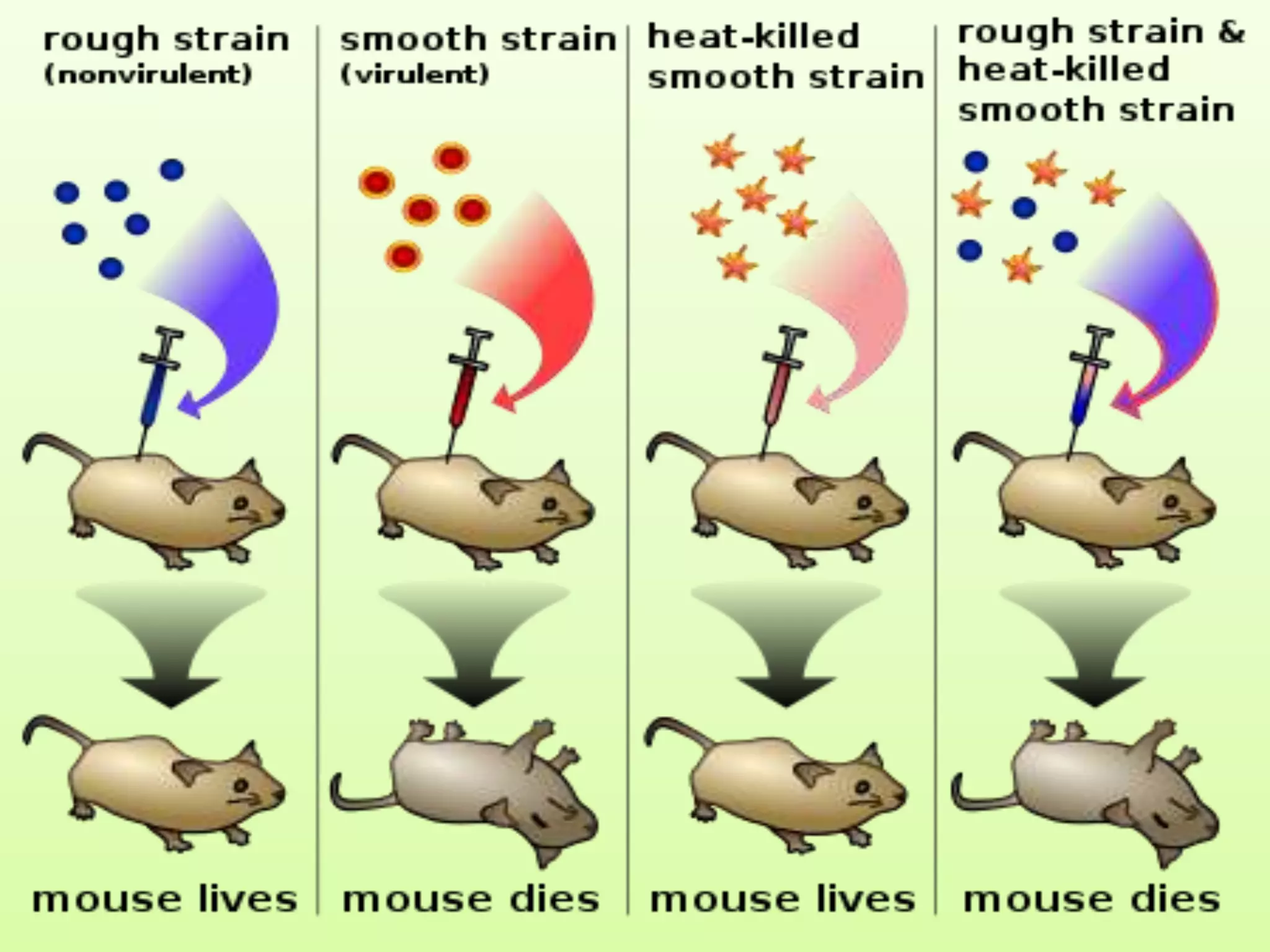
• MICE + S strain------mice died due to Pneumonia
• MICE + R strain------mice alive
Griffith experiment
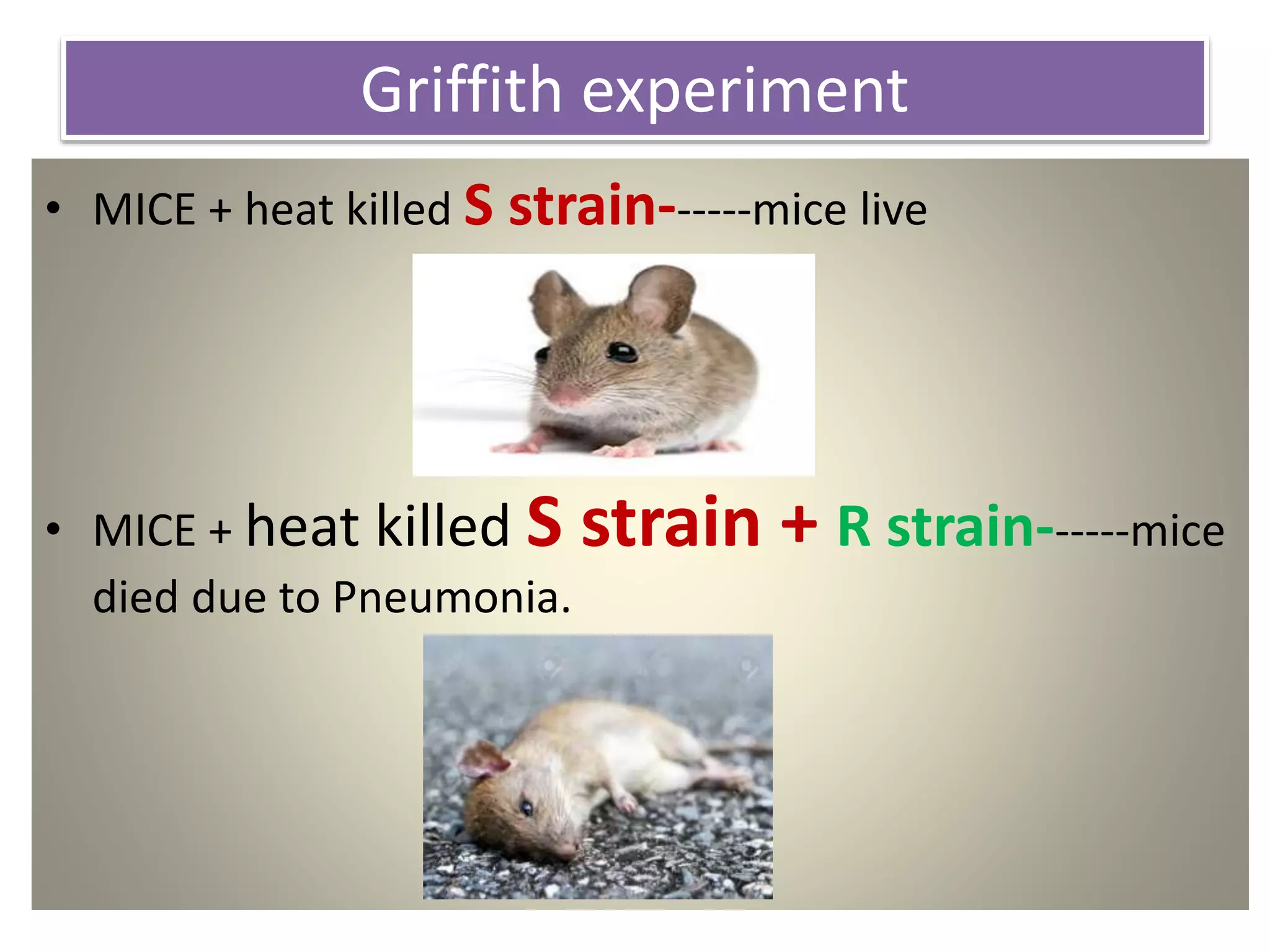
• MICE + heat killed S strain------mice live
• MICE + heat killed S strain + R strain------mice
died due to Pneumonia.
Reason
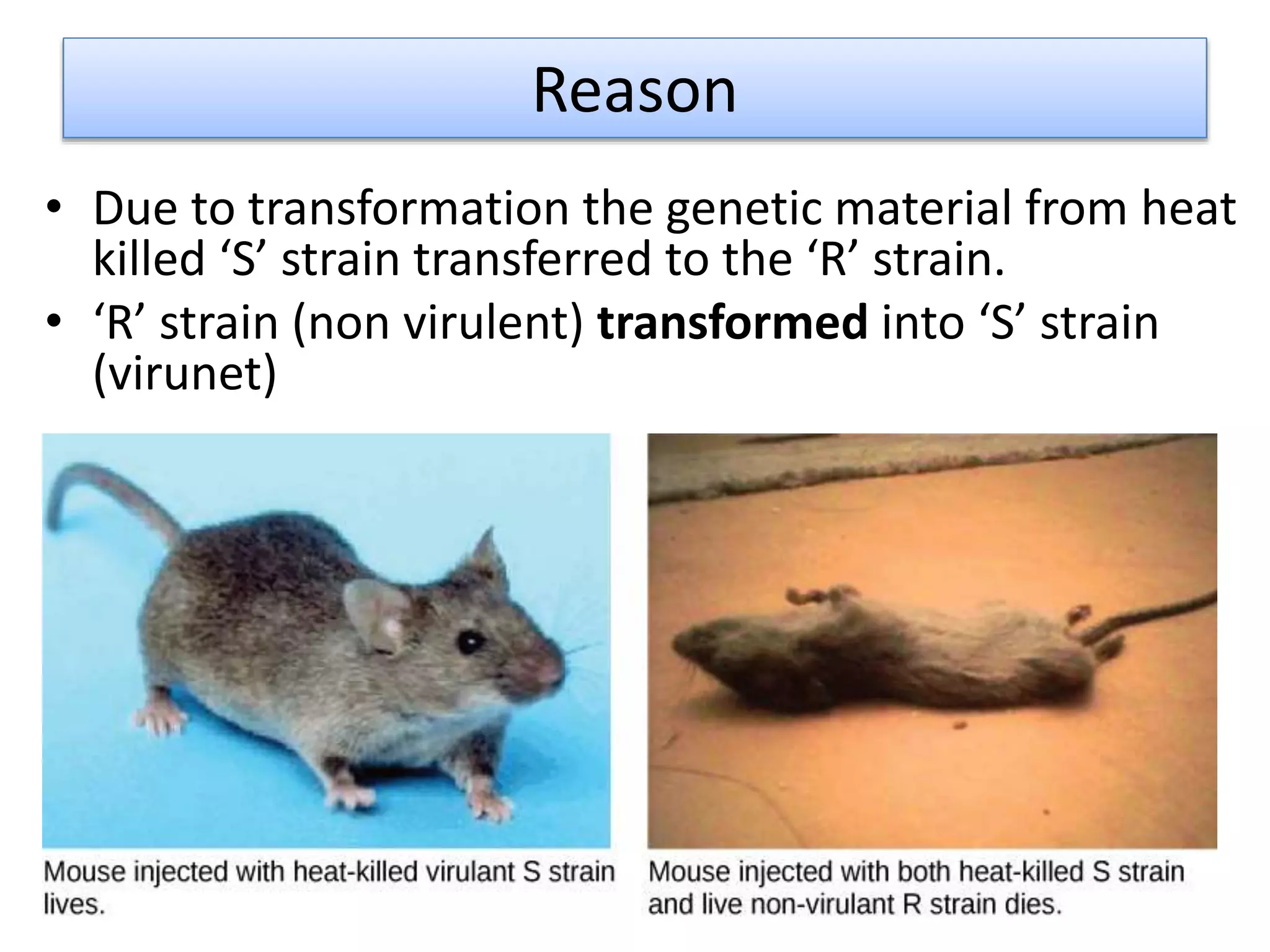
• Due to transformation the genetic material from heat
killed ‘S’ strain transferred to the ‘R’ strain.
• ‘R’ strain (non virulent) transformed into ‘S’ strain
(virunet)
Biochemical characterization of transforming principle
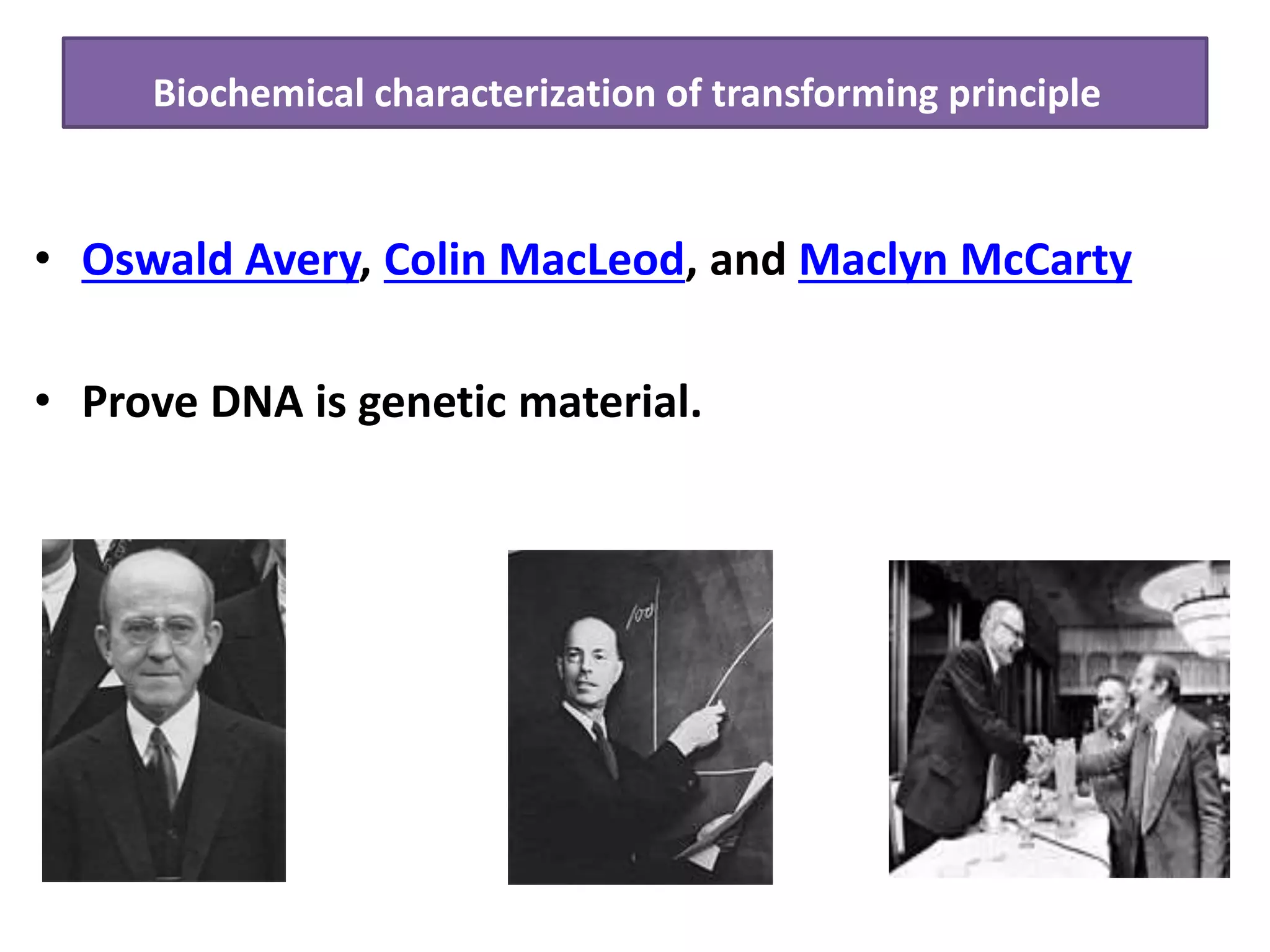
• Oswald Avery, Colin MacLeod, and Maclyn McCarty
• Prove DNA is genetic material.
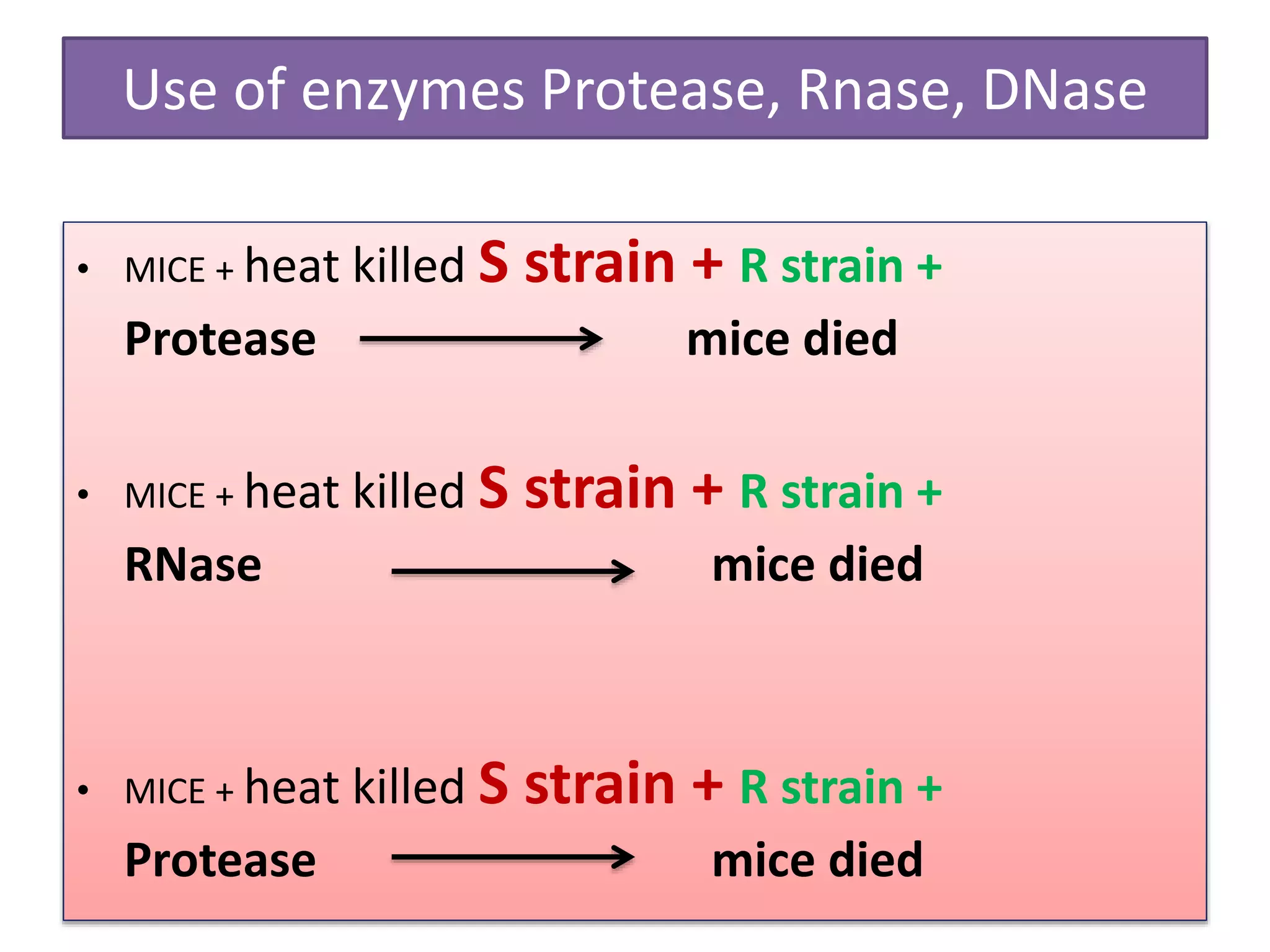
Use of enzymes Protease, Rnase, DNase
• MICE + heat killed S strain + R strain +
Protease mice died
• MICE + heat killed S strain + R strain +
RNase mice died
• MICE + heat killed S strain + R strain +
Protease mice died
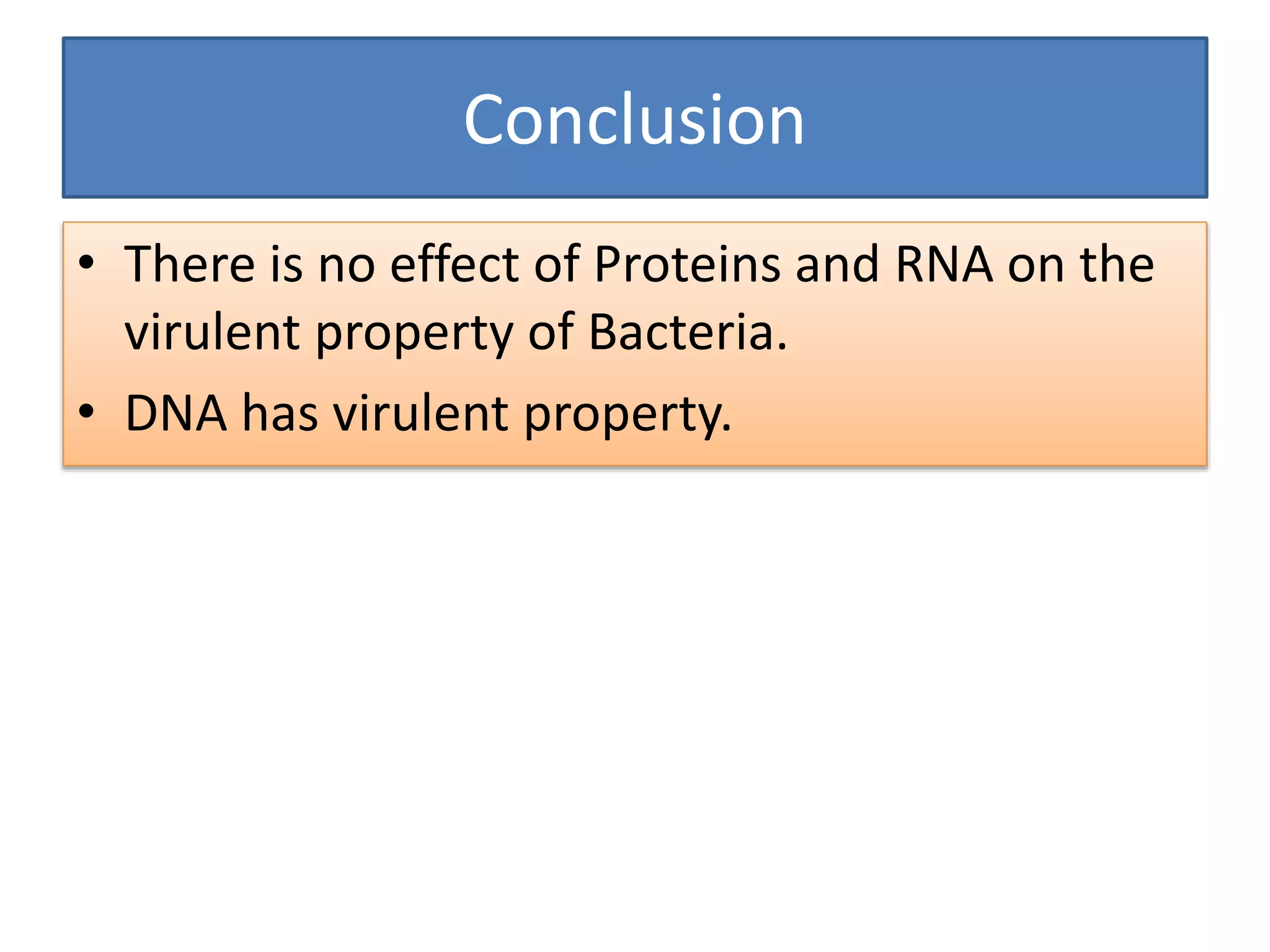
Conclusion
• There is no effect of Proteins and RNA on the
virulent property of Bacteria.
• DNA has virulent property.

Transforming principle by Griffith

  • 1.
    Transforming principle (Griffith’s Experiment) DNA-a genetic material By-Dr R K Upadhyay PGT, Biology
  • 2.
    Frederick Griffith • 1928 •Mice • Virulent strain of pneumonia (S strain) • Non virulent strain of Pneumonia (R strain) • Streptococcus pneumoniae)
  • 3.
    ‘S’ and ‘R’strain • Type III-S (smooth) – virulent • Type II-R (rough)- nonvirulent. • The III-S strain synthesize a polysaccharide capsule that protected itself from the host's immune system, resulting in the death of the host’ • While the II-R strain don’t have that protective capsule and was defeated by the host's immune system
  • 4.
    Transformation • bacteria arecapable of transferring genetic information through a process known as transformation
  • 5.
    Griffith experiment • MICE+ S strain------mice died due to Pneumonia • MICE + R strain------mice alive
  • 6.
    Griffith experiment • MICE+ heat killed S strain------mice live • MICE + heat killed S strain + R strain------mice died due to Pneumonia.
  • 7.
    Reason • Due totransformation the genetic material from heat killed ‘S’ strain transferred to the ‘R’ strain. • ‘R’ strain (non virulent) transformed into ‘S’ strain (virunet)
  • 9.
    Biochemical characterization oftransforming principle • Oswald Avery, Colin MacLeod, and Maclyn McCarty • Prove DNA is genetic material.
  • 10.
    Use of enzymesProtease, Rnase, DNase • MICE + heat killed S strain + R strain + Protease mice died • MICE + heat killed S strain + R strain + RNase mice died • MICE + heat killed S strain + R strain + Protease mice died
  • 11.
    Conclusion • There isno effect of Proteins and RNA on the virulent property of Bacteria. • DNA has virulent property.