TRANSFORMERS
“Transformers are the heart
of alternating current.”
- William Stanley Jr.
SUBMITTED BY:- JAI KUMAR SAINI
SUBMITTED TO:- SIR SUMIT PANDEY
CLASS:- XIIth
OVERVIEW
 Transformer
 Need of Transformer
 History
 What is Transformer?
 Types of Transformer
 Basis of Construction
 Basis of Windings
 Basis of Coolant
 Working Principal
 Applications
 Bibliography
TRANSFORMER
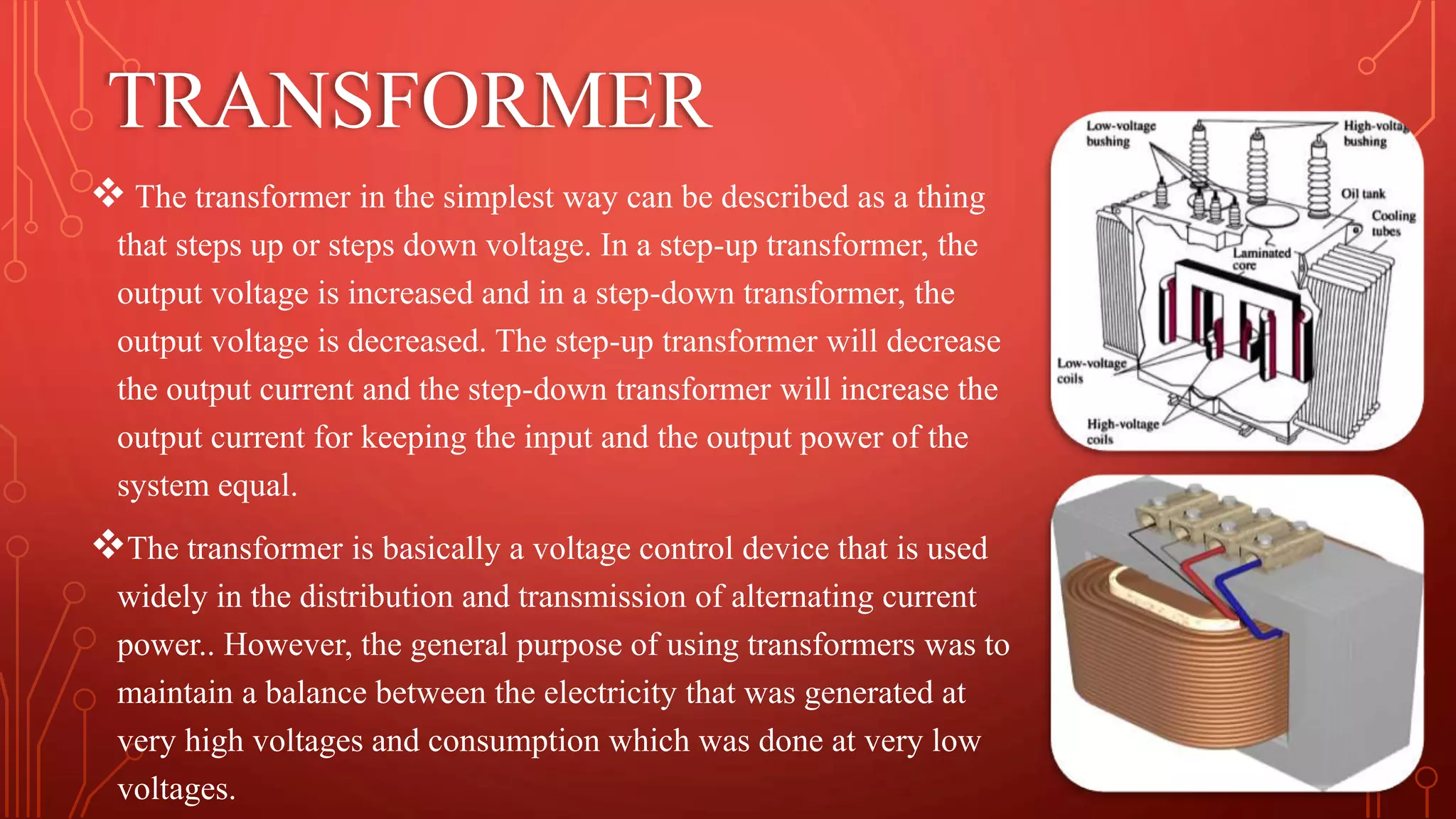
 The transformer in the simplest way can be described as a thing
that steps up or steps down voltage. In a step-up transformer, the
output voltage is increased and in a step-down transformer, the
output voltage is decreased. The step-up transformer will decrease
the output current and the step-down transformer will increase the
output current for keeping the input and the output power of the
system equal.
The transformer is basically a voltage control device that is used
widely in the distribution and transmission of alternating current
power.. However, the general purpose of using transformers was to
maintain a balance between the electricity that was generated at
very high voltages and consumption which was done at very low
voltages.
NEED OF TRANSFORMER
 In most cases, appliances are manufactured to work
under some specific voltage. Transformers are used to
adjust the voltage to a proper level. The Transformers
are the basic components for the transmission of the
electricity.
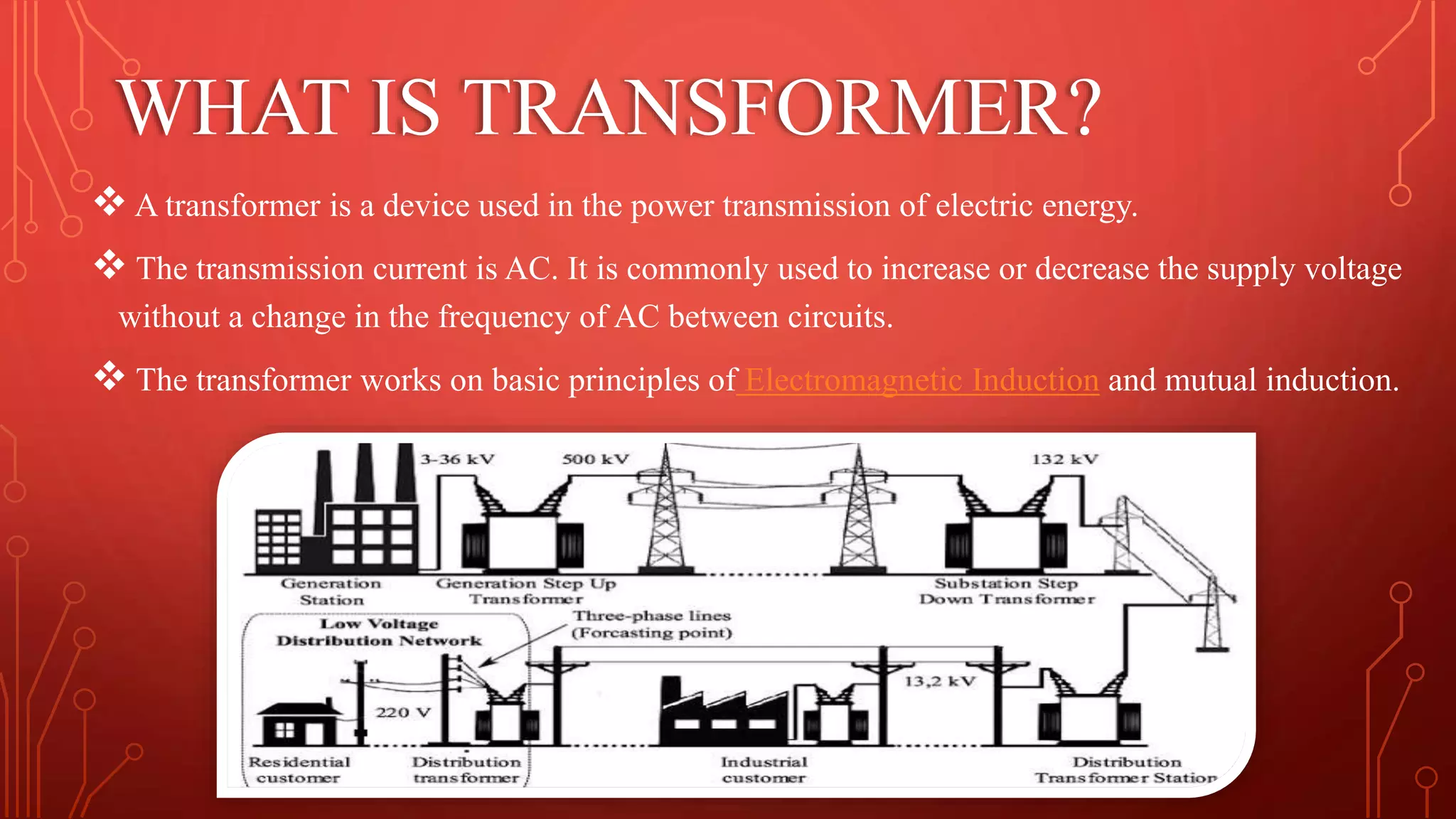
 Transformer is used to increase the voltage at the
power generating station(Step up) and used to decrease
the voltage(Step down) for house hold purpose.
By increasing the voltages the loss of the electricity in
the transmission purpose is minimized.
HISTORY
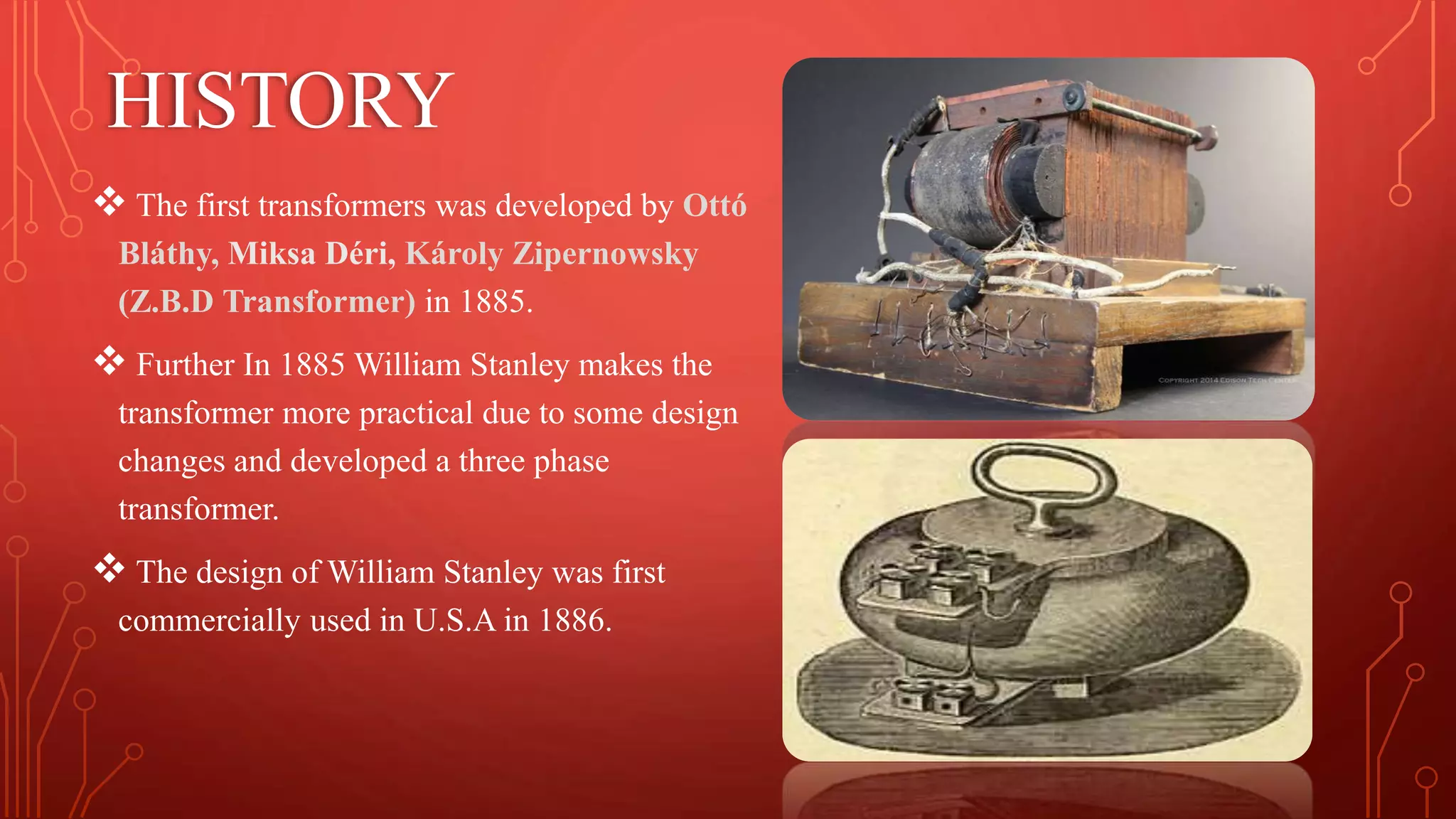
 The first transformers was developed by Ottó
Bláthy, Miksa Déri, Károly Zipernowsky
(Z.B.D Transformer) in 1885.
 Further In 1885 William Stanley makes the
transformer more practical due to some design
changes and developed a three phase
transformer.
 The design of William Stanley was first
commercially used in U.S.A in 1886.
WHAT IS TRANSFORMER?
 A transformer is a device used in the power transmission of electric energy.
 The transmission current is AC. It is commonly used to increase or decrease the supply voltage
without a change in the frequency of AC between circuits.
 The transformer works on basic principles of Electromagnetic Induction and mutual induction.
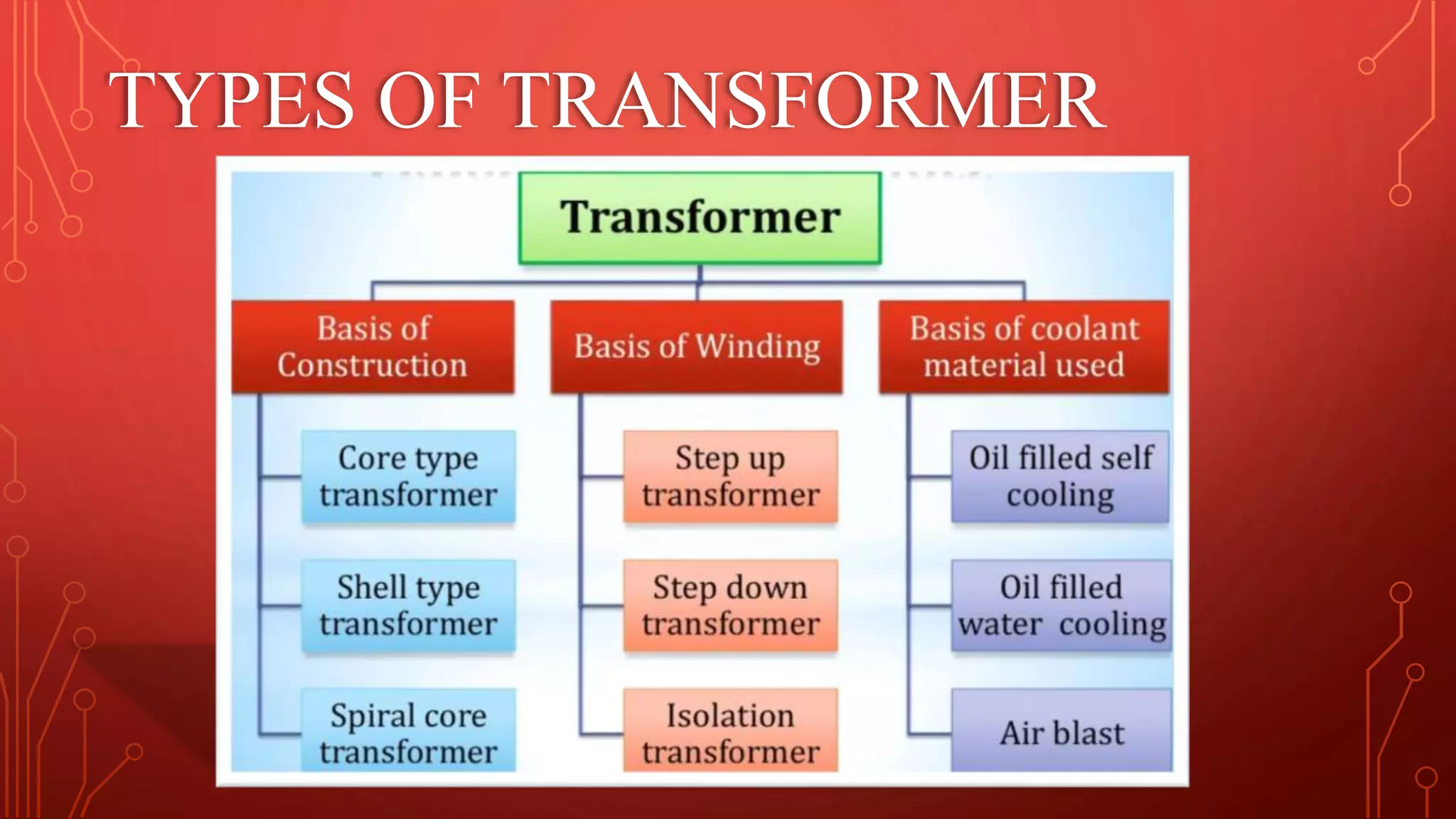
TYPES OF TRANSFORMER
 BASIS OF CONSTRUCTION
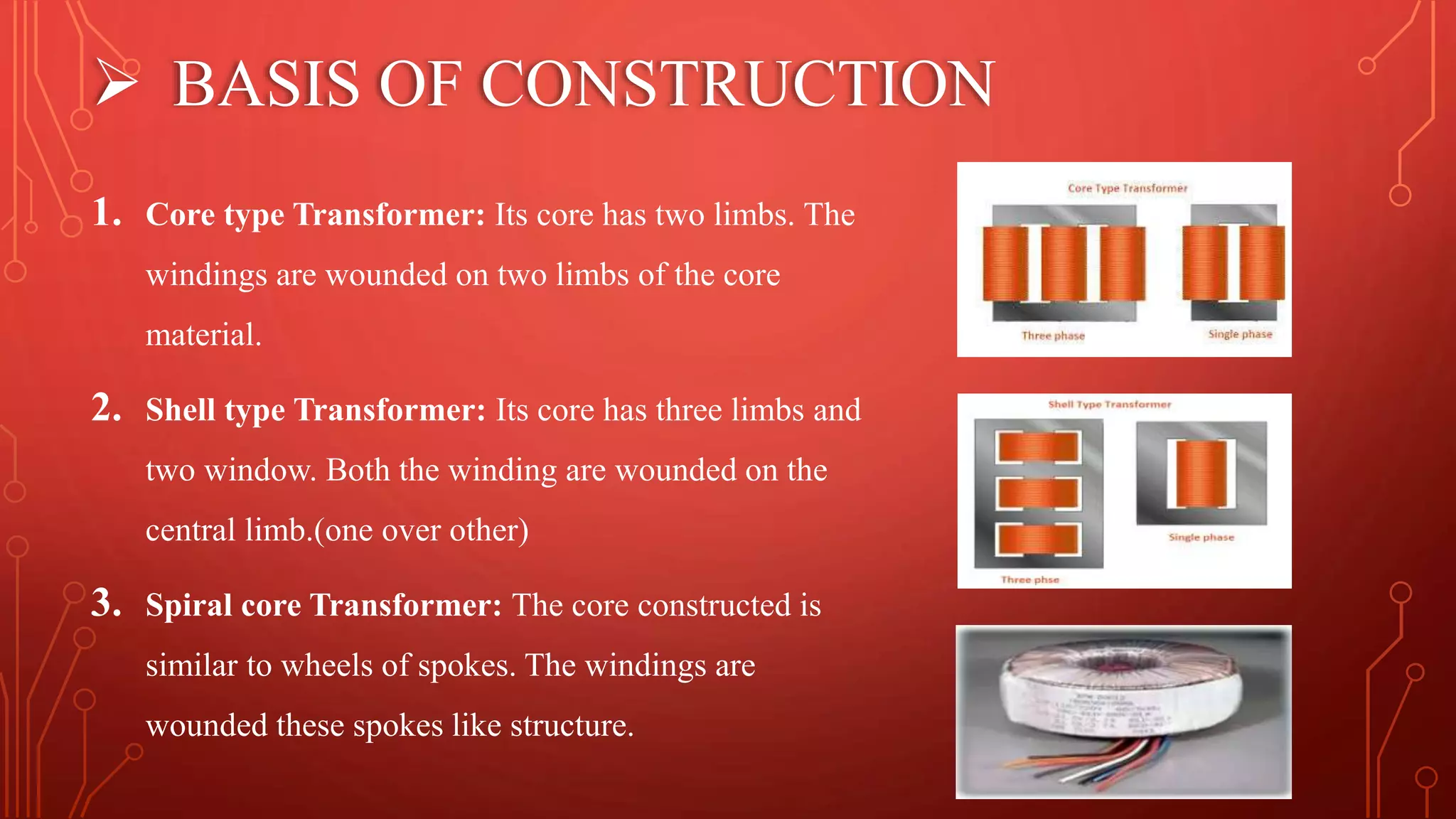
1. Core type Transformer: Its core has two limbs. The
windings are wounded on two limbs of the core
material.
2. Shell type Transformer: Its core has three limbs and
two window. Both the winding are wounded on the
central limb.(one over other)
3. Spiral core Transformer: The core constructed is
similar to wheels of spokes. The windings are
wounded these spokes like structure.
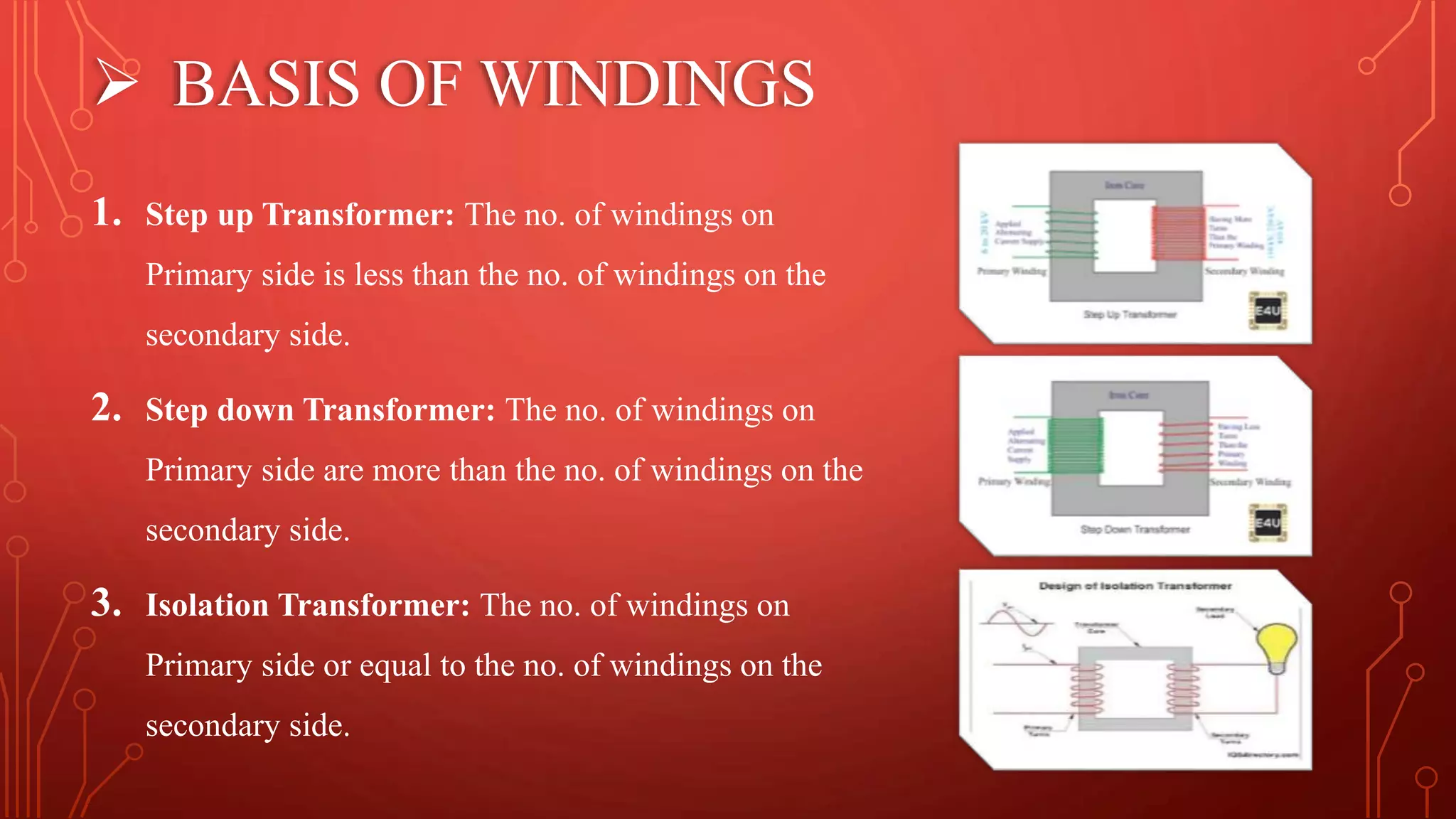
 BASIS OF WINDINGS
1. Step up Transformer: The no. of windings on
Primary side is less than the no. of windings on the
secondary side.
2. Step down Transformer: The no. of windings on
Primary side are more than the no. of windings on the
secondary side.
3. Isolation Transformer: The no. of windings on
Primary side or equal to the no. of windings on the
secondary side.
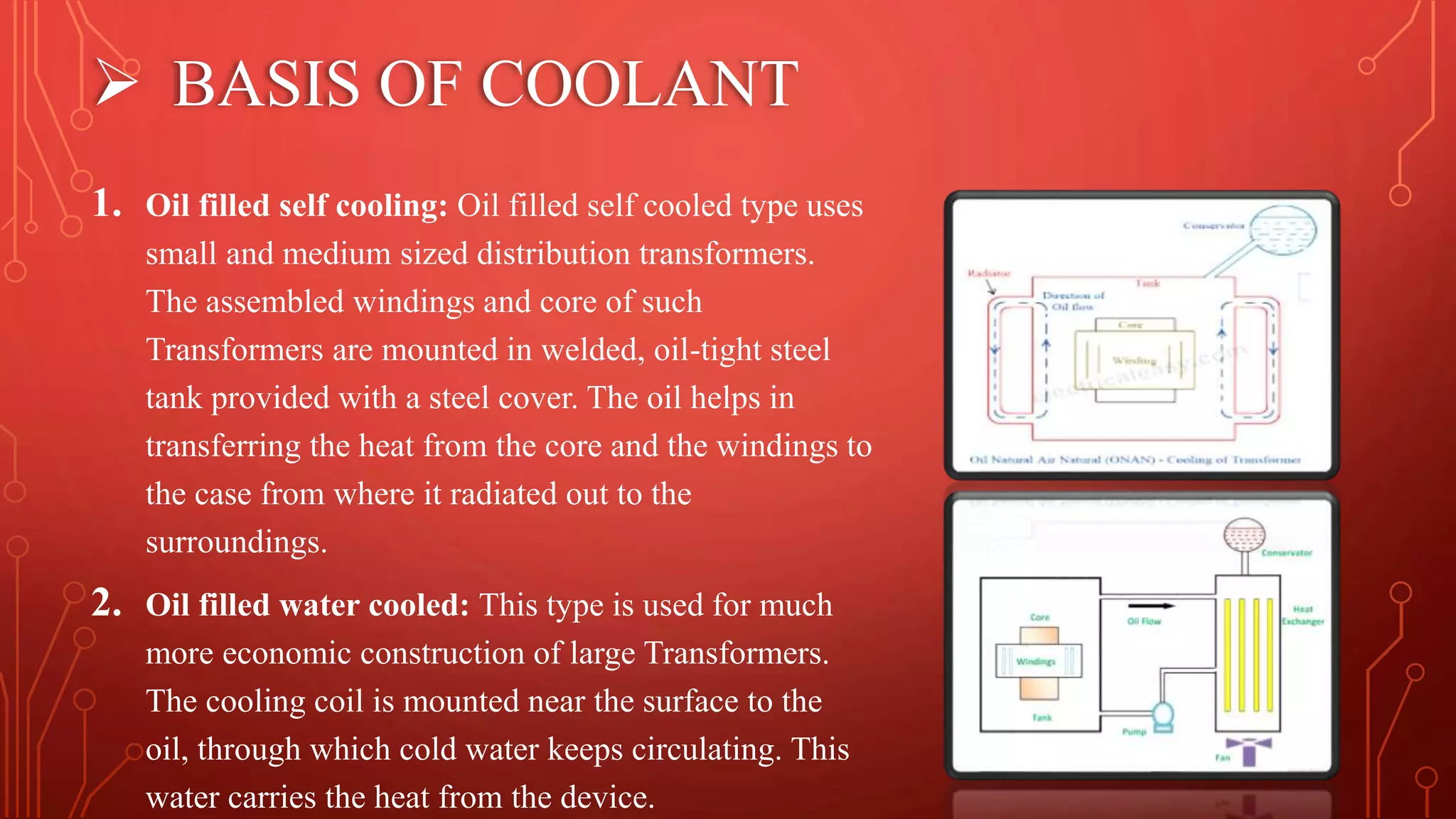
 BASIS OF COOLANT
1. Oil filled self cooling: Oil filled self cooled type uses
small and medium sized distribution transformers.
The assembled windings and core of such
Transformers are mounted in welded, oil-tight steel
tank provided with a steel cover. The oil helps in
transferring the heat from the core and the windings to
the case from where it radiated out to the
surroundings.
2. Oil filled water cooled: This type is used for much
more economic construction of large Transformers.
The cooling coil is mounted near the surface to the
oil, through which cold water keeps circulating. This
water carries the heat from the device.
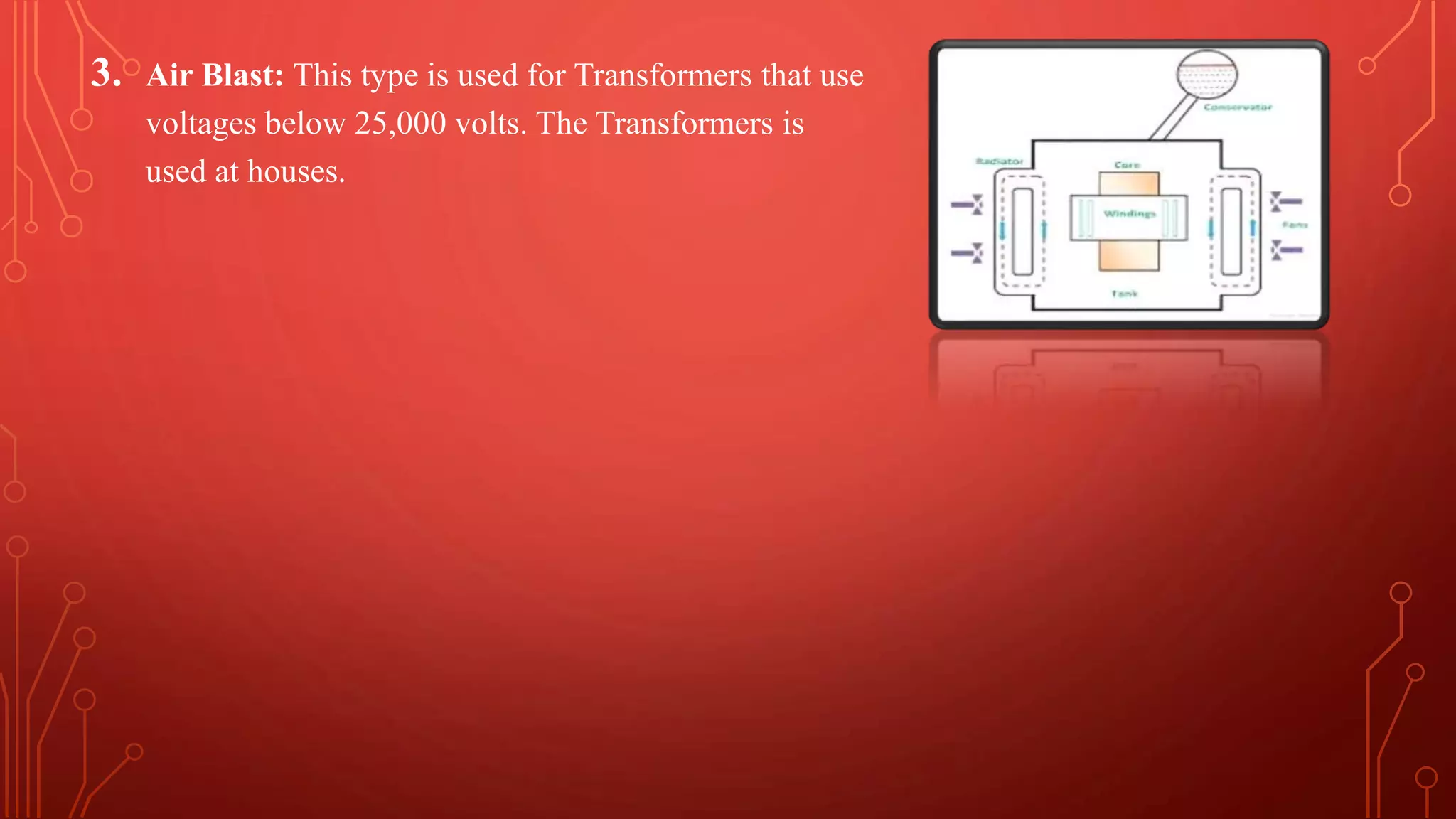
3. Air Blast: This type is used for Transformers that use
voltages below 25,000 volts. The Transformers is
used at houses.
WORKING PRINCIPAL
 The transformer works on the principle of Faraday’s
law of electromagnetic induction and mutual induction.
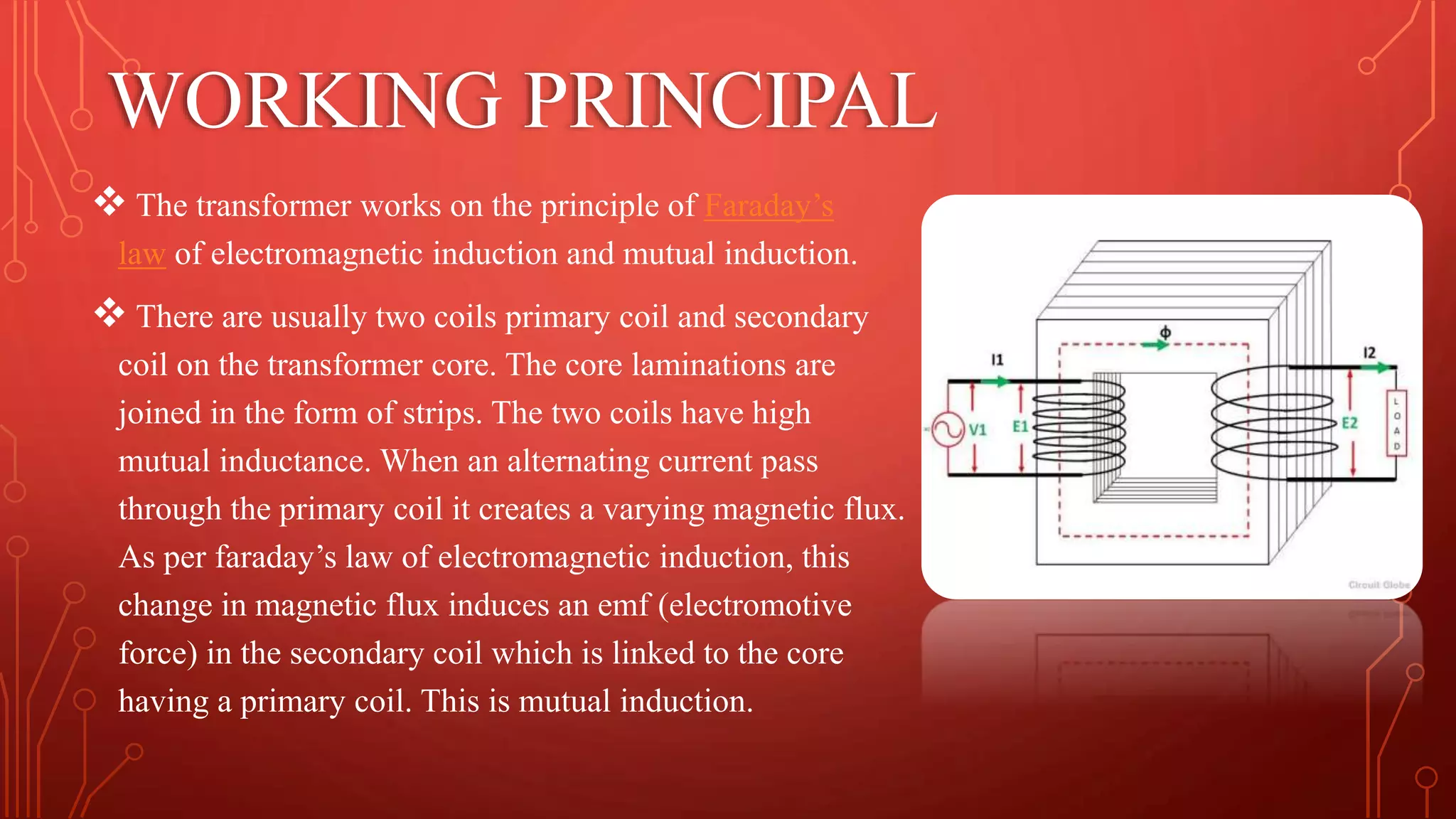
 There are usually two coils primary coil and secondary
coil on the transformer core. The core laminations are
joined in the form of strips. The two coils have high
mutual inductance. When an alternating current pass
through the primary coil it creates a varying magnetic flux.
As per faraday’s law of electromagnetic induction, this
change in magnetic flux induces an emf (electromotive
force) in the secondary coil which is linked to the core
having a primary coil. This is mutual induction.
APPLICATIONS
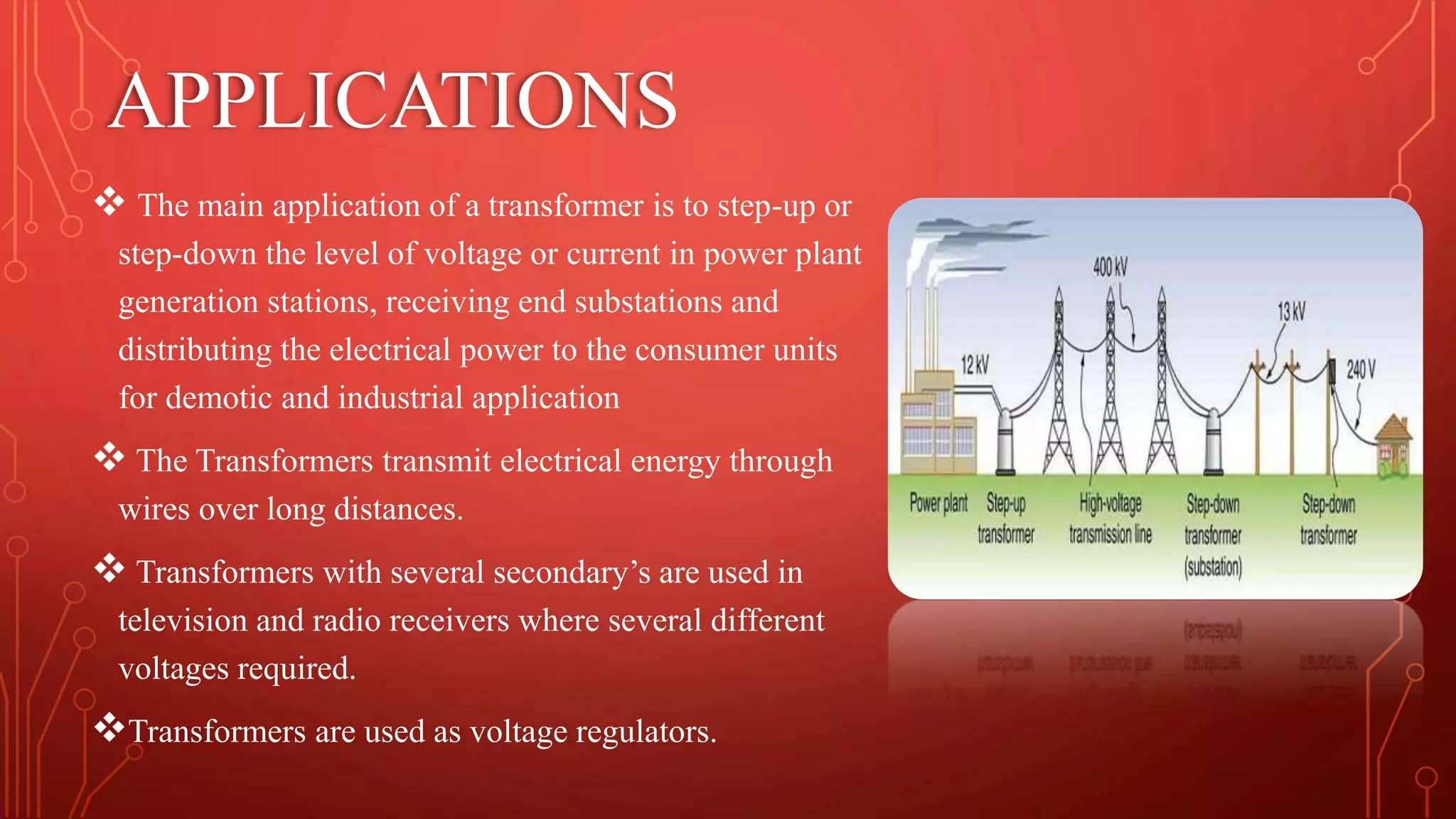
 The main application of a transformer is to step-up or
step-down the level of voltage or current in power plant
generation stations, receiving end substations and
distributing the electrical power to the consumer units
for demotic and industrial application
 The Transformers transmit electrical energy through
wires over long distances.
 Transformers with several secondary’s are used in
television and radio receivers where several different
voltages required.
Transformers are used as voltage regulators.
BIBILOGRAPHY
 www.google.com
www.Wikipedia.com
www.byjus.com
www.eletrical4u.com/transformers
www.electricalengineeringinfo.com/transtormers

transformers.pptx

  • 1.
    TRANSFORMERS “Transformers are theheart of alternating current.” - William Stanley Jr. SUBMITTED BY:- JAI KUMAR SAINI SUBMITTED TO:- SIR SUMIT PANDEY CLASS:- XIIth
  • 2.
    OVERVIEW  Transformer  Needof Transformer  History  What is Transformer?  Types of Transformer  Basis of Construction  Basis of Windings  Basis of Coolant  Working Principal  Applications  Bibliography
  • 3.
    TRANSFORMER  The transformerin the simplest way can be described as a thing that steps up or steps down voltage. In a step-up transformer, the output voltage is increased and in a step-down transformer, the output voltage is decreased. The step-up transformer will decrease the output current and the step-down transformer will increase the output current for keeping the input and the output power of the system equal. The transformer is basically a voltage control device that is used widely in the distribution and transmission of alternating current power.. However, the general purpose of using transformers was to maintain a balance between the electricity that was generated at very high voltages and consumption which was done at very low voltages.
  • 4.
    NEED OF TRANSFORMER In most cases, appliances are manufactured to work under some specific voltage. Transformers are used to adjust the voltage to a proper level. The Transformers are the basic components for the transmission of the electricity.  Transformer is used to increase the voltage at the power generating station(Step up) and used to decrease the voltage(Step down) for house hold purpose. By increasing the voltages the loss of the electricity in the transmission purpose is minimized.
  • 5.
    HISTORY  The firsttransformers was developed by Ottó Bláthy, Miksa Déri, Károly Zipernowsky (Z.B.D Transformer) in 1885.  Further In 1885 William Stanley makes the transformer more practical due to some design changes and developed a three phase transformer.  The design of William Stanley was first commercially used in U.S.A in 1886.
  • 6.
    WHAT IS TRANSFORMER? A transformer is a device used in the power transmission of electric energy.  The transmission current is AC. It is commonly used to increase or decrease the supply voltage without a change in the frequency of AC between circuits.  The transformer works on basic principles of Electromagnetic Induction and mutual induction.
  • 7.
  • 8.
     BASIS OFCONSTRUCTION 1. Core type Transformer: Its core has two limbs. The windings are wounded on two limbs of the core material. 2. Shell type Transformer: Its core has three limbs and two window. Both the winding are wounded on the central limb.(one over other) 3. Spiral core Transformer: The core constructed is similar to wheels of spokes. The windings are wounded these spokes like structure.
  • 9.
     BASIS OFWINDINGS 1. Step up Transformer: The no. of windings on Primary side is less than the no. of windings on the secondary side. 2. Step down Transformer: The no. of windings on Primary side are more than the no. of windings on the secondary side. 3. Isolation Transformer: The no. of windings on Primary side or equal to the no. of windings on the secondary side.
  • 10.
     BASIS OFCOOLANT 1. Oil filled self cooling: Oil filled self cooled type uses small and medium sized distribution transformers. The assembled windings and core of such Transformers are mounted in welded, oil-tight steel tank provided with a steel cover. The oil helps in transferring the heat from the core and the windings to the case from where it radiated out to the surroundings. 2. Oil filled water cooled: This type is used for much more economic construction of large Transformers. The cooling coil is mounted near the surface to the oil, through which cold water keeps circulating. This water carries the heat from the device.
  • 11.
    3. Air Blast:This type is used for Transformers that use voltages below 25,000 volts. The Transformers is used at houses.
  • 12.
    WORKING PRINCIPAL  Thetransformer works on the principle of Faraday’s law of electromagnetic induction and mutual induction.  There are usually two coils primary coil and secondary coil on the transformer core. The core laminations are joined in the form of strips. The two coils have high mutual inductance. When an alternating current pass through the primary coil it creates a varying magnetic flux. As per faraday’s law of electromagnetic induction, this change in magnetic flux induces an emf (electromotive force) in the secondary coil which is linked to the core having a primary coil. This is mutual induction.
  • 13.
    APPLICATIONS  The mainapplication of a transformer is to step-up or step-down the level of voltage or current in power plant generation stations, receiving end substations and distributing the electrical power to the consumer units for demotic and industrial application  The Transformers transmit electrical energy through wires over long distances.  Transformers with several secondary’s are used in television and radio receivers where several different voltages required. Transformers are used as voltage regulators.
  • 14.