Electrical Instrument And
Measurement
Presentation:
Current Transformer
Group Members:
Kamran Ali (ADP-002)
Ameer Hamza (BS-004)
Abdul Bilal (BS-006)
Furqan Habib (BS-007)
Current Transformer
An instrument transformer that is used to generate an AC
within the secondary winding of the transformer is known as
a current transformer.
This is also known as a series transformer as it is allied in
series with the circuit for measuring different parameters of
electric power.
The current in the secondary winding is proportional to the
current in the primary winding.
In the current transformer, the input value is constant
current.
These are used to reduce high voltage currents to low
voltage currents.
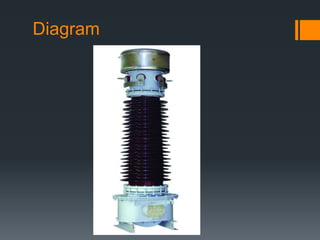
Diagram
Working Principle
The working principle of the current transformer is
somewhat different when we compare it with a normal
voltage transformer. Similar to the voltage transformer, it
includes two windings. Whenever AC supplies throughout
the primary winding, then alternating magnetic flux can be
generated, then AC will be induced within the secondary
winding.
In this type, the load impedance is very small. Thus, this
transformer works under short circuit conditions. So the
current within the secondary winding depends on the
current in the primary winding but doesn’t depend on the
load impedance.
A current transformer is designed to maintain an
accurate ratio between the currents in its primary
and secondary circuits over a defined range. The
alternating current in the primary produces an
alternating magnetic field in the core, which then
induces an alternating current in the secondary.
Construction
The construction of this transformer includes different features
based on the design like primary ampere-turns, core,
windings, and insulation. A current transformer is constructed
of high-permeability steel at the flux density at which the
transformer operates. The flux density is kept to a low value
so that the magnetizing current is low.
In a current transformer, the primary winding has a smaller
number of turns and carries the current to be measured. In a
current transformer, the secondary winding possesses large
numbers of turns on the secondary side and is connected to
the current winding of the instrument.
In a current transformer, the primary current doesn’t depend
upon secondary side circuit conditions.
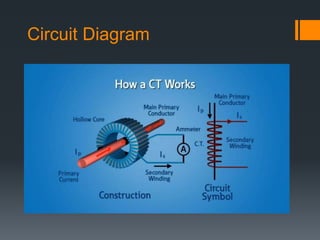
Circuit Diagram
Function
On the one hand, a current transformer reduces a high
current to a safer and more manageable level that you
can measure. It converts large primary currents into
small 1A/5A currents that can be measured on the
ammeter.
Standards
Ultimately, depending on client requirements, there
are two main standards to which current transformers
are designed. IEC 61869-1 (in the past IEC 60044-1)
& IEEE C57.13 (ANSI), although the Canadian and
Australian standards are also recognized.
Types of Current Transformers
Indoor Current Transformer
A current transformer without primary conductor, but with primary
insulation which can be fitted directly over a conductor or busbar.
Outdoor Current Transformers
Outdoor current transformer designed for high current metering
and relaying. Up to 4 cores. Resistant to outdoor conditions.
Hydrophobic material offers superior outdoor performance and
minimizes the potential for flashover.
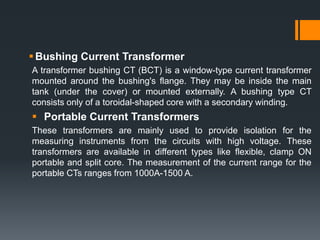
Bushing Current Transformer
A transformer bushing CT (BCT) is a window-type current transformer
mounted around the bushing's flange. They may be inside the main
tank (under the cover) or mounted externally. A bushing type CT
consists only of a toroidal-shaped core with a secondary winding.
 Portable Current Transformers
These transformers are mainly used to provide isolation for the
measuring instruments from the circuits with high voltage. These
transformers are available in different types like flexible, clamp ON
portable and split core. The measurement of the current range for the
portable CTs ranges from 1000A-1500 A.
Use
Current transformers are the current-sensing units of
the power system and are used at generating
stations, electrical substations, and in industrial and
commercial electric power distribution.
Errors in Current Transformer
The errors that occurred in this transformer include the
following:
The primary winding of this transformer requires MMF
(magnetomotive force) to generate flux which draws
magnetizing current.
The transformer’s no-load current includes an element
of core loss component and occurs hysteresis and eddy
current losses.
Once the transformer’s core is saturated, then the
magnetizing force’s flux density can be stopped & other
losses can occur.
Applications of Current
Transformers
These transformers are used to measure electric
power in powerhouses, industries, grid stations,
control rooms in industries for metering &
analyzing the flow of current in the circuit and also
for protection purposes. Current transformers are
used for protection, measurement and control in
high-voltage electrical substations and the
electrical grid.
Advantages
The current transformer can measure high current
easily.
The current transformer has high electrical isolation.
The construction has a simple construction.
The current transformer has easy maintenance and
installation.
The current transformer is used as a controlling device
to operate protective devices such as relays and pilot
lights.
Disadvantages
The disadvantage of a large exciting current is more
losses in the transformer, and thus transformer
efficiency deteriorates.
The exciting current in the transformer remains fairly
constant whether the transformer is at load or no load.
 The main purpose of the exciting current is to generate
flux in the transformer.
Conclusion
It is used to generate an AC within the
secondary winding of the transformer. Current
transformers are considered to be applied as
proportional current instruments. Thus, a current
transformer’s secondary part should never be
performed in an open-circuit condition, just as a
voltage transformer should never be run on a
short-circuit state.
Current Transformer.pptx

Current Transformer.pptx

  • 1.
    Electrical Instrument And Measurement Presentation: CurrentTransformer Group Members: Kamran Ali (ADP-002) Ameer Hamza (BS-004) Abdul Bilal (BS-006) Furqan Habib (BS-007)
  • 2.
    Current Transformer An instrumenttransformer that is used to generate an AC within the secondary winding of the transformer is known as a current transformer. This is also known as a series transformer as it is allied in series with the circuit for measuring different parameters of electric power. The current in the secondary winding is proportional to the current in the primary winding. In the current transformer, the input value is constant current. These are used to reduce high voltage currents to low voltage currents.
  • 3.
  • 4.
    Working Principle The workingprinciple of the current transformer is somewhat different when we compare it with a normal voltage transformer. Similar to the voltage transformer, it includes two windings. Whenever AC supplies throughout the primary winding, then alternating magnetic flux can be generated, then AC will be induced within the secondary winding. In this type, the load impedance is very small. Thus, this transformer works under short circuit conditions. So the current within the secondary winding depends on the current in the primary winding but doesn’t depend on the load impedance.
  • 5.
    A current transformeris designed to maintain an accurate ratio between the currents in its primary and secondary circuits over a defined range. The alternating current in the primary produces an alternating magnetic field in the core, which then induces an alternating current in the secondary.
  • 6.
    Construction The construction ofthis transformer includes different features based on the design like primary ampere-turns, core, windings, and insulation. A current transformer is constructed of high-permeability steel at the flux density at which the transformer operates. The flux density is kept to a low value so that the magnetizing current is low. In a current transformer, the primary winding has a smaller number of turns and carries the current to be measured. In a current transformer, the secondary winding possesses large numbers of turns on the secondary side and is connected to the current winding of the instrument. In a current transformer, the primary current doesn’t depend upon secondary side circuit conditions.
  • 7.
  • 8.
    Function On the onehand, a current transformer reduces a high current to a safer and more manageable level that you can measure. It converts large primary currents into small 1A/5A currents that can be measured on the ammeter.
  • 9.
    Standards Ultimately, depending onclient requirements, there are two main standards to which current transformers are designed. IEC 61869-1 (in the past IEC 60044-1) & IEEE C57.13 (ANSI), although the Canadian and Australian standards are also recognized.
  • 10.
    Types of CurrentTransformers Indoor Current Transformer A current transformer without primary conductor, but with primary insulation which can be fitted directly over a conductor or busbar. Outdoor Current Transformers Outdoor current transformer designed for high current metering and relaying. Up to 4 cores. Resistant to outdoor conditions. Hydrophobic material offers superior outdoor performance and minimizes the potential for flashover.
  • 11.
    Bushing Current Transformer Atransformer bushing CT (BCT) is a window-type current transformer mounted around the bushing's flange. They may be inside the main tank (under the cover) or mounted externally. A bushing type CT consists only of a toroidal-shaped core with a secondary winding.  Portable Current Transformers These transformers are mainly used to provide isolation for the measuring instruments from the circuits with high voltage. These transformers are available in different types like flexible, clamp ON portable and split core. The measurement of the current range for the portable CTs ranges from 1000A-1500 A.
  • 12.
    Use Current transformers arethe current-sensing units of the power system and are used at generating stations, electrical substations, and in industrial and commercial electric power distribution.
  • 13.
    Errors in CurrentTransformer The errors that occurred in this transformer include the following: The primary winding of this transformer requires MMF (magnetomotive force) to generate flux which draws magnetizing current. The transformer’s no-load current includes an element of core loss component and occurs hysteresis and eddy current losses. Once the transformer’s core is saturated, then the magnetizing force’s flux density can be stopped & other losses can occur.
  • 14.
    Applications of Current Transformers Thesetransformers are used to measure electric power in powerhouses, industries, grid stations, control rooms in industries for metering & analyzing the flow of current in the circuit and also for protection purposes. Current transformers are used for protection, measurement and control in high-voltage electrical substations and the electrical grid.
  • 15.
    Advantages The current transformercan measure high current easily. The current transformer has high electrical isolation. The construction has a simple construction. The current transformer has easy maintenance and installation. The current transformer is used as a controlling device to operate protective devices such as relays and pilot lights.
  • 16.
    Disadvantages The disadvantage ofa large exciting current is more losses in the transformer, and thus transformer efficiency deteriorates. The exciting current in the transformer remains fairly constant whether the transformer is at load or no load.  The main purpose of the exciting current is to generate flux in the transformer.
  • 17.
    Conclusion It is usedto generate an AC within the secondary winding of the transformer. Current transformers are considered to be applied as proportional current instruments. Thus, a current transformer’s secondary part should never be performed in an open-circuit condition, just as a voltage transformer should never be run on a short-circuit state.