Prepared By:
Shela Akther
191002134
Contents
1. Introduction
2. History of transformer
3. Principle
4. Construction
5. Types of Transformer
6. Application
7. Need of transformer
2
Introduction
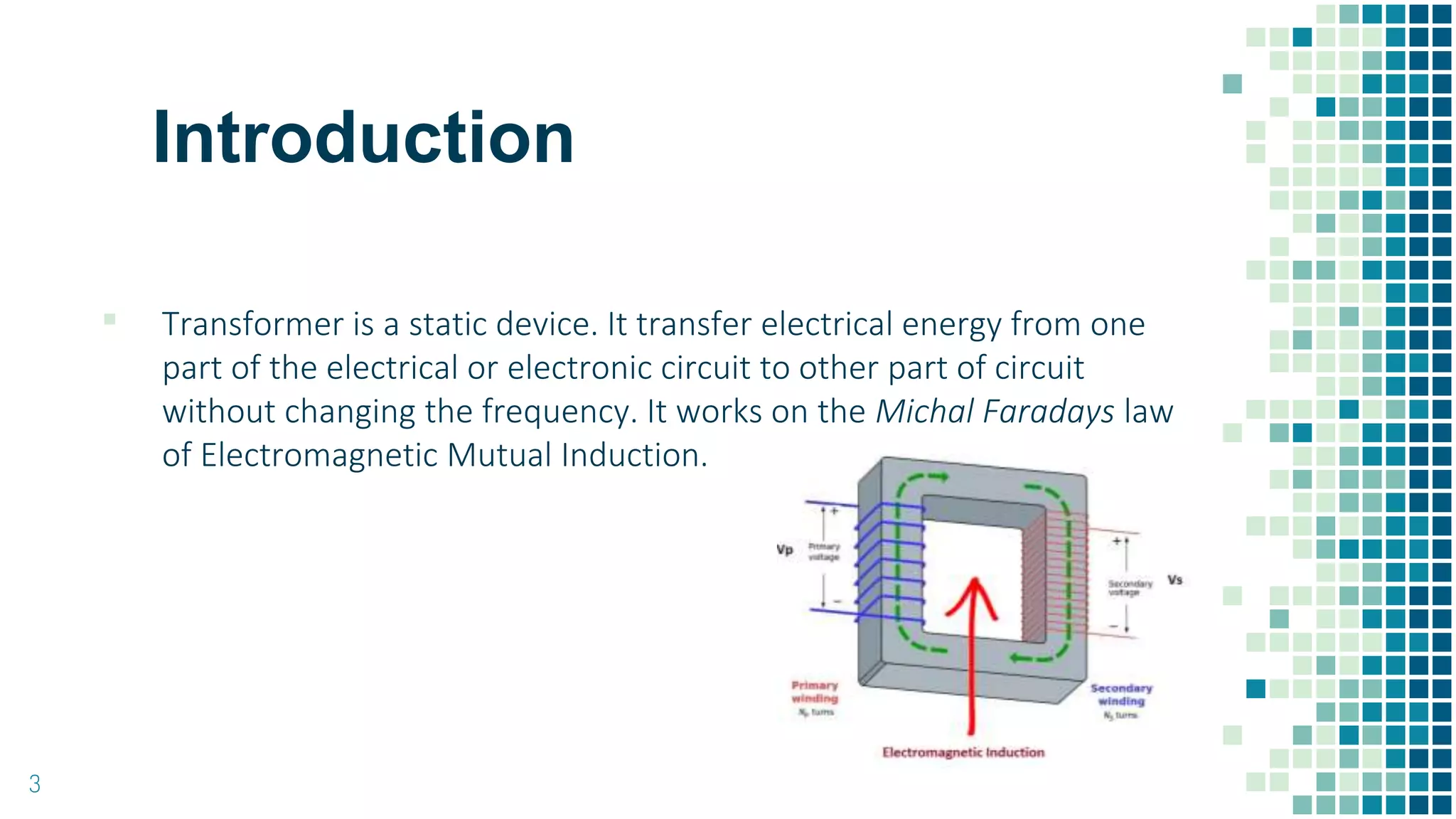
▪ Transformer is a static device. It transfer electrical energy from one
part of the electrical or electronic circuit to other part of circuit
without changing the frequency. It works on the Michal Faradays law
of Electromagnetic Mutual Induction.
3
History of transformer
The first transformer was developed by Ottó Bláthy, Miksa Déri, Károly
Zipernowsky (Z.B.D Transformer) in 1885.
Further In 1885 William Stanley makes the transformer more practical
due to some design changes and developed a three phase
transformer.
The design of William Stanley was first commercially used in the U.S.A in
1886
Principle
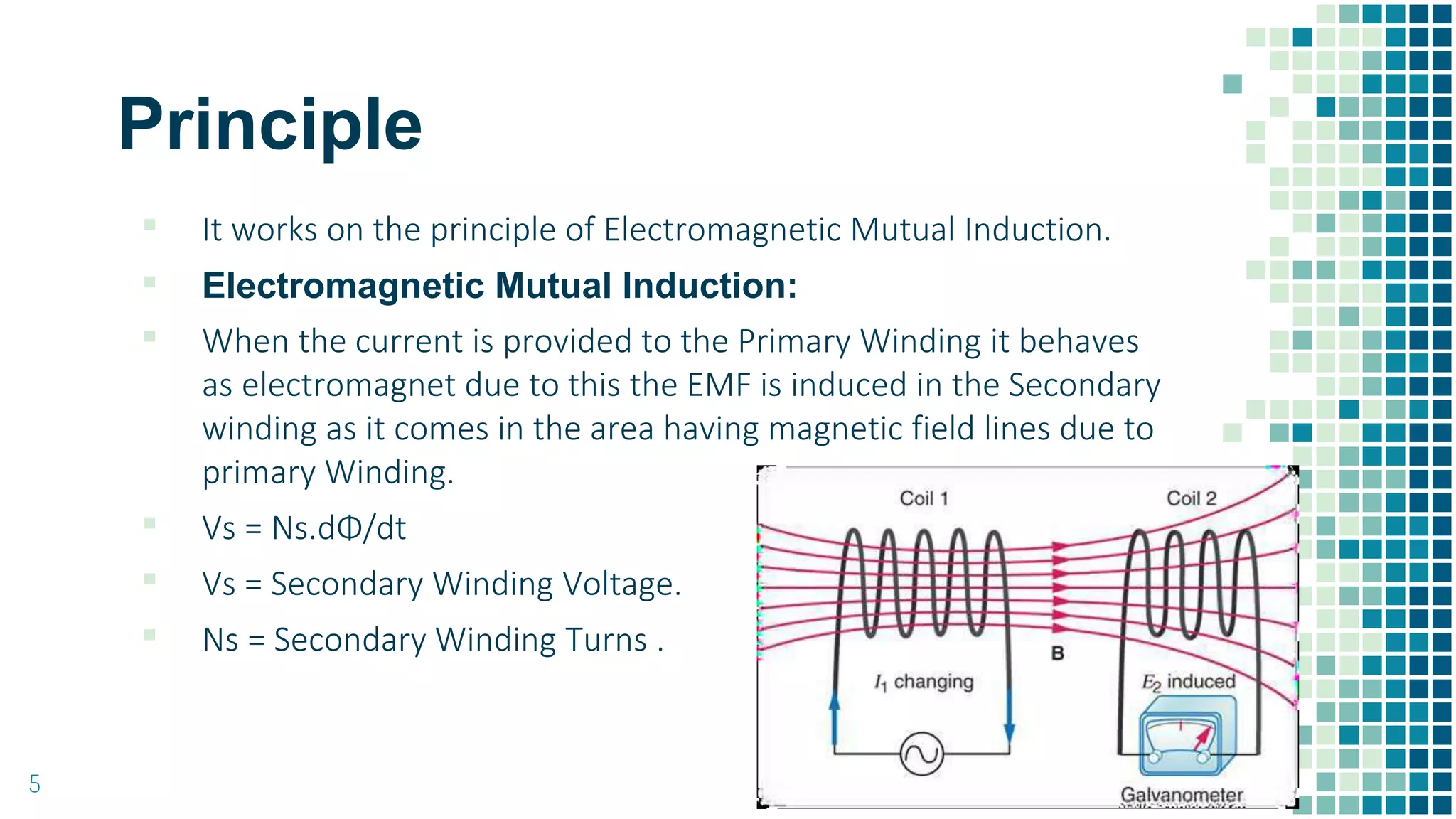
▪ It works on the principle of Electromagnetic Mutual Induction.
▪ Electromagnetic Mutual Induction:
▪ When the current is provided to the Primary Winding it behaves
as electromagnet due to this the EMF is induced in the Secondary
winding as it comes in the area having magnetic field lines due to
primary Winding.
▪ Vs = Ns.dΦ/dt
▪ Vs = Secondary Winding Voltage.
▪ Ns = Secondary Winding Turns .
5
Construction
6
Laminated
Core
Cores are designed not to have current in it. But still there is a
leakages current Or the eddy current present in it. To minimize
these current the cores are laminated.
Winding Made up of copper or aluminum coated with very
thin layer of insulation.
Tank The main function of conservator tank of transformer is to
provide adequate space for expansion of oil inside the
transformer. It is usually Cylindrical or cubical.
Isolation It is provided by using Synthetic Oil between Core
and Tank.
Breather When the temperature changes occur in Transformer insulating oil, the oil
expands or contracts and there an exchange of air also occurs when
transformer is fully loaded. When transformer gets cooled, the oil level goes
down and air gets absorbed within.
Types of Transformer
7
Transformer
Basis of
Construction
Basis of Winding
Basis of coolant
material used
1.Core type
transformer
2.Shell type
transformer
3.Spiral core
transformer
1.Step up
transformer
2.Step down
transformer
3.Isolation
transformer
1.Oil filled self
cooling
2.Oil filled
water cooling
3.Air blast
▪ Core type transformer: Its core has two limbs.The windings are
wounded on two limbs of the core material.
▪ Shell type transformer: Its core has three limbs and two windows.
Both the windings are wounded on the central limb.(one over the
other)
▪ Spiral core transformer: The core constructed is similar to wheels
of spokes. The windings are wounded these spokes like structure.
8
Basis of construction
Basis of Windings
9
Step up Transformer: The no of windings on Primary side is less than the no.
of windings on the secondary side.
Np < Ns
Step down Transformer: The no. of winding on Primary side are more than
the no. of windings on the secondary side.
Np > Ns
Isolation Transformer: The no. of winding on Primary side are equal to the
no. of windings on the secondary side.
Np = Ns
Basis of coolant material used
10
Oil filled self cooling: Oil filled self cooled type uses small and medium-
sized distribution transformers. The assembled windings and core of such
transformers are mounted in a welded, oil-tight steel tanks provided with a
steel cover. The oil helps in transferring the heat from the core and the
windings to the case from where it is radiated out to the surroundings.
Oil filled water cooled: This type is used for much more economic
construction of large transformers. The cooling coil is mounted near the surface
of the oil, through which cold water keeps circulating. This water carries the
heat from the device.
Air Blast: This type is used for transformers that use voltages below 25,000
volts. The transformer is used at houses.
Application
1.The transformer used for impedance matching.
2. It is used to increase or decrease the alternating voltages in electric
power applications.
3. The transformer used for step up low voltage in case of measurement.
4. It is used in voltage regulators, voltage stabilizers, power supplies etc.
11
Need of transformer
12
1.In most cases, appliances are manufactured to work under
some specific voltages. Transformers are used to adjust
the voltages to a proper level.
2. The transformers are the basic components for the transmission of
the electricity.
3. By increasing the voltages the loss of the electricity in the transmission
purpose is minimized.
References:
13
https://www.speakatpeak.com/2019/01/what-are-
transformers-what-is-need-for.html
https://edisontechcenter.org/Transformers.html
https://en.wikipedia.org/wiki/Transformer
THANKS!
Stay Safe
14

Transformer

  • 1.
  • 2.
    Contents 1. Introduction 2. Historyof transformer 3. Principle 4. Construction 5. Types of Transformer 6. Application 7. Need of transformer 2
  • 3.
    Introduction ▪ Transformer isa static device. It transfer electrical energy from one part of the electrical or electronic circuit to other part of circuit without changing the frequency. It works on the Michal Faradays law of Electromagnetic Mutual Induction. 3
  • 4.
    History of transformer Thefirst transformer was developed by Ottó Bláthy, Miksa Déri, Károly Zipernowsky (Z.B.D Transformer) in 1885. Further In 1885 William Stanley makes the transformer more practical due to some design changes and developed a three phase transformer. The design of William Stanley was first commercially used in the U.S.A in 1886
  • 5.
    Principle ▪ It workson the principle of Electromagnetic Mutual Induction. ▪ Electromagnetic Mutual Induction: ▪ When the current is provided to the Primary Winding it behaves as electromagnet due to this the EMF is induced in the Secondary winding as it comes in the area having magnetic field lines due to primary Winding. ▪ Vs = Ns.dΦ/dt ▪ Vs = Secondary Winding Voltage. ▪ Ns = Secondary Winding Turns . 5
  • 6.
    Construction 6 Laminated Core Cores are designednot to have current in it. But still there is a leakages current Or the eddy current present in it. To minimize these current the cores are laminated. Winding Made up of copper or aluminum coated with very thin layer of insulation. Tank The main function of conservator tank of transformer is to provide adequate space for expansion of oil inside the transformer. It is usually Cylindrical or cubical. Isolation It is provided by using Synthetic Oil between Core and Tank. Breather When the temperature changes occur in Transformer insulating oil, the oil expands or contracts and there an exchange of air also occurs when transformer is fully loaded. When transformer gets cooled, the oil level goes down and air gets absorbed within.
  • 7.
    Types of Transformer 7 Transformer Basisof Construction Basis of Winding Basis of coolant material used 1.Core type transformer 2.Shell type transformer 3.Spiral core transformer 1.Step up transformer 2.Step down transformer 3.Isolation transformer 1.Oil filled self cooling 2.Oil filled water cooling 3.Air blast
  • 8.
    ▪ Core typetransformer: Its core has two limbs.The windings are wounded on two limbs of the core material. ▪ Shell type transformer: Its core has three limbs and two windows. Both the windings are wounded on the central limb.(one over the other) ▪ Spiral core transformer: The core constructed is similar to wheels of spokes. The windings are wounded these spokes like structure. 8 Basis of construction
  • 9.
    Basis of Windings 9 Stepup Transformer: The no of windings on Primary side is less than the no. of windings on the secondary side. Np < Ns Step down Transformer: The no. of winding on Primary side are more than the no. of windings on the secondary side. Np > Ns Isolation Transformer: The no. of winding on Primary side are equal to the no. of windings on the secondary side. Np = Ns
  • 10.
    Basis of coolantmaterial used 10 Oil filled self cooling: Oil filled self cooled type uses small and medium- sized distribution transformers. The assembled windings and core of such transformers are mounted in a welded, oil-tight steel tanks provided with a steel cover. The oil helps in transferring the heat from the core and the windings to the case from where it is radiated out to the surroundings. Oil filled water cooled: This type is used for much more economic construction of large transformers. The cooling coil is mounted near the surface of the oil, through which cold water keeps circulating. This water carries the heat from the device. Air Blast: This type is used for transformers that use voltages below 25,000 volts. The transformer is used at houses.
  • 11.
    Application 1.The transformer usedfor impedance matching. 2. It is used to increase or decrease the alternating voltages in electric power applications. 3. The transformer used for step up low voltage in case of measurement. 4. It is used in voltage regulators, voltage stabilizers, power supplies etc. 11
  • 12.
    Need of transformer 12 1.Inmost cases, appliances are manufactured to work under some specific voltages. Transformers are used to adjust the voltages to a proper level. 2. The transformers are the basic components for the transmission of the electricity. 3. By increasing the voltages the loss of the electricity in the transmission purpose is minimized.
  • 13.
  • 14.