
Transformation Process
Topics to cover:
-What is Transformation Process?
-A case study on BMM-ISPAT
-Company Practices
-Gap Analysis
Transformation Process
Input Output
processes that transform resources (inputs) into finished goods or services for customers or
clients (outputs).
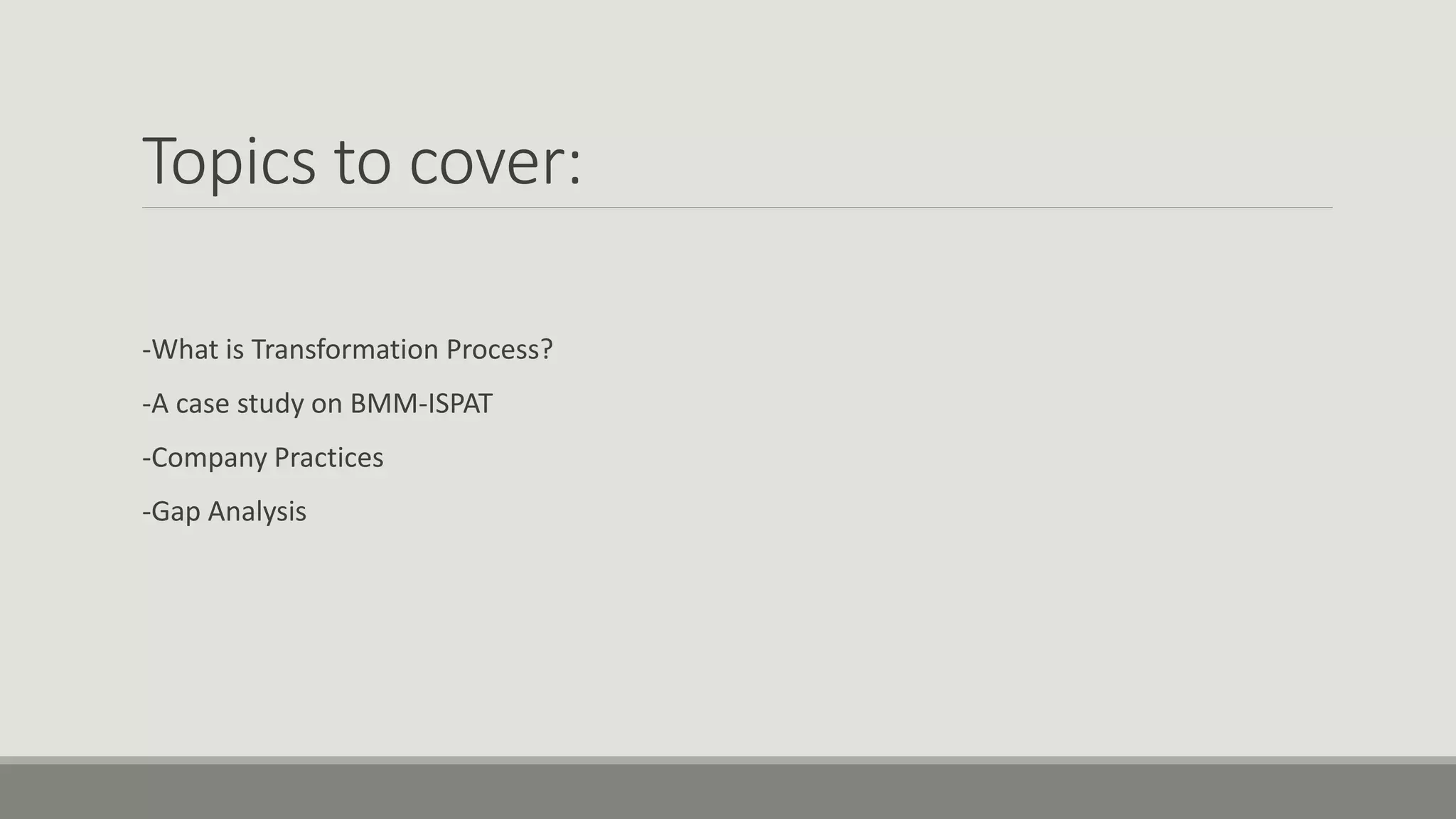
Transformation
INPUT OUTPUT
Transforming goods
- For goods, Transformation means there will
be physical changes. The output will be
tangible.
- The operation process will be highly
automated and mechanised.
- For example: Samsung takes electronic
parts, glass, metal, plastic and changes
them into a mobile phone.
Transforming services
For services, Transformation means there will be no
physical changes. The output will be intangible.
The process will rely heavily on staff-humans.
For example: Fed uses its input of staffs, vehicles and
delivers delivery services to the consumers as output
Value Adding
It costs the business money
to transform an input into
an output.
As a result value is added.
Example: There is more
value in a burger than in the
inputs such as bread, sauce,
meat.
Value Increases
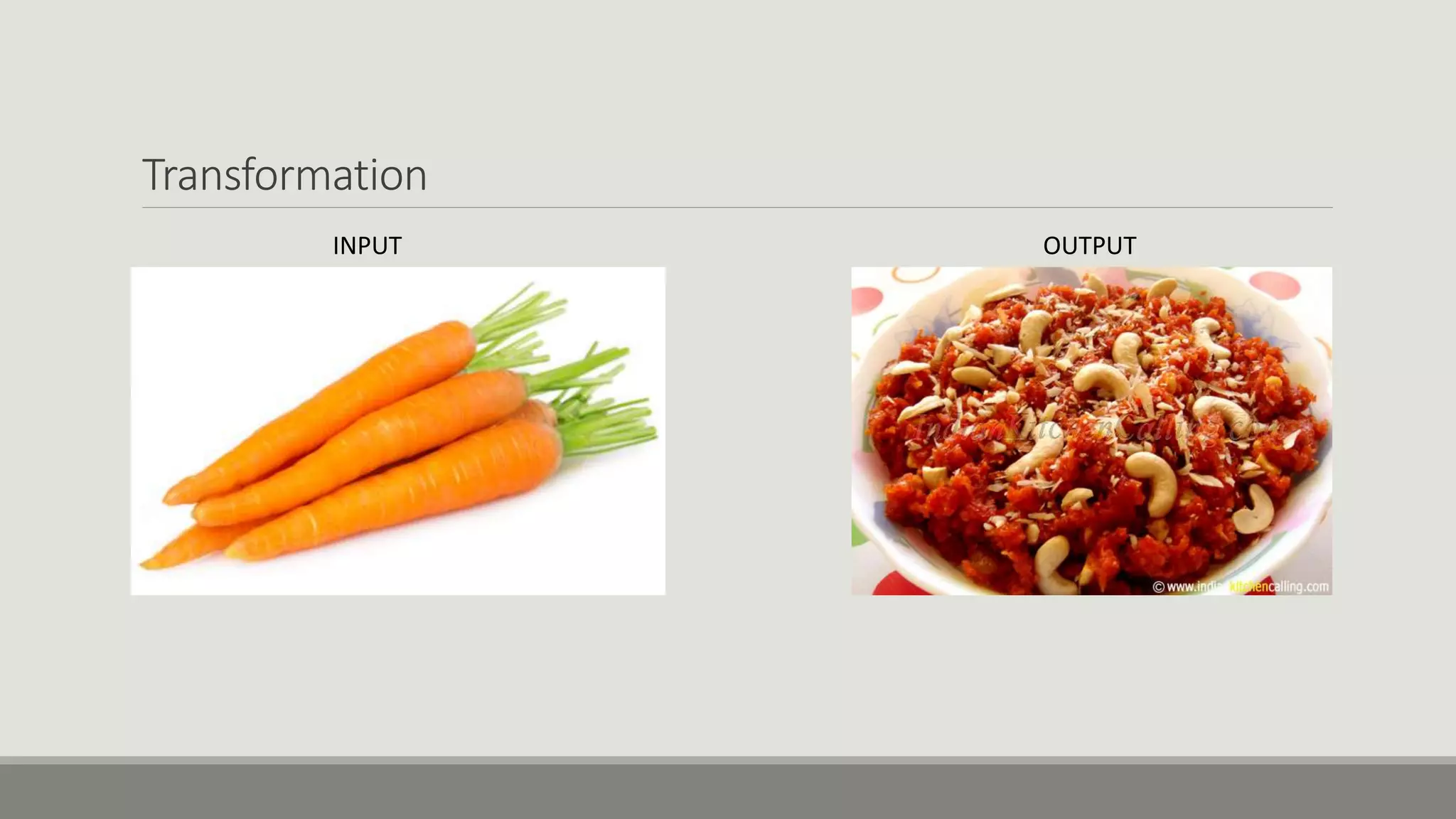
Influence of volume
One key decision that must be made
is- Volume – or How much ?
The business must be flexible to meet
the customer demand.
Lead Time
Lead Time
is the time it takes for an order to be
filled from the moment it is made.
Otherwise there might be:
-Wastage
-Increased inventory cost
-lost sales
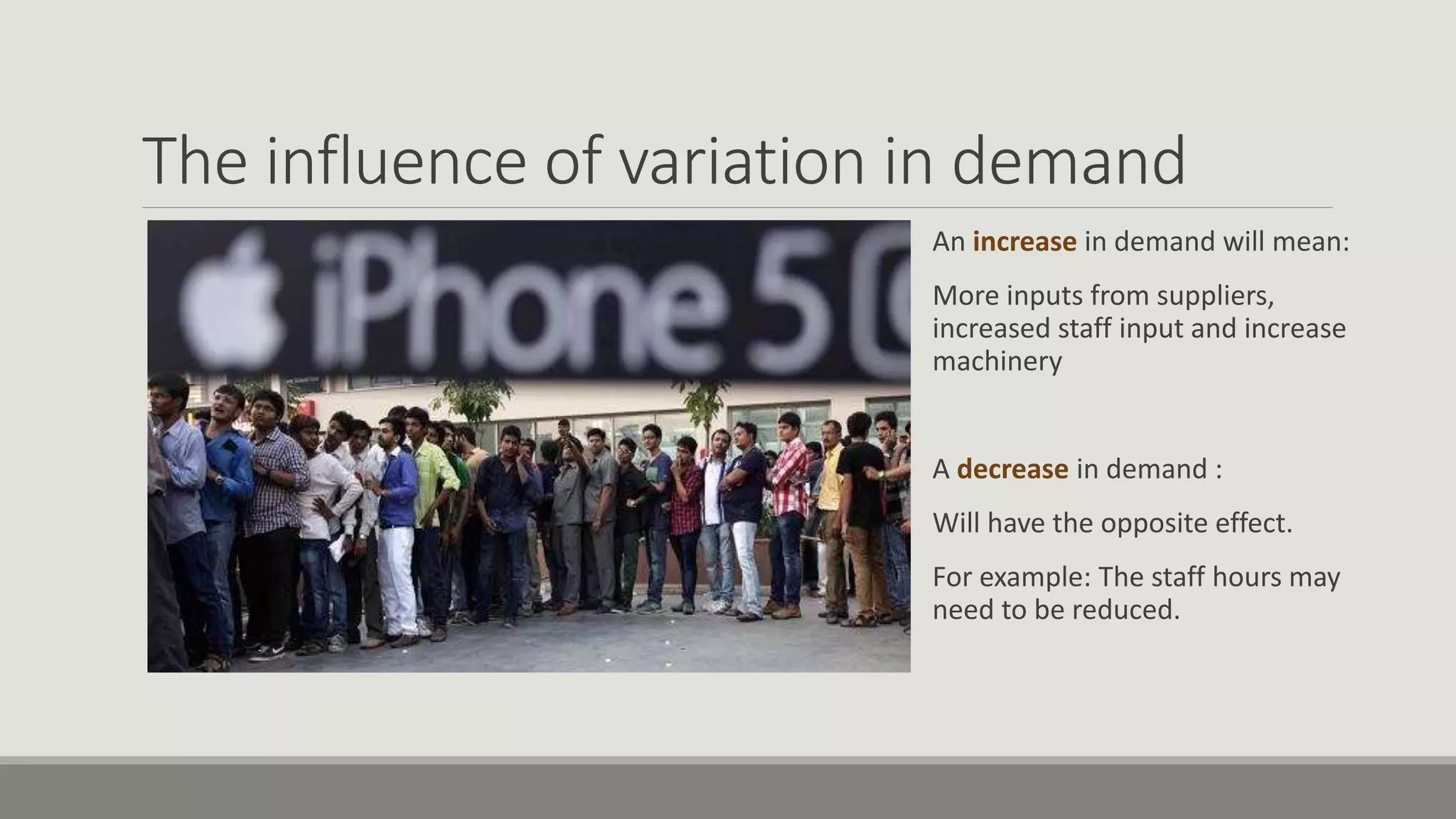
The influence of variation in demand
An increase in demand will mean:
More inputs from suppliers,
increased staff input and increase
machinery
A decrease in demand :
Will have the opposite effect.
For example: The staff hours may
need to be reduced.
Transformation processes include:
-changes in the physical characteristics of materials or customers
-changes in the location of materials, information or customers
-changes in the ownership of materials or information
-storage or accommodation of materials, information or customers
-changes in the purpose or form of information
-changes in the physiological or psychological state of customers.
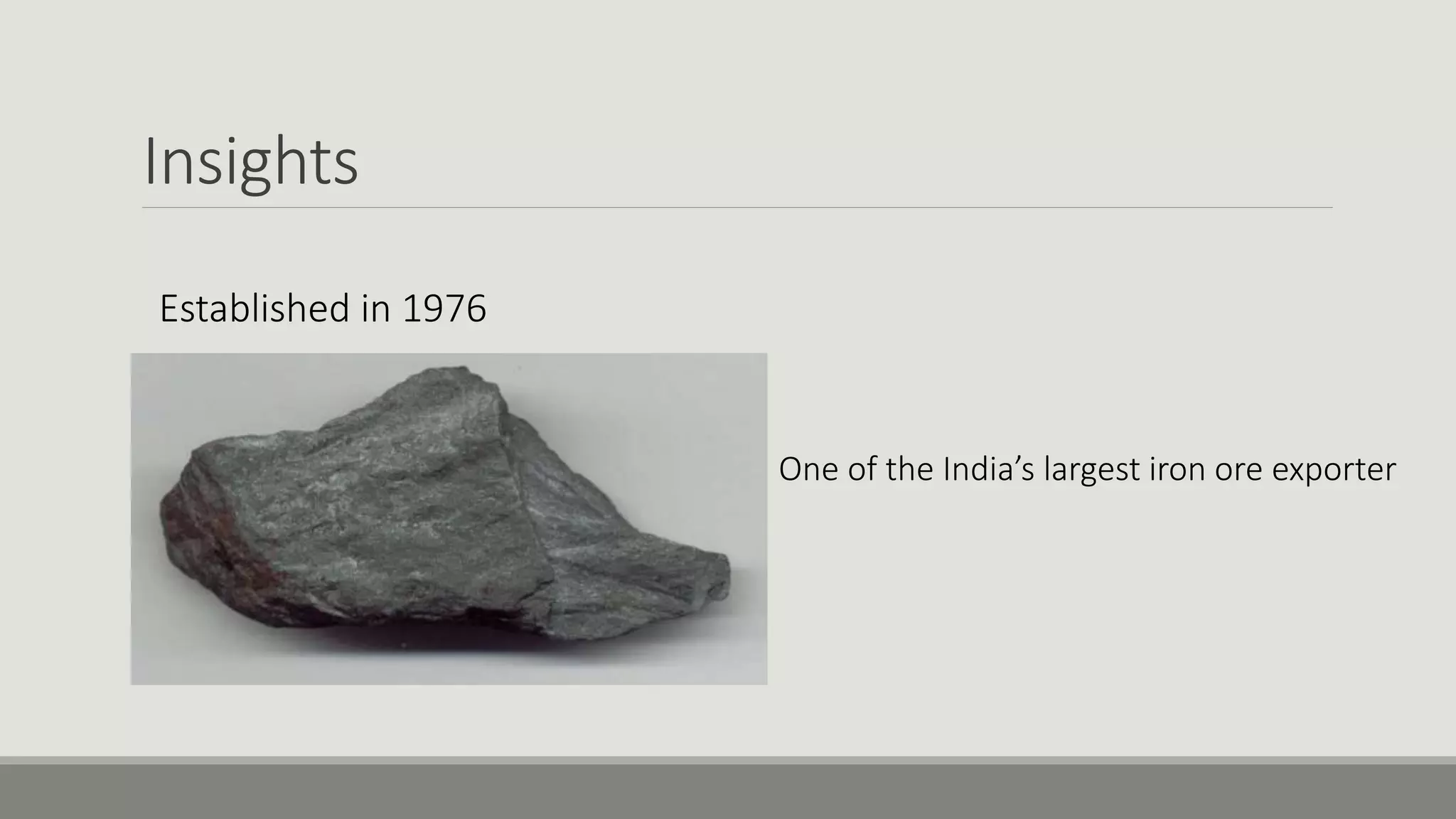
Insights
One of the India’s largest iron ore exporter
Established in 1976
PRODUCTS OF BMM GOUP:
SPONGE IRON
INDUCTION FURNACE
ROLLING MILL
235 MW POWER PLANT
PELLET PLANT
BENEFICIATION PLANT
BRICK PLANT
Integrated Steel Plant
COMPANY PRACTICES
Issue
Unloading was done with the help
of manpower
consumed a very large amount of
time and money.
Input
-Conveyor belts
-Track hopper
-wagon tipplers
Output
INCREASE IN OVERALL PRODUCTIVITY BY 7 TIMES
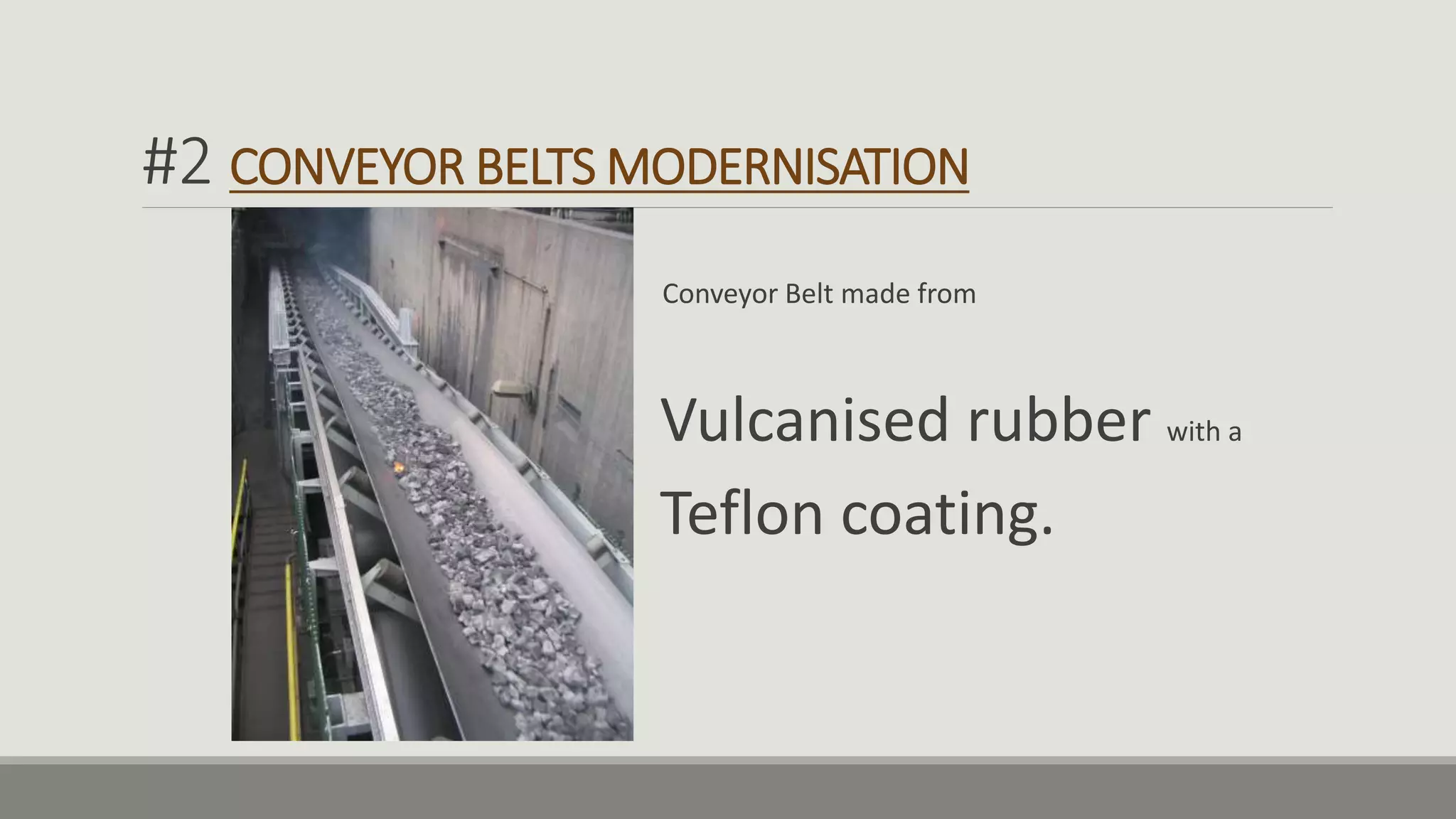
#2 CONVEYOR BELTS MODERNISATION
Conveyor Belt made from
Vulcanised rubber with a
Teflon coating.
Output
better abrasion
wear and tear resistance
Lesser breakdown
high productivity
lesser maintenance cost
Increase in
lifespan of the
conveyor belt
#3 STEEL MELTING SHOP- OXYGEN LANCING
Issue
Slopping results in the splashing of the
hot metal out of the LD chamber
Input
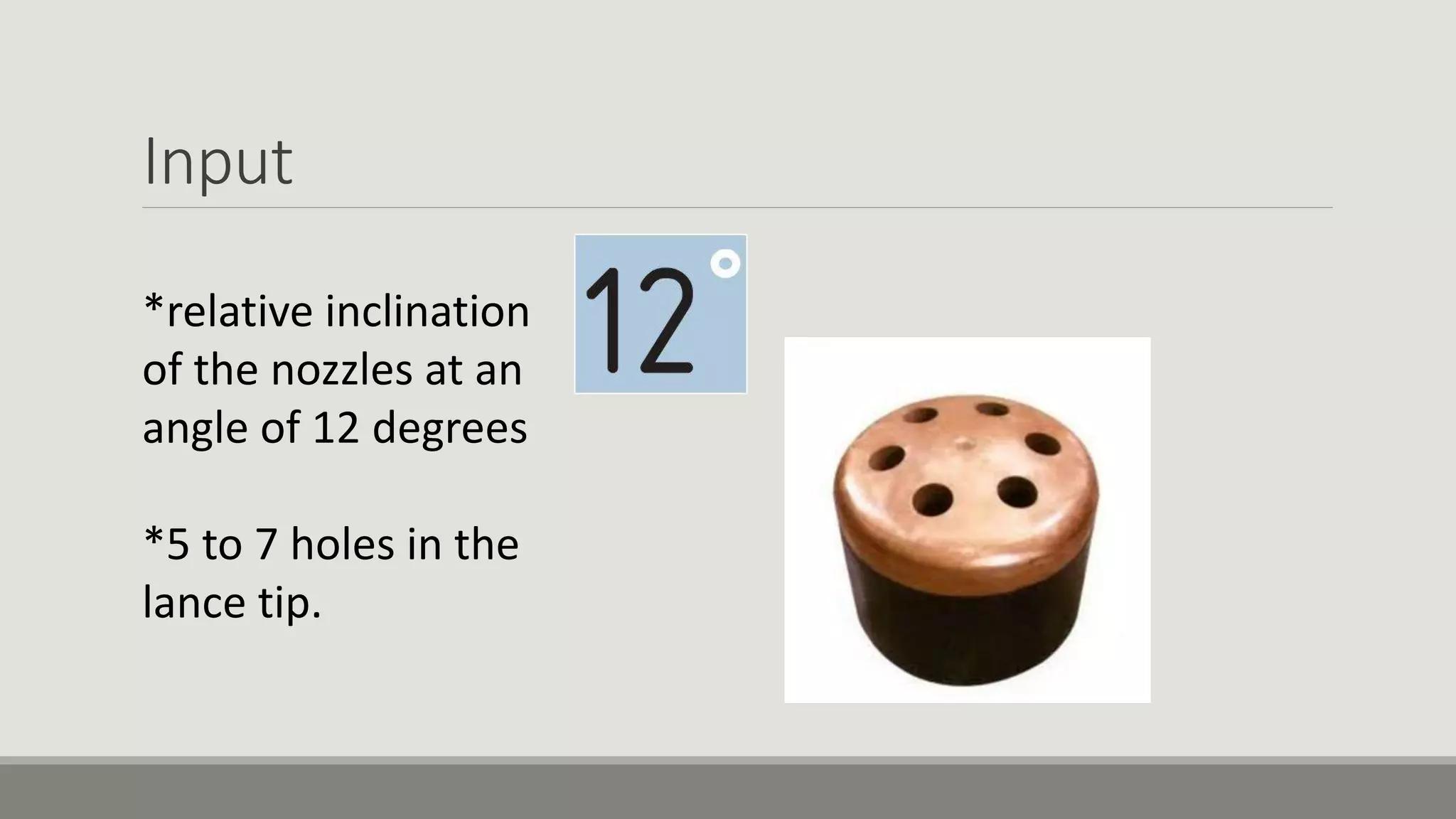
*relative inclination
of the nozzles at an
angle of 12 degrees
*5 to 7 holes in the
lance tip.
Output
Increase in overall productivity of 10% and reduction in
slopping.
Replaced Ladle Car with Torpedo Car
Output
Company saw reduction in scrap material and
more efficient energy utility due to absence of skulling.
INTRODUCTION OF SUBLANCE EQUIPMENT, DROP-IN THERMOCOUPLES
Thermocouple is an electrical device used to
measure temperature.
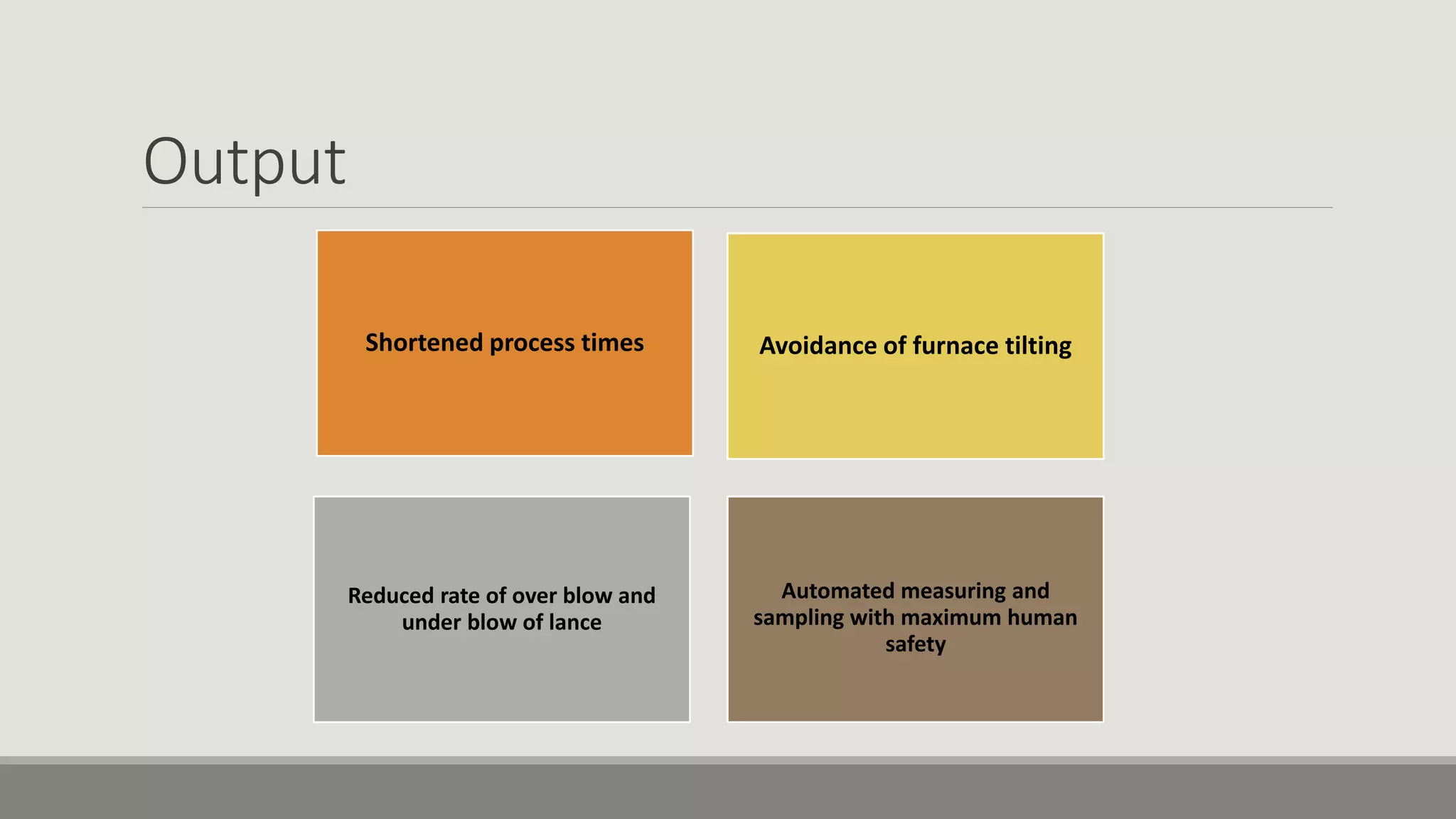
Output
Shortened process times Avoidance of furnace tilting
Reduced rate of over blow and
under blow of lance
Automated measuring and
sampling with maximum human
safety
In order to get the
required
kind of output,
The requisite Quality
of raw
materials
is to be ensured
In order to save
energy and to
ensure lower cost the
better,
efficient technology
should be
adapted.
Company imports
77-82% coking-
grade coal from
U.S.A., Australia
and the Philippines
and 18-23 of the
coal is fed from
East Indian
domestic mines
Replacement of
Ladle Cars with
Torpedo cars and
hot gas stove( blast
furnace unit)
Less Gap is seen as
company practices
according to the
Indian standards
of Iron and steel
making.
A very less gap is
seen as the
company is able to
inefficient energy
saving measures.
All modernized factories
should be
Eco-friendly keeping in
mind the
Alarming Global issues
The company has
failed in procuring a
clean certification by
Karnataka Pollution
Control Board and
have been slapped
with fines twice
between 2009-2013
A very high gap is
seen as the company
is not able to cope
up with cleaner
ideas.
For long term
sustenance of a bus-
Iness it is necessary to
maintain
Courteous relationships
with
Partners which includes
reasonable
Timelines, negotiable
pricing, regular
Clearance etc.
Company executives
most of the time act
impatiently,
irrationally,
aggressively with
partners especially
when it comes to
procurements ending
up to brittle
relationships with
key people
A high gap is seen as
company struggles to
meet profits with
relationships
THEORY PRACTICAL APP. REMARKS THEORY PRACTICAL APP. REMARKS

Transformation process

  • 1.
  • 2.
    Topics to cover: -Whatis Transformation Process? -A case study on BMM-ISPAT -Company Practices -Gap Analysis
  • 3.
    Transformation Process Input Output processesthat transform resources (inputs) into finished goods or services for customers or clients (outputs).
  • 4.
  • 5.
    Transforming goods - Forgoods, Transformation means there will be physical changes. The output will be tangible. - The operation process will be highly automated and mechanised. - For example: Samsung takes electronic parts, glass, metal, plastic and changes them into a mobile phone.
  • 6.
    Transforming services For services,Transformation means there will be no physical changes. The output will be intangible. The process will rely heavily on staff-humans. For example: Fed uses its input of staffs, vehicles and delivers delivery services to the consumers as output
  • 7.
    Value Adding It coststhe business money to transform an input into an output. As a result value is added. Example: There is more value in a burger than in the inputs such as bread, sauce, meat. Value Increases
  • 8.
    Influence of volume Onekey decision that must be made is- Volume – or How much ? The business must be flexible to meet the customer demand.
  • 9.
    Lead Time Lead Time isthe time it takes for an order to be filled from the moment it is made.
  • 10.
    Otherwise there mightbe: -Wastage -Increased inventory cost -lost sales
  • 11.
    The influence ofvariation in demand An increase in demand will mean: More inputs from suppliers, increased staff input and increase machinery A decrease in demand : Will have the opposite effect. For example: The staff hours may need to be reduced.
  • 12.
    Transformation processes include: -changesin the physical characteristics of materials or customers -changes in the location of materials, information or customers -changes in the ownership of materials or information -storage or accommodation of materials, information or customers -changes in the purpose or form of information -changes in the physiological or psychological state of customers.
  • 15.
    Insights One of theIndia’s largest iron ore exporter Established in 1976
  • 16.
    PRODUCTS OF BMMGOUP: SPONGE IRON INDUCTION FURNACE ROLLING MILL 235 MW POWER PLANT PELLET PLANT BENEFICIATION PLANT BRICK PLANT
  • 17.
  • 20.
  • 21.
    Issue Unloading was donewith the help of manpower consumed a very large amount of time and money.
  • 22.
  • 23.
    Output INCREASE IN OVERALLPRODUCTIVITY BY 7 TIMES
  • 24.
    #2 CONVEYOR BELTSMODERNISATION Conveyor Belt made from Vulcanised rubber with a Teflon coating.
  • 25.
    Output better abrasion wear andtear resistance Lesser breakdown high productivity lesser maintenance cost Increase in lifespan of the conveyor belt
  • 26.
    #3 STEEL MELTINGSHOP- OXYGEN LANCING
  • 27.
    Issue Slopping results inthe splashing of the hot metal out of the LD chamber
  • 28.
    Input *relative inclination of thenozzles at an angle of 12 degrees *5 to 7 holes in the lance tip.
  • 29.
    Output Increase in overallproductivity of 10% and reduction in slopping.
  • 30.
    Replaced Ladle Carwith Torpedo Car
  • 31.
    Output Company saw reductionin scrap material and more efficient energy utility due to absence of skulling.
  • 32.
    INTRODUCTION OF SUBLANCEEQUIPMENT, DROP-IN THERMOCOUPLES Thermocouple is an electrical device used to measure temperature.
  • 33.
    Output Shortened process timesAvoidance of furnace tilting Reduced rate of over blow and under blow of lance Automated measuring and sampling with maximum human safety
  • 34.
    In order toget the required kind of output, The requisite Quality of raw materials is to be ensured In order to save energy and to ensure lower cost the better, efficient technology should be adapted. Company imports 77-82% coking- grade coal from U.S.A., Australia and the Philippines and 18-23 of the coal is fed from East Indian domestic mines Replacement of Ladle Cars with Torpedo cars and hot gas stove( blast furnace unit) Less Gap is seen as company practices according to the Indian standards of Iron and steel making. A very less gap is seen as the company is able to inefficient energy saving measures. All modernized factories should be Eco-friendly keeping in mind the Alarming Global issues The company has failed in procuring a clean certification by Karnataka Pollution Control Board and have been slapped with fines twice between 2009-2013 A very high gap is seen as the company is not able to cope up with cleaner ideas. For long term sustenance of a bus- Iness it is necessary to maintain Courteous relationships with Partners which includes reasonable Timelines, negotiable pricing, regular Clearance etc. Company executives most of the time act impatiently, irrationally, aggressively with partners especially when it comes to procurements ending up to brittle relationships with key people A high gap is seen as company struggles to meet profits with relationships THEORY PRACTICAL APP. REMARKS THEORY PRACTICAL APP. REMARKS