Training Need Analysis

    Hj Arriffin Mansor
Training Need Analysis

   A practical approach
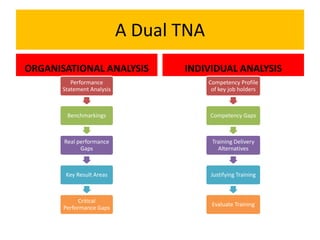
A Dual TNA
ORGANISATIONAL ANALYSIS            INDIVIDUAL ANALYSIS
          Performance                    Competency Profile
       Statement Analysis                 of key job holders


        Benchmarkings                    Competency Gaps


       Real performance                   Training Delivery
             Gaps                           Alternatives


        Key Result Areas                 Justifying Training


            Critical
                                          Evaluate Training
       Performance Gaps
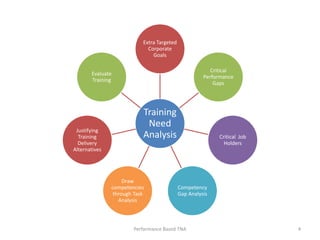
Extra Targeted
                             Corporate
                               Goals

                                                         Critical
       Evaluate
                                                      Performance
       Training
                                                          Gaps


                           Training
                            Need
 Justifying
  Training                 Analysis                        Critical Job
  Delivery                                                   Holders
Alternatives


                    Draw
               competencies                 Competency
                through Task                Gap Analysis
                  Analysis


                       Performance Based TNA                              4
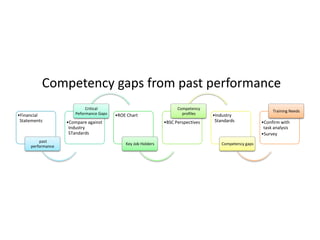
Competency gaps from past performance
                            Critical                                 Competency
                                                                                                              Training Needs
•Financial             Peformance Gaps   •ROE Chart                    profiles    •Industry
 Statements        •Compare against                            •BSC Perspectives    Standards            •Confirm with
                    Industry                                                                              task analysis
                    STandards                                                                            •Survey
         past
                                             Key Job Holders                           Competency gaps
     performance
Stage One : Establish Organisational support and
               business direction

 1. Ask and analyse 3 years Financial Statements based on
    industry standards
 2. Identify weak performance areas using Du Pont Ratio
    Analysis
 3. ‘Project Parameters’ : rationale of approach(es), time
    needed, numbers of people involved, admin. (& other)
    support needed.
    –   Establish Committee on performance
        •   Benchmarkings
        •   Accepted KPIs
    –   Establish performance standards
    –   Identify weak performers through KPI


                            Performance Based TNA            6
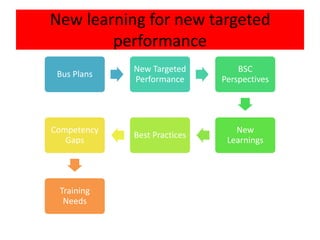
New learning for new targeted
        performance
             New Targeted         BSC
 Bus Plans
             Performance      Perspectives


Competency                       New
             Best Practices
   Gaps                        Learnings


 Training
  Needs
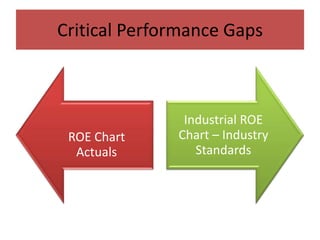
Critical Performance Gaps


               Industrial ROE
 ROE Chart    Chart – Industry
  Actuals        Standards
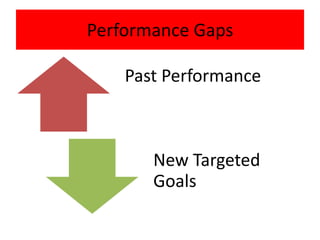
Performance Gaps

    Past Performance


       New Targeted
       Goals
Stage Two : Organisational Performance Gap Analysis

  1. Central Issue = ‘how well is the organisation doing?’
  2. N.B. Organisation does not have to be underperforming
     to need development
  3. Importance of the ‘transfer’ climate : system-wide factors
     that may support/undermine training
  4. Goldstein (1993) : 4 stages of Organisational Analysis
     –   Specify training goals (3 types)
     –   Determine training climate
     –   Identify legal constraints (vertical and horizontal)
     –   Determine resources available


                           Performance Based TNA                10
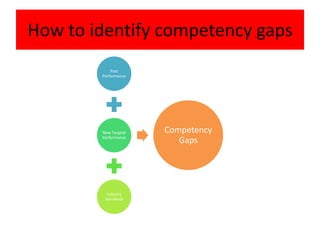
How to identify competency gaps
            Past
        Performance


        New Targetd   Competency
        Performance
                         Gaps


          Industry
         Standards
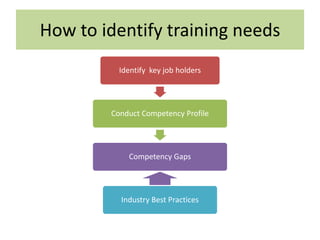
How to identify training needs
          Identify key job holders


        Conduct Competency Profile


            Competency Gaps


          Industry Best Practices
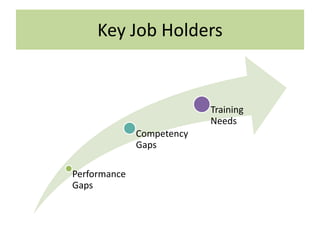
Key Job Holders


                           Training
                           Needs
              Competency
              Gaps

Performance
Gaps
Stage Three : Team and Individual Performance Analysis

 1. determine teams to be assessed
 2. Narrow to key job holders
 3. identify how needs assessment data best collected
    –   interviews, observations, surveys, tests, records, SME’s, focus
        groups, work samples, etc.
 4. determine who is going to provide necessary info
    –   Benchmarks internally and externally.
 5. ascertain key points of contact and their responsibilities
 6. anticipate problems and difficulties
 7. develop a TNA protocol


                      Performance Based TNA                         14
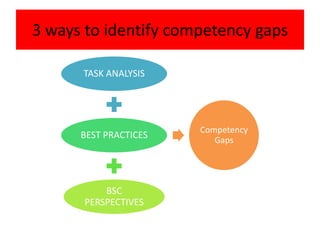
3 ways to identify competency gaps

      TASK ANALYSIS


                       Competency
      BEST PRACTICES      Gaps


          BSC
      PERSPECTIVES
Stage Four : Individual Job & Task Analysis
• Job and function analysis
    • Duty Analysis
    • Best Practices
• Task Analysis for TNA should provide
    • a job specification (KSA’s/competencies required).
    • Training spec. derived from difference between employees’ current
      and ideal levels
• Reid & Barrington (1997) : 3 main TNA TA approaches (task
  identification & task element analysis)
    – Comprehensive Approach
    – Key Task Analysis
    – Problem-Centred Approach
• Task fidelity (physical and psychological)
    – e.g. stages and ‘key points analysis’, manual skills analysis, job
      learning analysis, faults analysis, benchmarking, Critical Incidents
      Technique.


                           Performance Based TNA                             16
3            4
    2                    5
            6 step
1            TNA             6
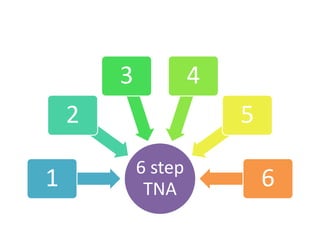
Detailed
                                  Job Holders
                    performance
                                  competency
                      and job
                                    profile
                      analysis

         Critical                               Competency
      Performance                                   Gap
          Gaps                                   identified


Best Practices
                            Training                    Specific
    in the
  industry
                             need                       training
                                                       solutions
                            analysis
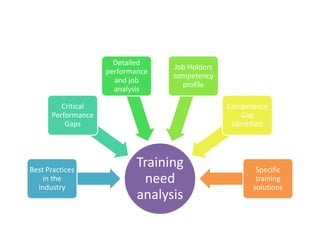
Key Performance     Key Performance
                 areas             Indicators


                                                 Measure
                                             performance due
ROE chart
                           Best               to competency
                                               improvement
                         practices
                          in the
                         Industry
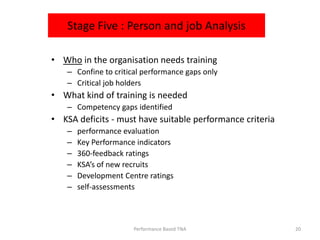
Stage Five : Person and job Analysis

• Who in the organisation needs training
    – Confine to critical performance gaps only
    – Critical job holders
• What kind of training is needed
    – Competency gaps identified
• KSA deficits - must have suitable performance criteria
    –   performance evaluation
    –   Key Performance indicators
    –   360-feedback ratings
    –   KSA’s of new recruits
    –   Development Centre ratings
    –   self-assessments


                       Performance Based TNA               20
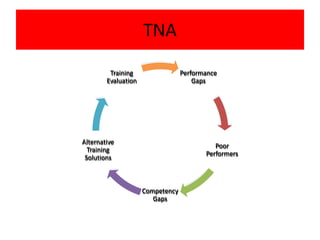
TNA
         Training                 Performance
        Evaluation                    Gaps


Alternative
                                            Poor
  Training
                                         Performers
 Solutions


                     Competency
                        Gaps
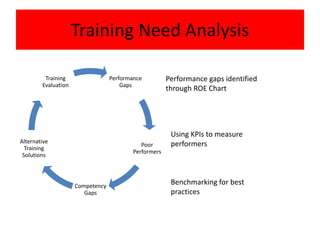
Training Need Analysis

         Training                 Performance          Performance gaps identified
        Evaluation                    Gaps
                                                       through ROE Chart


                                                        Using KPIs to measure
Alternative                                             performers
                                             Poor
  Training
                                          Performers
 Solutions


                     Competency
                                                        Benchmarking for best
                        Gaps                            practices
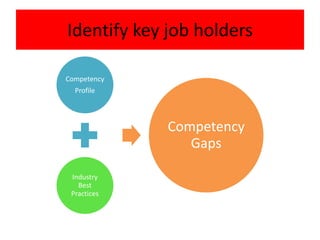
Identify key job holders

Competency
  Profile


             Competency
                Gaps

 Industry
   Best
 Practices
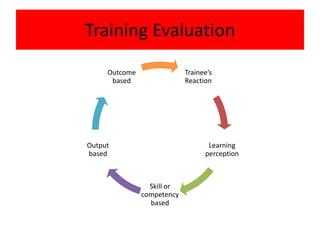
Training Evaluation
     Outcome                Trainee’s
      based                 Reaction


Output                             Learning
based                             perception


                 Skill or
               competency
                 based
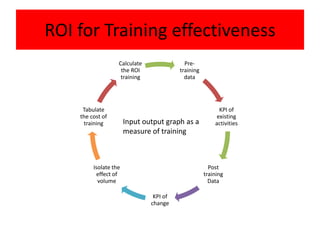
ROI for Training effectiveness
                   Calculate               Pre-
                    the ROI              training
                    training               data


     Tabulate                                             KPI of
    the cost of                                          existing
     training          Input output graph as a          activities
                       measure of training


         Isolate the                                  Post
           effect of                                training
           volume                                     Data

                                KPI of
                               change
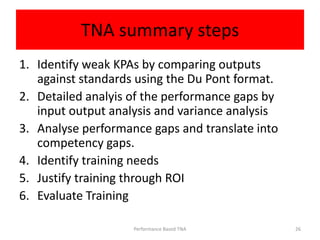
TNA summary steps
1. Identify weak KPAs by comparing outputs
   against standards using the Du Pont format.
2. Detailed analyis of the performance gaps by
   input output analysis and variance analysis
3. Analyse performance gaps and translate into
   competency gaps.
4. Identify training needs
5. Justify training through ROI
6. Evaluate Training

                    Performance Based TNA        26
TNA should lead towards
Organsational Performance Improvement


             The End

Training Need Analysis - Apr 2012

  • 1.
    Training Need Analysis Hj Arriffin Mansor
  • 2.
    Training Need Analysis A practical approach
  • 3.
    A Dual TNA ORGANISATIONALANALYSIS INDIVIDUAL ANALYSIS Performance Competency Profile Statement Analysis of key job holders Benchmarkings Competency Gaps Real performance Training Delivery Gaps Alternatives Key Result Areas Justifying Training Critical Evaluate Training Performance Gaps
  • 4.
    Extra Targeted Corporate Goals Critical Evaluate Performance Training Gaps Training Need Justifying Training Analysis Critical Job Delivery Holders Alternatives Draw competencies Competency through Task Gap Analysis Analysis Performance Based TNA 4
  • 5.
    Competency gaps frompast performance Critical Competency Training Needs •Financial Peformance Gaps •ROE Chart profiles •Industry Statements •Compare against •BSC Perspectives Standards •Confirm with Industry task analysis STandards •Survey past Key Job Holders Competency gaps performance
  • 6.
    Stage One :Establish Organisational support and business direction 1. Ask and analyse 3 years Financial Statements based on industry standards 2. Identify weak performance areas using Du Pont Ratio Analysis 3. ‘Project Parameters’ : rationale of approach(es), time needed, numbers of people involved, admin. (& other) support needed. – Establish Committee on performance • Benchmarkings • Accepted KPIs – Establish performance standards – Identify weak performers through KPI Performance Based TNA 6
  • 7.
    New learning fornew targeted performance New Targeted BSC Bus Plans Performance Perspectives Competency New Best Practices Gaps Learnings Training Needs
  • 8.
    Critical Performance Gaps Industrial ROE ROE Chart Chart – Industry Actuals Standards
  • 9.
    Performance Gaps Past Performance New Targeted Goals
  • 10.
    Stage Two :Organisational Performance Gap Analysis 1. Central Issue = ‘how well is the organisation doing?’ 2. N.B. Organisation does not have to be underperforming to need development 3. Importance of the ‘transfer’ climate : system-wide factors that may support/undermine training 4. Goldstein (1993) : 4 stages of Organisational Analysis – Specify training goals (3 types) – Determine training climate – Identify legal constraints (vertical and horizontal) – Determine resources available Performance Based TNA 10
  • 11.
    How to identifycompetency gaps Past Performance New Targetd Competency Performance Gaps Industry Standards
  • 12.
    How to identifytraining needs Identify key job holders Conduct Competency Profile Competency Gaps Industry Best Practices
  • 13.
    Key Job Holders Training Needs Competency Gaps Performance Gaps
  • 14.
    Stage Three :Team and Individual Performance Analysis 1. determine teams to be assessed 2. Narrow to key job holders 3. identify how needs assessment data best collected – interviews, observations, surveys, tests, records, SME’s, focus groups, work samples, etc. 4. determine who is going to provide necessary info – Benchmarks internally and externally. 5. ascertain key points of contact and their responsibilities 6. anticipate problems and difficulties 7. develop a TNA protocol Performance Based TNA 14
  • 15.
    3 ways toidentify competency gaps TASK ANALYSIS Competency BEST PRACTICES Gaps BSC PERSPECTIVES
  • 16.
    Stage Four :Individual Job & Task Analysis • Job and function analysis • Duty Analysis • Best Practices • Task Analysis for TNA should provide • a job specification (KSA’s/competencies required). • Training spec. derived from difference between employees’ current and ideal levels • Reid & Barrington (1997) : 3 main TNA TA approaches (task identification & task element analysis) – Comprehensive Approach – Key Task Analysis – Problem-Centred Approach • Task fidelity (physical and psychological) – e.g. stages and ‘key points analysis’, manual skills analysis, job learning analysis, faults analysis, benchmarking, Critical Incidents Technique. Performance Based TNA 16
  • 17.
    3 4 2 5 6 step 1 TNA 6
  • 18.
    Detailed Job Holders performance competency and job profile analysis Critical Competency Performance Gap Gaps identified Best Practices Training Specific in the industry need training solutions analysis
  • 19.
    Key Performance Key Performance areas Indicators Measure performance due ROE chart Best to competency improvement practices in the Industry
  • 20.
    Stage Five :Person and job Analysis • Who in the organisation needs training – Confine to critical performance gaps only – Critical job holders • What kind of training is needed – Competency gaps identified • KSA deficits - must have suitable performance criteria – performance evaluation – Key Performance indicators – 360-feedback ratings – KSA’s of new recruits – Development Centre ratings – self-assessments Performance Based TNA 20
  • 21.
    TNA Training Performance Evaluation Gaps Alternative Poor Training Performers Solutions Competency Gaps
  • 22.
    Training Need Analysis Training Performance Performance gaps identified Evaluation Gaps through ROE Chart Using KPIs to measure Alternative performers Poor Training Performers Solutions Competency Benchmarking for best Gaps practices
  • 23.
    Identify key jobholders Competency Profile Competency Gaps Industry Best Practices
  • 24.
    Training Evaluation Outcome Trainee’s based Reaction Output Learning based perception Skill or competency based
  • 25.
    ROI for Trainingeffectiveness Calculate Pre- the ROI training training data Tabulate KPI of the cost of existing training Input output graph as a activities measure of training Isolate the Post effect of training volume Data KPI of change
  • 26.
    TNA summary steps 1.Identify weak KPAs by comparing outputs against standards using the Du Pont format. 2. Detailed analyis of the performance gaps by input output analysis and variance analysis 3. Analyse performance gaps and translate into competency gaps. 4. Identify training needs 5. Justify training through ROI 6. Evaluate Training Performance Based TNA 26
  • 27.
    TNA should leadtowards Organsational Performance Improvement The End