Introduction to
Training Need
Analysis
Training need analysis is a critical process in the pharmaceutical industry,
where staying ahead of the curve and ensuring a skilled workforce is
paramount. This introductory section lays the foundation for
understanding the importance and key steps involved in conducting a
thorough training needs assessment.
by Flt Lt Renu Lamba
Importance of Training Need Analysis
in Pharma Companies
1 Identifying Skill Gaps
Pinpoint areas where employees lack the
necessary knowledge and abilities to
perform their roles effectively.
2 Aligning with Business Goals
Tailor training programs to directly support
the company's strategic objectives and
drive organizational success.
3 Optimizing Resources
Ensure training investments are targeted
and efficient, maximizing the return on
training initiatives.
4 Compliance and Regulations
Stay ahead of evolving industry regulations
and guidelines through comprehensive
training programs.
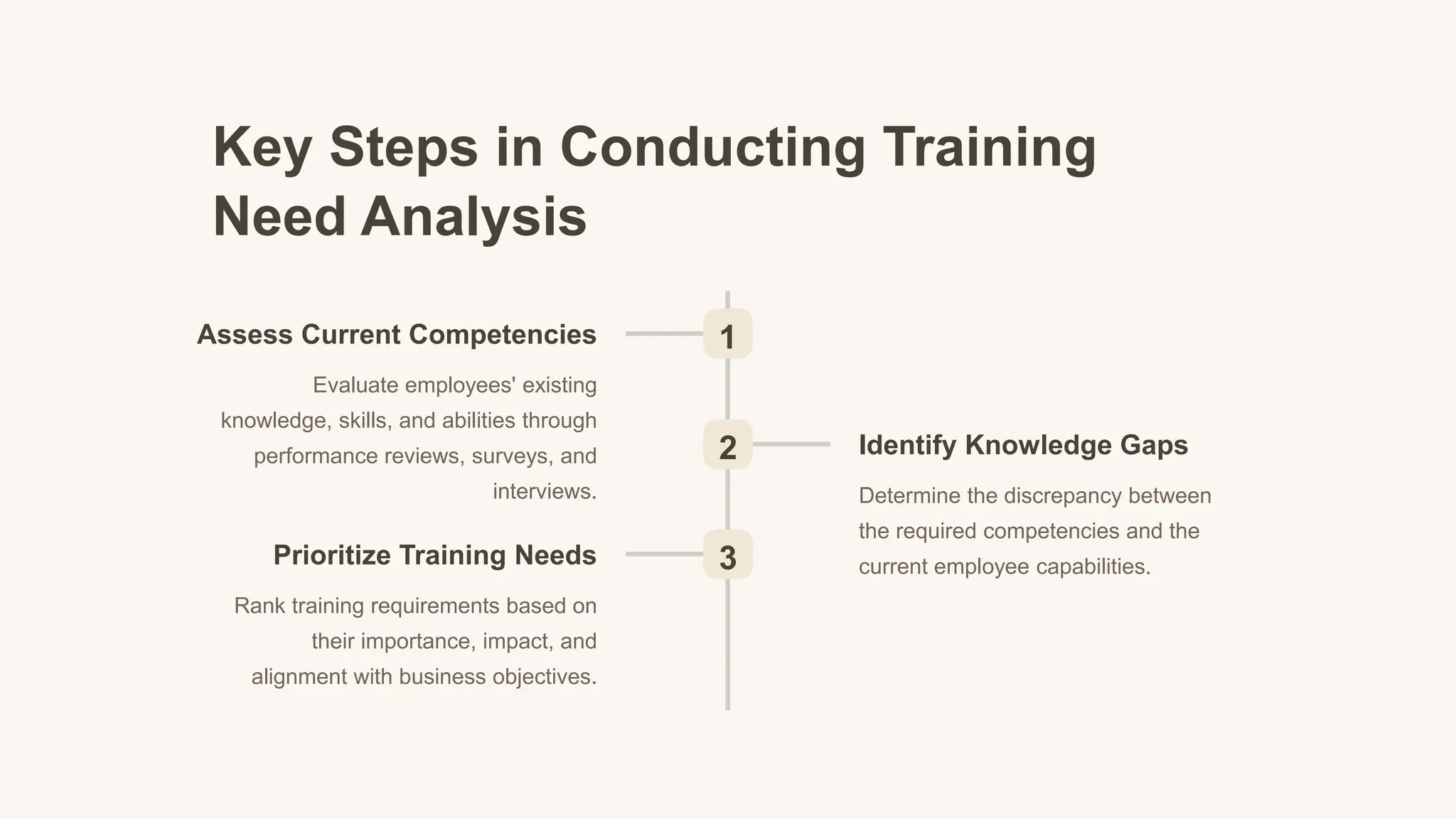
Key Steps in Conducting Training
Need Analysis
1
Assess Current Competencies
Evaluate employees' existing
knowledge, skills, and abilities through
performance reviews, surveys, and
interviews.
2 Identify Knowledge Gaps
Determine the discrepancy between
the required competencies and the
current employee capabilities.
3
Prioritize Training Needs
Rank training requirements based on
their importance, impact, and
alignment with business objectives.
Identifying Knowledge and Skill Gaps
Technical Skills
Assess proficiency in
specialized skills, such as
data analysis, regulatory
compliance, and scientific
research techniques.
Soft Skills
Evaluate employees'
communication, problem-
solving, critical thinking, and
leadership abilities.
Industry Knowledge
Ensure employees stay up-to-
date with the latest industry
trends, regulations, and best
practices.
Assessing Current Employee
Competencies
Performance Reviews
Conduct regular performance reviews to
identify strengths, weaknesses, and areas for
improvement.
Skills Assessments
Implement skills assessments and tests to
objectively evaluate employees' knowledge
and capabilities.
Feedback from Managers
Gather input from supervisors and managers
who have direct experience with the
employees' day-to-day performance.
Self-Evaluations
Encourage employees to assess their own
skills and identify areas where they need to
develop further.
Aligning Training with Business
Objectives
Identify Business
Goals
Clearly define the
company's strategic
objectives, such as
improving productivity,
enhancing quality, or
expanding into new markets.
Pinpoint Skill
Requirements
Determine the specific
knowledge, abilities, and
competencies needed to
achieve the identified
business goals.
Develop Targeted
Training
Design training programs
that directly address the skill
gaps and support the
attainment of the company's
objectives.
Developing a Comprehensive Training
Plan
Timely
Ensure training is
delivered at the right
time, aligned with
business needs and
employee
development cycles.
Cost-Effective
Optimize training
investments by
leveraging a mix of in-
house expertise,
online resources, and
external providers.
Impactful
Design training
programs that
enhance employee
skills and knowledge,
driving measurable
improvements in
performance.
Evaluative
Implement robust
evaluation processes
to continuously
assess the
effectiveness of
training initiatives.
Evaluating Training Effectiveness
Reaction Measure participant satisfaction and
engagement levels with the training program.
Learning Assess the acquisition of new knowledge,
skills, and abilities by the trainees.
Behavior Observe and evaluate the application of
learned skills and behaviors in the workplace.
Results Analyze the tangible business impacts and
outcomes achieved through the training
initiatives.

Introduction-to-Training-Need-Analysis [Autosaved].pptx

  • 1.
    Introduction to Training Need Analysis Trainingneed analysis is a critical process in the pharmaceutical industry, where staying ahead of the curve and ensuring a skilled workforce is paramount. This introductory section lays the foundation for understanding the importance and key steps involved in conducting a thorough training needs assessment. by Flt Lt Renu Lamba
  • 2.
    Importance of TrainingNeed Analysis in Pharma Companies 1 Identifying Skill Gaps Pinpoint areas where employees lack the necessary knowledge and abilities to perform their roles effectively. 2 Aligning with Business Goals Tailor training programs to directly support the company's strategic objectives and drive organizational success. 3 Optimizing Resources Ensure training investments are targeted and efficient, maximizing the return on training initiatives. 4 Compliance and Regulations Stay ahead of evolving industry regulations and guidelines through comprehensive training programs.
  • 3.
    Key Steps inConducting Training Need Analysis 1 Assess Current Competencies Evaluate employees' existing knowledge, skills, and abilities through performance reviews, surveys, and interviews. 2 Identify Knowledge Gaps Determine the discrepancy between the required competencies and the current employee capabilities. 3 Prioritize Training Needs Rank training requirements based on their importance, impact, and alignment with business objectives.
  • 4.
    Identifying Knowledge andSkill Gaps Technical Skills Assess proficiency in specialized skills, such as data analysis, regulatory compliance, and scientific research techniques. Soft Skills Evaluate employees' communication, problem- solving, critical thinking, and leadership abilities. Industry Knowledge Ensure employees stay up-to- date with the latest industry trends, regulations, and best practices.
  • 5.
    Assessing Current Employee Competencies PerformanceReviews Conduct regular performance reviews to identify strengths, weaknesses, and areas for improvement. Skills Assessments Implement skills assessments and tests to objectively evaluate employees' knowledge and capabilities. Feedback from Managers Gather input from supervisors and managers who have direct experience with the employees' day-to-day performance. Self-Evaluations Encourage employees to assess their own skills and identify areas where they need to develop further.
  • 6.
    Aligning Training withBusiness Objectives Identify Business Goals Clearly define the company's strategic objectives, such as improving productivity, enhancing quality, or expanding into new markets. Pinpoint Skill Requirements Determine the specific knowledge, abilities, and competencies needed to achieve the identified business goals. Develop Targeted Training Design training programs that directly address the skill gaps and support the attainment of the company's objectives.
  • 7.
    Developing a ComprehensiveTraining Plan Timely Ensure training is delivered at the right time, aligned with business needs and employee development cycles. Cost-Effective Optimize training investments by leveraging a mix of in- house expertise, online resources, and external providers. Impactful Design training programs that enhance employee skills and knowledge, driving measurable improvements in performance. Evaluative Implement robust evaluation processes to continuously assess the effectiveness of training initiatives.
  • 8.
    Evaluating Training Effectiveness ReactionMeasure participant satisfaction and engagement levels with the training program. Learning Assess the acquisition of new knowledge, skills, and abilities by the trainees. Behavior Observe and evaluate the application of learned skills and behaviors in the workplace. Results Analyze the tangible business impacts and outcomes achieved through the training initiatives.