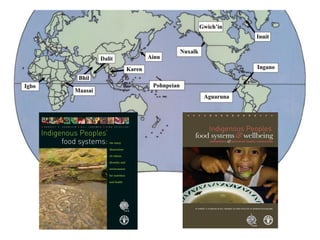
Traditional Food Systems of
Indigenous Peoples
Barbara Burlingame, PhD
FAO
Definitions
Indigenous peoples (PFII, 2007)
• Self- identification
• Historical continuity with pre-colonial and/or pre-settler societies
• Strong link to territories and surrounding natural resources
• Distinct language, culture and beliefs
• Resolve to maintain and reproduce their ancestral environments and
systems as distinctive peoples and communities

Traditional food systems
• Local access
• Ecosystem service
• Product of traditional knowledge and the natural environment
• Naturally resilient, adapted food plants and animals
Issues
•

Diets are not sustainable
– 870 million hungry people
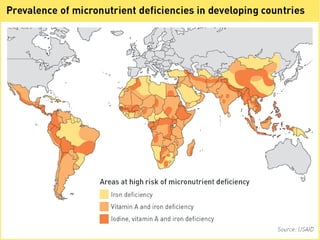
– 2 billion people with micronutrient malnutrition
– 2 billion people overweight and obese

• Environments are not sustainable
– ecosystems degraded
– biodiversity forever lost

•

Food systems are not sustainable
– Deforestation, intensive livestock industries, imports of “popularly
positioned products”, agricultural and industrial chemical
contaminations
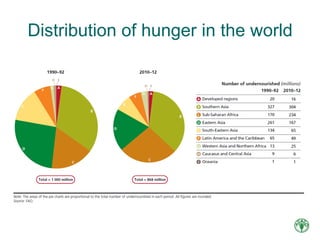
Distribution of hunger in the world
•27.6
•23.7
•18.1

•10

•13.5

•200
•150

•38.2

•190

•138

•100

•30

•39.3
•37.7

•100

•60

•50

•40.3

•Number of stunted (millions)

•48.6

•2
0

•Stunting (%)

•40

•50

Stunting prevalence and number affected in
developing countries

•51

•45

•10

•7

•0

•0

•13

•1990

•2000

•2010

•Source: Department of Nutrition, World Health Organization •AFRICA

•CFS
•Roma, 14th October
2010

•1990
•ASIA

•2000

•2010
•LATIN AMERICA
•6

•5.7
•4.9

•4

•4

•20

•14

•13

•13

•7
•4

•4

•4

•4

•0

•2

•3.2

•3.7

•15

•6.9

•10

•6.8

•18

•5

•6.8

•0

•Overweight (%)

•8

•8.5

•Number of overweight (millions)

•10

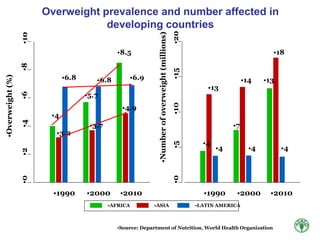
Overweight prevalence and number affected in
developing countries

•1990

•2000

•2010

•AFRICA

•1990
•ASIA

•2000

•2010

•LATIN AMERICA

•Source: Department of Nutrition, World Health Organization
Definition of
Sustainable Diets
Sustainable Diets are those diets with low
environmental impacts which contribute to food and
nutrition security and to healthy life for present and
future generations. Sustainable diets are protective and
respectful of biodiversity and ecosystems, culturally
acceptable, accessible, economically fair and
affordable; nutritionally adequate, safe and healthy;
while optimizing natural and human resources.
Source: FAO, 2010
Ingano
Ingano forest resources
“Let’s return to our
food, our life and our
tradition. With our
food, we will improve
our health, will recover
our culture, and will
take care of the natural
world. We need our
plants and our jungle
in order to have
strength and to live
better.”
Eva Yela, Ingano community
member
Ingano forest resources
“Let’s return to our
food, our life and our
tradition. With our
food, we will improve
our health, will recover
our culture, and will
take care of the natural
world. We need our
plants and our jungle
in order to have
strength and to live
better.”
Eva Yela, Ingano community
member
•
Organización de Desarrollo de
Comunidades Fronterizas del Cenepa
(ODECOFROC, Organization for
Development of the Frontier
Communities of
Cenepa)

•

•

•

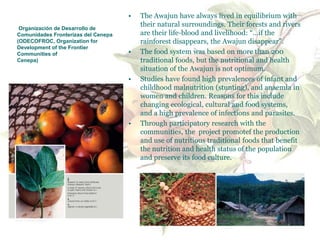
The Awajun have always lived in equilibrium with
their natural surroundings. Their forests and rivers
are their life-blood and livelihood: “…if the
rainforest disappears, the Awajun disappear”.
The food system was based on more than 200
traditional foods, but the nutritional and health
situation of the Awajun is not optimum.
Studies have found high prevalences of infant and
childhood malnutrition (stunting), and anaemia in
women and children. Reasons for this include
changing ecological, cultural and food systems,
and a high prevalence of infections and parasites.
Through participatory research with the
communities, the project promotef the production
and use of nutritious traditional foods that benefit
the nutrition and health status of the population
and preserve its food culture.
Inventory of plants at central nursery
Bananas and vitamin A

<5 µg carotenes
>8500 µg carotenes
Impact of food biodiversity on
measurements of dietary adequacy
Banana

β-carotene
content in
μg/100 g

Banana intake
in Philippines
in g/cap/d

Vitamin A
intake through
banana in
μg RE/cap/d

%RDI for vitamin
A calculated
for banana
intake

USDA

26

93

4

0.7

Lacatan

360

93

56

9.3

Utin Iap

8510

93

1320

220
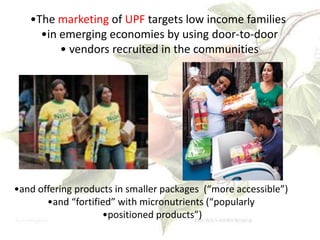
•The marketing of UPF targets low income families
•in emerging economies by using door-to-door
• vendors recruited in the communities

•and offering products in smaller packages (“more accessible”)
•and “fortified” with micronutrients (“popularly
•positioned products”)
•Nestle to Sail Amazon River to Reach
Emerging-Market Consumers
http://www.bloomberg.com/news/2010-06-17
•The marketing of ultra-processed products
• promotes compulsive overeating

•New brand of ultra-processed products in Brazil

•
•
•

It is one after the other!
The name says it all.
Non-stop is simply irresistible.
•From a Nestlé press release:
•Vevey, February 21, 2008
•“Popularly positioned products (PPPs). Products
•aimed at lower income consumers in the developing
•world, will continue to grow strongly in 2008 and
•beyond. Nestlé PPPs, which mostly consist of dairy
•products, Nescafé and Maggi culinary products,
•grew by over 25% to reach around CHF 6 billion in
•sales in 2007. The overall market for such products in
•Asia, Africa and Latin America is estimated at over CHF
•80 billion.”
Improving the evidence base
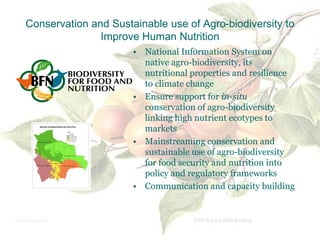
Conservation and Sustainable use of Agro-biodiversity to
Improve Human Nutrition
• National Information System on
native agro-biodiversity, its
nutritional properties and resilience
to climate change
• Ensure support for in-situ
conservation of agro-biodiversity
linking high nutrient ecotypes to
markets
• Mainstreaming conservation and
sustainable use of agro-biodiversity
for food security and nutrition into
policy and regulatory frameworks
• Communication and capacity building
Environmental
footprint

Source: Mediterranean
Diet Foundation, 2010
•Note that the degradation of ecosystems and the
loss of food biodiversity is contributing greatly to
the increases in poverty and malnutrition in Africa;
• Recognize that returning to local crops and
traditional food systems is a prerequisite for
conservation and sustainable use of biodiversity for
food and nutrition;
• Acknowledge that local foods are the basis for
African sustainable diets.

•
•

The Door of No
Return
House of the Slaves
•

Gorée Island
Traditional food systems

Traditional food systems

  • 1.
    Traditional Food Systemsof Indigenous Peoples Barbara Burlingame, PhD FAO
  • 2.
    Definitions Indigenous peoples (PFII,2007) • Self- identification • Historical continuity with pre-colonial and/or pre-settler societies • Strong link to territories and surrounding natural resources • Distinct language, culture and beliefs • Resolve to maintain and reproduce their ancestral environments and systems as distinctive peoples and communities Traditional food systems • Local access • Ecosystem service • Product of traditional knowledge and the natural environment • Naturally resilient, adapted food plants and animals
  • 3.
    Issues • Diets are notsustainable – 870 million hungry people – 2 billion people with micronutrient malnutrition – 2 billion people overweight and obese • Environments are not sustainable – ecosystems degraded – biodiversity forever lost • Food systems are not sustainable – Deforestation, intensive livestock industries, imports of “popularly positioned products”, agricultural and industrial chemical contaminations
  • 4.
  • 5.
    •27.6 •23.7 •18.1 •10 •13.5 •200 •150 •38.2 •190 •138 •100 •30 •39.3 •37.7 •100 •60 •50 •40.3 •Number of stunted(millions) •48.6 •2 0 •Stunting (%) •40 •50 Stunting prevalence and number affected in developing countries •51 •45 •10 •7 •0 •0 •13 •1990 •2000 •2010 •Source: Department of Nutrition, World Health Organization •AFRICA •CFS •Roma, 14th October 2010 •1990 •ASIA •2000 •2010 •LATIN AMERICA
  • 6.
    •6 •5.7 •4.9 •4 •4 •20 •14 •13 •13 •7 •4 •4 •4 •4 •0 •2 •3.2 •3.7 •15 •6.9 •10 •6.8 •18 •5 •6.8 •0 •Overweight (%) •8 •8.5 •Number ofoverweight (millions) •10 Overweight prevalence and number affected in developing countries •1990 •2000 •2010 •AFRICA •1990 •ASIA •2000 •2010 •LATIN AMERICA •Source: Department of Nutrition, World Health Organization
  • 8.
    Definition of Sustainable Diets SustainableDiets are those diets with low environmental impacts which contribute to food and nutrition security and to healthy life for present and future generations. Sustainable diets are protective and respectful of biodiversity and ecosystems, culturally acceptable, accessible, economically fair and affordable; nutritionally adequate, safe and healthy; while optimizing natural and human resources. Source: FAO, 2010
  • 10.
  • 11.
    Ingano forest resources “Let’sreturn to our food, our life and our tradition. With our food, we will improve our health, will recover our culture, and will take care of the natural world. We need our plants and our jungle in order to have strength and to live better.” Eva Yela, Ingano community member
  • 12.
    Ingano forest resources “Let’sreturn to our food, our life and our tradition. With our food, we will improve our health, will recover our culture, and will take care of the natural world. We need our plants and our jungle in order to have strength and to live better.” Eva Yela, Ingano community member
  • 14.
    • Organización de Desarrollode Comunidades Fronterizas del Cenepa (ODECOFROC, Organization for Development of the Frontier Communities of Cenepa) • • • The Awajun have always lived in equilibrium with their natural surroundings. Their forests and rivers are their life-blood and livelihood: “…if the rainforest disappears, the Awajun disappear”. The food system was based on more than 200 traditional foods, but the nutritional and health situation of the Awajun is not optimum. Studies have found high prevalences of infant and childhood malnutrition (stunting), and anaemia in women and children. Reasons for this include changing ecological, cultural and food systems, and a high prevalence of infections and parasites. Through participatory research with the communities, the project promotef the production and use of nutritious traditional foods that benefit the nutrition and health status of the population and preserve its food culture.
  • 15.
    Inventory of plantsat central nursery
  • 16.
    Bananas and vitaminA <5 µg carotenes >8500 µg carotenes
  • 17.
    Impact of foodbiodiversity on measurements of dietary adequacy Banana β-carotene content in μg/100 g Banana intake in Philippines in g/cap/d Vitamin A intake through banana in μg RE/cap/d %RDI for vitamin A calculated for banana intake USDA 26 93 4 0.7 Lacatan 360 93 56 9.3 Utin Iap 8510 93 1320 220
  • 18.
    •The marketing ofUPF targets low income families •in emerging economies by using door-to-door • vendors recruited in the communities •and offering products in smaller packages (“more accessible”) •and “fortified” with micronutrients (“popularly •positioned products”)
  • 19.
    •Nestle to SailAmazon River to Reach Emerging-Market Consumers http://www.bloomberg.com/news/2010-06-17
  • 20.
    •The marketing ofultra-processed products • promotes compulsive overeating •New brand of ultra-processed products in Brazil • • • It is one after the other! The name says it all. Non-stop is simply irresistible.
  • 21.
    •From a Nestlépress release: •Vevey, February 21, 2008 •“Popularly positioned products (PPPs). Products •aimed at lower income consumers in the developing •world, will continue to grow strongly in 2008 and •beyond. Nestlé PPPs, which mostly consist of dairy •products, Nescafé and Maggi culinary products, •grew by over 25% to reach around CHF 6 billion in •sales in 2007. The overall market for such products in •Asia, Africa and Latin America is estimated at over CHF •80 billion.”
  • 22.
  • 23.
    Conservation and Sustainableuse of Agro-biodiversity to Improve Human Nutrition • National Information System on native agro-biodiversity, its nutritional properties and resilience to climate change • Ensure support for in-situ conservation of agro-biodiversity linking high nutrient ecotypes to markets • Mainstreaming conservation and sustainable use of agro-biodiversity for food security and nutrition into policy and regulatory frameworks • Communication and capacity building
  • 24.
  • 25.
    •Note that thedegradation of ecosystems and the loss of food biodiversity is contributing greatly to the increases in poverty and malnutrition in Africa; • Recognize that returning to local crops and traditional food systems is a prerequisite for conservation and sustainable use of biodiversity for food and nutrition; • Acknowledge that local foods are the basis for African sustainable diets. • • The Door of No Return House of the Slaves • Gorée Island