Nutrition-sensitive
28 April 2015
Nutrition sensitive – a definition
• Multi-sectorial interventions that address the
determinants of malnutrition
• Nutrition sensitive: incorporating nutrition into other
sector approaches to achieve improved nutrition
outcomes
Also know as
• nutrition sensitizing
• nutrition-linking
• nutrition-linked approaches
• nutrition-integration
• nutrition-relevant
• nutrition-relevant actions
• nutrition-targeted
So what is a nutrition intervention?
• Action deliberately planned and designed to change a
nutrition-related behavior or risk
• Often taken within larger nutrition goals
• Implementation is complex and requires broad
stakeholder involvement in multiple sectors
– Poverty
– Gender inequality
– Lack of access to health services
– Lack of access to water, sanitation, and hygiene
– Food insecurity
Why is Nutrition Sensitive Important?
• Malnutrition especially stunting is still a major problem
• Malawi needs to reach the target of 23% in 10 years –
• Nutrition-sensitive can be leveraged to increase scale,
coverage and effectiveness of nutrition specific
• These programmes often reach poor households
Unique Nutrition challenges
Multidimensional and overlapping causes
• A large chronically food insecure population (13%), even in
good years
• Consistent poor diets, no change in decades
• High disease burden among children
• Structural and Interlinked inadequate resources
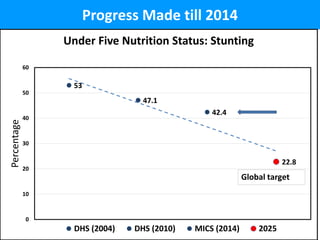
Progress Made till 2014
53
47.1
42.4
22.8
0
10
20
30
40
50
60
Percentage
Under Five Nutrition Status: Stunting
DHS (2004) DHS (2010) MICS (2014) 2025
Global target
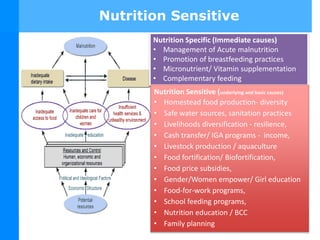
Nutrition Sensitive
Nutrition Specific (Immediate causes)
• Management of Acute malnutrition
• Promotion of breastfeeding practices
• Micronutrient/ Vitamin supplementation
• Complementary feeding
Nutrition Sensitive (underlying and basic causes)
• Homestead food production- diversity
• Safe water sources, sanitation practices
• Livelihoods diversification - resilience,
• Cash transfer/ IGA programs - income,
• Livestock production / aquaculture
• Food fortification/ Biofortification,
• Food price subsidies,
• Gender/Women empower/ Girl education
• Food-for-work programs,
• School feeding programs,
• Nutrition education / BCC
• Family planning
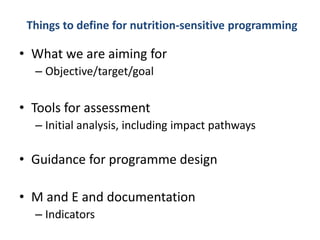
Things to define for nutrition-sensitive programming
• What we are aiming for
– Objective/target/goal
• Tools for assessment
– Initial analysis, including impact pathways
• Guidance for programme design
• M and E and documentation
– Indicators
Thank you

Nutrition Sensitive

  • 1.
  • 2.
    Nutrition sensitive –a definition • Multi-sectorial interventions that address the determinants of malnutrition • Nutrition sensitive: incorporating nutrition into other sector approaches to achieve improved nutrition outcomes
  • 3.
    Also know as •nutrition sensitizing • nutrition-linking • nutrition-linked approaches • nutrition-integration • nutrition-relevant • nutrition-relevant actions • nutrition-targeted
  • 4.
    So what isa nutrition intervention? • Action deliberately planned and designed to change a nutrition-related behavior or risk • Often taken within larger nutrition goals • Implementation is complex and requires broad stakeholder involvement in multiple sectors – Poverty – Gender inequality – Lack of access to health services – Lack of access to water, sanitation, and hygiene – Food insecurity
  • 5.
    Why is NutritionSensitive Important? • Malnutrition especially stunting is still a major problem • Malawi needs to reach the target of 23% in 10 years – • Nutrition-sensitive can be leveraged to increase scale, coverage and effectiveness of nutrition specific • These programmes often reach poor households
  • 6.
    Unique Nutrition challenges Multidimensionaland overlapping causes • A large chronically food insecure population (13%), even in good years • Consistent poor diets, no change in decades • High disease burden among children • Structural and Interlinked inadequate resources
  • 7.
    Progress Made till2014 53 47.1 42.4 22.8 0 10 20 30 40 50 60 Percentage Under Five Nutrition Status: Stunting DHS (2004) DHS (2010) MICS (2014) 2025 Global target
  • 8.
    Nutrition Sensitive Nutrition Specific(Immediate causes) • Management of Acute malnutrition • Promotion of breastfeeding practices • Micronutrient/ Vitamin supplementation • Complementary feeding Nutrition Sensitive (underlying and basic causes) • Homestead food production- diversity • Safe water sources, sanitation practices • Livelihoods diversification - resilience, • Cash transfer/ IGA programs - income, • Livestock production / aquaculture • Food fortification/ Biofortification, • Food price subsidies, • Gender/Women empower/ Girl education • Food-for-work programs, • School feeding programs, • Nutrition education / BCC • Family planning
  • 9.
    Things to definefor nutrition-sensitive programming • What we are aiming for – Objective/target/goal • Tools for assessment – Initial analysis, including impact pathways • Guidance for programme design • M and E and documentation – Indicators
  • 10.

Editor's Notes

  • #3 Can reference that there are many definitions, a la Bread for the World summary 2012 http://www.bread.org/institute/papers/nutrition-sensitive-interventions.pdf
  • #4 Can reference that there are many definitions, a la Bread for the World summary 2012 http://www.bread.org/institute/papers/nutrition-sensitive-interventions.pdf
  • #5 Can reference that there are many definitions, a la Bread for the World summary 2012 http://www.bread.org/institute/papers/nutrition-sensitive-interventions.pdf
  • #6 12.5 percent of the world’s population (868 million people) are undernourished in terms of energy intake (SOFI 2013) undernutrition in the aggregate—including fetal growth restriction, stunting, wasting, and deficiencies of vitamin A and zinc along with suboptimum breastfeeding—is a cause of 3·1 million child deaths annually or 45% of all child deaths in 2011 WFP is uniquely placed to fight undernutrition due to its work in food security, vulnerability analysis and nutrition. Nutrition-sensitive action can improve the coverage of nutrition-specific programmes as delivery platforms for nutrition-specific interventions, increasing scale, coverage and effectiveness
  • #10 What we know form the Lancet- ways to enhance nutrition sensitivity of programmes: Targeting Using conditions to stimulate participation Strengthen nutrition goals and actions Optimize women’s time, nutrition, physical and mental health and empowerment