Activity 2
Tracking a tropical cyclone
Objectives:
After performing this activity, you
should be able to:
1. determine if your location is in the
path of a tropical cyclone, given the
latitude and longitude position and
2. explain why PAGASA regularly
monitors when a tropical cyclone is
within PAR.
Materials Needed:
map with the PAR (from Activity 1)
tracking data
pencil
Procedure:
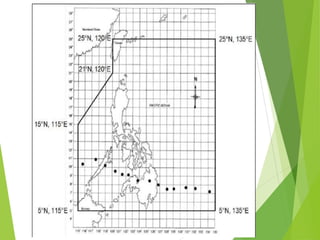
1.Use the latitude and longitude
(lat-long) in the table below to
track the
location of Sendong. Plot each lat-long
pair on the map with the PAR.
Date: 13-19 DEC 2011
Tropical Storm Sendong (International
name: Washi)
Month/Day/Time Latitude (°N) Longitude (°E)
12/13/06 6.00 145.10
12/13/12 6.40 143.30
12/14/18 6.00 141.70
12/14/00 5.90 140.60
12/14/06 6.20 139.00
12/14/12 6.70 137.70
12/14/18 7.00 136.30
12/15/00 7.20 134.30
12/15/00 7.20 134.30
12/15/06 7.60 132.30
12/15/12 7.70 130.80
12/15/18 7.50 129.10
12/16/00 7.40 128.10
12/16/06 8.00 126.80
12/16/12 8.40 125.50
12/16/18 8.50 123.80
12/17/00 9.10 122.40
12/17/06 9.20 121.50
12/17/12 9.60 120.40
12/17/18 10.20 119.00
12/18/00 10.90 117.60
12/18/06 10.30 115.70
12/18/12 9.90 114.60
12/18/18 9.60 113.90
12/19/00 9.10 112.90
12/19/06 9.70 111.90
12/19/12 10.50 110.70
Q3. Where did Sendong form?
Q4. When did Sendong enter the PAR?
Q5. When did Sendong leave the PAR?
Answer: Sendong formed in the
Pacific Ocean.
Answer: Sendong entered the PAR on
December 15, 2011.
Answer: Sendong left the PAR on
December 18, 2013.
Q6 . In what direction did Sendong move?
Is it possible to plot all the points in
the table on the map from Activity 1?
No, it is not possible. The
points west of 115°E and east
of 135°E beyond the coverage of
the map from Activity 1.
Answer: Sendong moved in a westward
direction.
Sendong started out in the Pacific as an area
of low pressure. Because it was just a low-
pressure area, it was not given a name.
Then it intensified into a tropical
depression. Again it was not yet given a name
because it was still outside the PAR.

tracking a typhoon.pptx

  • 1.
    Activity 2 Tracking atropical cyclone Objectives: After performing this activity, you should be able to: 1. determine if your location is in the path of a tropical cyclone, given the latitude and longitude position and 2. explain why PAGASA regularly monitors when a tropical cyclone is within PAR.
  • 2.
    Materials Needed: map withthe PAR (from Activity 1) tracking data pencil Procedure: 1.Use the latitude and longitude (lat-long) in the table below to track the location of Sendong. Plot each lat-long pair on the map with the PAR.
  • 3.
    Date: 13-19 DEC2011 Tropical Storm Sendong (International name: Washi) Month/Day/Time Latitude (°N) Longitude (°E) 12/13/06 6.00 145.10 12/13/12 6.40 143.30 12/14/18 6.00 141.70 12/14/00 5.90 140.60 12/14/06 6.20 139.00 12/14/12 6.70 137.70 12/14/18 7.00 136.30 12/15/00 7.20 134.30 12/15/00 7.20 134.30 12/15/06 7.60 132.30 12/15/12 7.70 130.80 12/15/18 7.50 129.10 12/16/00 7.40 128.10 12/16/06 8.00 126.80 12/16/12 8.40 125.50 12/16/18 8.50 123.80 12/17/00 9.10 122.40 12/17/06 9.20 121.50 12/17/12 9.60 120.40 12/17/18 10.20 119.00 12/18/00 10.90 117.60 12/18/06 10.30 115.70 12/18/12 9.90 114.60 12/18/18 9.60 113.90 12/19/00 9.10 112.90 12/19/06 9.70 111.90 12/19/12 10.50 110.70
  • 4.
    Q3. Where didSendong form? Q4. When did Sendong enter the PAR? Q5. When did Sendong leave the PAR? Answer: Sendong formed in the Pacific Ocean. Answer: Sendong entered the PAR on December 15, 2011. Answer: Sendong left the PAR on December 18, 2013.
  • 5.
    Q6 . Inwhat direction did Sendong move? Is it possible to plot all the points in the table on the map from Activity 1? No, it is not possible. The points west of 115°E and east of 135°E beyond the coverage of the map from Activity 1. Answer: Sendong moved in a westward direction.
  • 7.
    Sendong started outin the Pacific as an area of low pressure. Because it was just a low- pressure area, it was not given a name. Then it intensified into a tropical depression. Again it was not yet given a name because it was still outside the PAR.