http://www.free-powerpoint-templates-design.com
TOYOTA
COMPANY PROFILE
Section Break 2
Insert the Sub Title of Your Presentation
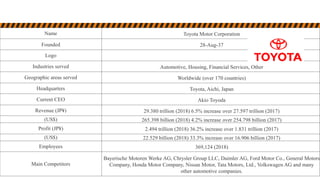
Name Toyota Motor Corporation
Founded 28-Aug-37
Logo
Industries served Automotive, Housing, Financial Services, Other
Geographic areas served Worldwide (over 170 countries)
Headquarters Toyota, Aichi, Japan
Current CEO Akio Toyoda
Revenue (JP¥) 29.380 trillion (2018) 6.5% increase over 27.597 trillion (2017)
(US$) 265.398 billion (2018) 4.2% increase over 254.798 billion (2017)
Profit (JP¥) 2.494 trillion (2018) 36.2% increase over 1.831 trillion (2017)
(US$) 22.529 billion (2018) 33.3% increase over 16.906 billion (2017)
Employees 369,124 (2018)
Main Competitors
Bayerische Motoren Werke AG, Chrysler Group LLC, Daimler AG, Ford Motor Co., General Motors
Company, Honda Motor Company, Nissan Motor, Tata Motors, Ltd., Volkswagen AG and many
other automotive companies.
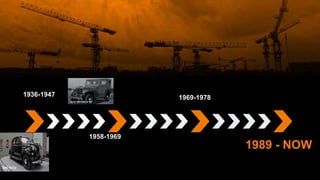
1936-1947
1958-1969
1989 - NOW
1969-1978
Infographic Style
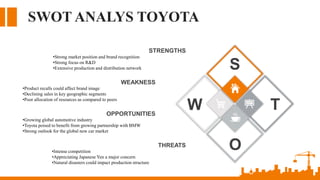
SWOT ANALYS TOYOTA
S
W T
O
STRENGTHS
•Strong market position and brand recognition
•Strong focus on R&D
•Extensive production and distribution network
WEAKNESS
•Product recalls could affect brand image
•Declining sales in key geographic segments
•Poor allocation of resources as compared to peers
OPPORTUNITIES
•Growing global automotive industry
•Toyota poised to benefit from growing partnership with BMW
•Strong outlook for the global new car market
THREATS
•Intense competition
•Appreciating Japanese Yen a major concern
•Natural disasters could impact production structure
TOYOTA OPERATION
STRATEGY
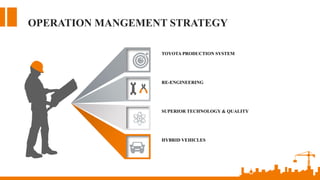
OPERATION MANGEMENT STRATEGY
TOYOTA PRODUCTION SYSTEM
RE-ENGINEERING
SUPERIOR TECHNOLOGY & QUALITY
HYBRID VEHICLES
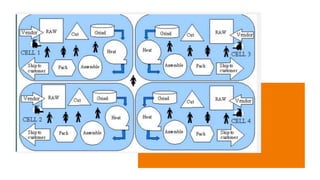
TOYOTA LAYOUT
Factory is organized into cells
with various machines in
sequential order.
Fewer workers, supervisors
and forklift trucks.
Much less work in process
and no finished goods in
inventory.
PRODUCT & PROCESS
DESIGN
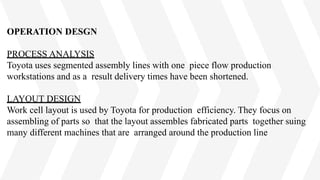
OPERATION DESGN
PROCESS ANALYSIS
Toyota uses segmented assembly lines with one piece flow production
workstations and as a result delivery times have been shortened.
LAYOUT DESIGN
Work cell layout is used by Toyota for production efficiency. They focus on
assembling of parts so that the layout assembles fabricated parts together suing
many different machines that are arranged around the production line
TOYOTA MATERIAL HANDLING
&
SAFETY
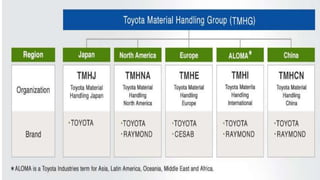
Toyota Material handling equipment manufacturers
and suppliers in India. Toyota forklift, hand
pallet truck in India, all set for selling of
Material Handling equipments.
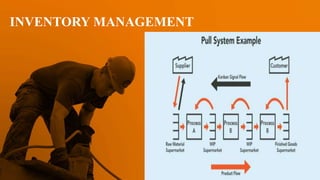
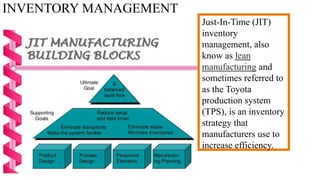
INVENTORY MANAGEMENT
Just-In-Time (JIT)
inventory
management, also
know as lean
manufacturing and
sometimes referred to
as the Toyota
production system
(TPS), is an inventory
strategy that
manufacturers use to
increase efficiency.
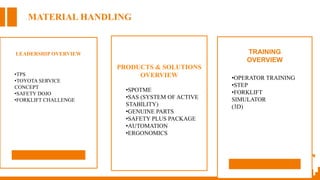
MATERIAL HANDLING
LEADERSHIP OVERVIEW
•TPS
•TOYOTA SERVICE
CONCEPT
•SAFETY DOJO
•FORKLIFT CHALLENGE
TRAINING
OVERVIEW
•OPERATOR TRAINING
•STEP
•FORKLIFT
SIMULATOR
(3D)
PRODUCTS & SOLUTIONS
OVERVIEW
•SPOTME
•SAS (SYSTEM OF ACTIVE
STABILITY)
•GENUINE PARTS
•SAFETY PLUS PACKAGE
•AUTOMATION
•ERGONOMICS
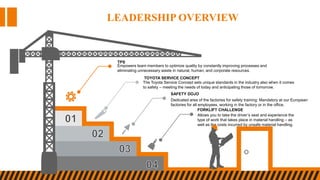
Empowers team members to optimize quality by constantly improving processes and
eliminating unnecessary waste in natural, human, and corporate resources.
TPS
The Toyota Service Concept sets unique standards in the industry also when it comes
to safety – meeting the needs of today and anticipating those of tomorrow.
TOYOTA SERVICE CONCEPT
Dedicated area of the factories for safety training: Mandatory at our European
factories for all employees, working in the factory or in the office.
SAFETY DOJO
Allows you to take the driver’s seat and experience the
type of work that takes place in material handling – as
well as the costs incurred by unsafe material handling.
FORKLIFT CHALLENGE
LEADERSHIP OVERVIEW
Awesome
Presentation
ALLPPT Layout Clean Text Slide for your
Presentation. ALLPPT Layout Clean Text
Slide for your Presentation.
ALLPPT Layout
Clean Text Slide for your Presentation
Portfolio Presentation
INFOGRAPHIC
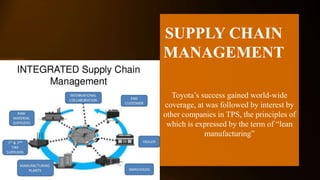
Toyota’s success gained world-wide
coverage, at was followed by interest by
other companies in TPS, the principles of
which is expressed by the term of “lean
manufacturing”
SUPPLY CHAIN
MANAGEMENT
SUPPLY CHAIN
MANAGEMENT
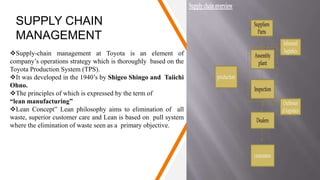
Supply-chain management at Toyota is an element of
company’s operations strategy which is thoroughly based on the
Toyota Production System (TPS).
It was developed in the 1940’s by Shigeo Shingo and Taiichi
Ohno.
The principles of which is expressed by the term of
“lean manufacturing”
Lean Concept” Lean philosophy aims to elimination of all
waste, superior customer care and Lean is based on pull system
where the elimination of waste seen as a primary objective.
DRIVERS OF SUPPLY CHAIN
Facility:
•Vehicles coming out of assembly line are moved into warehouse called "Marshaling yard” .
•Fitting accessories, price tag and final quality assurance takes place here.
Inventory:
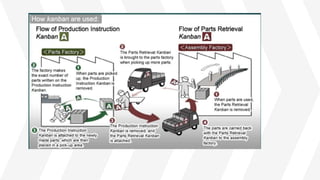
•Just-in – time based inventory method.
• Pull based system and kanban methods are followed.
Transport:
Majority of transport of raw material through truck , since suppliers stay close to plant. Finished products transported through
truck or rail for transport within the country and ships for export. Road transport is provided by third party logistic providers.
Information:
Parts and master database is maintained for part name, supplier, lot size information.13 week forecasting is given to suppliers
to provide them with guidance.
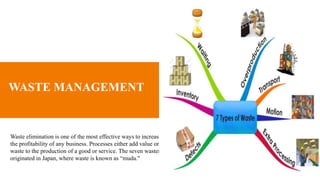
WASTE MANAGEMENT
Waste elimination is one of the most effective ways to increase
the profitability of any business. Processes either add value or
waste to the production of a good or service. The seven wastes
originated in Japan, where waste is known as “muda."
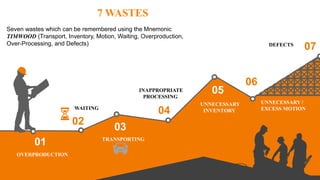
7 WASTES
02
03
04
WAITING
TRANSPORTING
INAPPROPRIATE
PROCESSING
01
OVERPRODUCTION
05
UNNECESSARY /
EXCESS MOTION
UNNECESSARY
INVENTORY
05
07
06
DEFECTS
Seven wastes which can be remembered using the Mnemonic
TIMWOOD (Transport, Inventory, Motion, Waiting, Overproduction,
Over-Processing, and Defects)
Thank You

Toyota

  • 1.
  • 2.
  • 3.
    Section Break 2 Insertthe Sub Title of Your Presentation Name Toyota Motor Corporation Founded 28-Aug-37 Logo Industries served Automotive, Housing, Financial Services, Other Geographic areas served Worldwide (over 170 countries) Headquarters Toyota, Aichi, Japan Current CEO Akio Toyoda Revenue (JP¥) 29.380 trillion (2018) 6.5% increase over 27.597 trillion (2017) (US$) 265.398 billion (2018) 4.2% increase over 254.798 billion (2017) Profit (JP¥) 2.494 trillion (2018) 36.2% increase over 1.831 trillion (2017) (US$) 22.529 billion (2018) 33.3% increase over 16.906 billion (2017) Employees 369,124 (2018) Main Competitors Bayerische Motoren Werke AG, Chrysler Group LLC, Daimler AG, Ford Motor Co., General Motors Company, Honda Motor Company, Nissan Motor, Tata Motors, Ltd., Volkswagen AG and many other automotive companies.
  • 4.
  • 5.
  • 6.
    SWOT ANALYS TOYOTA S WT O STRENGTHS •Strong market position and brand recognition •Strong focus on R&D •Extensive production and distribution network WEAKNESS •Product recalls could affect brand image •Declining sales in key geographic segments •Poor allocation of resources as compared to peers OPPORTUNITIES •Growing global automotive industry •Toyota poised to benefit from growing partnership with BMW •Strong outlook for the global new car market THREATS •Intense competition •Appreciating Japanese Yen a major concern •Natural disasters could impact production structure
  • 7.
  • 8.
    OPERATION MANGEMENT STRATEGY TOYOTAPRODUCTION SYSTEM RE-ENGINEERING SUPERIOR TECHNOLOGY & QUALITY HYBRID VEHICLES
  • 9.
    TOYOTA LAYOUT Factory isorganized into cells with various machines in sequential order. Fewer workers, supervisors and forklift trucks. Much less work in process and no finished goods in inventory.
  • 12.
  • 13.
    OPERATION DESGN PROCESS ANALYSIS Toyotauses segmented assembly lines with one piece flow production workstations and as a result delivery times have been shortened. LAYOUT DESIGN Work cell layout is used by Toyota for production efficiency. They focus on assembling of parts so that the layout assembles fabricated parts together suing many different machines that are arranged around the production line
  • 14.
    TOYOTA MATERIAL HANDLING & SAFETY ToyotaMaterial handling equipment manufacturers and suppliers in India. Toyota forklift, hand pallet truck in India, all set for selling of Material Handling equipments.
  • 15.
  • 16.
    INVENTORY MANAGEMENT Just-In-Time (JIT) inventory management,also know as lean manufacturing and sometimes referred to as the Toyota production system (TPS), is an inventory strategy that manufacturers use to increase efficiency.
  • 17.
    MATERIAL HANDLING LEADERSHIP OVERVIEW •TPS •TOYOTASERVICE CONCEPT •SAFETY DOJO •FORKLIFT CHALLENGE TRAINING OVERVIEW •OPERATOR TRAINING •STEP •FORKLIFT SIMULATOR (3D) PRODUCTS & SOLUTIONS OVERVIEW •SPOTME •SAS (SYSTEM OF ACTIVE STABILITY) •GENUINE PARTS •SAFETY PLUS PACKAGE •AUTOMATION •ERGONOMICS
  • 18.
    Empowers team membersto optimize quality by constantly improving processes and eliminating unnecessary waste in natural, human, and corporate resources. TPS The Toyota Service Concept sets unique standards in the industry also when it comes to safety – meeting the needs of today and anticipating those of tomorrow. TOYOTA SERVICE CONCEPT Dedicated area of the factories for safety training: Mandatory at our European factories for all employees, working in the factory or in the office. SAFETY DOJO Allows you to take the driver’s seat and experience the type of work that takes place in material handling – as well as the costs incurred by unsafe material handling. FORKLIFT CHALLENGE LEADERSHIP OVERVIEW
  • 19.
    Awesome Presentation ALLPPT Layout CleanText Slide for your Presentation. ALLPPT Layout Clean Text Slide for your Presentation. ALLPPT Layout Clean Text Slide for your Presentation Portfolio Presentation INFOGRAPHIC
  • 20.
    Toyota’s success gainedworld-wide coverage, at was followed by interest by other companies in TPS, the principles of which is expressed by the term of “lean manufacturing” SUPPLY CHAIN MANAGEMENT
  • 21.
    SUPPLY CHAIN MANAGEMENT Supply-chain managementat Toyota is an element of company’s operations strategy which is thoroughly based on the Toyota Production System (TPS). It was developed in the 1940’s by Shigeo Shingo and Taiichi Ohno. The principles of which is expressed by the term of “lean manufacturing” Lean Concept” Lean philosophy aims to elimination of all waste, superior customer care and Lean is based on pull system where the elimination of waste seen as a primary objective.
  • 22.
    DRIVERS OF SUPPLYCHAIN Facility: •Vehicles coming out of assembly line are moved into warehouse called "Marshaling yard” . •Fitting accessories, price tag and final quality assurance takes place here. Inventory: •Just-in – time based inventory method. • Pull based system and kanban methods are followed. Transport: Majority of transport of raw material through truck , since suppliers stay close to plant. Finished products transported through truck or rail for transport within the country and ships for export. Road transport is provided by third party logistic providers. Information: Parts and master database is maintained for part name, supplier, lot size information.13 week forecasting is given to suppliers to provide them with guidance.
  • 23.
    WASTE MANAGEMENT Waste eliminationis one of the most effective ways to increase the profitability of any business. Processes either add value or waste to the production of a good or service. The seven wastes originated in Japan, where waste is known as “muda."
  • 24.
    7 WASTES 02 03 04 WAITING TRANSPORTING INAPPROPRIATE PROCESSING 01 OVERPRODUCTION 05 UNNECESSARY / EXCESSMOTION UNNECESSARY INVENTORY 05 07 06 DEFECTS Seven wastes which can be remembered using the Mnemonic TIMWOOD (Transport, Inventory, Motion, Waiting, Overproduction, Over-Processing, and Defects)
  • 25.