Towards the Wikipedia
 of World Wide Sensors


Jie Liu
Principal Researcher
Microsoft Research
Redmond, WA 98052

With thanks to Yan Xu, Suman Nath, Aman Kansal, Heitor Ramos, and Qiang Wang
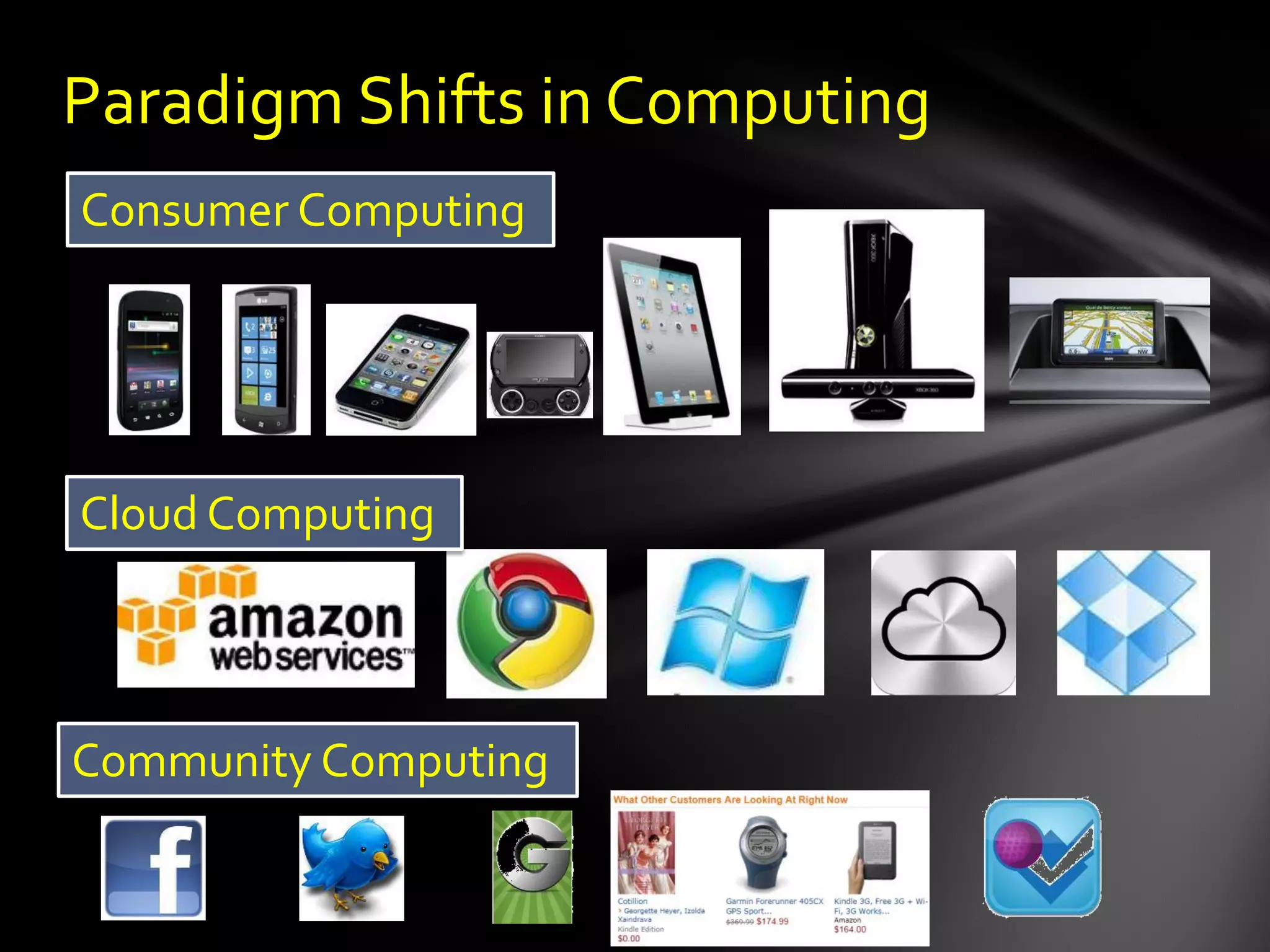
Paradigm Shifts in Computing
Consumer Computing


Cloud Computing


Community Computing
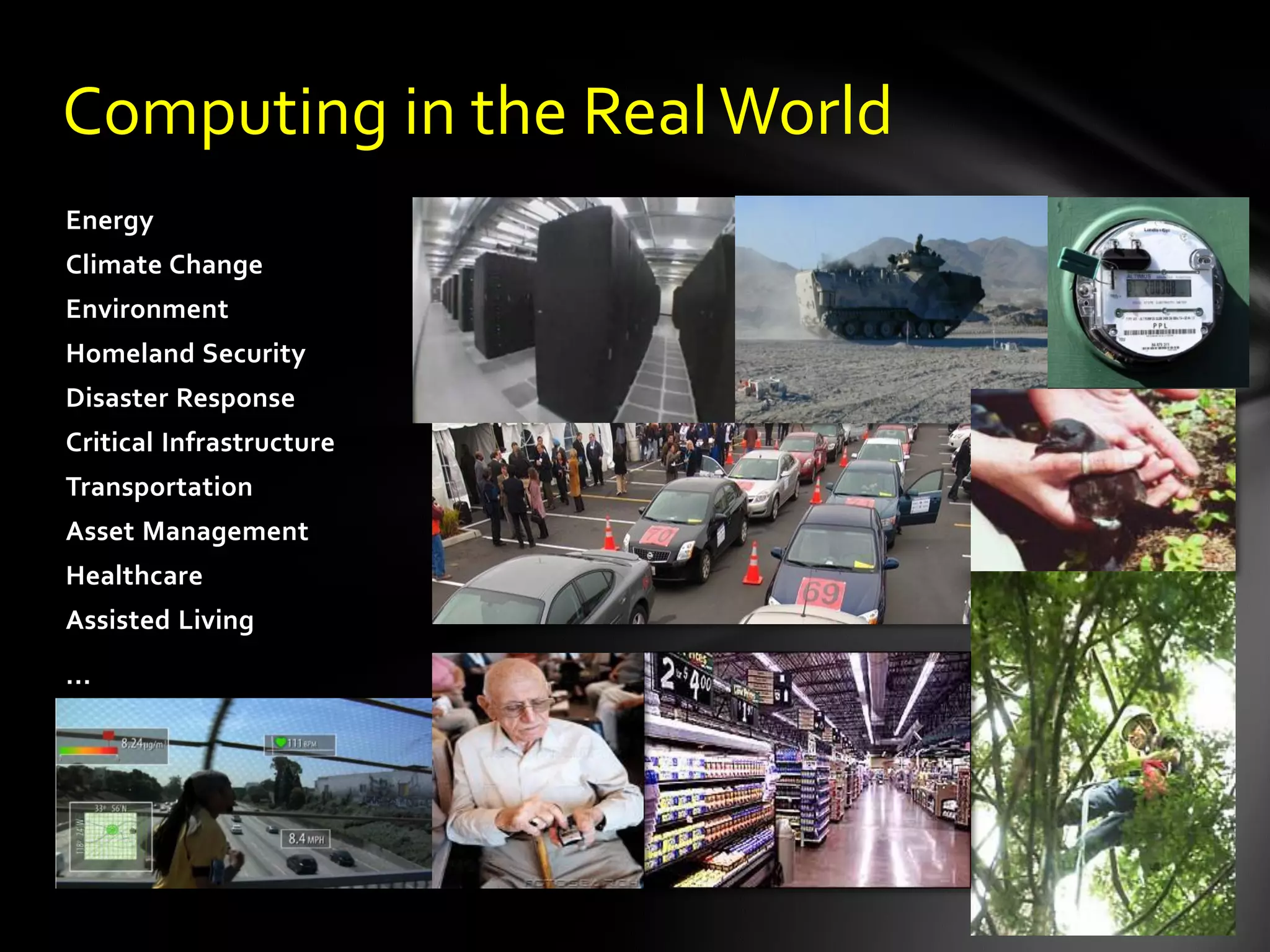
Computing in the Real World
Energy
Climate Change
Environment
Homeland Security
Disaster Response
Critical Infrastructure
Transportation
Asset Management
Healthcare
Assisted Living
...
4th Paradigm of Scientific Discovery


   Experimental, theoretical, and computational, and data-driven science.
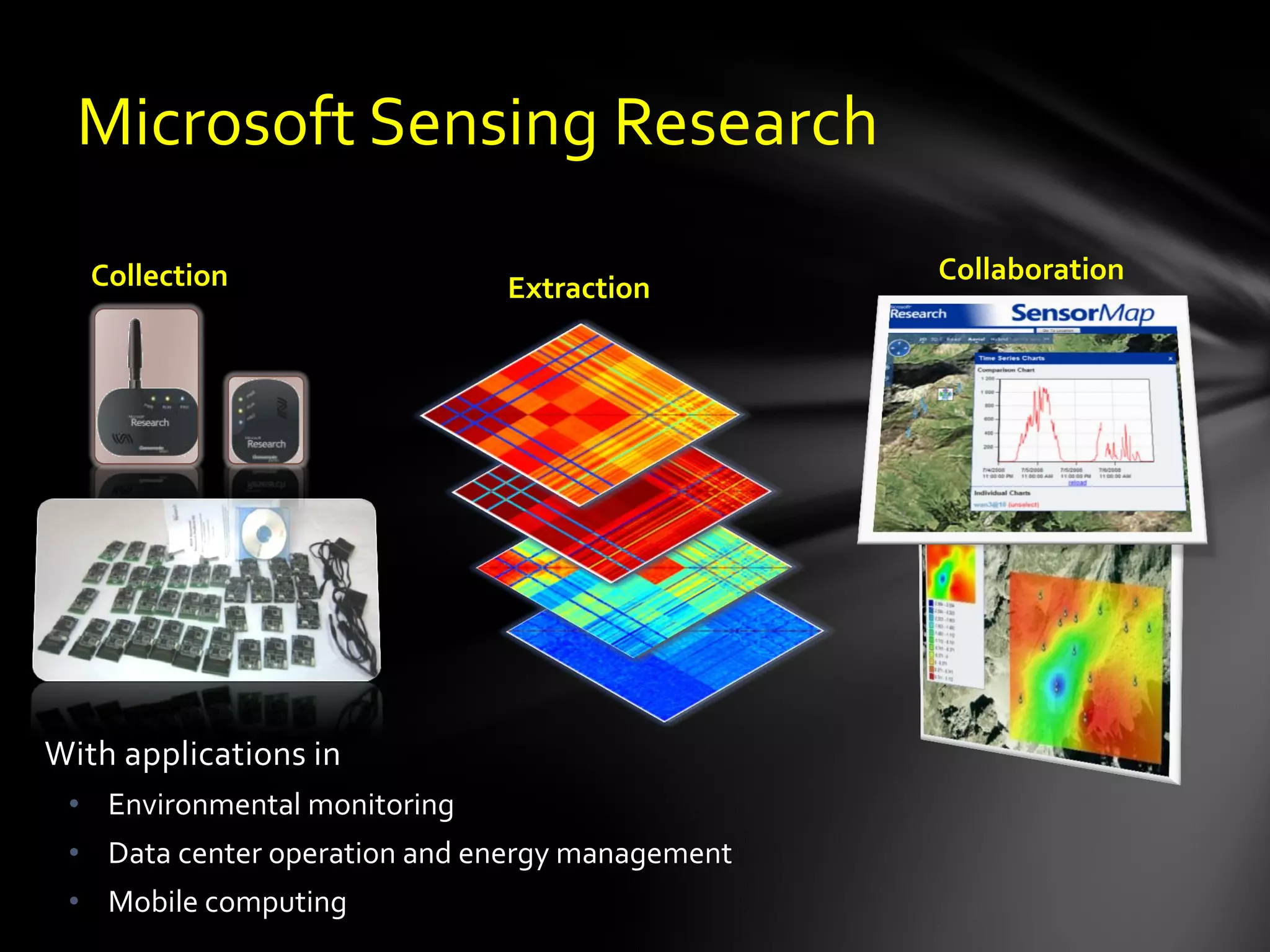
Microsoft Sensing Research

   Collection                                    Collaboration
                              Extraction


With applications in
 • Environmental monitoring
 • Data center operation and energy management
 • Mobile computing
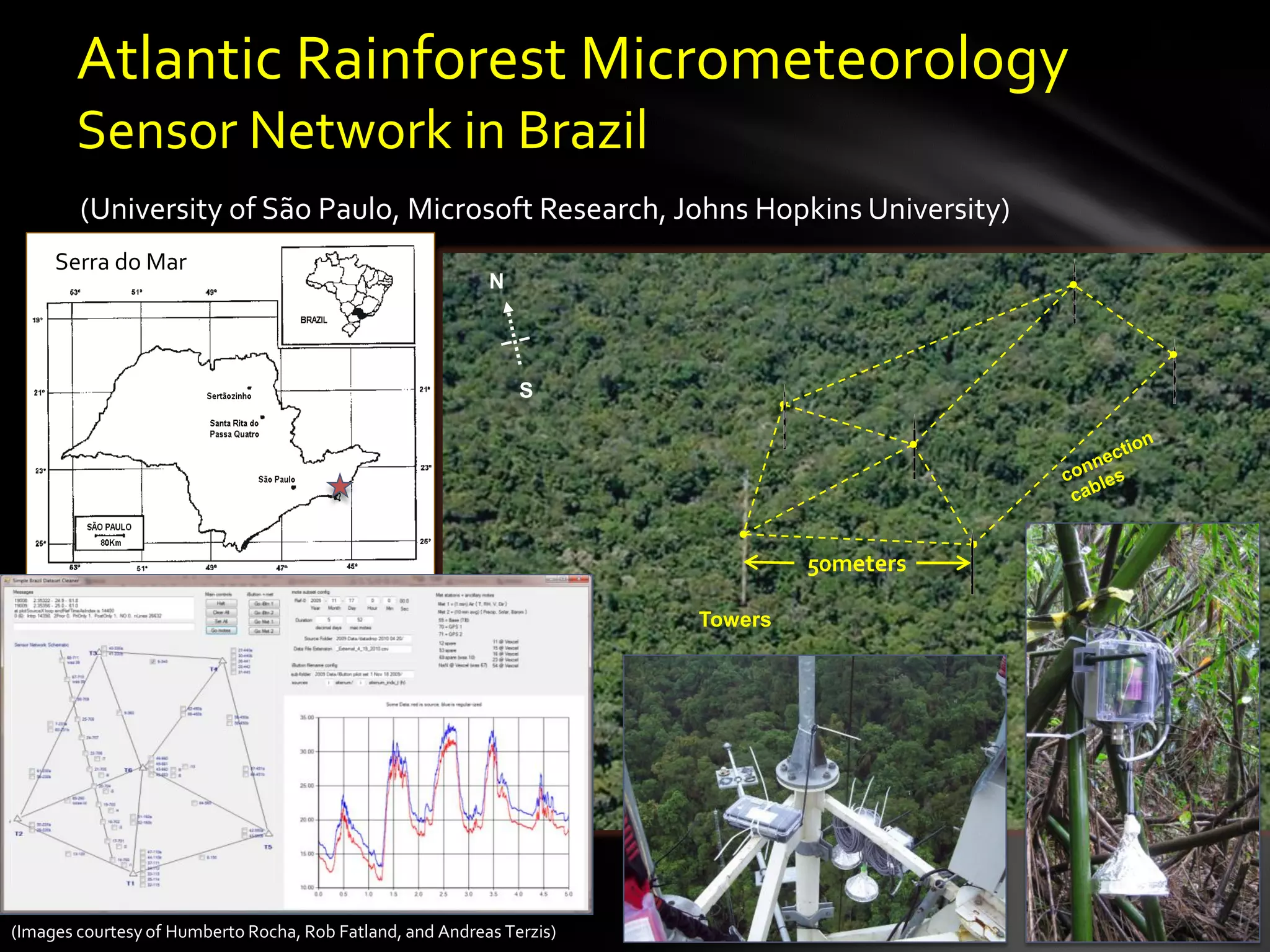
Atlantic Rainforest Micrometeorology
        Sensor Network in Brazil
        (University of São Paulo, Microsoft Research, Johns Hopkins University)
     Serra do Mar
                                                           N


                                                               S


                                                                                50meters

                                                                       Towers


(Images courtesy of Humberto Rocha, Rob Fatland, and Andreas Terzis)
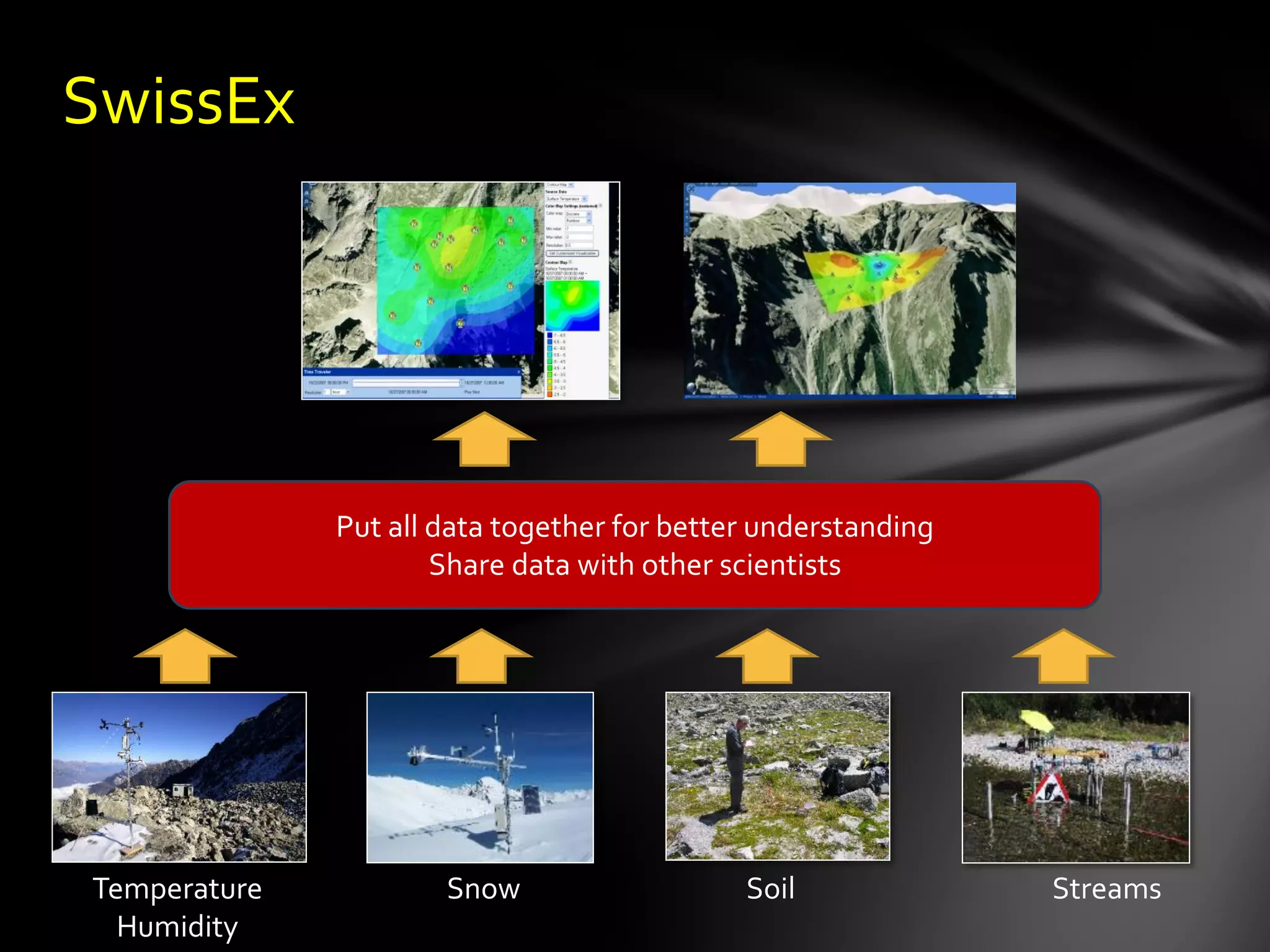
SwissEx


              Put all data together for better understanding
                      Share data with other scientists


Temperature           Snow                   Soil              Streams
  Humidity
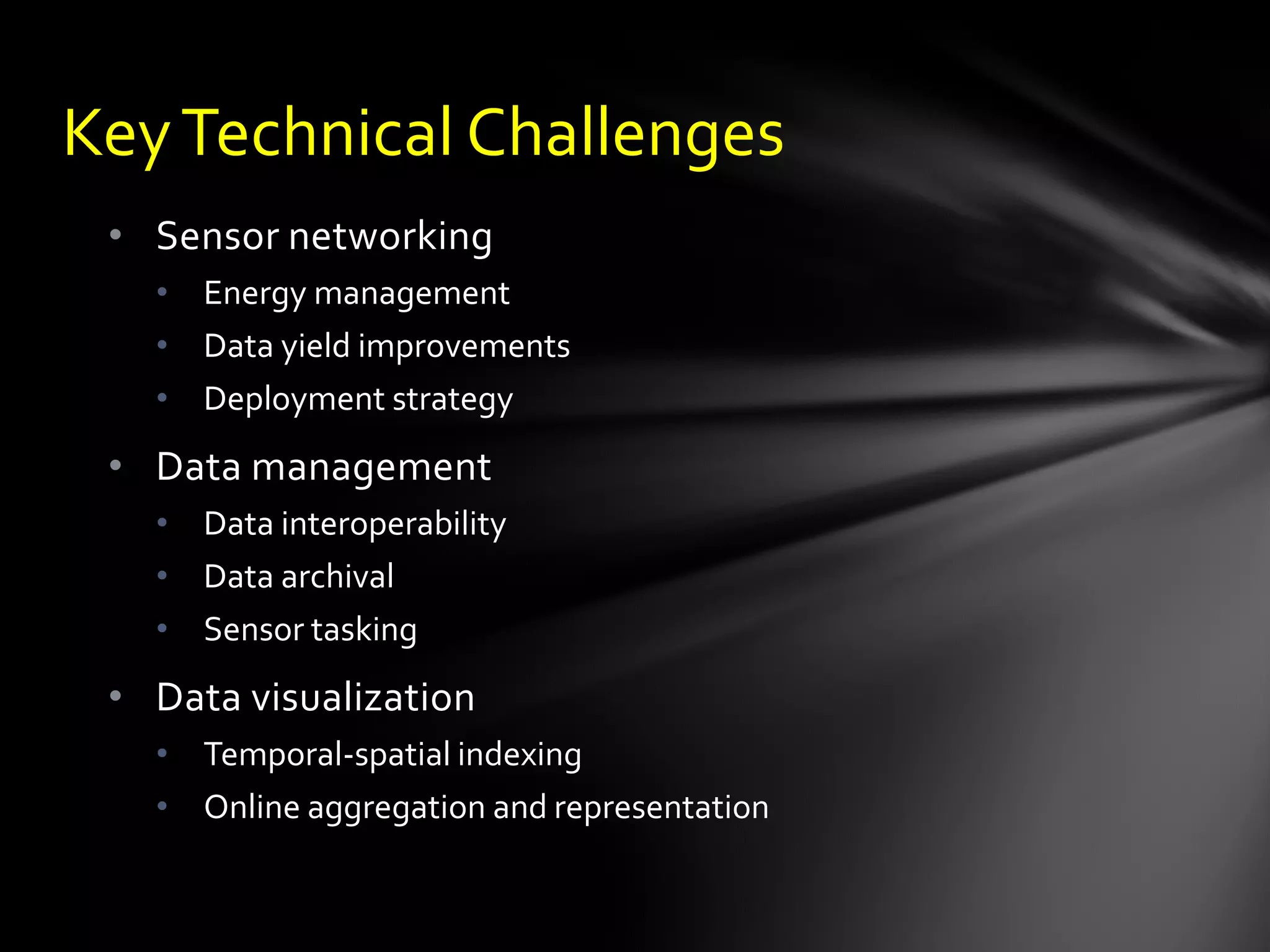
Key Technical Challenges
 • Sensor networking
   • Energy management
   • Data yield improvements
   • Deployment strategy
 • Data management
   • Data interoperability
   • Data archival
   • Sensor tasking
 • Data visualization
   • Temporal-spatial indexing
   • Online aggregation and representation
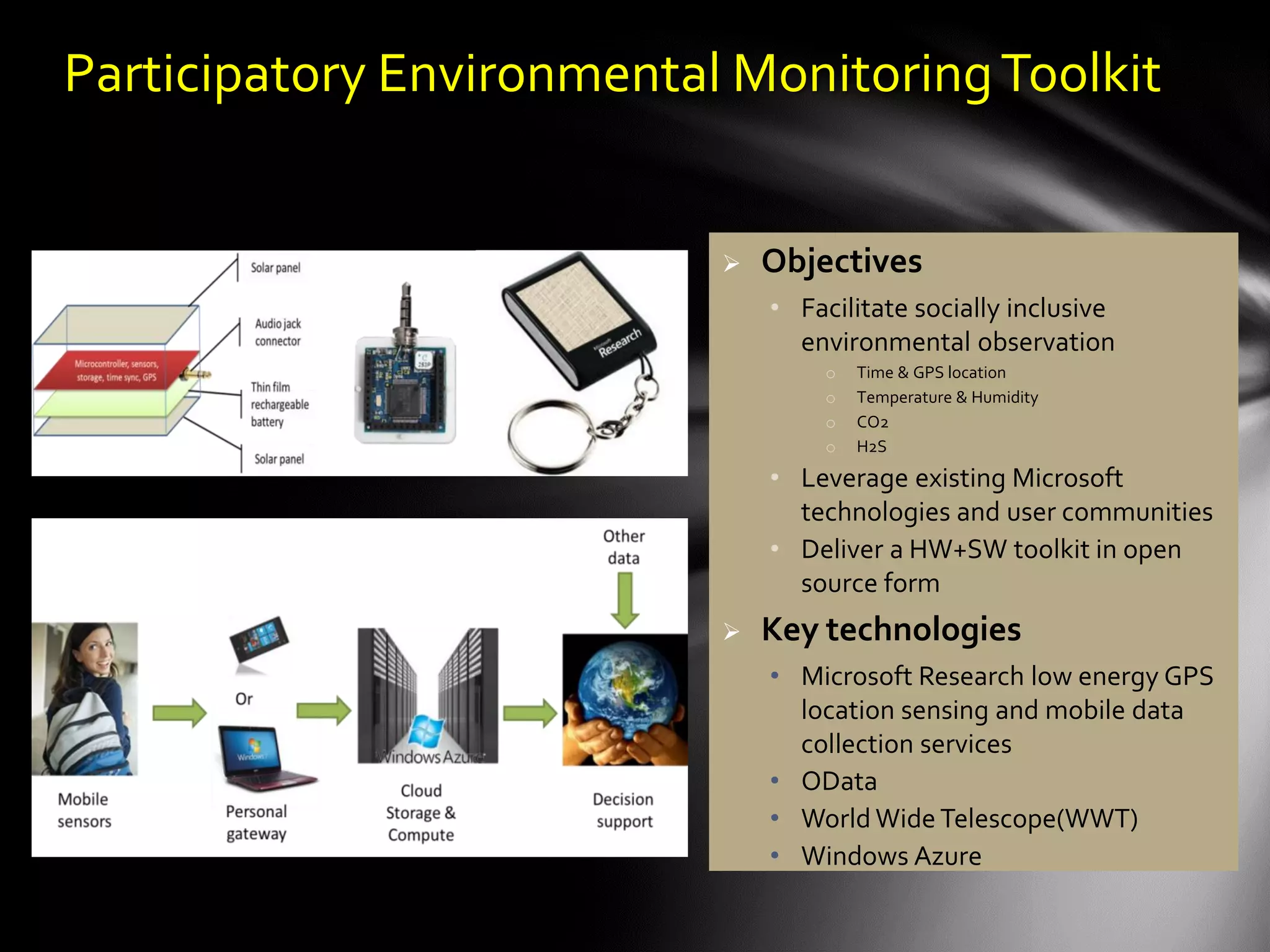
Participatory Environmental Monitoring Toolkit


                              Objectives
                               • Facilitate socially inclusive
                                 environmental observation
                                   o   Time & GPS location
                                   o   Temperature & Humidity
                                   o   CO2
                                   o   H2S
                               • Leverage existing Microsoft
                                 technologies and user communities
                               • Deliver a HW+SW toolkit in open
                                 source form
                              Key technologies
                               • Microsoft Research low energy GPS
                                 location sensing and mobile data
                                 collection services
                               • OData
                               • World Wide Telescope(WWT)
                               • Windows Azure
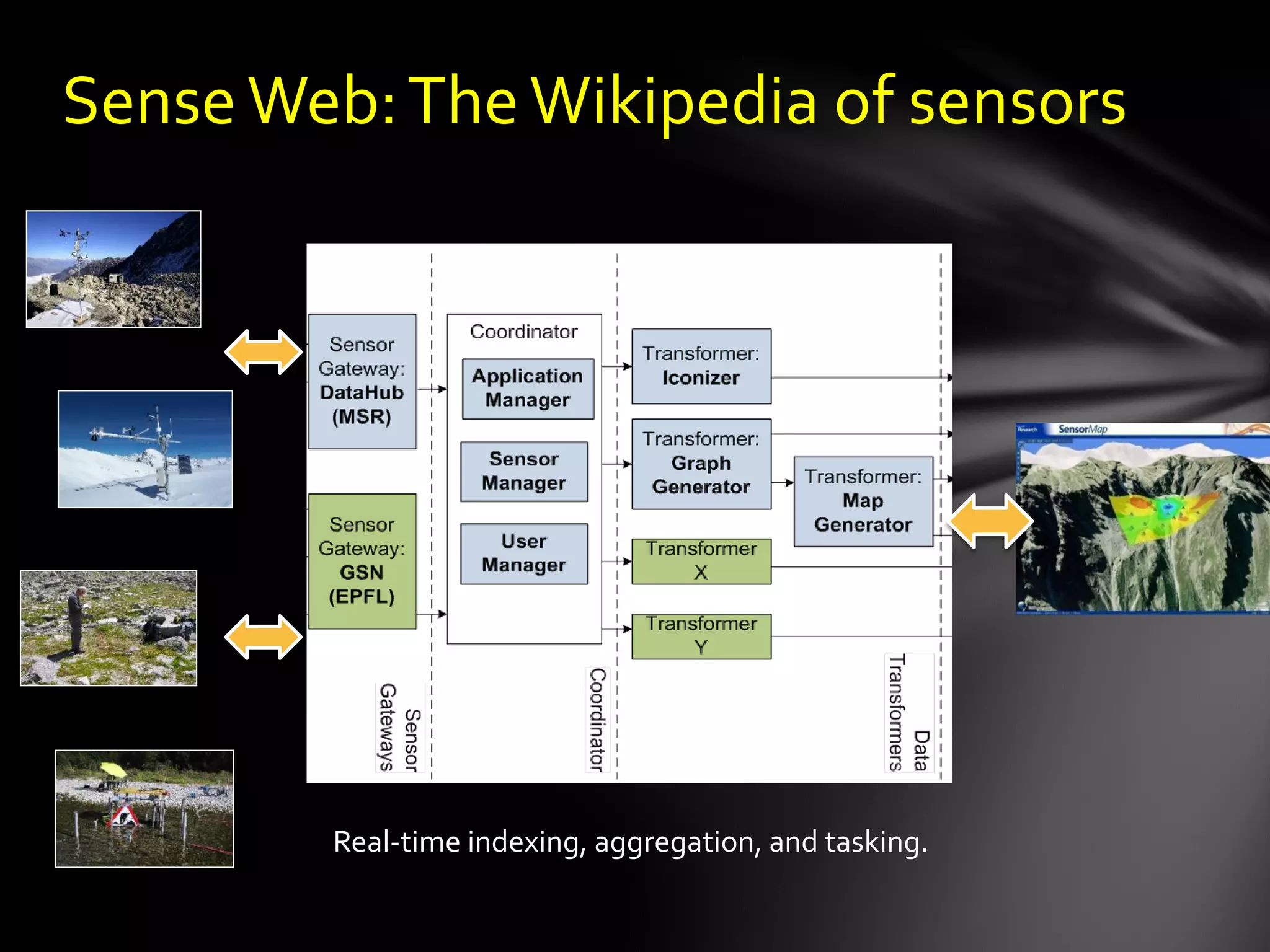
Sense Web: The Wikipedia of sensors


        Real-time indexing, aggregation, and tasking.
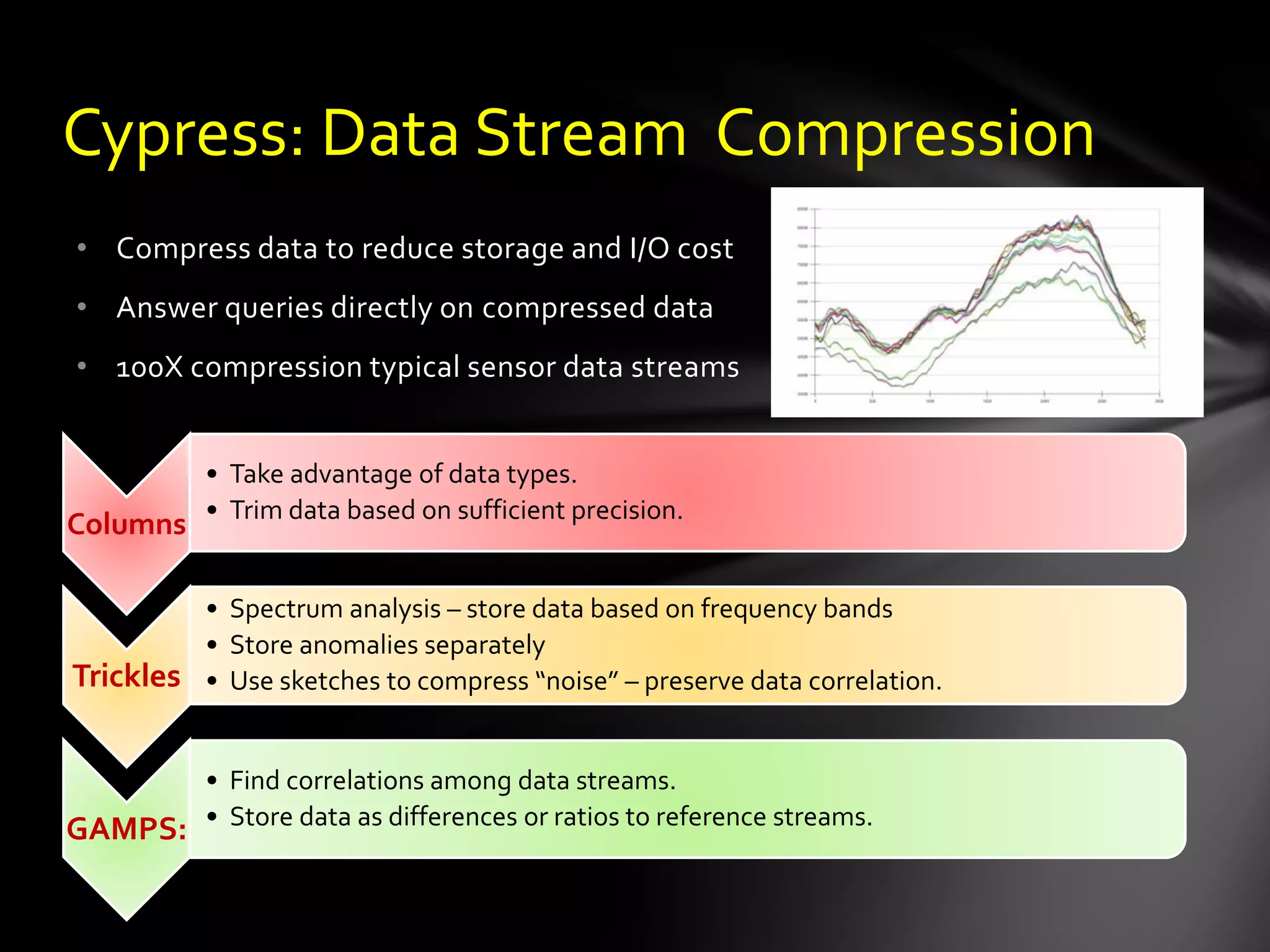
Cypress: Data Stream Compression
• Compress data to reduce storage and I/O cost
• Answer queries directly on compressed data
• 100X compression typical sensor data streams


           • Take advantage of data types.
           • Trim data based on sufficient precision.
Columns

         • Spectrum analysis – store data based on frequency bands
         • Store anomalies separately
Trickles • Use sketches to compress “noise” – preserve data correlation.


       • Find correlations among data streams.
GAMPS: • Store data as differences or ratios to reference streams.
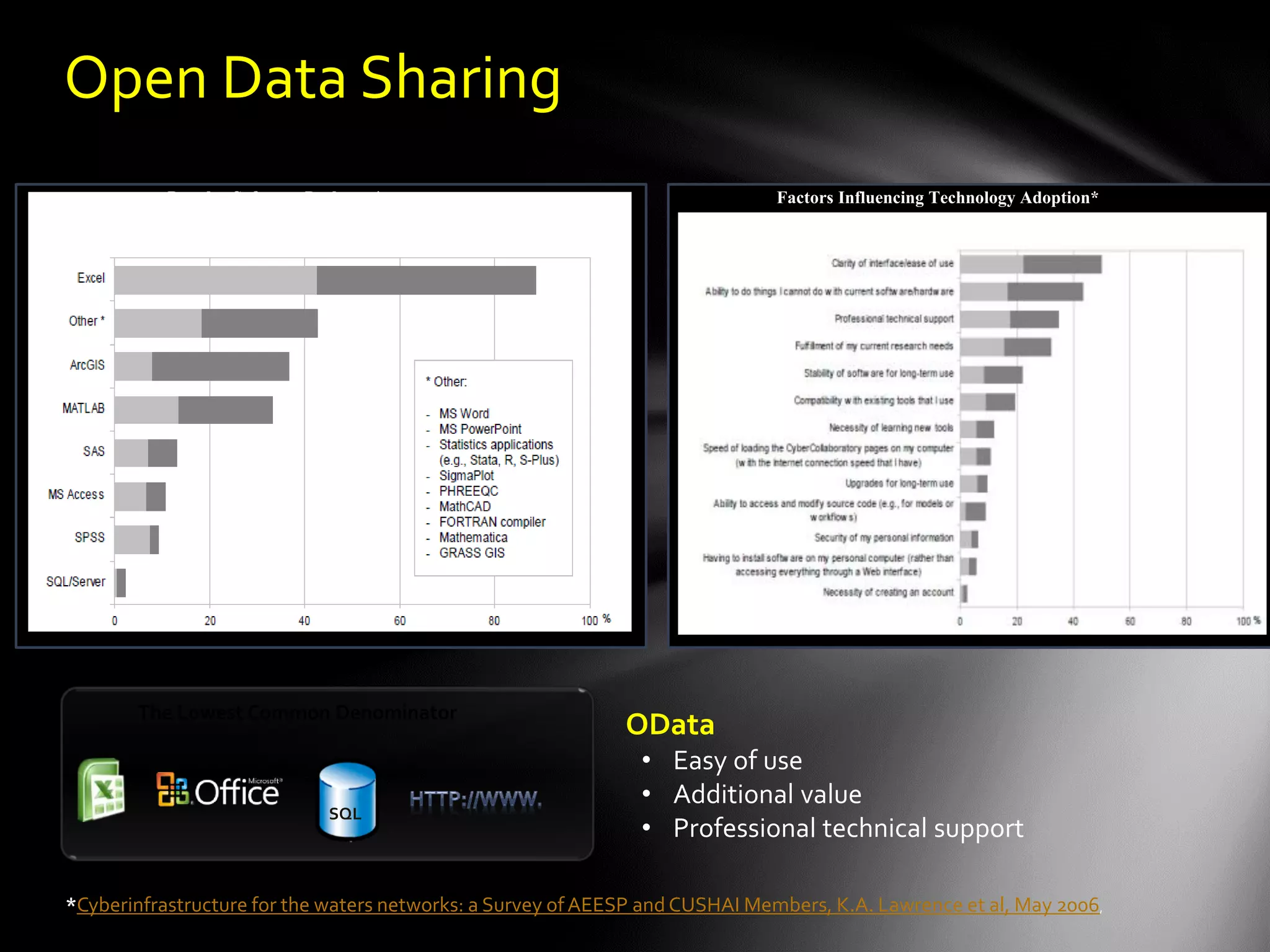
Open Data Sharing
           Popular Software Packages*                                         Factors Influencing Technology Adoption*


       The Lowest Common Denominator
                                                             OData
                                                               • Easy of use
                                                               • Additional value
                              SQL
                                                               • Professional technical support

*Cyberinfrastructure for the waters networks: a Survey of AEESP and CUSHAI Members, K.A. Lawrence et al, May 2006,
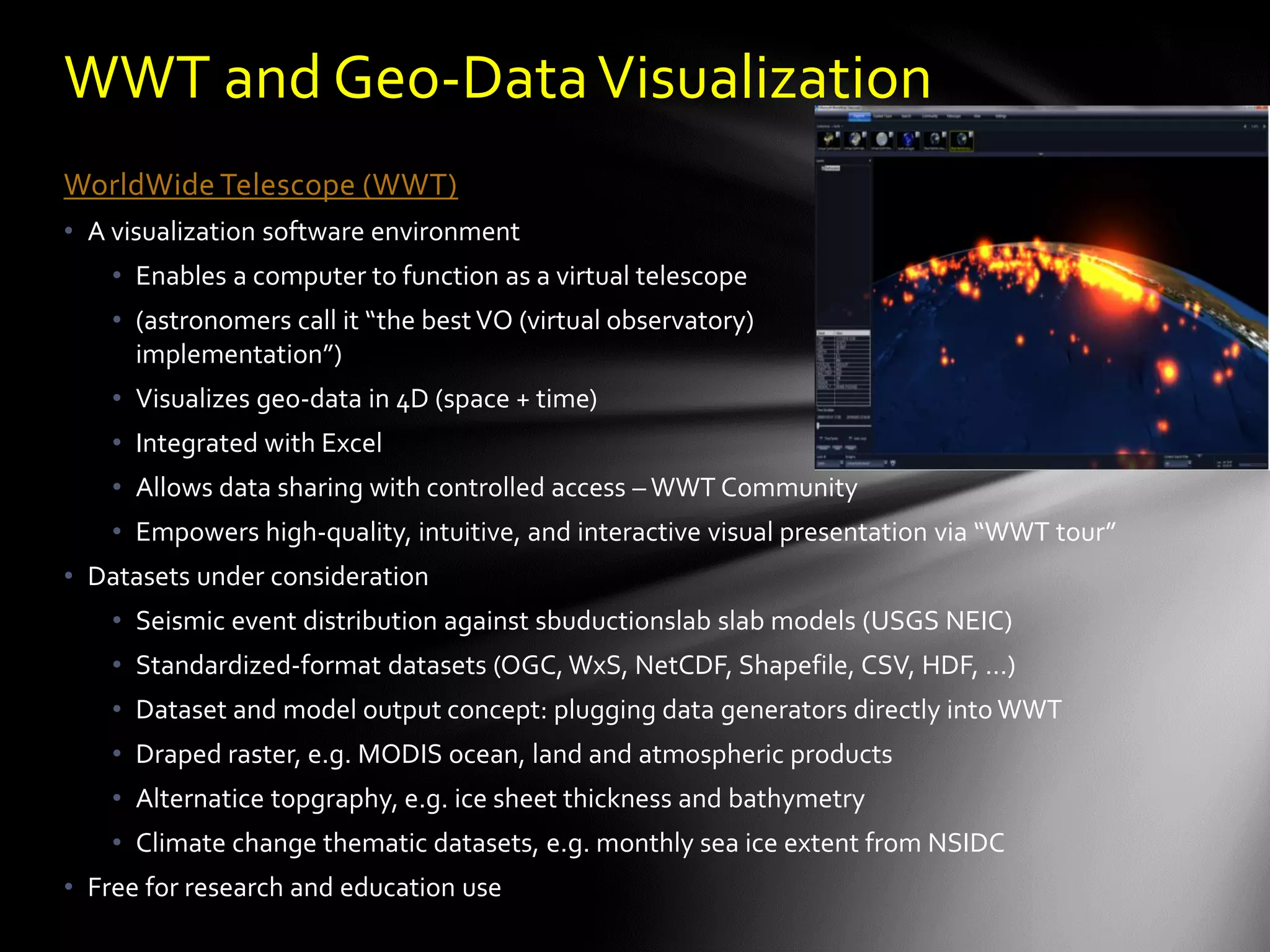
WWT and Geo-Data Visualization
WorldWide Telescope (WWT)
• A visualization software environment
    • Enables a computer to function as a virtual telescope
    • (astronomers call it “the best VO (virtual observatory)
      implementation”)
    • Visualizes geo-data in 4D (space + time)
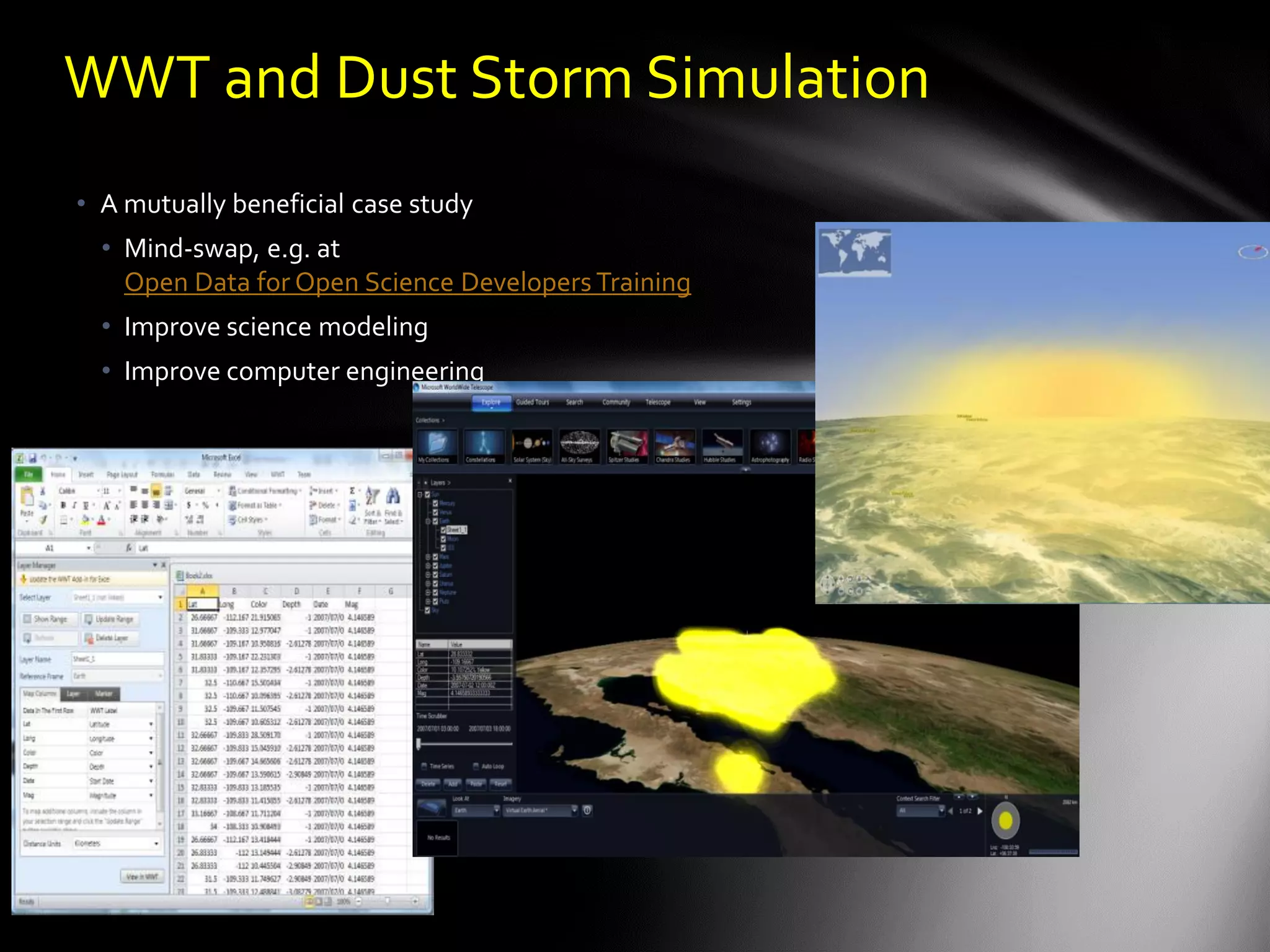
    • Integrated with Excel
    • Allows data sharing with controlled access – WWT Community
    • Empowers high-quality, intuitive, and interactive visual presentation via “WWT tour”
• Datasets under consideration
    • Seismic event distribution against sbuductionslab slab models (USGS NEIC)
    • Standardized-format datasets (OGC, WxS, NetCDF, Shapefile, CSV, HDF, …)
    • Dataset and model output concept: plugging data generators directly into WWT
    • Draped raster, e.g. MODIS ocean, land and atmospheric products
    • Alternatice topgraphy, e.g. ice sheet thickness and bathymetry
    • Climate change thematic datasets, e.g. monthly sea ice extent from NSIDC
• Free for research and education use
WWT and Dust Storm Simulation
• A mutually beneficial case study
  • Mind-swap, e.g. at
    Open Data for Open Science Developers Training
  • Improve science modeling
  • Improve computer engineering
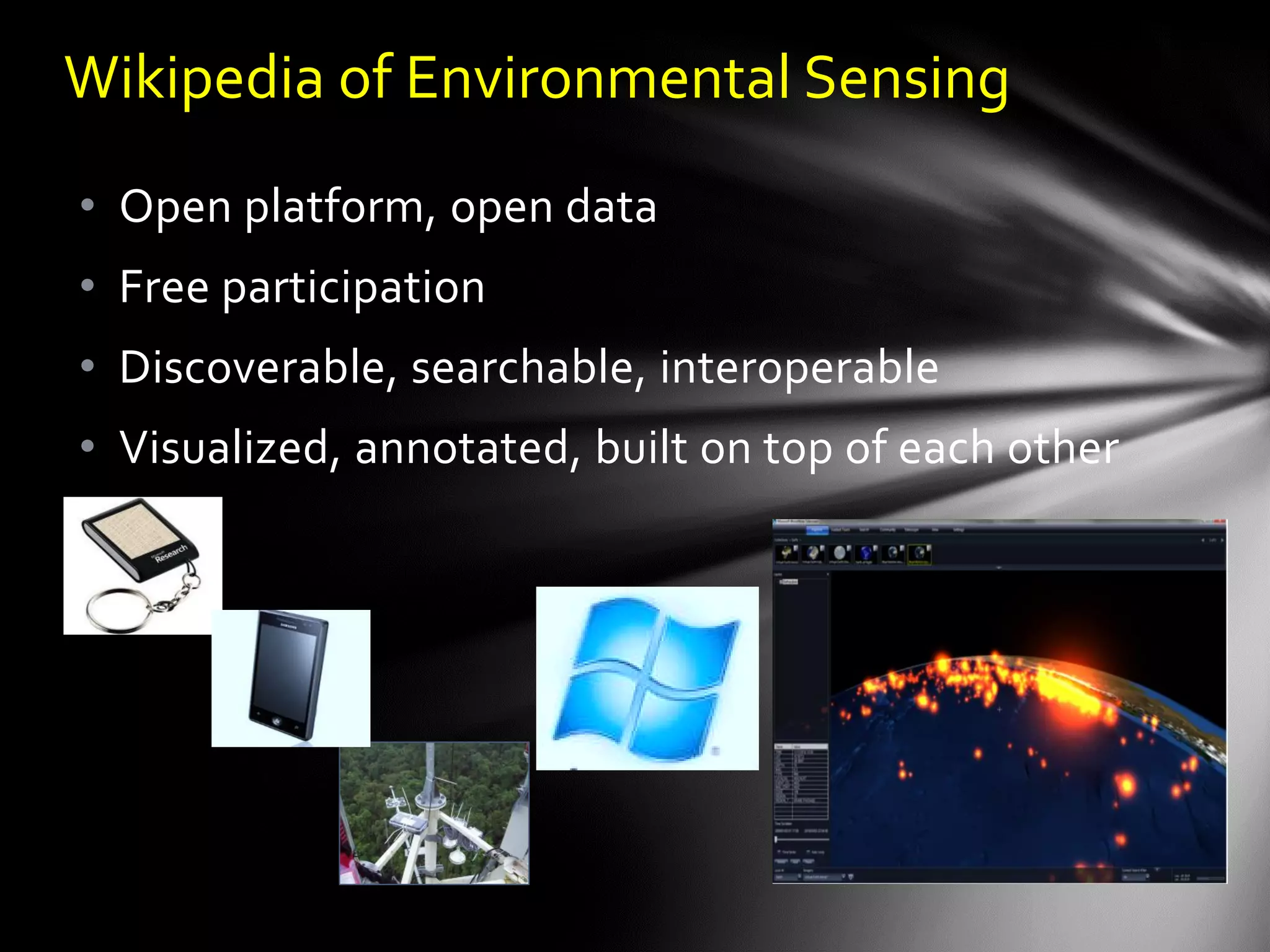
Wikipedia of Environmental Sensing
• Open platform, open data
• Free participation
• Discoverable, searchable, interoperable
• Visualized, annotated, built on top of each other
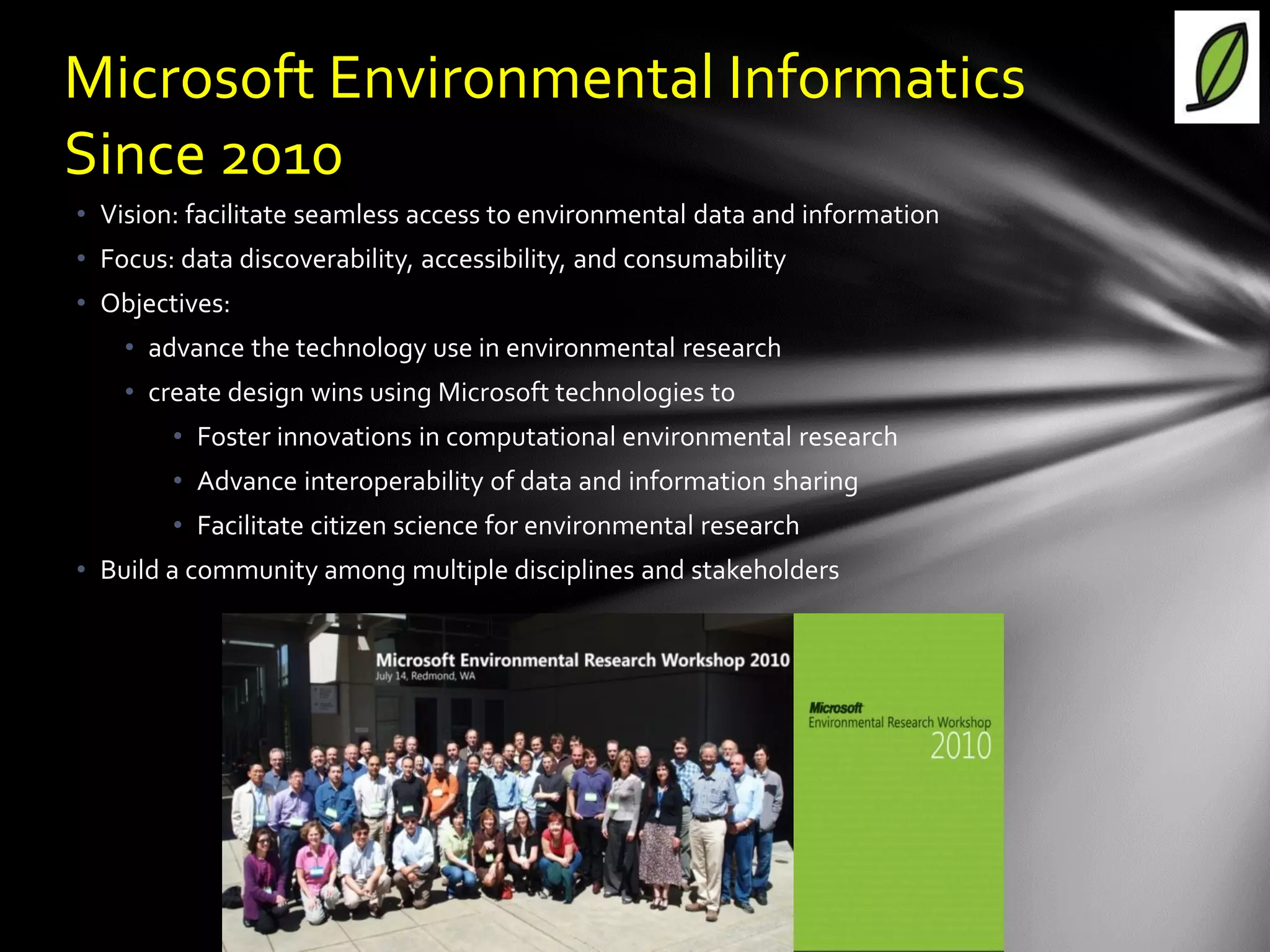
Microsoft Environmental Informatics
Since 2010
• Vision: facilitate seamless access to environmental data and information
• Focus: data discoverability, accessibility, and consumability
• Objectives:
    • advance the technology use in environmental research
    • create design wins using Microsoft technologies to
        • Foster innovations in computational environmental research
        • Advance interoperability of data and information sharing
        • Facilitate citizen science for environmental research
• Build a community among multiple disciplines and stakeholders

Towards the Wikipedia of World Wide Sensors

  • 1.
    Towards the Wikipedia of World Wide Sensors Jie Liu Principal Researcher Microsoft Research Redmond, WA 98052 With thanks to Yan Xu, Suman Nath, Aman Kansal, Heitor Ramos, and Qiang Wang
  • 2.
    Paradigm Shifts inComputing Consumer Computing Cloud Computing Community Computing
  • 3.
    Computing in theReal World Energy Climate Change Environment Homeland Security Disaster Response Critical Infrastructure Transportation Asset Management Healthcare Assisted Living ...
  • 4.
    4th Paradigm ofScientific Discovery Experimental, theoretical, and computational, and data-driven science.
  • 5.
    Microsoft Sensing Research Collection Collaboration Extraction With applications in • Environmental monitoring • Data center operation and energy management • Mobile computing
  • 6.
    Atlantic Rainforest Micrometeorology Sensor Network in Brazil (University of São Paulo, Microsoft Research, Johns Hopkins University) Serra do Mar N S 50meters Towers (Images courtesy of Humberto Rocha, Rob Fatland, and Andreas Terzis)
  • 7.
    SwissEx Put all data together for better understanding Share data with other scientists Temperature Snow Soil Streams Humidity
  • 8.
    Key Technical Challenges • Sensor networking • Energy management • Data yield improvements • Deployment strategy • Data management • Data interoperability • Data archival • Sensor tasking • Data visualization • Temporal-spatial indexing • Online aggregation and representation
  • 9.
    Participatory Environmental MonitoringToolkit  Objectives • Facilitate socially inclusive environmental observation o Time & GPS location o Temperature & Humidity o CO2 o H2S • Leverage existing Microsoft technologies and user communities • Deliver a HW+SW toolkit in open source form  Key technologies • Microsoft Research low energy GPS location sensing and mobile data collection services • OData • World Wide Telescope(WWT) • Windows Azure
  • 10.
    Sense Web: TheWikipedia of sensors Real-time indexing, aggregation, and tasking.
  • 11.
    Cypress: Data StreamCompression • Compress data to reduce storage and I/O cost • Answer queries directly on compressed data • 100X compression typical sensor data streams • Take advantage of data types. • Trim data based on sufficient precision. Columns • Spectrum analysis – store data based on frequency bands • Store anomalies separately Trickles • Use sketches to compress “noise” – preserve data correlation. • Find correlations among data streams. GAMPS: • Store data as differences or ratios to reference streams.
  • 12.
    Open Data Sharing Popular Software Packages* Factors Influencing Technology Adoption* The Lowest Common Denominator OData • Easy of use • Additional value SQL • Professional technical support *Cyberinfrastructure for the waters networks: a Survey of AEESP and CUSHAI Members, K.A. Lawrence et al, May 2006,
  • 13.
    WWT and Geo-DataVisualization WorldWide Telescope (WWT) • A visualization software environment • Enables a computer to function as a virtual telescope • (astronomers call it “the best VO (virtual observatory) implementation”) • Visualizes geo-data in 4D (space + time) • Integrated with Excel • Allows data sharing with controlled access – WWT Community • Empowers high-quality, intuitive, and interactive visual presentation via “WWT tour” • Datasets under consideration • Seismic event distribution against sbuductionslab slab models (USGS NEIC) • Standardized-format datasets (OGC, WxS, NetCDF, Shapefile, CSV, HDF, …) • Dataset and model output concept: plugging data generators directly into WWT • Draped raster, e.g. MODIS ocean, land and atmospheric products • Alternatice topgraphy, e.g. ice sheet thickness and bathymetry • Climate change thematic datasets, e.g. monthly sea ice extent from NSIDC • Free for research and education use
  • 14.
    WWT and DustStorm Simulation • A mutually beneficial case study • Mind-swap, e.g. at Open Data for Open Science Developers Training • Improve science modeling • Improve computer engineering
  • 15.
    Wikipedia of EnvironmentalSensing • Open platform, open data • Free participation • Discoverable, searchable, interoperable • Visualized, annotated, built on top of each other
  • 16.
    Microsoft Environmental Informatics Since2010 • Vision: facilitate seamless access to environmental data and information • Focus: data discoverability, accessibility, and consumability • Objectives: • advance the technology use in environmental research • create design wins using Microsoft technologies to • Foster innovations in computational environmental research • Advance interoperability of data and information sharing • Facilitate citizen science for environmental research • Build a community among multiple disciplines and stakeholders