HEALTHCARE DATA ANALYTICS
Unlocking The Power Of Healthcare Data TOGETHER
Lisa Lix, PhD, P.Stat.
September 30, 2015
Cyber Summit Generation D: Data Scientists of Tomorrow
Outline
Why together is better
• Where I work and do my research
• Examples of healthcare analytics in action
• What lies ahead
George and Fay Yee Centre for
Healthcare Innovation (CHI)
• CHI is a partnership between the University of Manitoba
and the Winnipeg Regional Health Authority
• CHI brings together leaders and practitioners from many
academic disciplines and areas of practice
• CHI aims to:
– improve patient outcomes,
– enhance patient experiences, and
– improve access to care
for Manitobans
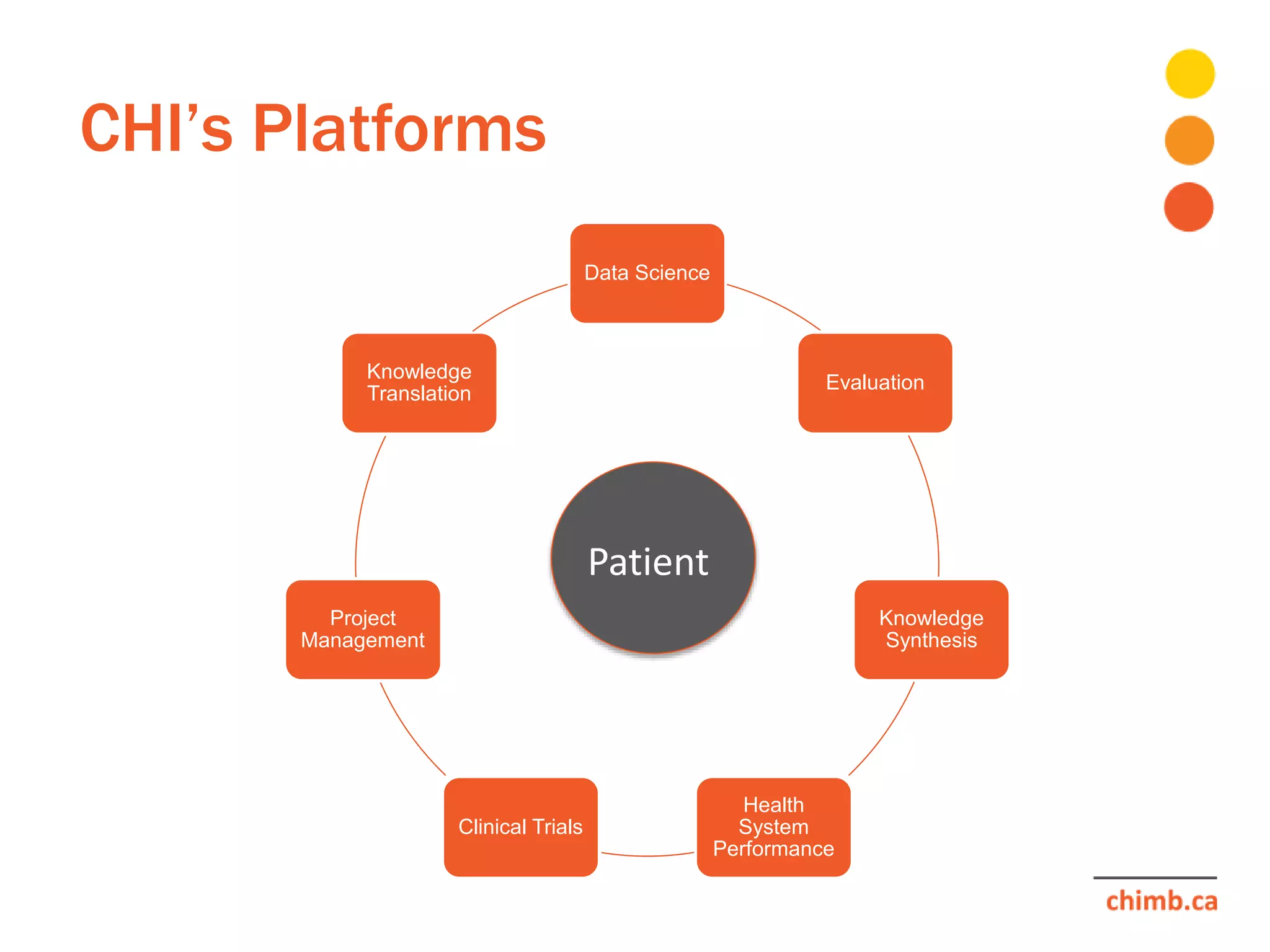
CHI’s Platforms
Data Science
Evaluation
Knowledge
Synthesis
Health
System
Performance
Clinical Trials
Project
Management
Knowledge
Translation
Patient
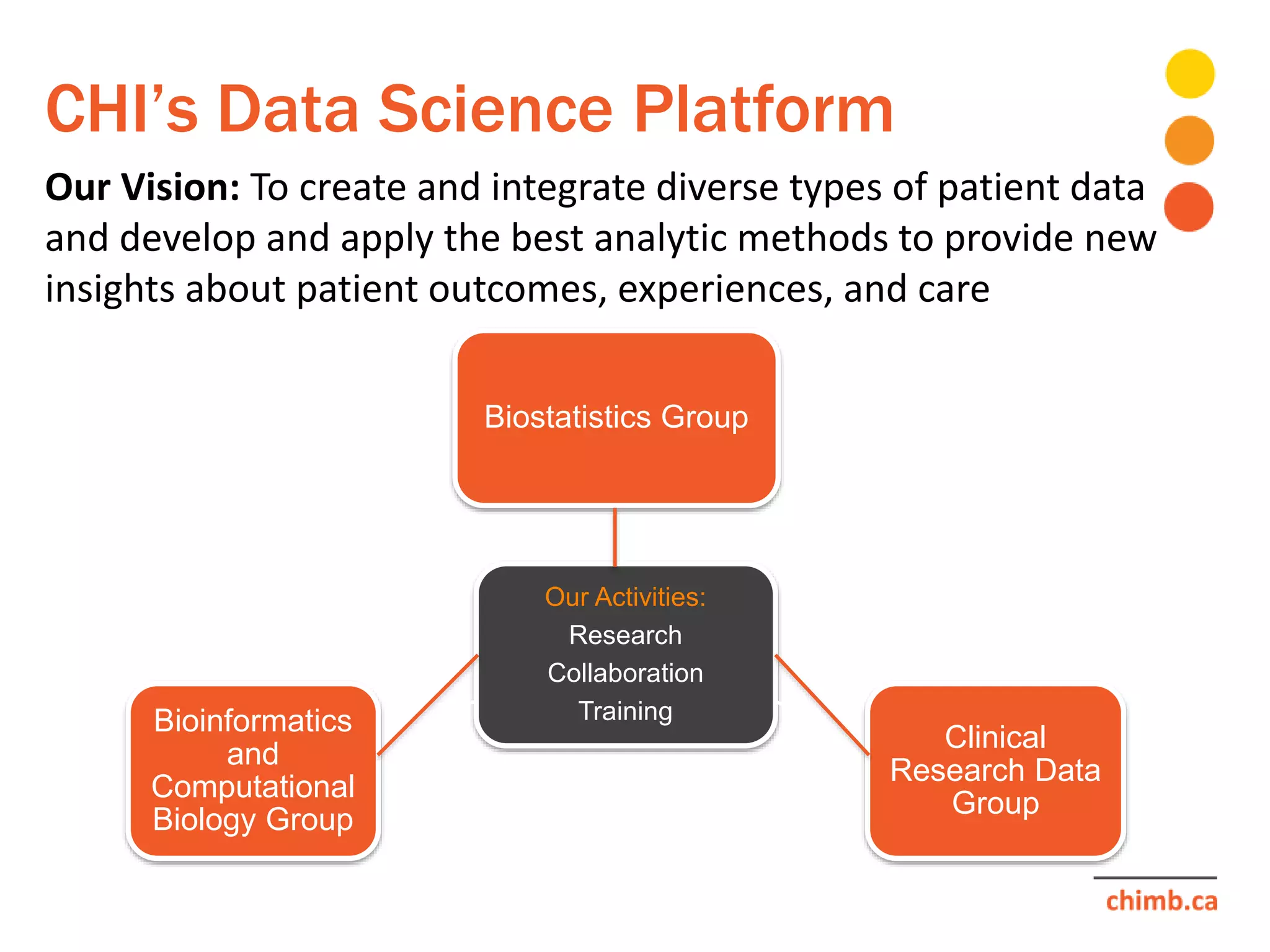
CHI’s Data Science Platform
Our Activities:
Research
Collaboration
Training
Clinical
Research Data
Group
Biostatistics Group
Bioinformatics
and
Computational
Biology Group
Our Vision: To create and integrate diverse types of patient data
and develop and apply the best analytic methods to provide new
insights about patient outcomes, experiences, and care
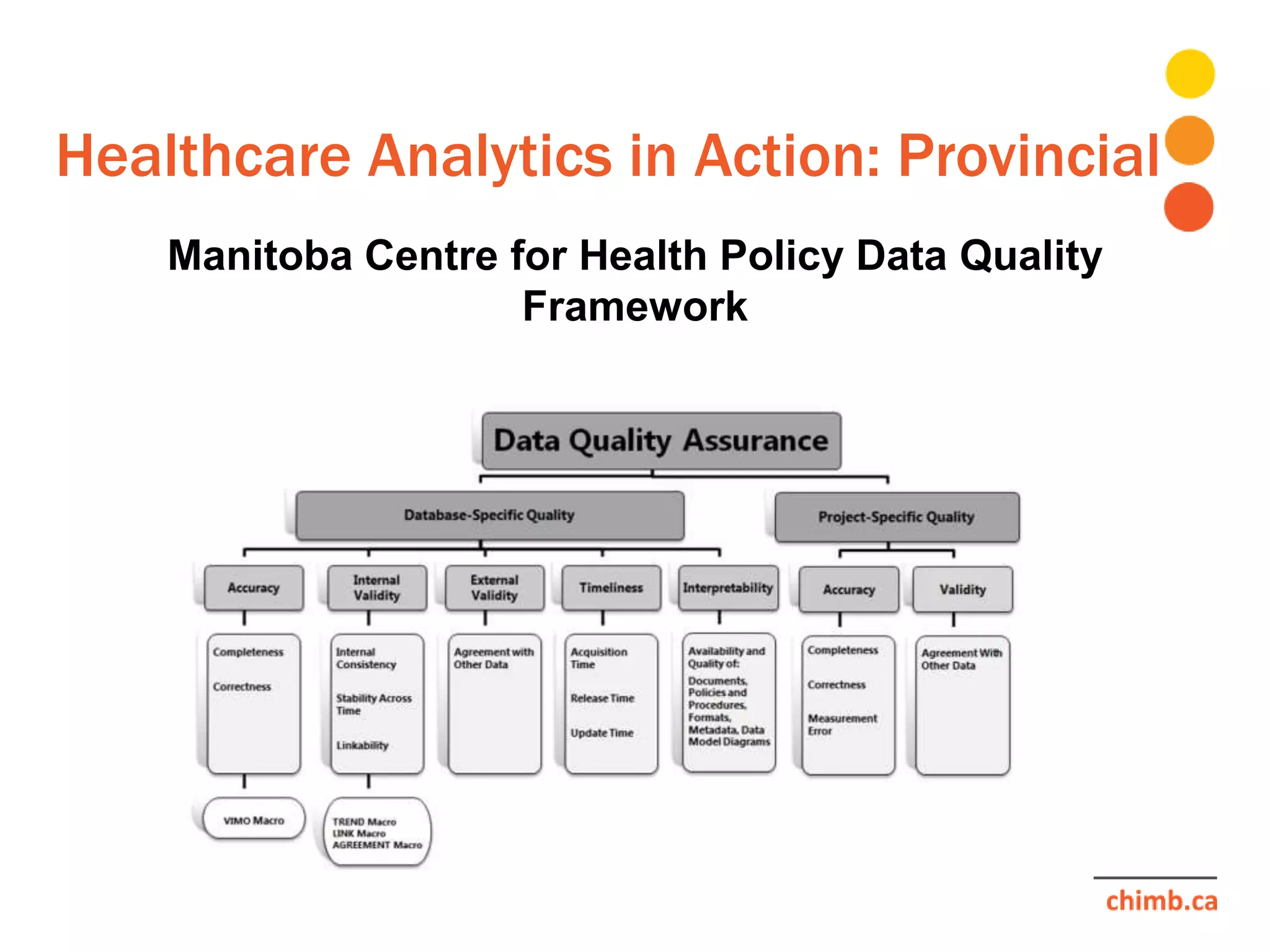
Healthcare Analytics in Action: Provincial
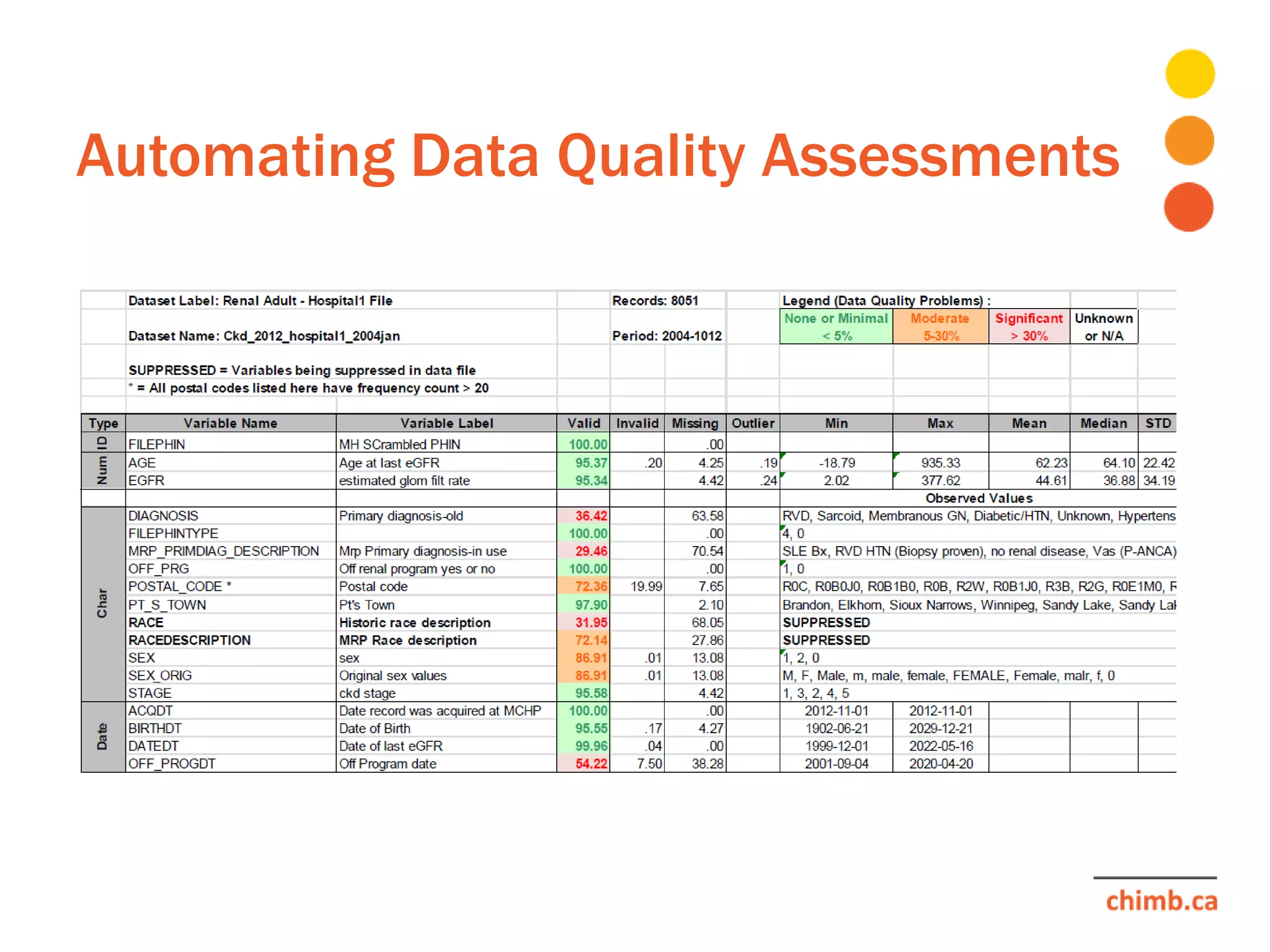
Manitoba Centre for Health Policy Data Quality
Framework
Manitoba Centre for Health Policy
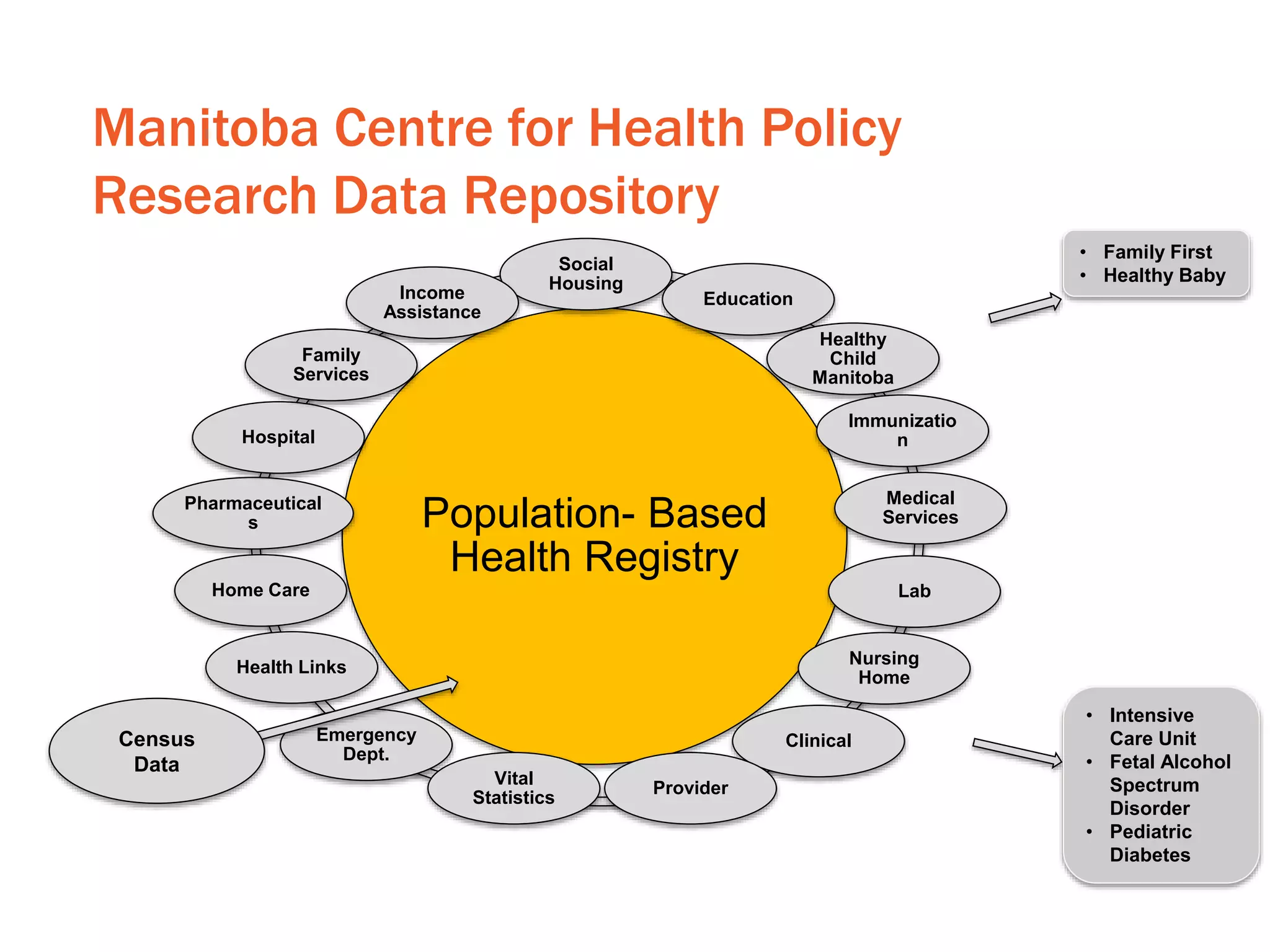
Research Data Repository
Population- Based
Health Registry
Social
Housing
Education
Healthy
Child
Manitoba
Immunizatio
n
Medical
Services
Lab
Nursing
Home
Clinical
Provider
Vital
Statistics
Emergency
Dept.
Health Links
Home Care
Pharmaceutical
s
Hospital
Family
Services
Income
Assistance
Census
Data
• Family First
• Healthy Baby
• Intensive
Care Unit
• Fetal Alcohol
Spectrum
Disorder
• Pediatric
Diabetes
Automating Data Quality Assessments
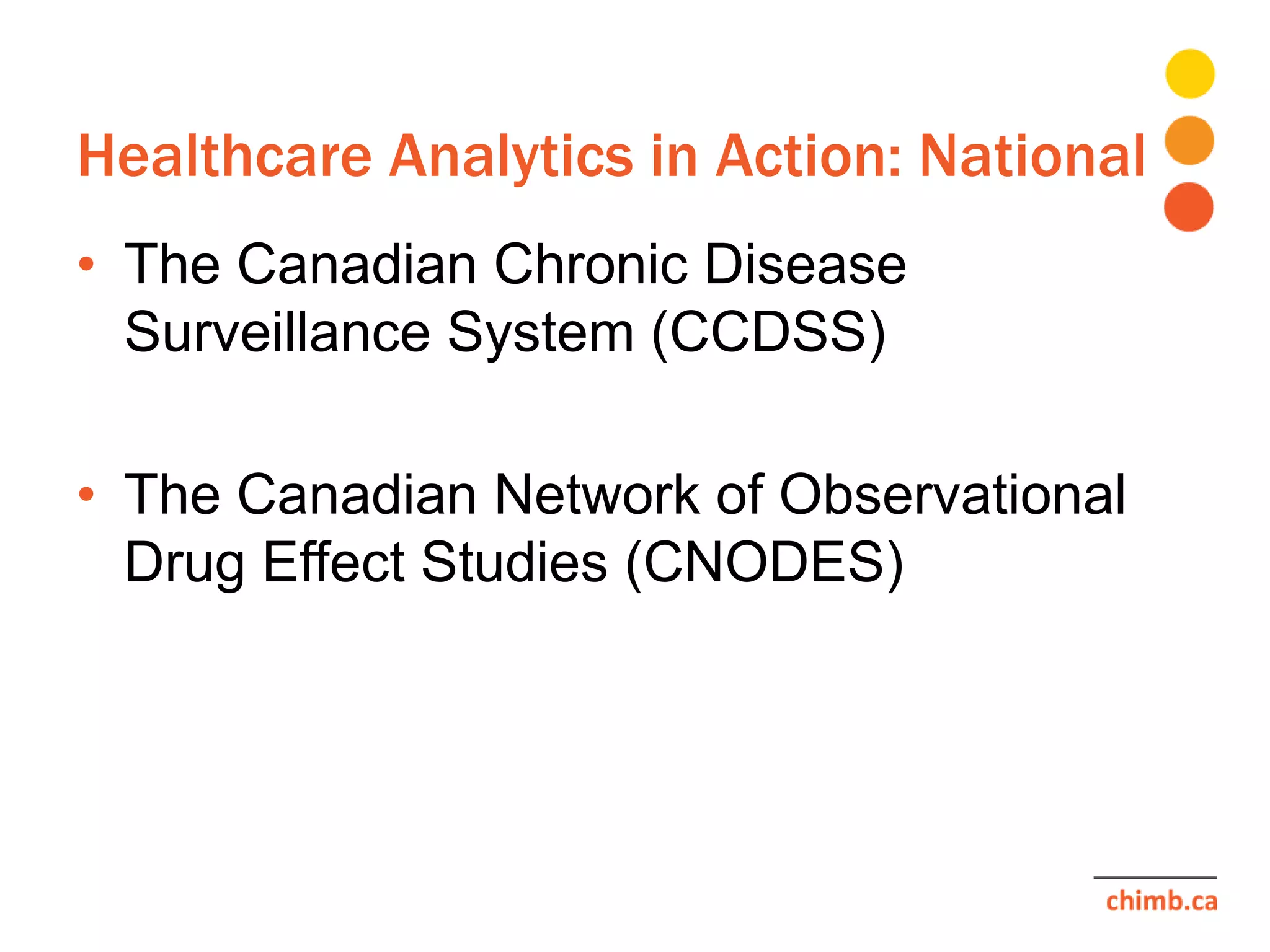
Healthcare Analytics in Action: National
• The Canadian Chronic Disease
Surveillance System (CCDSS)
• The Canadian Network of Observational
Drug Effect Studies (CNODES)
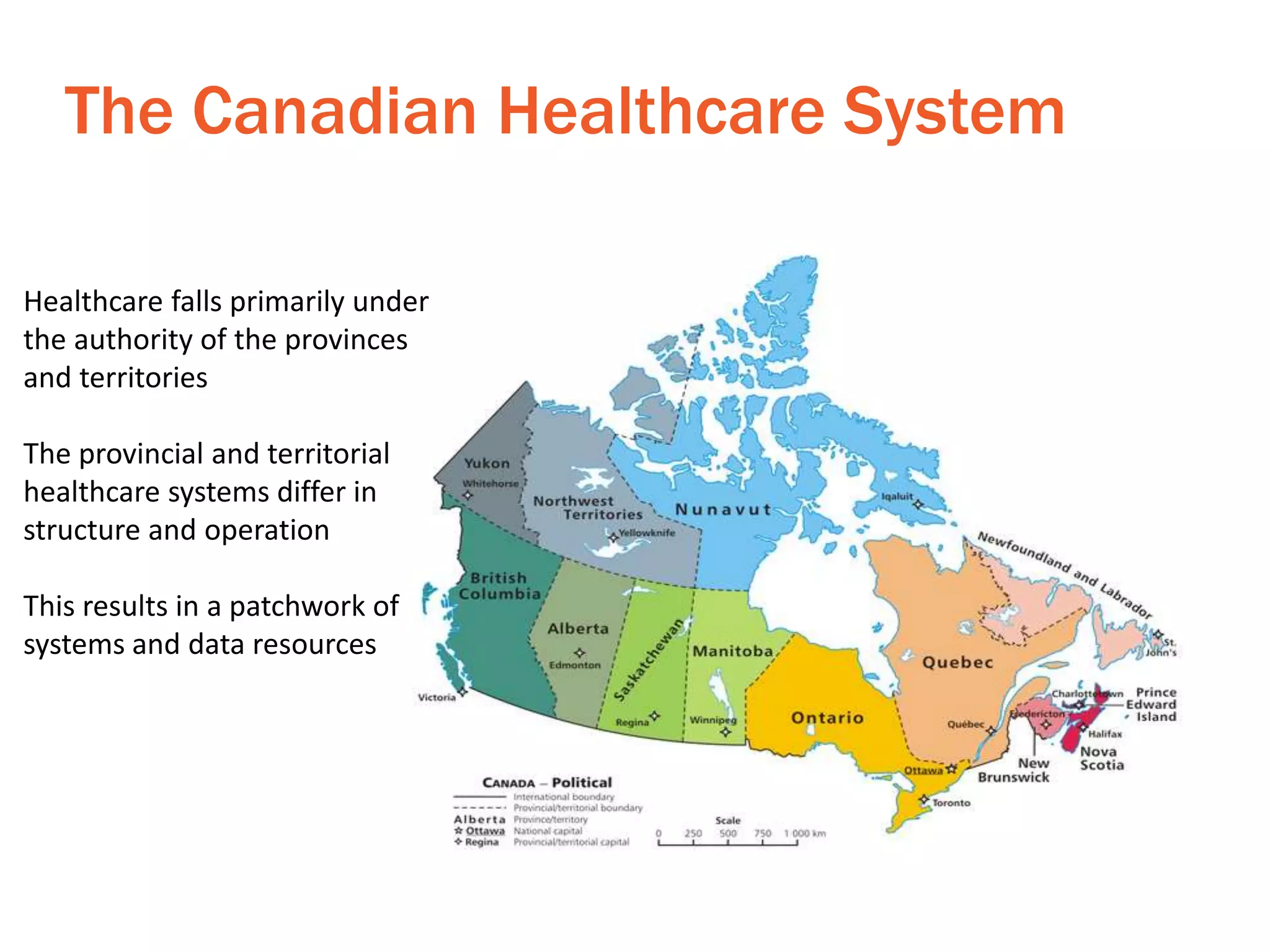
Healthcare falls primarily under
the authority of the provinces
and territories
The provincial and territorial
healthcare systems differ in
structure and operation
This results in a patchwork of
systems and data resources
The Canadian Healthcare System
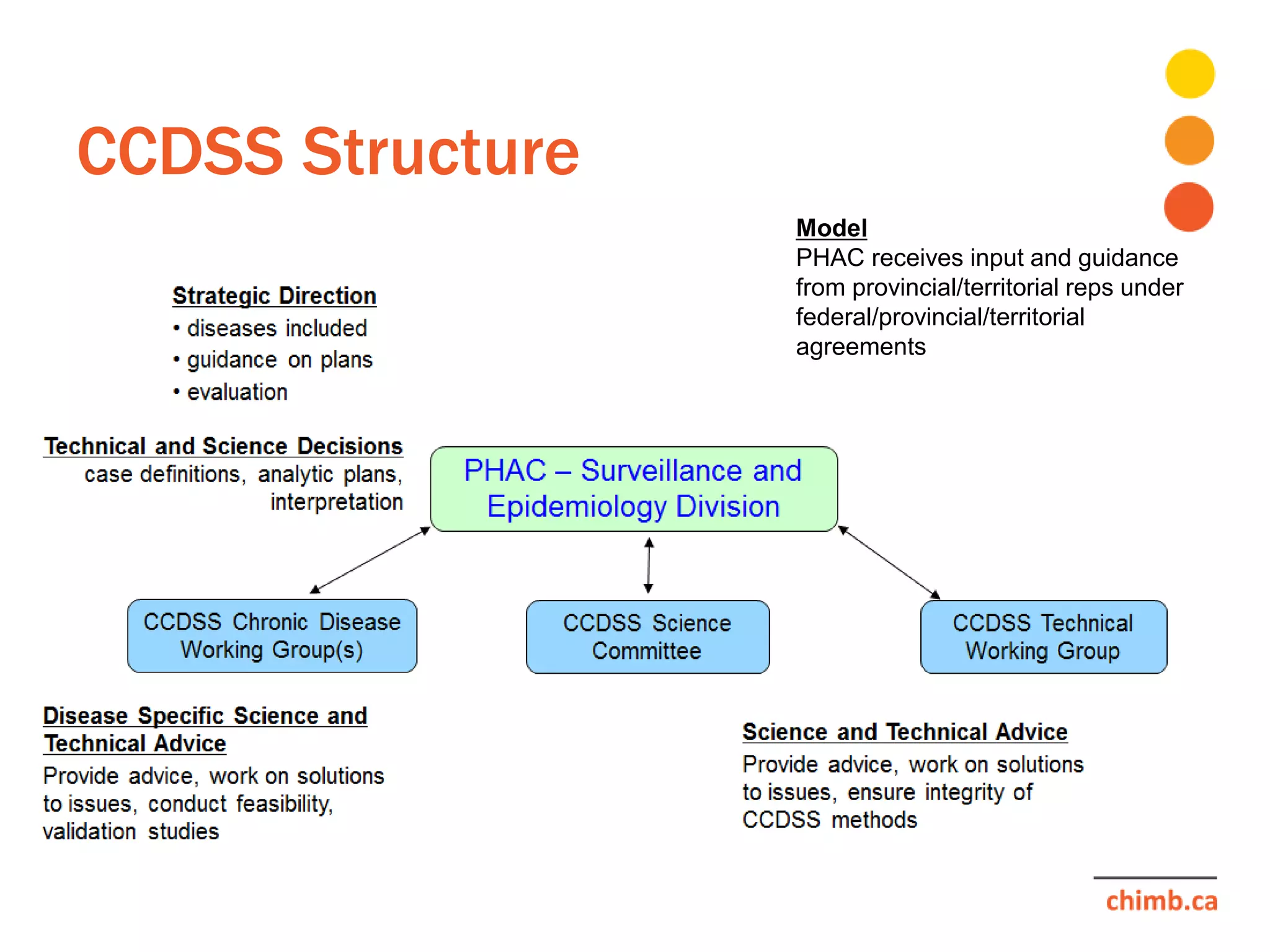
The Canadian Chronic Disease
Surveillance System (CCDSS)
 Established by the Public Health Agency of Canada
(PHAC) as a collaborative initiative amongst the federal,
provincial, and territorial governments
 Uses health administrative data to estimate chronic
disease prevalence/incidence and the related burden on
the healthcare system
 Adopts a distributed surveillance system model that
respects the data custodial responsibilities of the
provinces and territories
 Provides a standardized pan-Canadian approach to
chronic disease surveillance
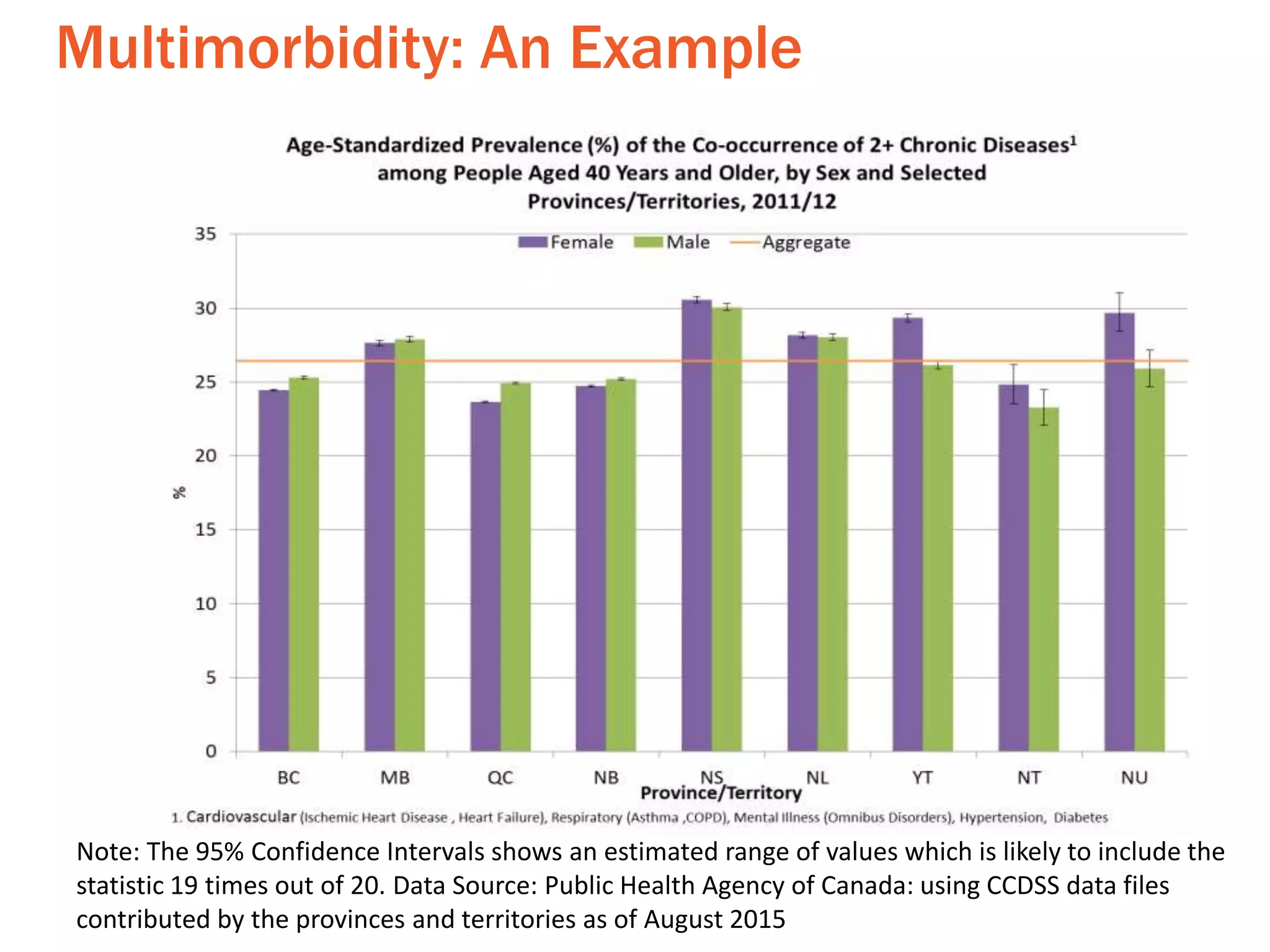
Multimorbidity: An Example
Note: The 95% Confidence Intervals shows an estimated range of values which is likely to include the
statistic 19 times out of 20. Data Source: Public Health Agency of Canada: using CCDSS data files
contributed by the provinces and territories as of August 2015
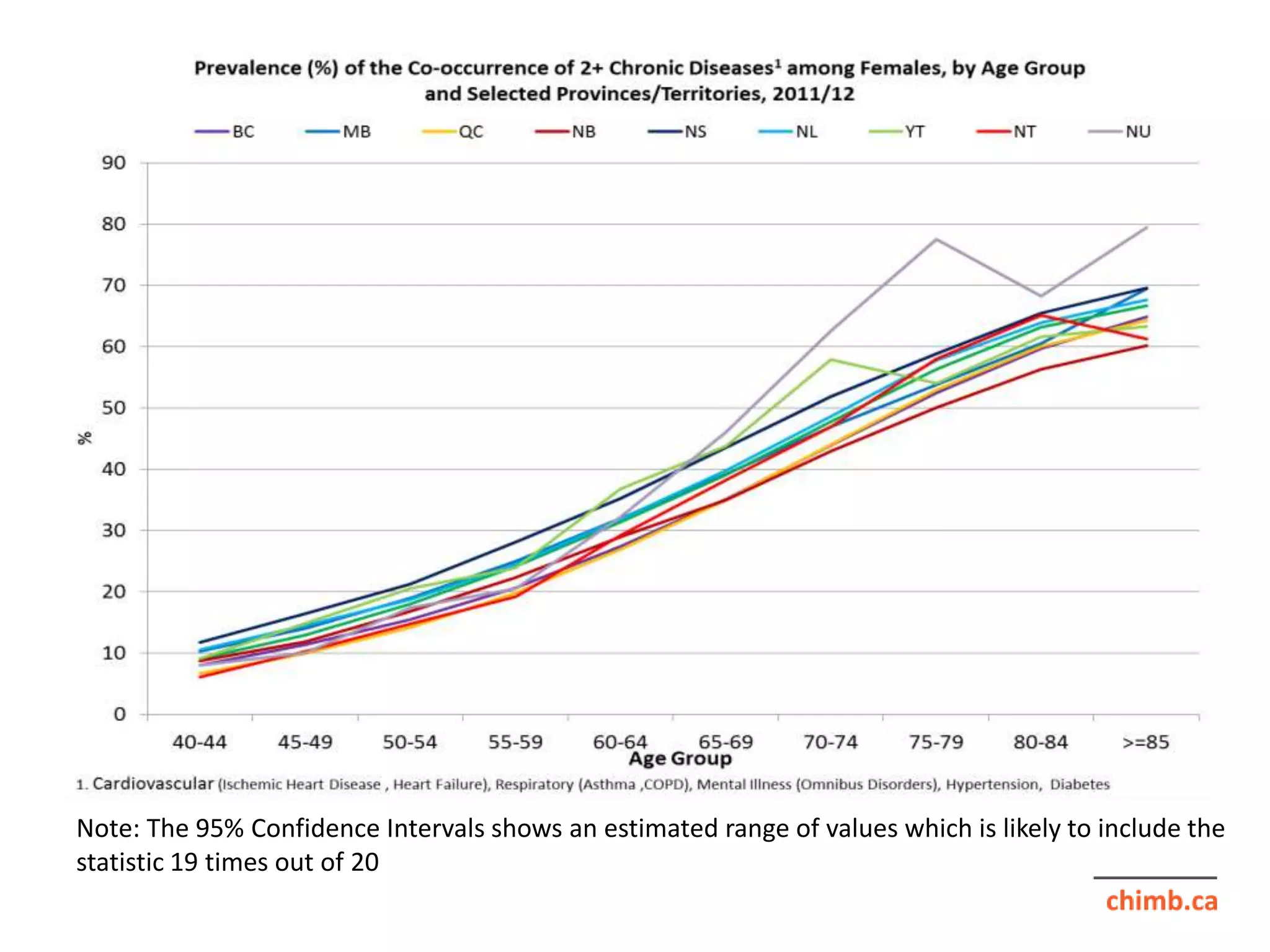
Note: The 95% Confidence Intervals shows an estimated range of values which is likely to include the
statistic 19 times out of 20
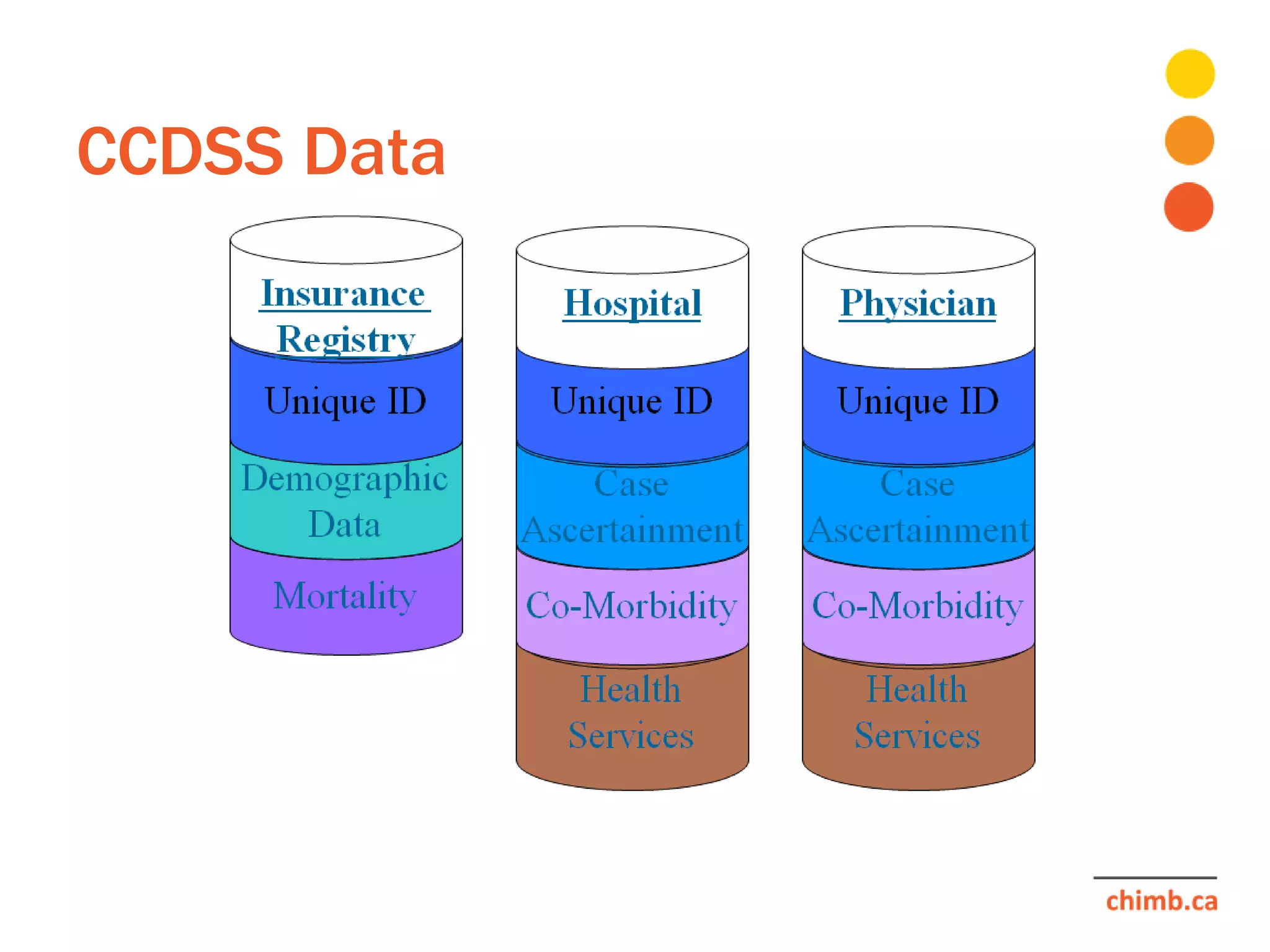
CCDSS Data
CCDSS Structure
Model
PHAC receives input and guidance
from provincial/territorial reps under
federal/provincial/territorial
agreements
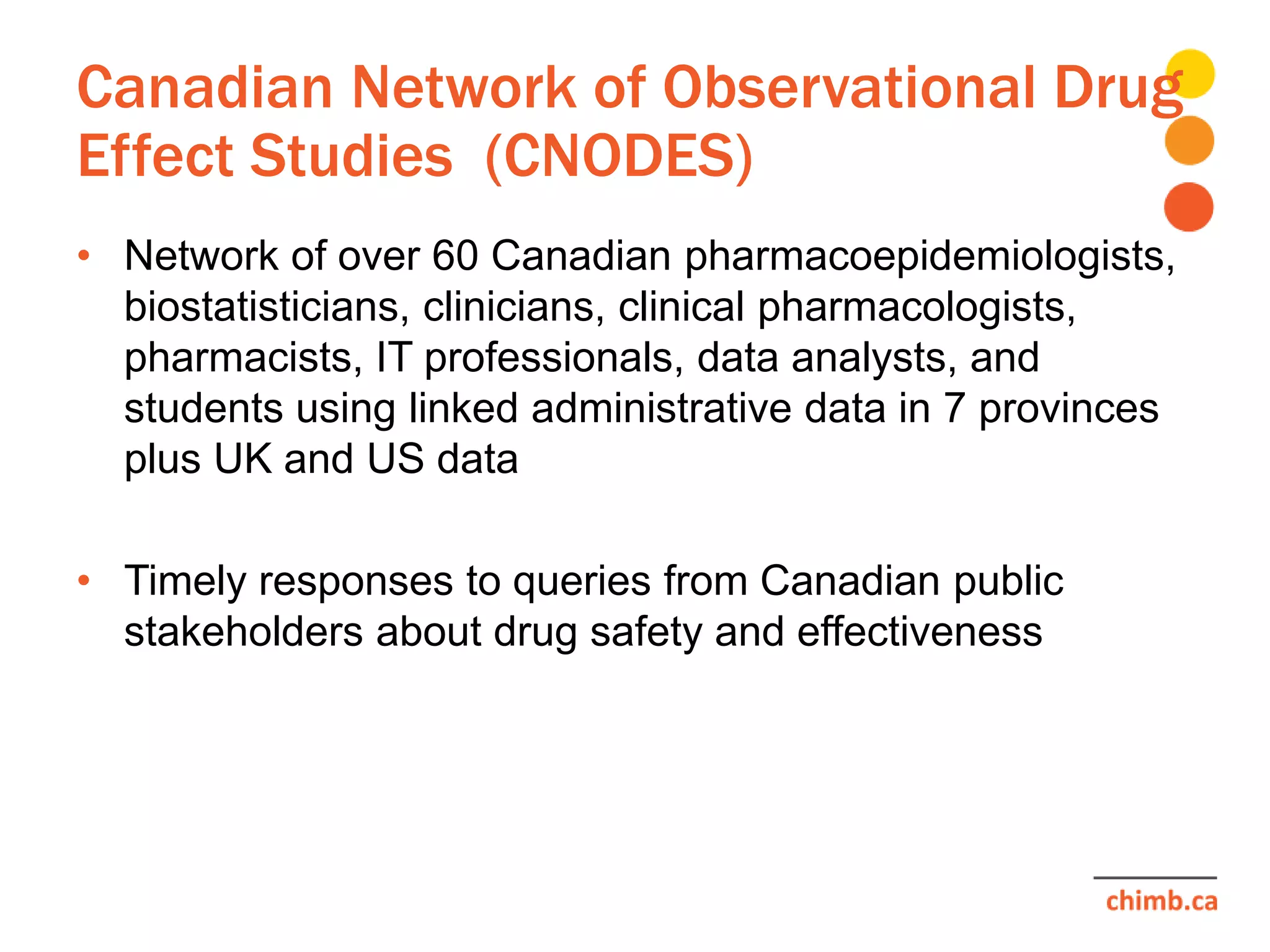
Canadian Network of Observational Drug
Effect Studies (CNODES)
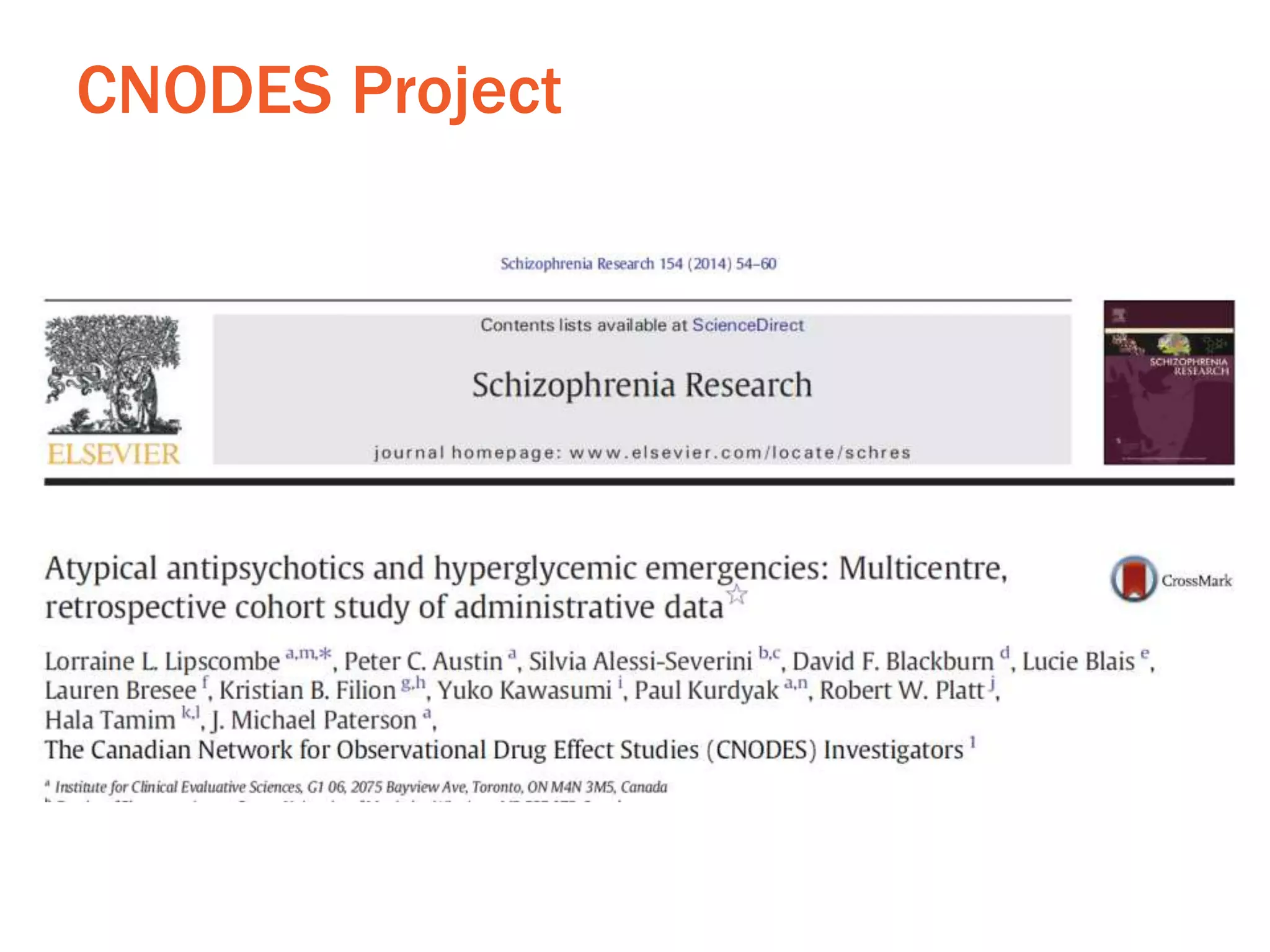
• Network of over 60 Canadian pharmacoepidemiologists,
biostatisticians, clinicians, clinical pharmacologists,
pharmacists, IT professionals, data analysts, and
students using linked administrative data in 7 provinces
plus UK and US data
• Timely responses to queries from Canadian public
stakeholders about drug safety and effectiveness
1 -
2 -
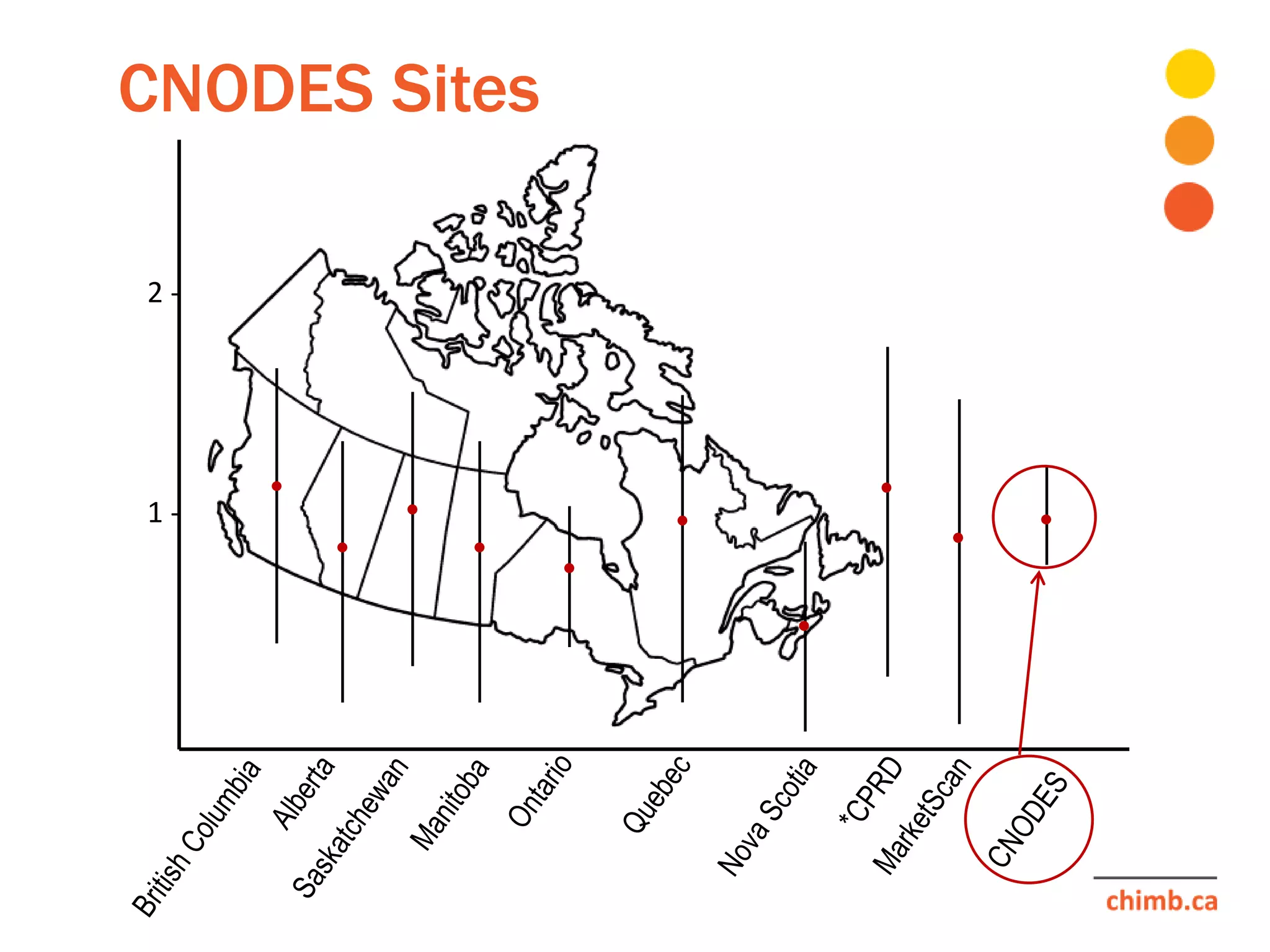
CNODES Sites
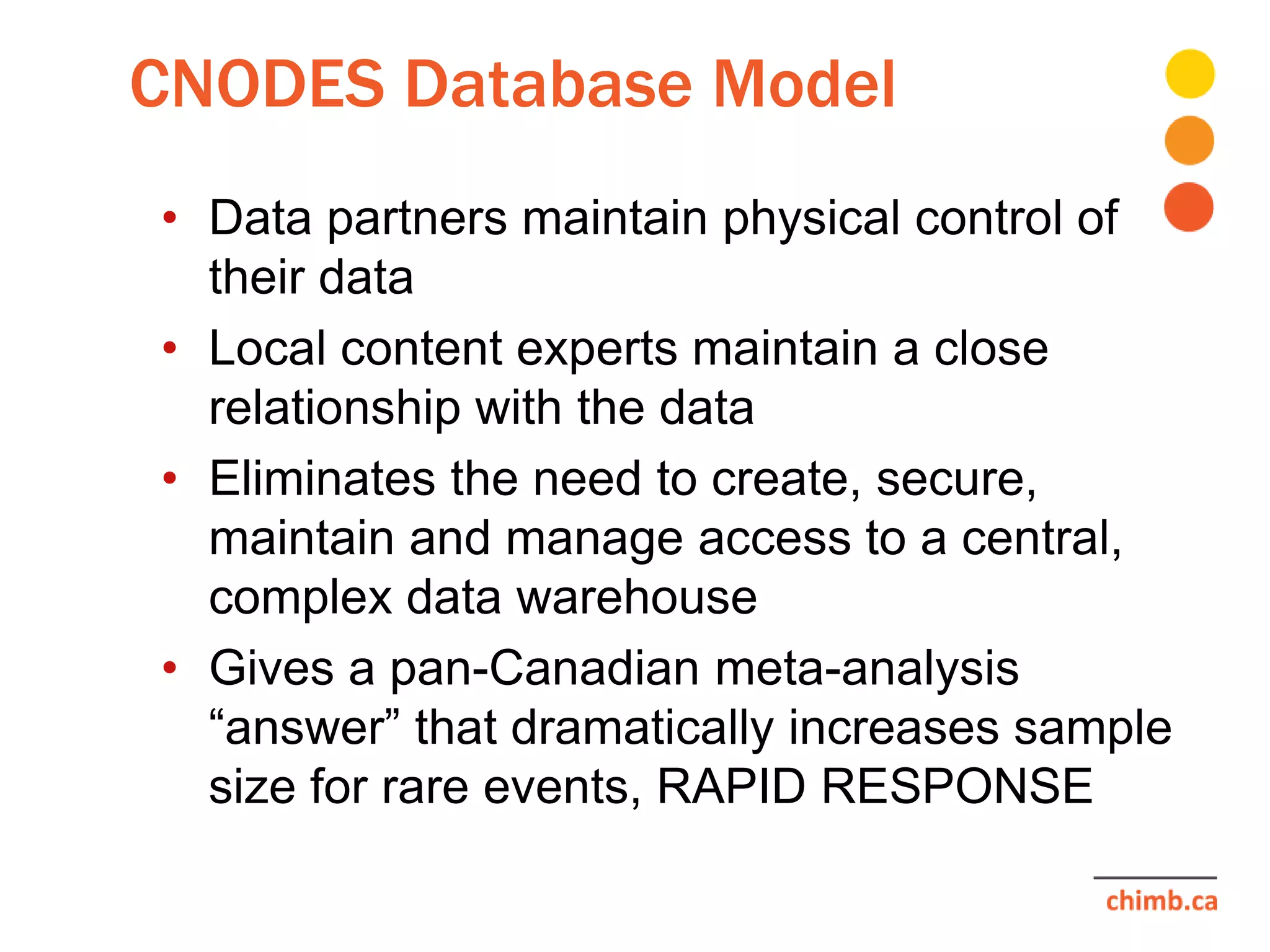
CNODES Database Model
• Data partners maintain physical control of
their data
• Local content experts maintain a close
relationship with the data
• Eliminates the need to create, secure,
maintain and manage access to a central,
complex data warehouse
• Gives a pan-Canadian meta-analysis
“answer” that dramatically increases sample
size for rare events, RAPID RESPONSE
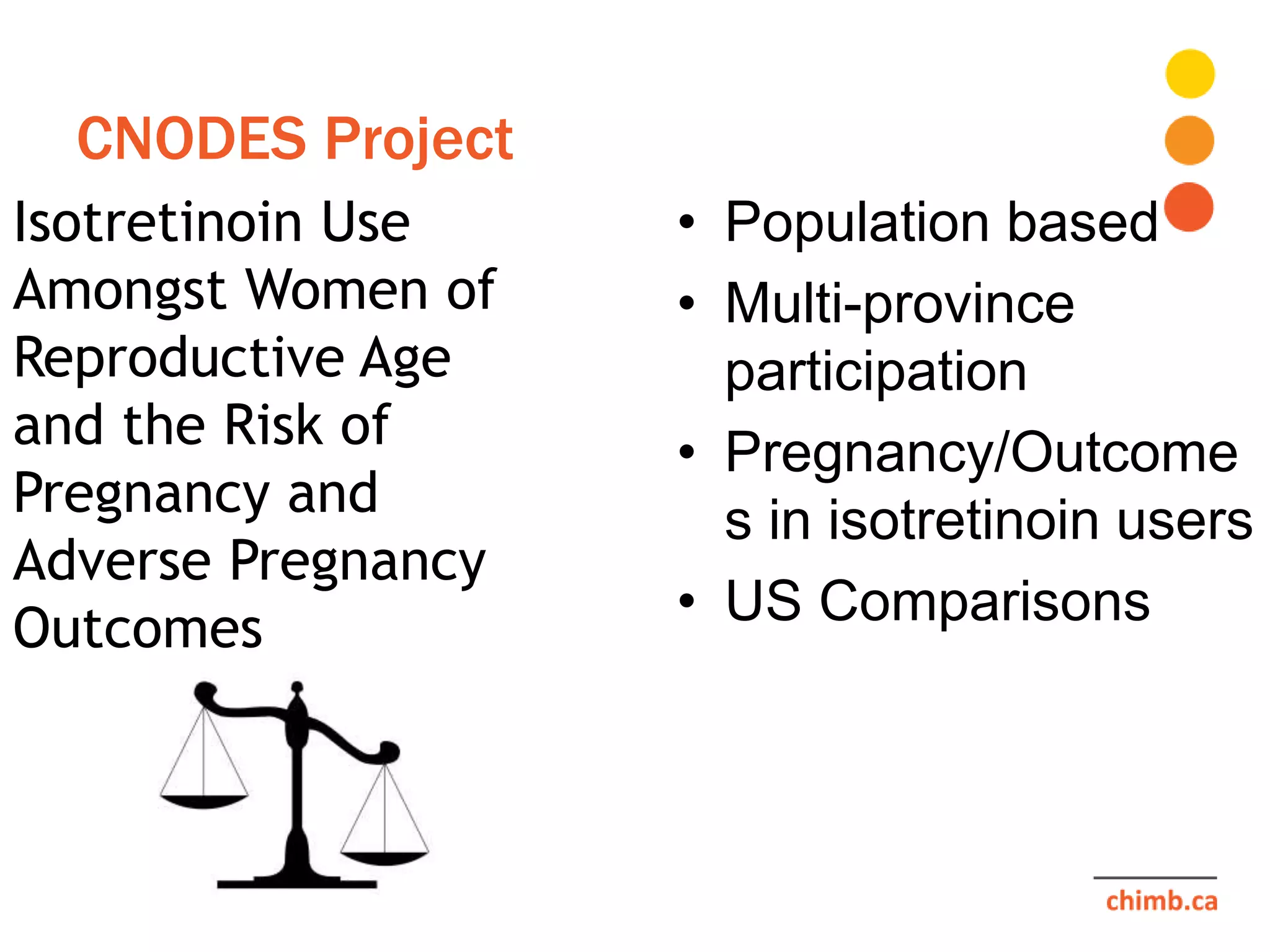
CNODES Project
Isotretinoin Use
Amongst Women of
Reproductive Age
and the Risk of
Pregnancy and
Adverse Pregnancy
Outcomes
• Population based
• Multi-province
participation
• Pregnancy/Outcome
s in isotretinoin users
• US Comparisons
CNODES Project
What Lies Ahead?
• Data Linkage
– Images
– Streaming data from wearable devices
– Electronic medical records
• Analyses
– Biases
– Rare events
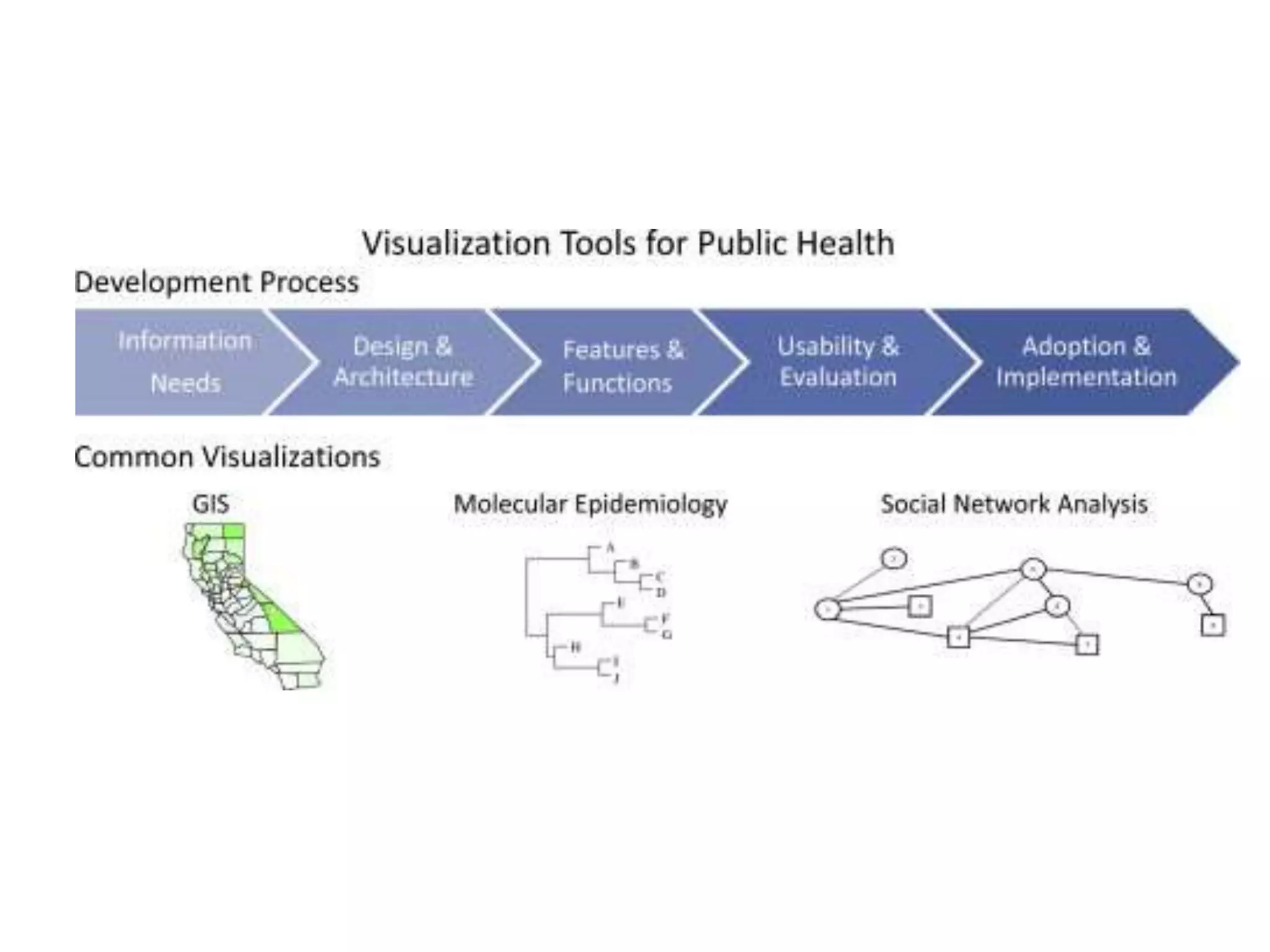
• Data Visualization
• Formalized Training
Training in Healthcare Analytics
• Strategic:
– Focussed on performance
– Strategic thinking and communication skills
– Less essential to have skills in the technical, nitty-gritty details of
setting up database systems and defining or selecting algorithms
• Operational:
– Training in programming, statistics, mathematics
– Skills in implementing systems to probe and interpret data
Essential Skills
• Constructing data queries
• Manipulating data into different formats or
structures
• Modeling & analysis
• Telling the story of the data
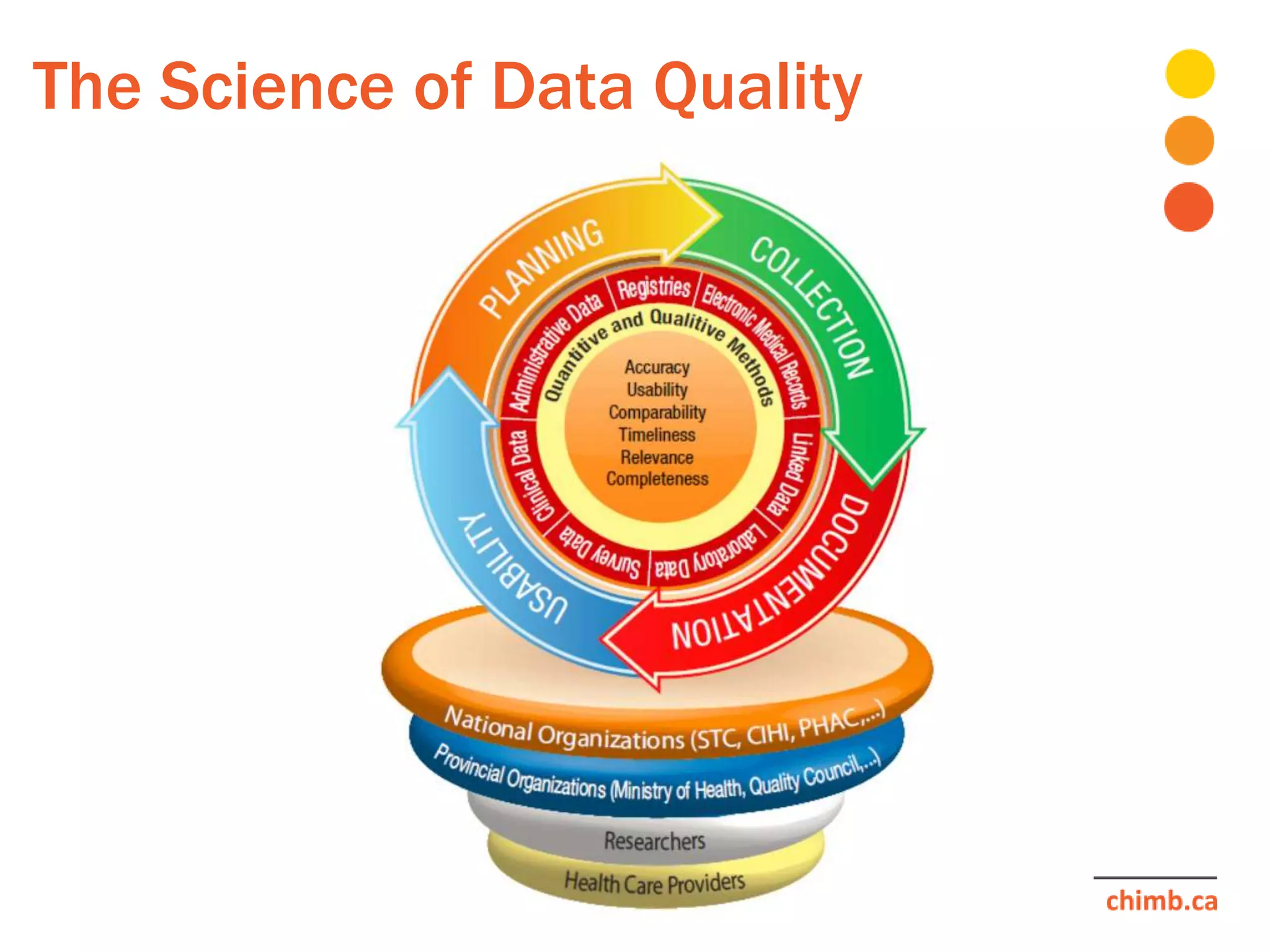
The Science of Data Quality
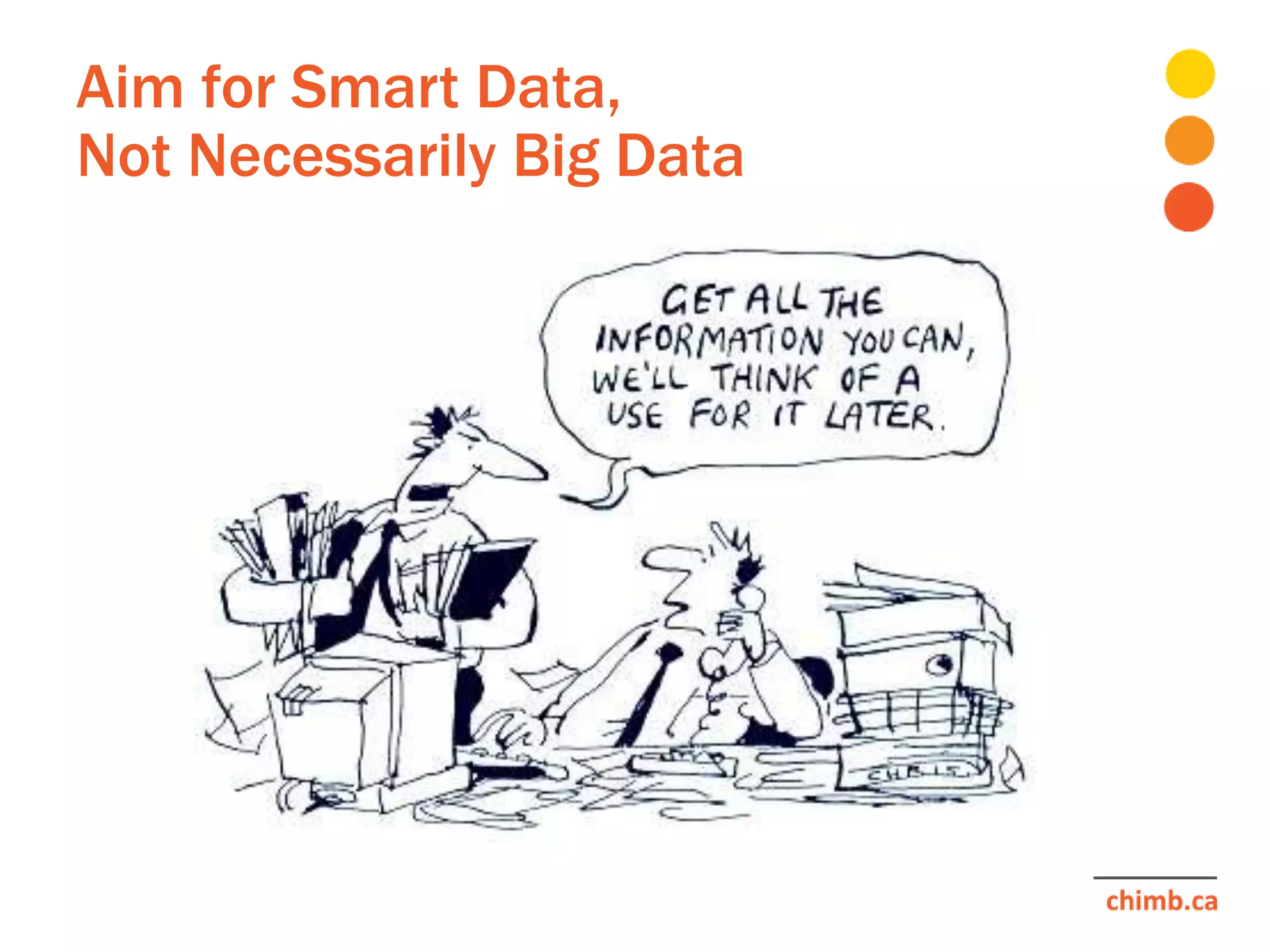
Aim for Smart Data,
Not Necessarily Big Data
Contact Information
Lisa Lix, PhD P.Stat.
e-mail: lisa.lix@umanitoba.ca
Unlocking the power of healthcare data

Unlocking the power of healthcare data

  • 1.
    HEALTHCARE DATA ANALYTICS UnlockingThe Power Of Healthcare Data TOGETHER Lisa Lix, PhD, P.Stat. September 30, 2015 Cyber Summit Generation D: Data Scientists of Tomorrow
  • 2.
    Outline Why together isbetter • Where I work and do my research • Examples of healthcare analytics in action • What lies ahead
  • 4.
    George and FayYee Centre for Healthcare Innovation (CHI) • CHI is a partnership between the University of Manitoba and the Winnipeg Regional Health Authority • CHI brings together leaders and practitioners from many academic disciplines and areas of practice • CHI aims to: – improve patient outcomes, – enhance patient experiences, and – improve access to care for Manitobans
  • 5.
  • 6.
    CHI’s Data SciencePlatform Our Activities: Research Collaboration Training Clinical Research Data Group Biostatistics Group Bioinformatics and Computational Biology Group Our Vision: To create and integrate diverse types of patient data and develop and apply the best analytic methods to provide new insights about patient outcomes, experiences, and care
  • 8.
    Healthcare Analytics inAction: Provincial Manitoba Centre for Health Policy Data Quality Framework
  • 9.
    Manitoba Centre forHealth Policy Research Data Repository Population- Based Health Registry Social Housing Education Healthy Child Manitoba Immunizatio n Medical Services Lab Nursing Home Clinical Provider Vital Statistics Emergency Dept. Health Links Home Care Pharmaceutical s Hospital Family Services Income Assistance Census Data • Family First • Healthy Baby • Intensive Care Unit • Fetal Alcohol Spectrum Disorder • Pediatric Diabetes
  • 10.
  • 11.
    Healthcare Analytics inAction: National • The Canadian Chronic Disease Surveillance System (CCDSS) • The Canadian Network of Observational Drug Effect Studies (CNODES)
  • 12.
    Healthcare falls primarilyunder the authority of the provinces and territories The provincial and territorial healthcare systems differ in structure and operation This results in a patchwork of systems and data resources The Canadian Healthcare System
  • 13.
    The Canadian ChronicDisease Surveillance System (CCDSS)  Established by the Public Health Agency of Canada (PHAC) as a collaborative initiative amongst the federal, provincial, and territorial governments  Uses health administrative data to estimate chronic disease prevalence/incidence and the related burden on the healthcare system  Adopts a distributed surveillance system model that respects the data custodial responsibilities of the provinces and territories  Provides a standardized pan-Canadian approach to chronic disease surveillance
  • 14.
    Multimorbidity: An Example Note:The 95% Confidence Intervals shows an estimated range of values which is likely to include the statistic 19 times out of 20. Data Source: Public Health Agency of Canada: using CCDSS data files contributed by the provinces and territories as of August 2015
  • 15.
    Note: The 95%Confidence Intervals shows an estimated range of values which is likely to include the statistic 19 times out of 20
  • 16.
  • 17.
    CCDSS Structure Model PHAC receivesinput and guidance from provincial/territorial reps under federal/provincial/territorial agreements
  • 18.
    Canadian Network ofObservational Drug Effect Studies (CNODES) • Network of over 60 Canadian pharmacoepidemiologists, biostatisticians, clinicians, clinical pharmacologists, pharmacists, IT professionals, data analysts, and students using linked administrative data in 7 provinces plus UK and US data • Timely responses to queries from Canadian public stakeholders about drug safety and effectiveness
  • 19.
  • 20.
    CNODES Database Model •Data partners maintain physical control of their data • Local content experts maintain a close relationship with the data • Eliminates the need to create, secure, maintain and manage access to a central, complex data warehouse • Gives a pan-Canadian meta-analysis “answer” that dramatically increases sample size for rare events, RAPID RESPONSE
  • 21.
    CNODES Project Isotretinoin Use AmongstWomen of Reproductive Age and the Risk of Pregnancy and Adverse Pregnancy Outcomes • Population based • Multi-province participation • Pregnancy/Outcome s in isotretinoin users • US Comparisons
  • 22.
  • 23.
    What Lies Ahead? •Data Linkage – Images – Streaming data from wearable devices – Electronic medical records • Analyses – Biases – Rare events • Data Visualization • Formalized Training
  • 24.
    Training in HealthcareAnalytics • Strategic: – Focussed on performance – Strategic thinking and communication skills – Less essential to have skills in the technical, nitty-gritty details of setting up database systems and defining or selecting algorithms • Operational: – Training in programming, statistics, mathematics – Skills in implementing systems to probe and interpret data
  • 25.
    Essential Skills • Constructingdata queries • Manipulating data into different formats or structures • Modeling & analysis • Telling the story of the data
  • 26.
    The Science ofData Quality
  • 28.
    Aim for SmartData, Not Necessarily Big Data
  • 29.
    Contact Information Lisa Lix,PhD P.Stat. e-mail: lisa.lix@umanitoba.ca

Editor's Notes

  • #10 Sources: http://www.cpe.umanitoba.ca/shared/support/MCHP_PPT_template/Repository_circles_diagram_October2013.pptx P:\candata\Approvals\candata_data_request_use_FINAL.xlsx