Transforming
simple spoken
  sentences
   Topic 34
   Pg 91 - 92
Converting Direct Speech
to Reported Speech
Some changes are necessary:

1) Changes in tenses
2) Changes in time/place
3) Changes in pronouns
4) Changes in word order
• Reporting direct speeches
Changing tenses according to tenses
of reporting verbs

John says, “I am eight years
old.”
 John says that he is eight
 years old.
My father said,” I have finished my
work.”

My father said that he had finished
his work.


Kandi told me,” I noticed you in the
park.”

Kandi told me that she had noticed
me in the park.
Direct     Reported
 am/is       was
  are        were
has/have     had
do/does       did
  went     had gone
was/were   had been
  can       could
  will      would
  had      had had
  must      had to
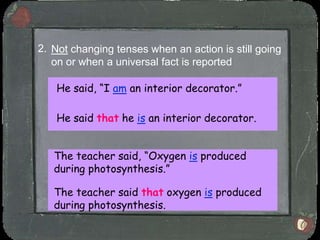
2. Not changing tenses when an action is still going
   on or when a universal fact is reported

   He said, “I am an interior decorator.”

   He said that he is an interior decorator.


   The teacher said, “Oxygen is produced
   during photosynthesis.”

   The teacher said that oxygen is produced
   during photosynthesis.
Transforming
spoken sentences
 with time frame
     Topic 35
     Pg 93 – 94
3. Changing adverbs (when the main verb is in the
   past tense)

  Mrs Goh added, ”I will be leaving next week.”

  Mrs Goh added that she would be leaving
  the following week / the week after.


  Bobby said, “I shall be at the game tonight.”

  Bobby said that he would be at the game
  that night.
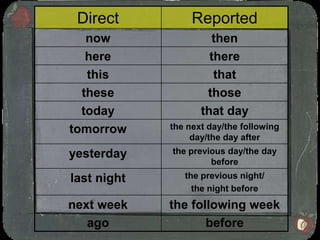
Direct           Reported
   now                 then
   here               there
   this                that
  these              those
  today             that day
tomorrow     the next day/the following
                  day/the day after
yesterday    the previous day/the day
                      before
last night      the previous night/
                  the night before
next week    the following week
   ago              before
4. Changing pronouns (when the main verb is in the
   past tense)

  Joshua said, ”I will return the book myself.”

  Joshua said that he would return the book
  himself.


  She said, ”We can complete it on our own.”

  She said that they could complete it on
  their own.
Direct       Reported
  I             he/she
 me            him/her
 my             his/her
mine           his/hers
 we              they
our              their
ours            theirs
you      I/me/him/her/he/she/
              they/them
 your       my/his/her/their
yours    mine/his/hers/theirs
Jim said, “I shall have plenty of work to do
tomorrow.”

Jim said that he would have plenty of work
to do the following day / the next day.


Mr Sim told the class, “The capital of
Sweden is Stockholm.”

Mr Sim told the class that the capital of
Sweden is Stockholm.
“Could you take a photo of us with my
camera?” the Japanese man asked me.

The Japanese man asked me if / whether I
could take a photo of them with his camera.


The news report said, “Many places were
flooded yesterday.”

The news report said that many places
were flooded the previous day / the day
before.
Topic 34&35 Direct & Indirect Speech

Topic 34&35 Direct & Indirect Speech

  • 1.
    Transforming simple spoken sentences Topic 34 Pg 91 - 92
  • 2.
    Converting Direct Speech toReported Speech Some changes are necessary: 1) Changes in tenses 2) Changes in time/place 3) Changes in pronouns 4) Changes in word order
  • 3.
    • Reporting directspeeches Changing tenses according to tenses of reporting verbs John says, “I am eight years old.” John says that he is eight years old.
  • 4.
    My father said,”I have finished my work.” My father said that he had finished his work. Kandi told me,” I noticed you in the park.” Kandi told me that she had noticed me in the park.
  • 5.
    Direct Reported am/is was are were has/have had do/does did went had gone was/were had been can could will would had had had must had to
  • 6.
    2. Not changingtenses when an action is still going on or when a universal fact is reported He said, “I am an interior decorator.” He said that he is an interior decorator. The teacher said, “Oxygen is produced during photosynthesis.” The teacher said that oxygen is produced during photosynthesis.
  • 7.
    Transforming spoken sentences withtime frame Topic 35 Pg 93 – 94
  • 8.
    3. Changing adverbs(when the main verb is in the past tense) Mrs Goh added, ”I will be leaving next week.” Mrs Goh added that she would be leaving the following week / the week after. Bobby said, “I shall be at the game tonight.” Bobby said that he would be at the game that night.
  • 9.
    Direct Reported now then here there this that these those today that day tomorrow the next day/the following day/the day after yesterday the previous day/the day before last night the previous night/ the night before next week the following week ago before
  • 10.
    4. Changing pronouns(when the main verb is in the past tense) Joshua said, ”I will return the book myself.” Joshua said that he would return the book himself. She said, ”We can complete it on our own.” She said that they could complete it on their own.
  • 11.
    Direct Reported I he/she me him/her my his/her mine his/hers we they our their ours theirs you I/me/him/her/he/she/ they/them your my/his/her/their yours mine/his/hers/theirs
  • 13.
    Jim said, “Ishall have plenty of work to do tomorrow.” Jim said that he would have plenty of work to do the following day / the next day. Mr Sim told the class, “The capital of Sweden is Stockholm.” Mr Sim told the class that the capital of Sweden is Stockholm.
  • 14.
    “Could you takea photo of us with my camera?” the Japanese man asked me. The Japanese man asked me if / whether I could take a photo of them with his camera. The news report said, “Many places were flooded yesterday.” The news report said that many places were flooded the previous day / the day before.