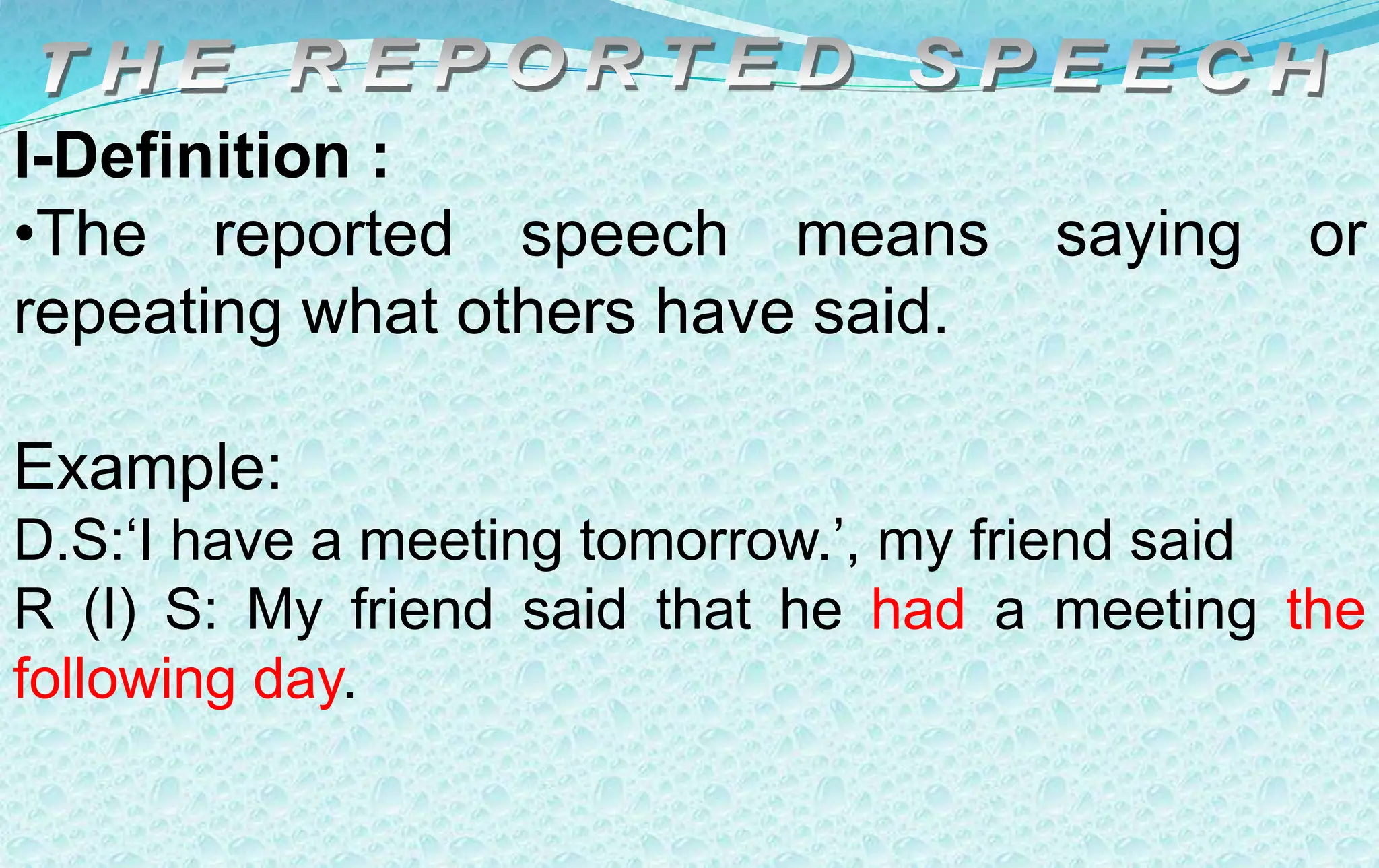
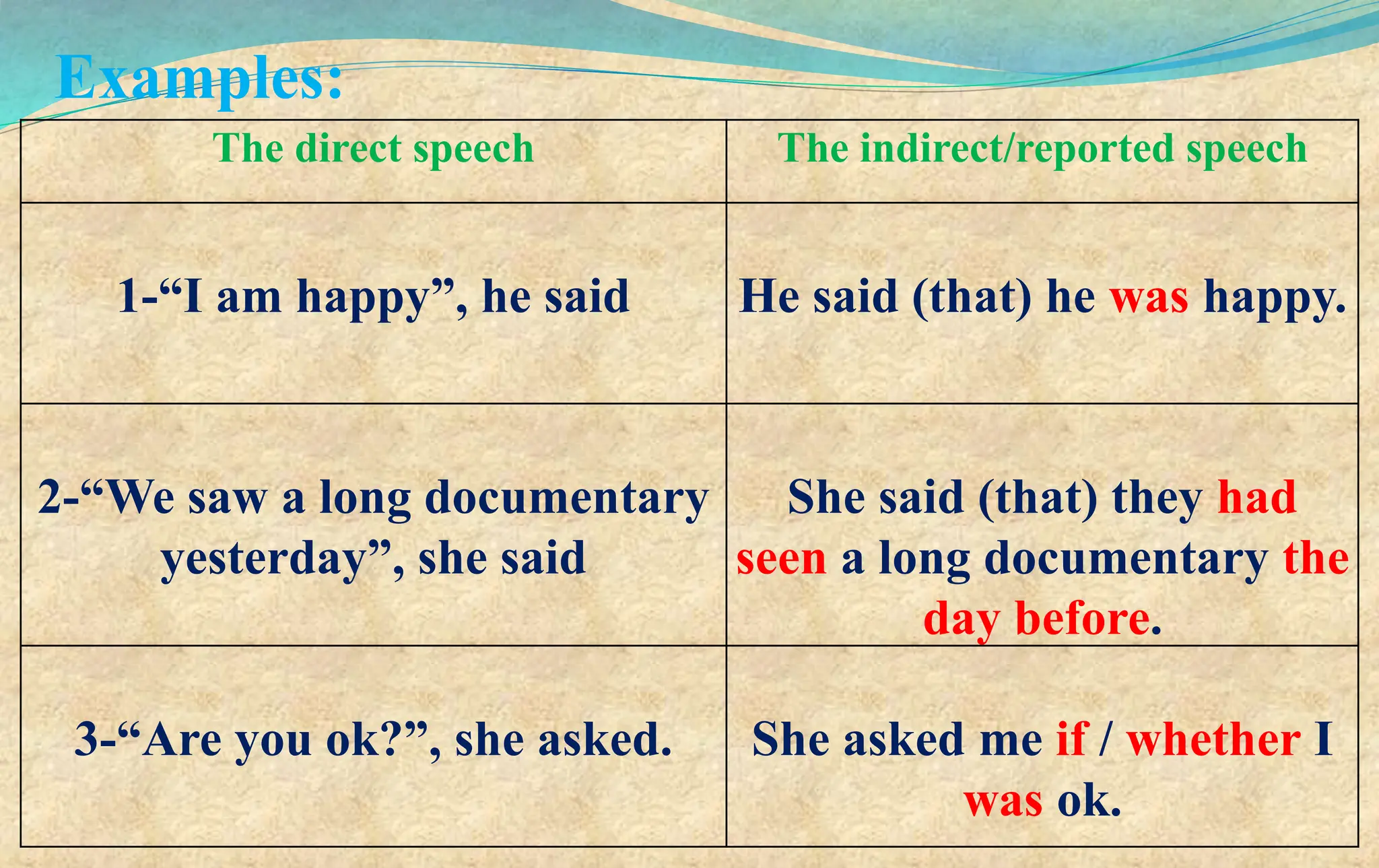
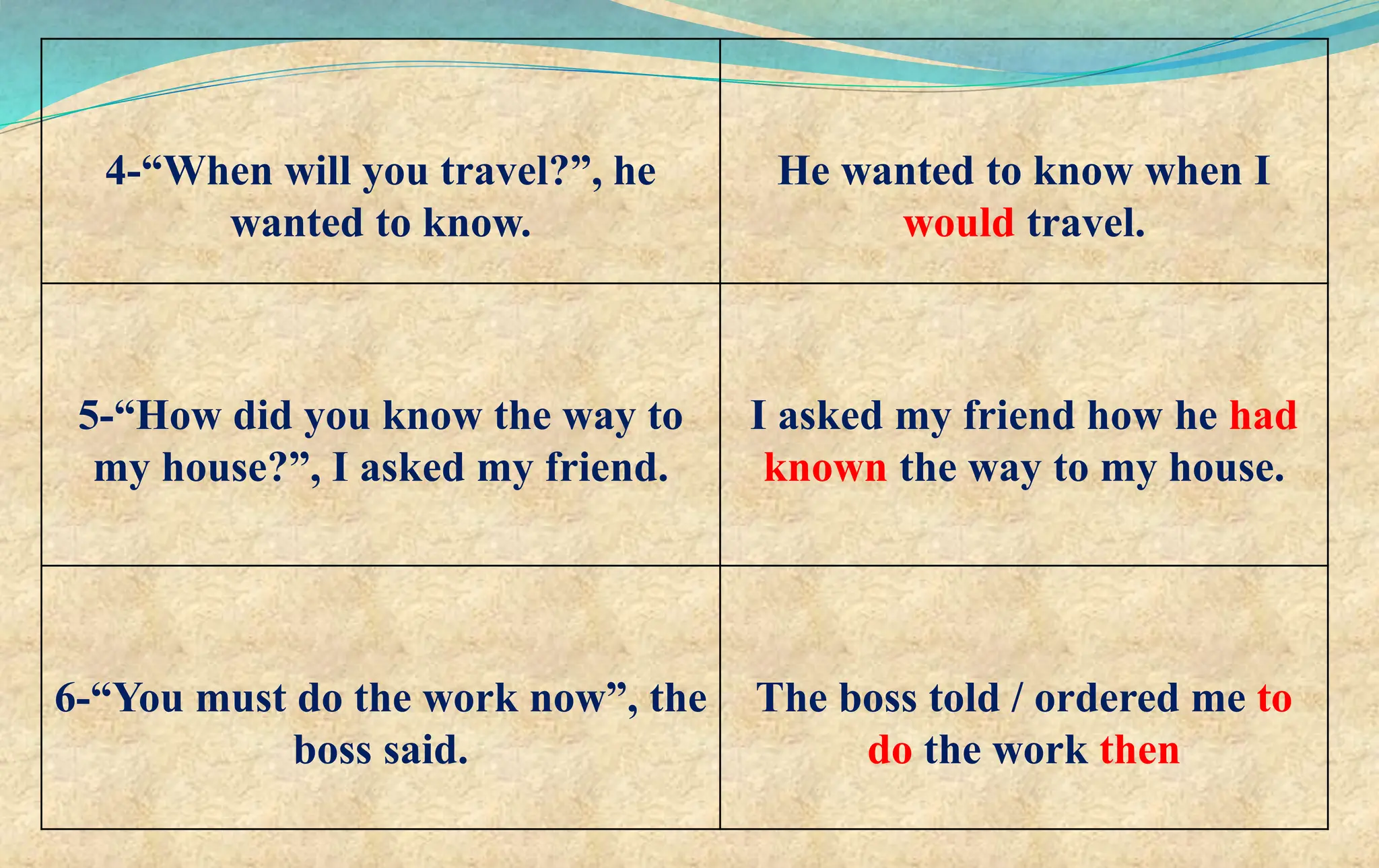
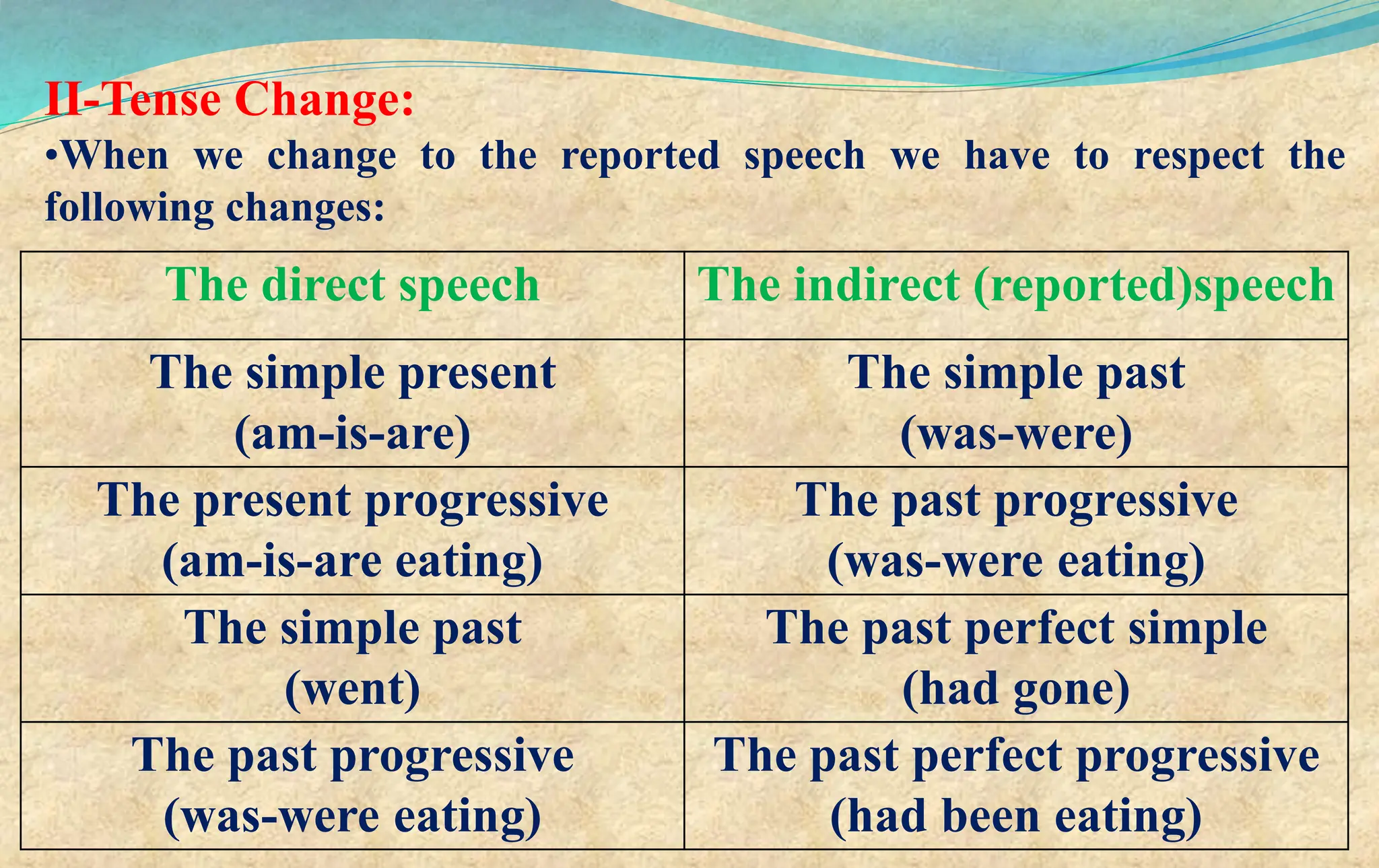
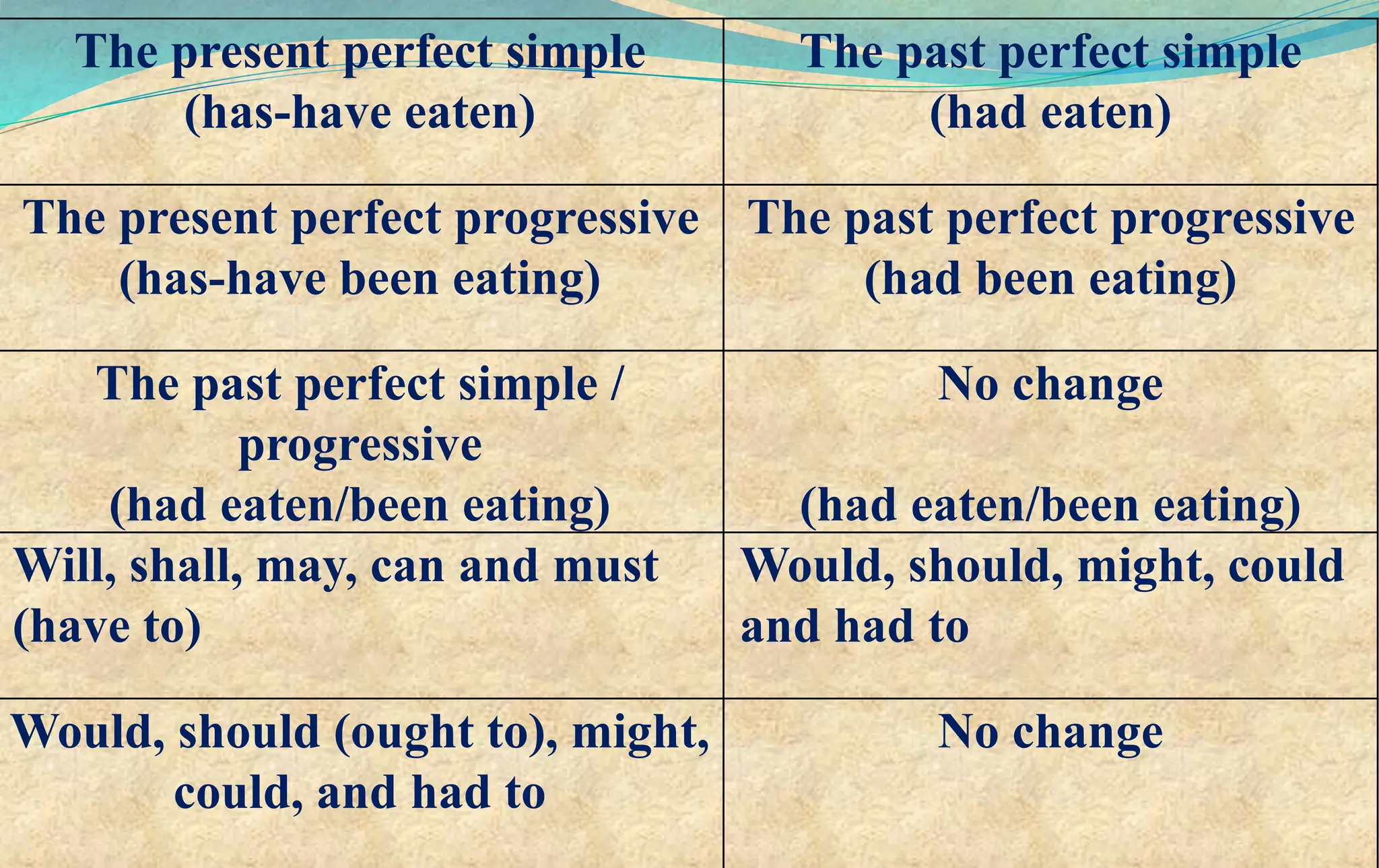
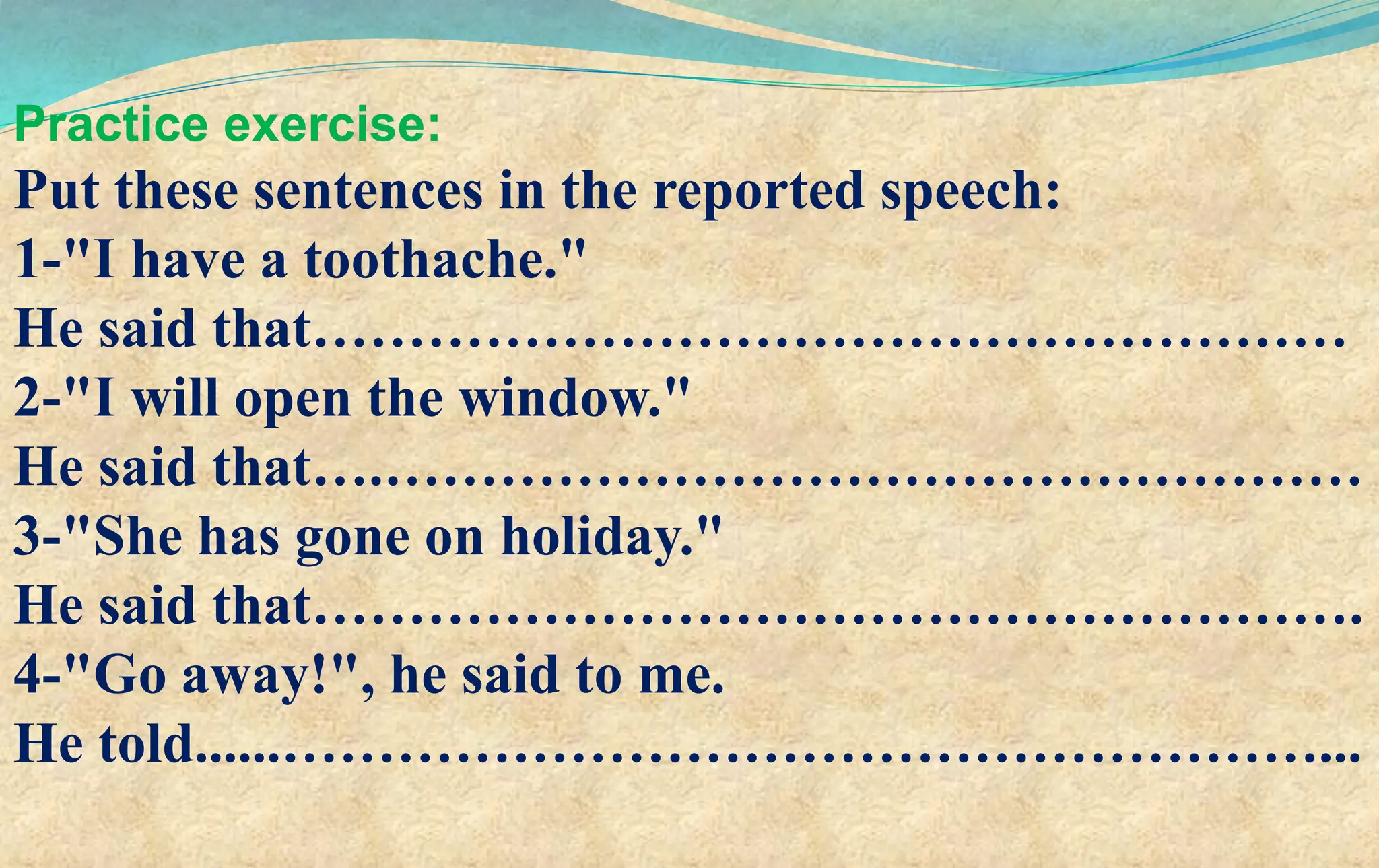
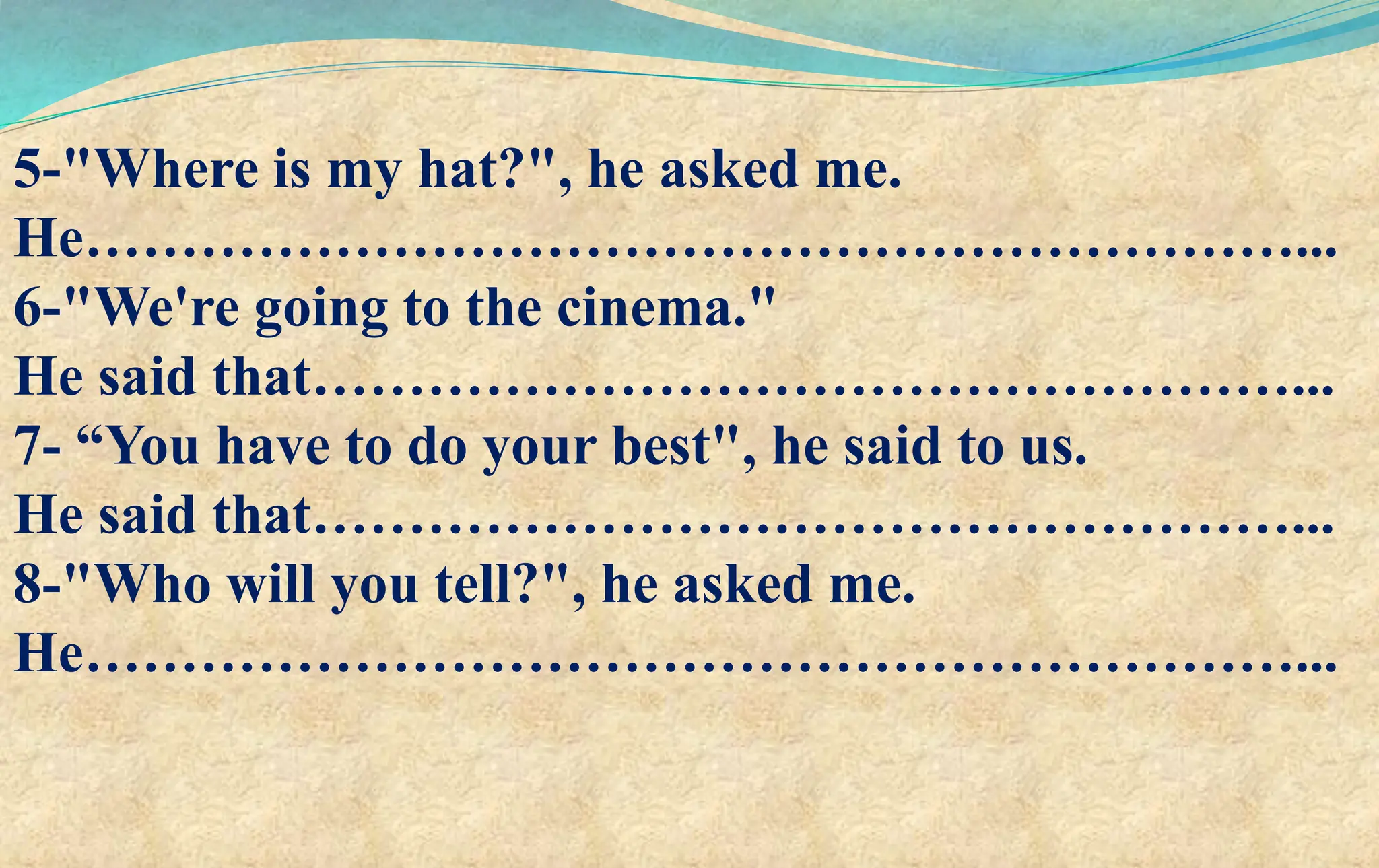
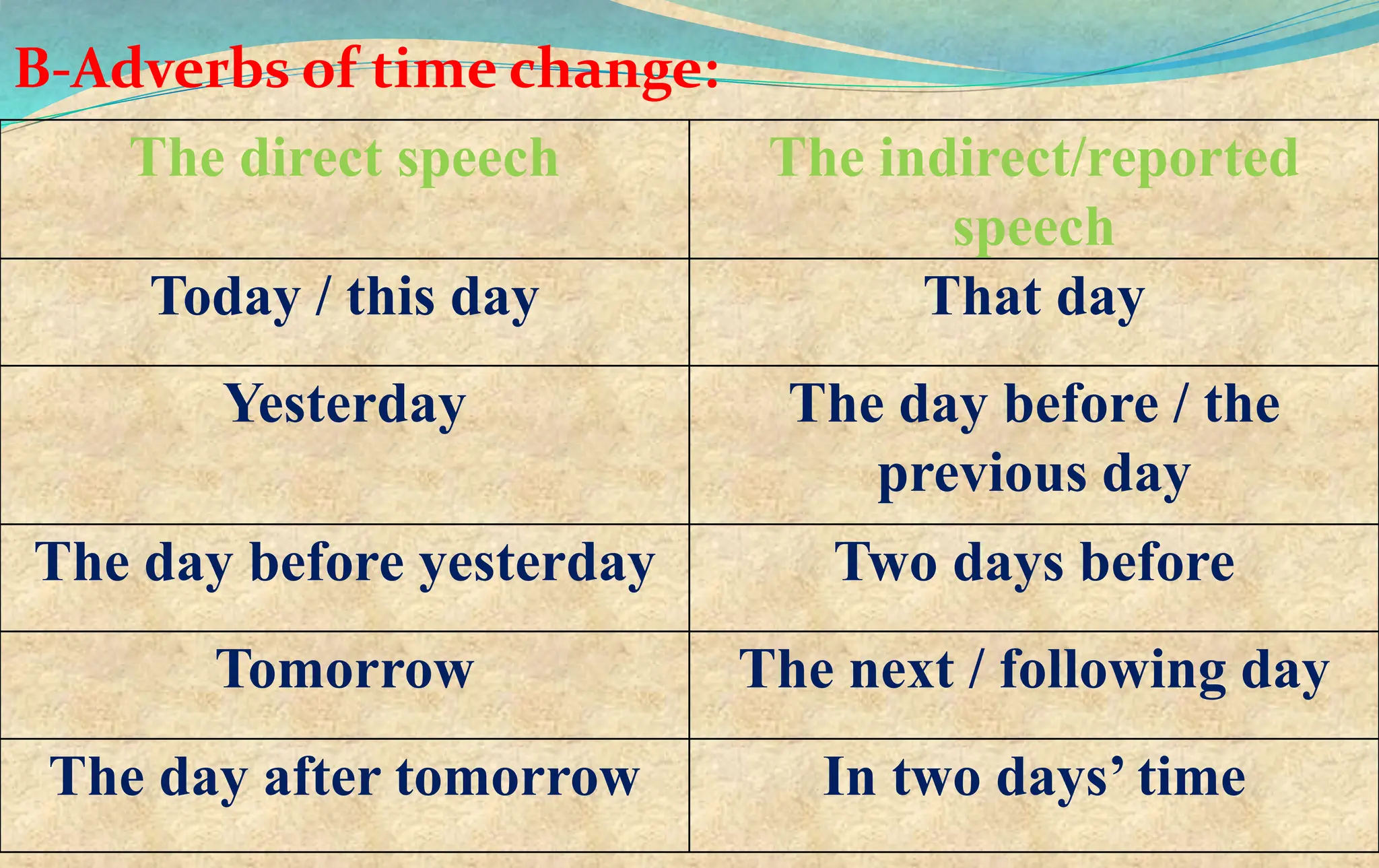
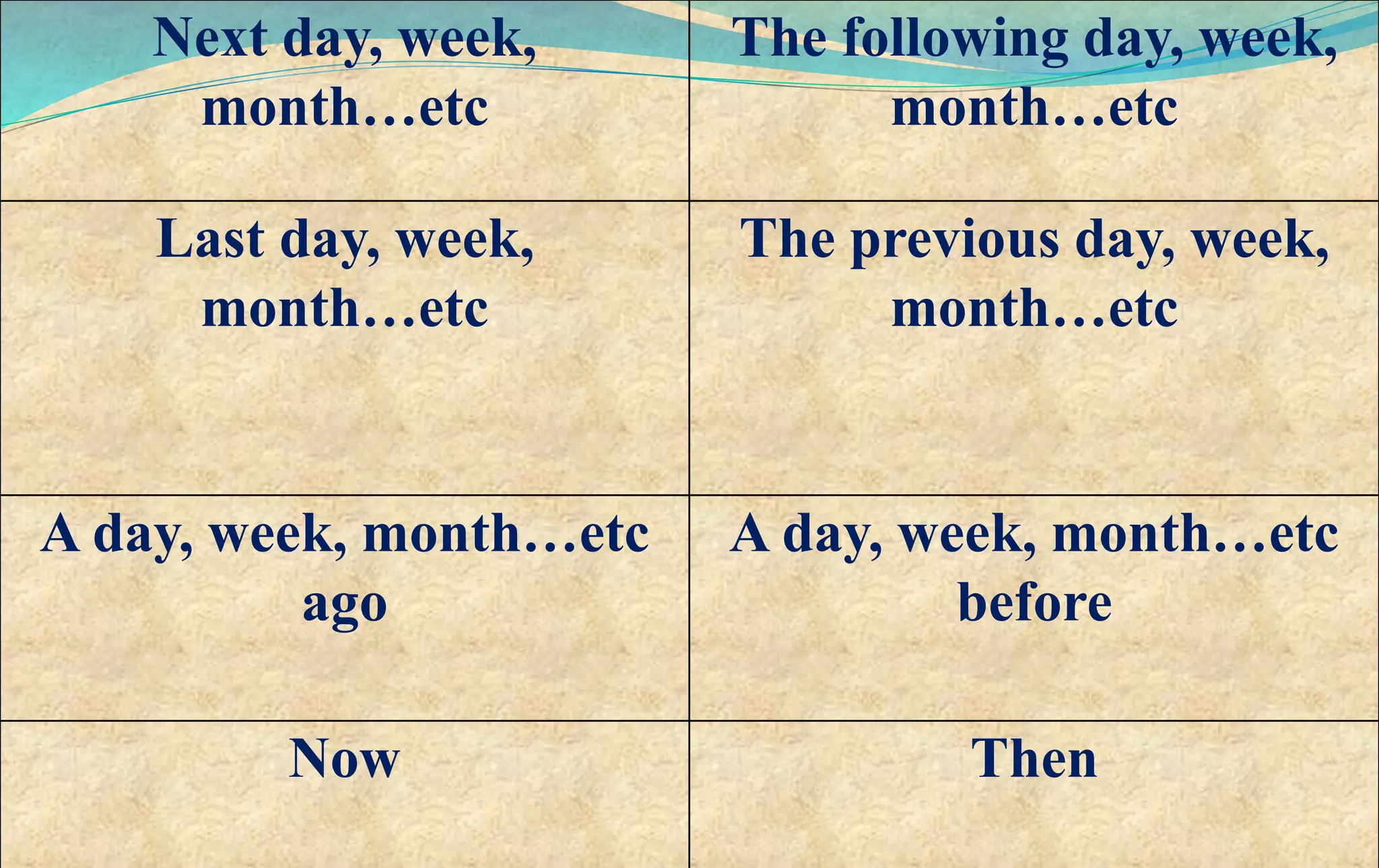
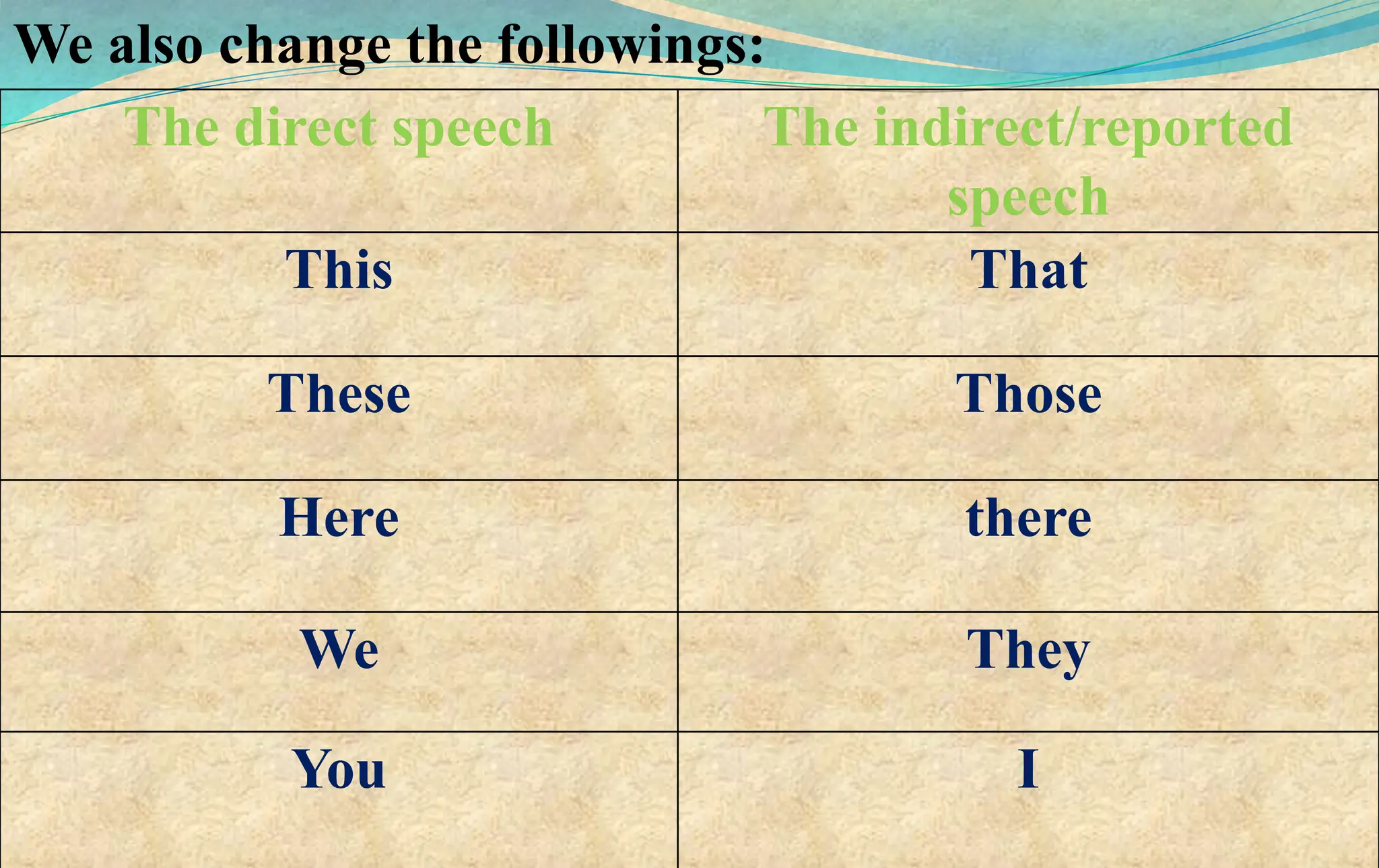
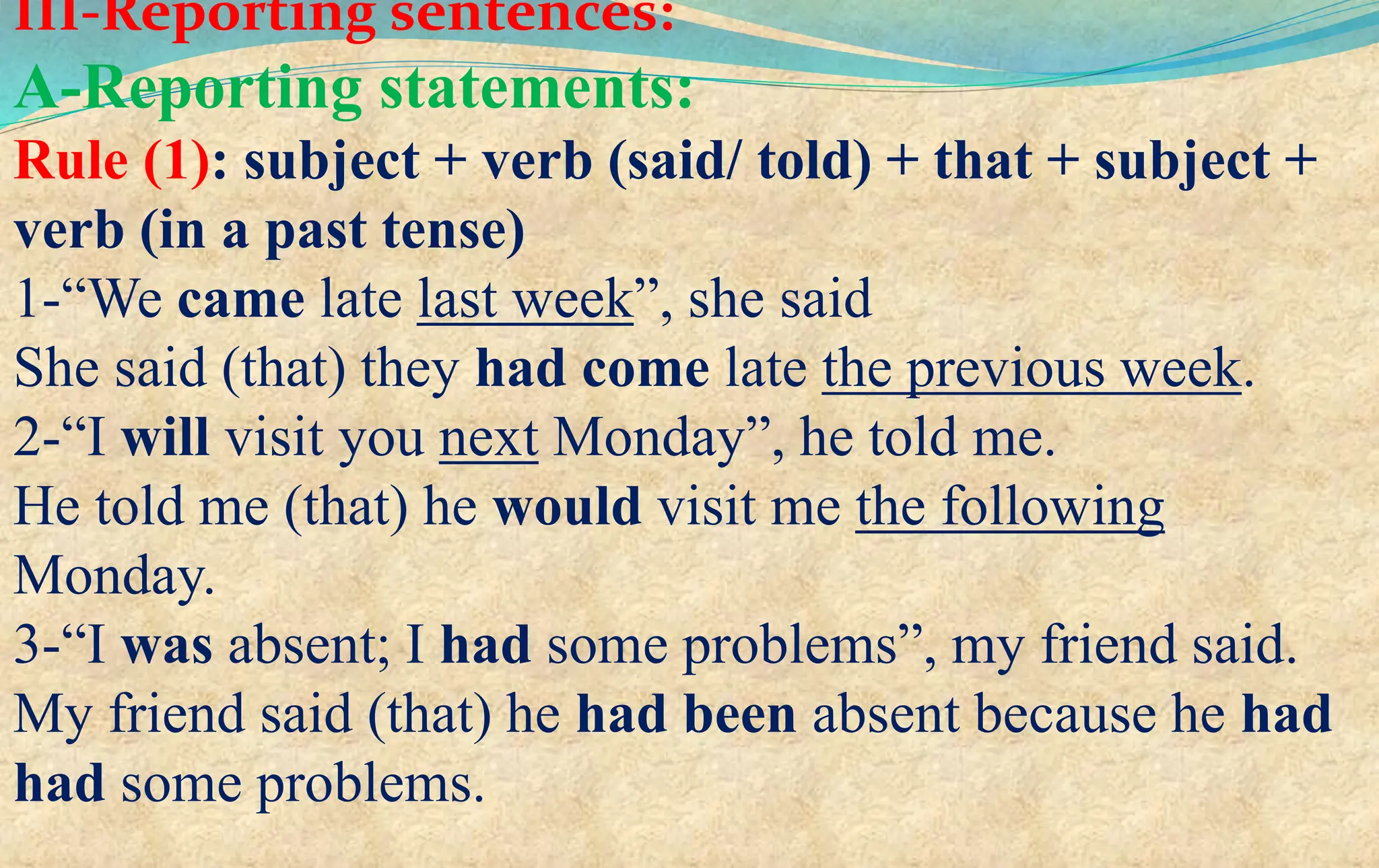
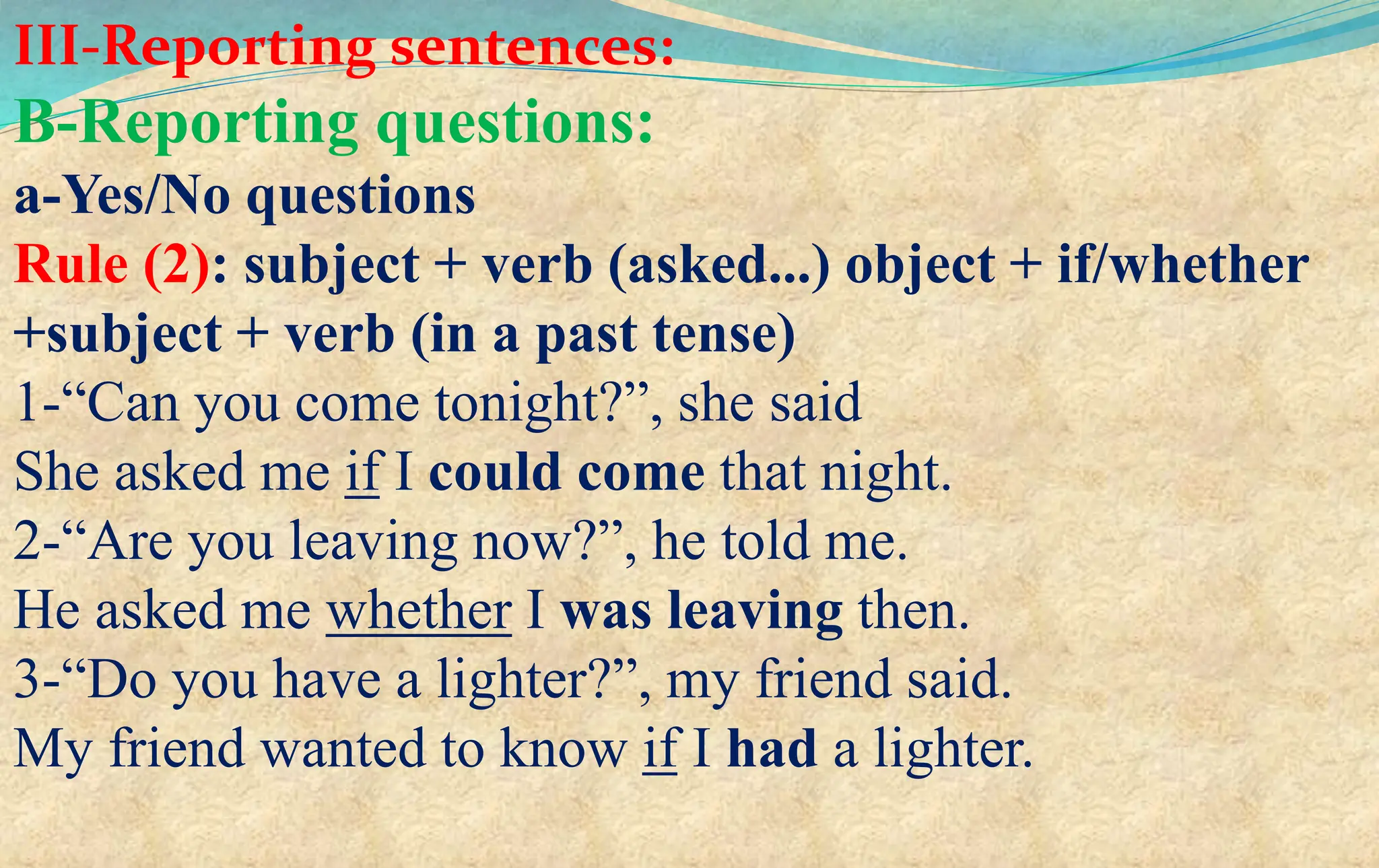
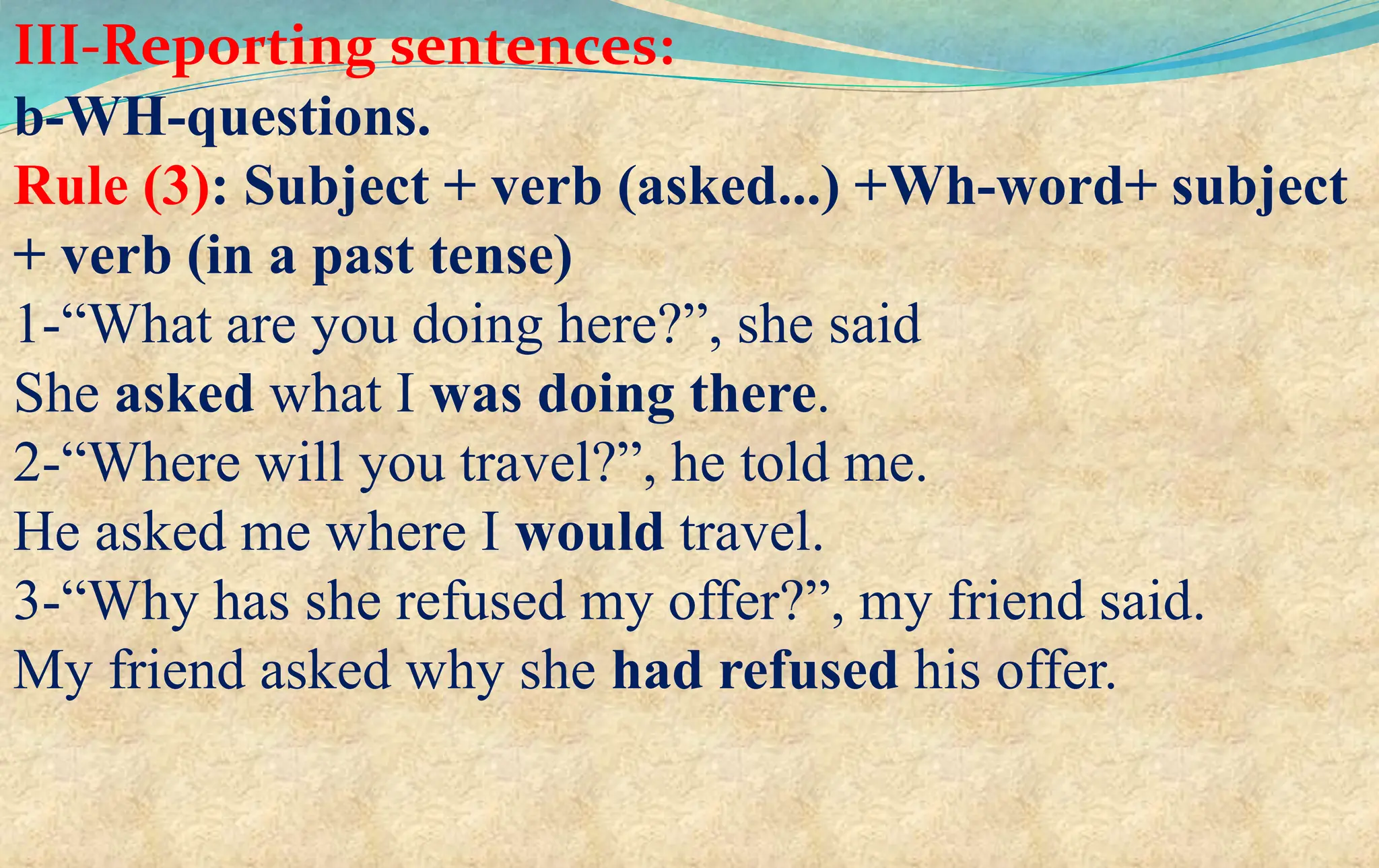
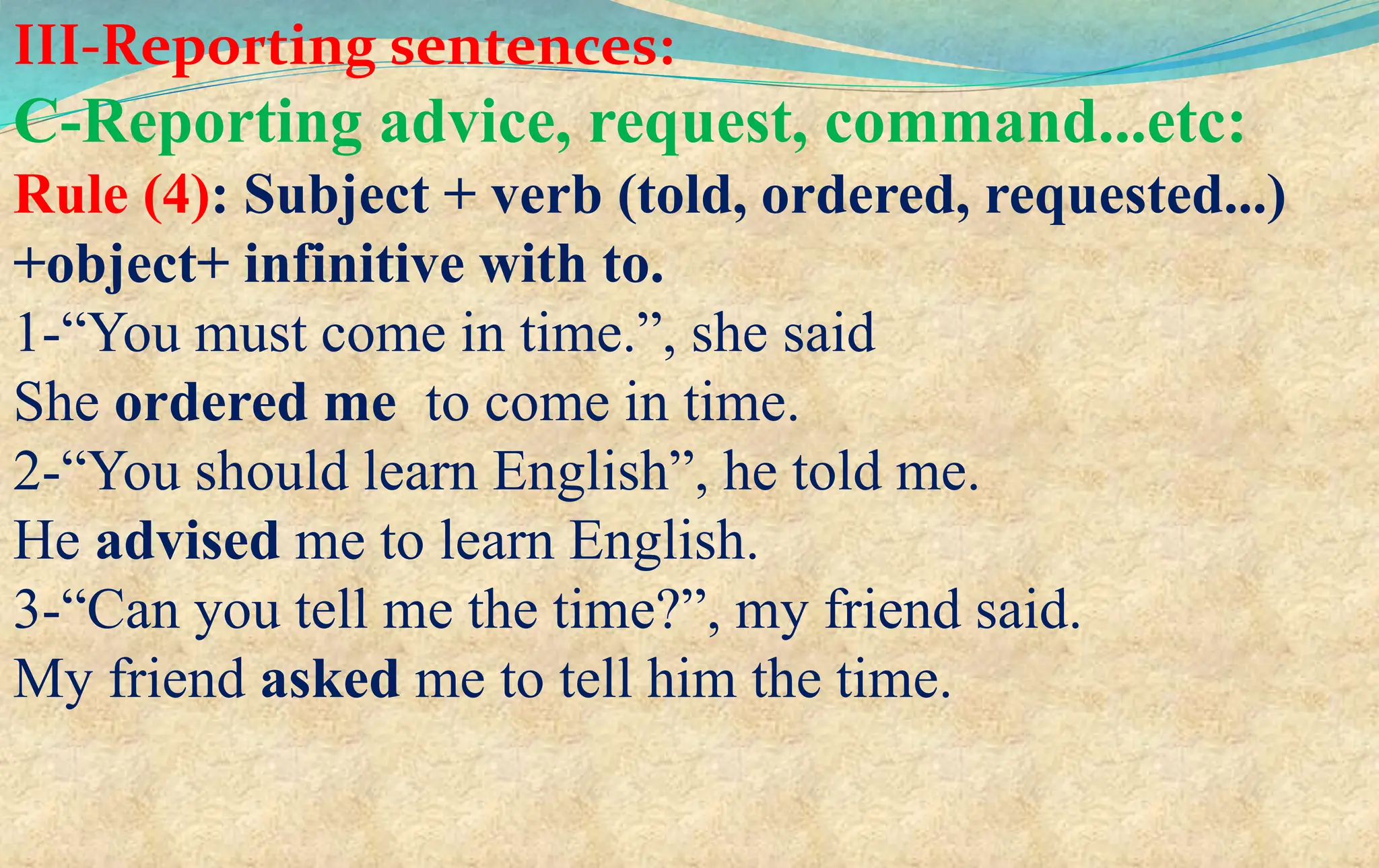
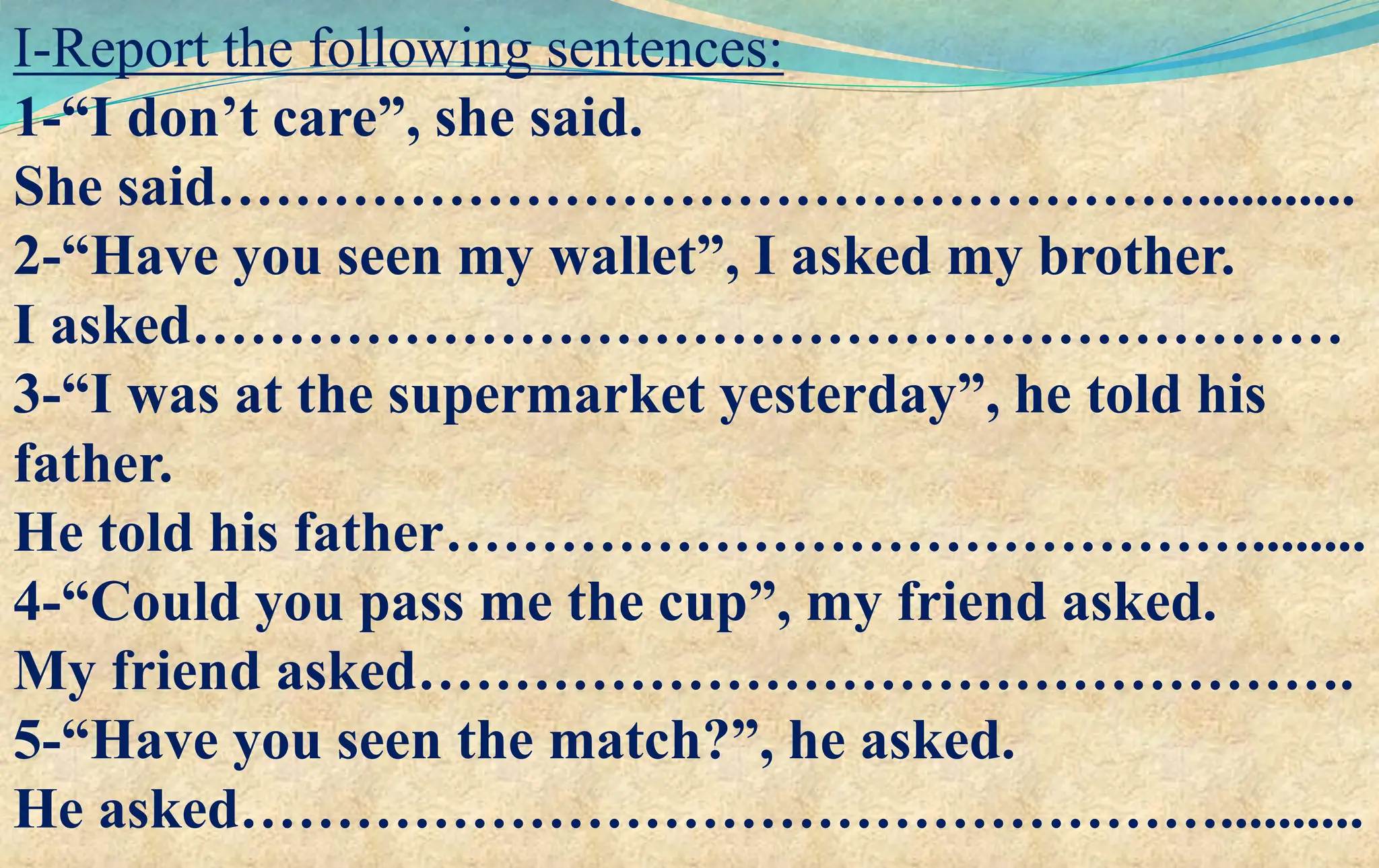
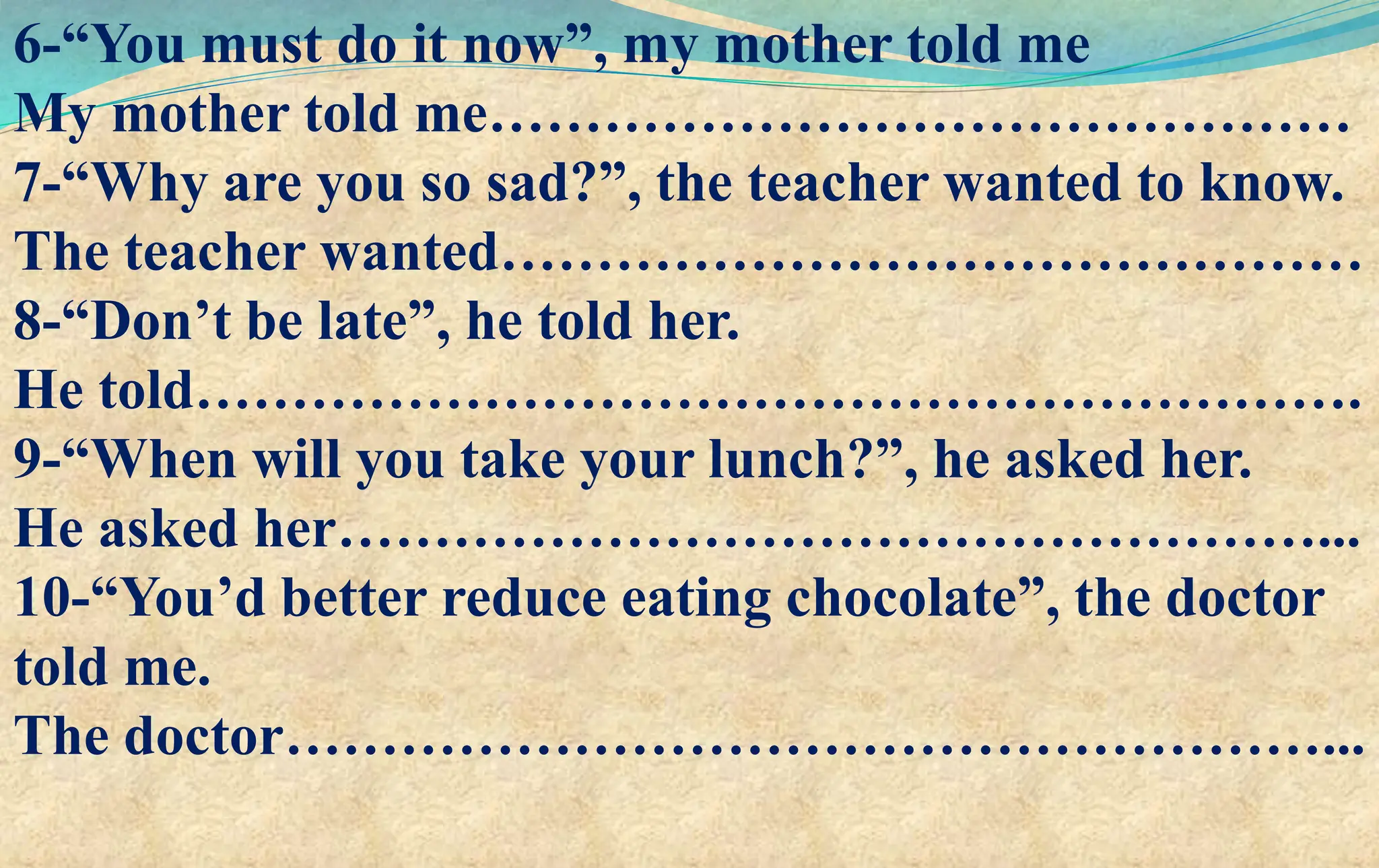
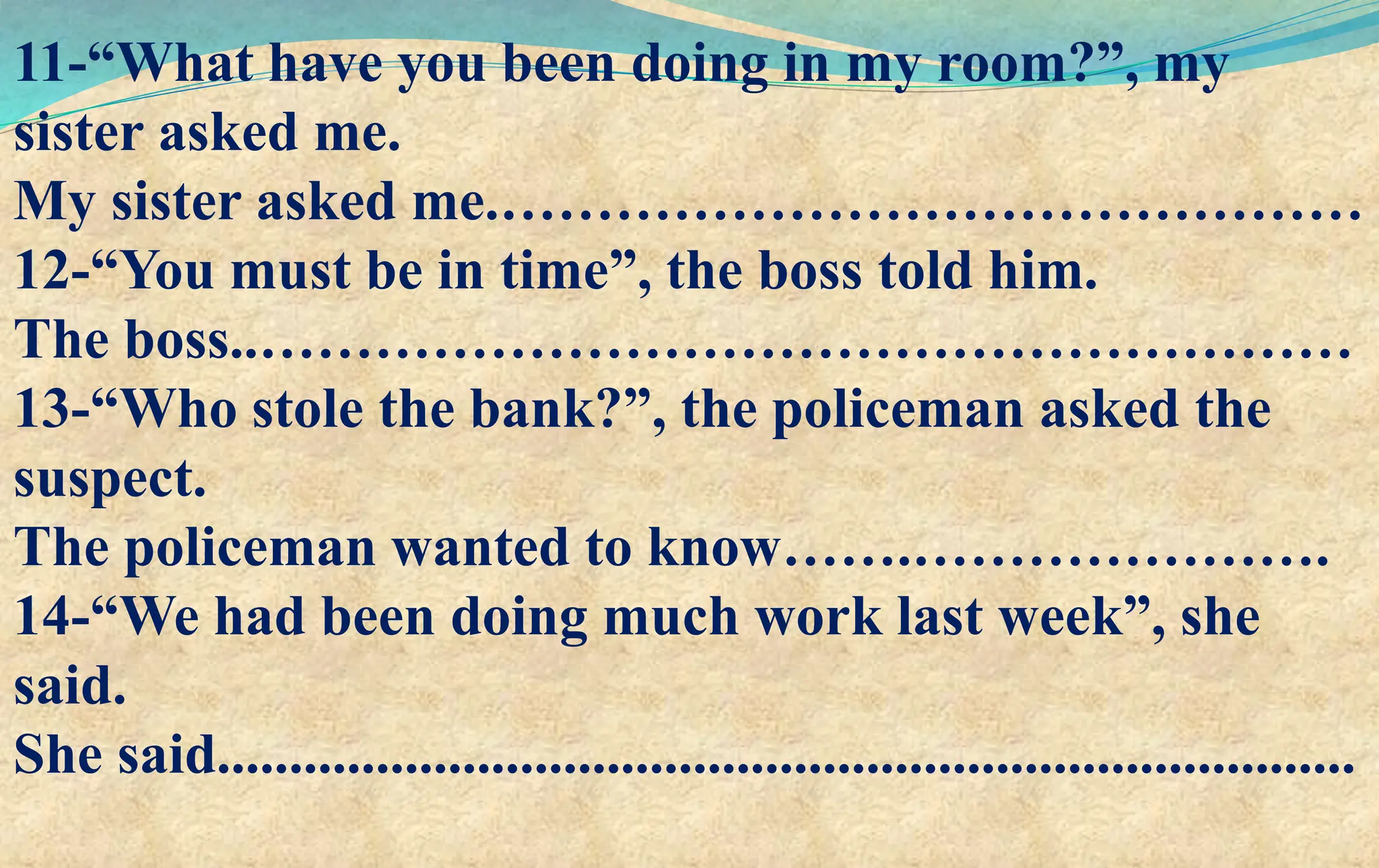
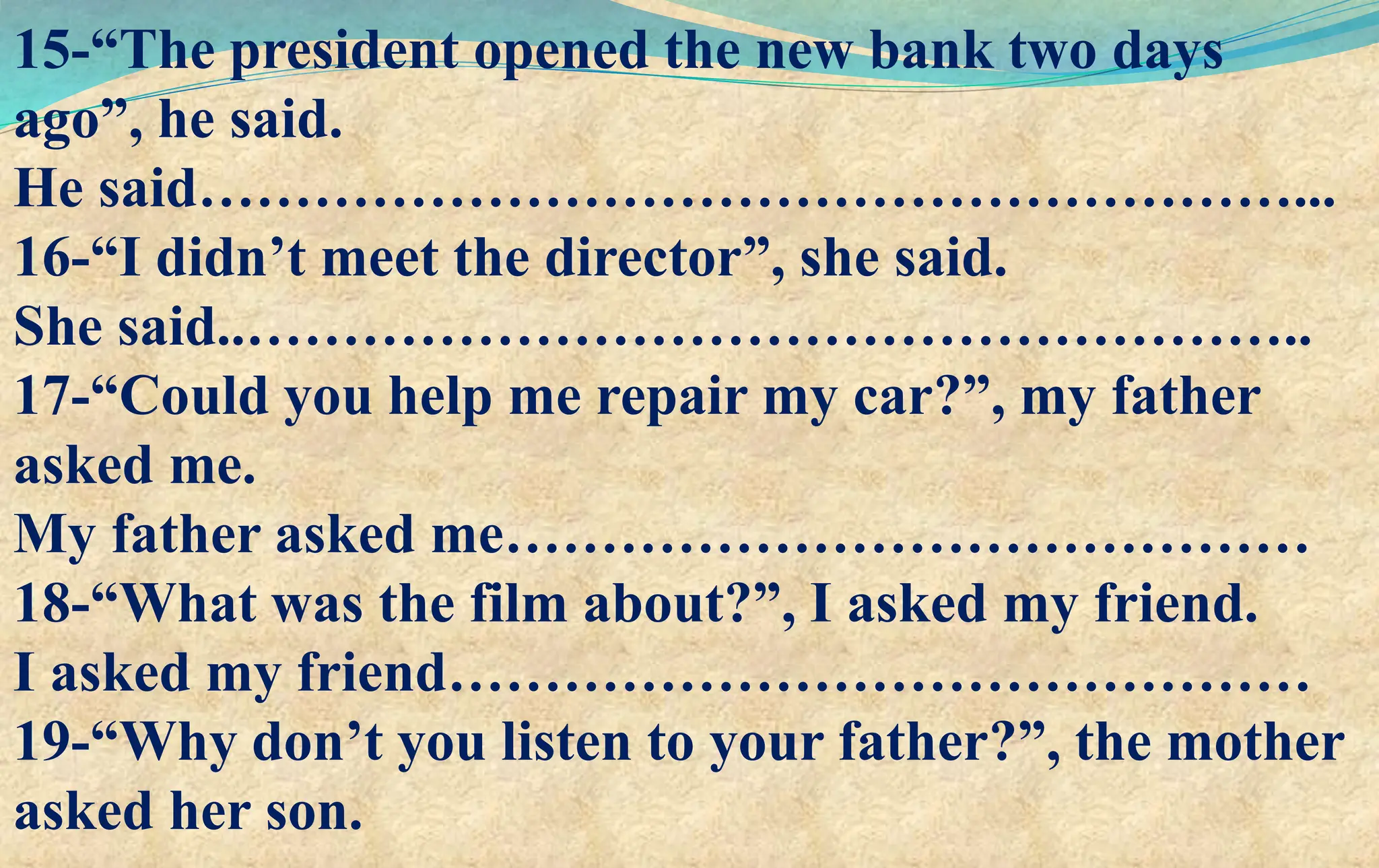
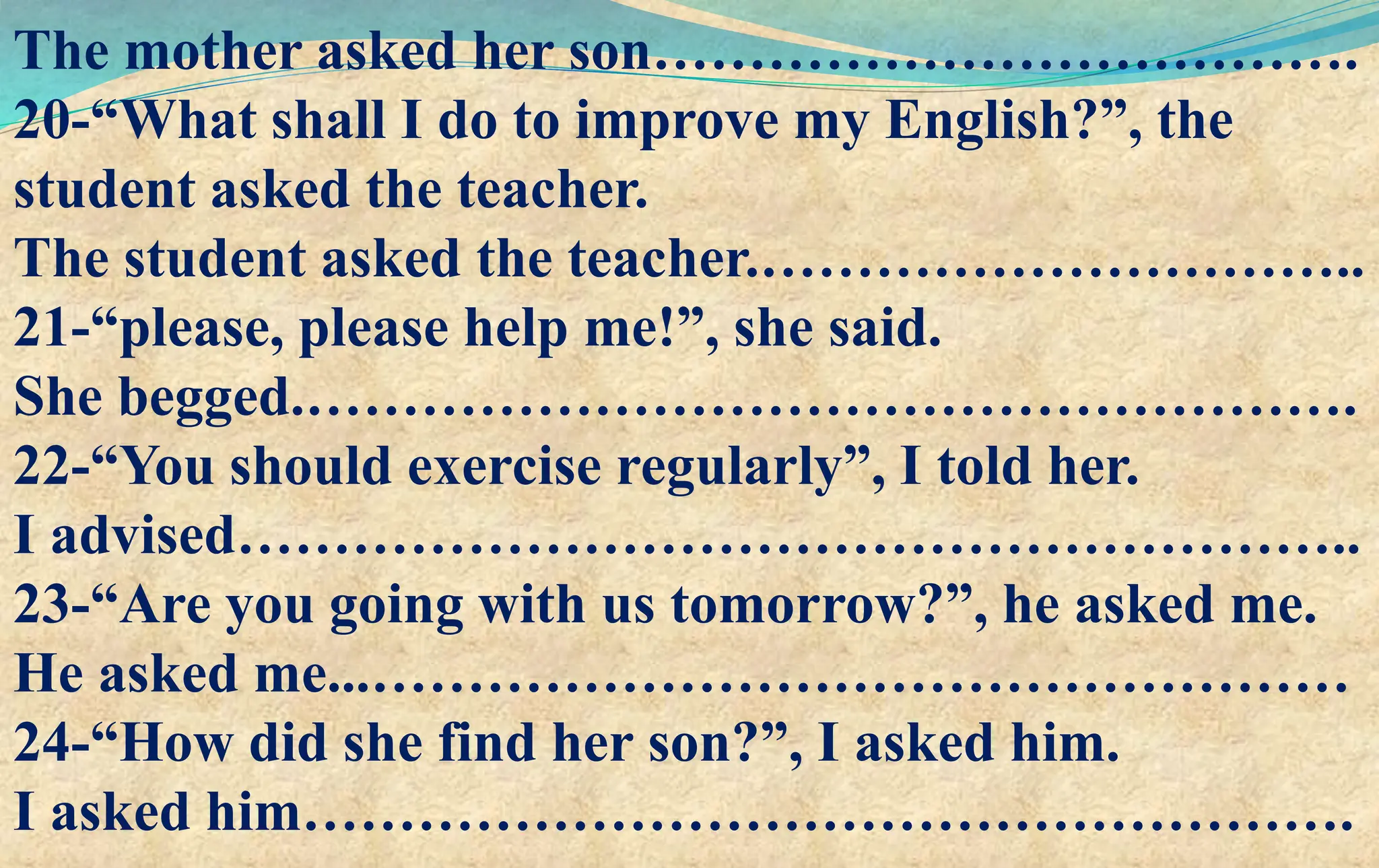
This document provides examples of direct and indirect speech. It defines direct and indirect speech, also known as reported speech. The key differences are that indirect speech changes the tense and pronouns when reporting what someone else has said. For example, changing "I am happy" to "He said he was happy." The document also provides rules for changing direct to indirect speech based on tense, time and place adverbs, and question and statement structures. It includes practice exercises for reporting sample sentences in indirect speech.