08/04/2016
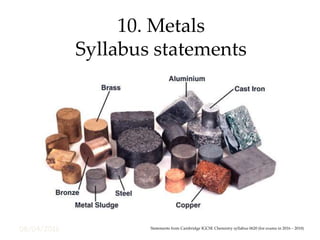
10. Metals
Syllabus statements
Statements from Cambridge IGCSE Chemistry syllabus 0620 (for exams in 2016 – 2018)
10.1 Properties of Metals
• List the general physical properties of metals
• Describe the general chemical properties of metals
e.g. reaction with dilute acids and reaction with
oxygen
• Explain in terms of their properties why alloys are
used instead of pure metals
• Identify representations of alloys from diagrams
of structure
10.2 Reactivity Series
• Place in order of reactivity: potassium, sodium,
calcium, magnesium, zinc, iron, (hydrogen) and
copper, by reference to the reactions, if any, of the
metals with:
– water or steam
– dilute hydrochloric acid
and the reduction of their oxides with carbon
• Deduce an order of reactivity from a given set of
experimental results
10.2 Reactivity Series
• Describe the reactivity series as related to the
tendency of a metal to form its positive ion,
illustrated by its reaction, if any, with:
– the aqueous ions
– the oxides
of the other listed metals
• Describe and explain the action of heat on the
hydroxides, carbonates and nitrates of the listed
metals
10.2 Reactivity Series
• Account for the apparent un-reactivity of
aluminium in terms of the oxide layer which
adheres to the metal
10.3 Extraction of Metals
• Describe the ease in obtaining metals from their
ores by relating the elements to the reactivity
series
• Describe and state the essential reactions in the
extraction of iron from hematite
• Describe the conversion of iron into steel using
basic oxides and oxygen
• Describe in outline, the extraction of zinc from
zinc blende
10.3 Extraction of Metals
• Know that aluminium is extracted from the ore
bauxite by electrolysis
• Describe in outline, the extraction of aluminium
from bauxite including the role of cryolite and the
reactions at the electrodes
• Discuss the advantages and disadvantages of
recycling metals, limited to iron/steel and
aluminium
10.4 Uses of Metals
• Name the uses of aluminium:
– in the manufacture of aircraft because of its
strength and low density
– in food containers because of its resistance to
corrosion
• Name the uses of copper related to its properties
(electrical wiring and in cooking utensils)
10.4 Uses of Metals
• Explain the uses of zinc for galvanising and for
making brass
• Name the uses of mild steel (car bodies and
machinery) and stainless steel (chemical plant and
cutlery)
• Describe the idea of changing the properties of
iron by the controlled use of additives to form
steel alloys

Topic 10 syllabus statements

  • 1.
    08/04/2016 10. Metals Syllabus statements Statementsfrom Cambridge IGCSE Chemistry syllabus 0620 (for exams in 2016 – 2018)
  • 2.
    10.1 Properties ofMetals • List the general physical properties of metals • Describe the general chemical properties of metals e.g. reaction with dilute acids and reaction with oxygen • Explain in terms of their properties why alloys are used instead of pure metals • Identify representations of alloys from diagrams of structure
  • 3.
    10.2 Reactivity Series •Place in order of reactivity: potassium, sodium, calcium, magnesium, zinc, iron, (hydrogen) and copper, by reference to the reactions, if any, of the metals with: – water or steam – dilute hydrochloric acid and the reduction of their oxides with carbon • Deduce an order of reactivity from a given set of experimental results
  • 4.
    10.2 Reactivity Series •Describe the reactivity series as related to the tendency of a metal to form its positive ion, illustrated by its reaction, if any, with: – the aqueous ions – the oxides of the other listed metals • Describe and explain the action of heat on the hydroxides, carbonates and nitrates of the listed metals
  • 5.
    10.2 Reactivity Series •Account for the apparent un-reactivity of aluminium in terms of the oxide layer which adheres to the metal
  • 6.
    10.3 Extraction ofMetals • Describe the ease in obtaining metals from their ores by relating the elements to the reactivity series • Describe and state the essential reactions in the extraction of iron from hematite • Describe the conversion of iron into steel using basic oxides and oxygen • Describe in outline, the extraction of zinc from zinc blende
  • 7.
    10.3 Extraction ofMetals • Know that aluminium is extracted from the ore bauxite by electrolysis • Describe in outline, the extraction of aluminium from bauxite including the role of cryolite and the reactions at the electrodes • Discuss the advantages and disadvantages of recycling metals, limited to iron/steel and aluminium
  • 8.
    10.4 Uses ofMetals • Name the uses of aluminium: – in the manufacture of aircraft because of its strength and low density – in food containers because of its resistance to corrosion • Name the uses of copper related to its properties (electrical wiring and in cooking utensils)
  • 9.
    10.4 Uses ofMetals • Explain the uses of zinc for galvanising and for making brass • Name the uses of mild steel (car bodies and machinery) and stainless steel (chemical plant and cutlery) • Describe the idea of changing the properties of iron by the controlled use of additives to form steel alloys