9/19/2013 1
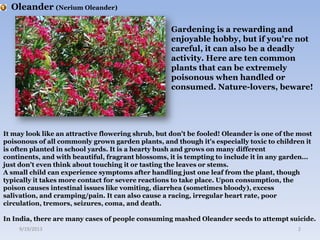
Oleander (Nerium Oleander)
Gardening is a rewarding and
enjoyable hobby, but if you're not
careful, it can also be a deadly
activity. Here are ten common
plants that can be extremely
poisonous when handled or
consumed. Nature-lovers, beware!
It may look like an attractive flowering shrub, but don't be fooled! Oleander is one of the most
poisonous of all commonly grown garden plants, and though it's especially toxic to children it
is often planted in school yards. It is a hearty bush and grows on many different
continents, and with beautiful, fragrant blossoms, it is tempting to include it in any garden...
just don't even think about touching it or tasting the leaves or stems.
A small child can experience symptoms after handling just one leaf from the plant, though
typically it takes more contact for severe reactions to take place. Upon consumption, the
poison causes intestinal issues like vomiting, diarrhea (sometimes bloody), excess
salivation, and cramping/pain. It can also cause a racing, irregular heart rate, poor
circulation, tremors, seizures, coma, and death.
In India, there are many cases of people consuming mashed Oleander seeds to attempt suicide.
9/19/2013 2
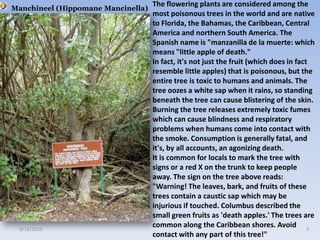
Manchineel (Hippomane Mancinella)
The flowering plants are considered among the
most poisonous trees in the world and are native
to Florida, the Bahamas, the Caribbean, Central
America and northern South America. The
Spanish name is "manzanilla de la muerte: which
means "little apple of death."
In fact, it's not just the fruit (which does in fact
resemble little apples) that is poisonous, but the
entire tree is toxic to humans and animals. The
tree oozes a white sap when it rains, so standing
beneath the tree can cause blistering of the skin.
Burning the tree releases extremely toxic fumes
which can cause blindness and respiratory
problems when humans come into contact with
the smoke. Consumption is generally fatal, and
it's, by all accounts, an agonizing death.
It is common for locals to mark the tree with
signs or a red X on the trunk to keep people
away. The sign on the tree above reads:
"Warning! The leaves, bark, and fruits of these
trees contain a caustic sap which may be
injurious if touched. Columbus described the
small green fruits as 'death apples.' The trees are
common along the Caribbean shores. Avoid
contact with any part of this tree!"
9/19/2013 3
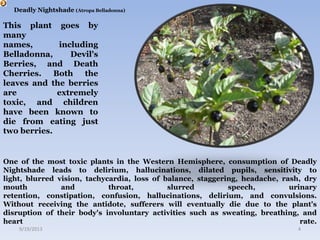
Deadly Nightshade (Atropa Belladonna)
One of the most toxic plants in the Western Hemisphere, consumption of Deadly
Nightshade leads to delirium, hallucinations, dilated pupils, sensitivity to
light, blurred vision, tachycardia, loss of balance, staggering, headache, rash, dry
mouth and throat, slurred speech, urinary
retention, constipation, confusion, hallucinations, delirium, and convulsions.
Without receiving the antidote, sufferers will eventually die due to the plant's
disruption of their body's involuntary activities such as sweating, breathing, and
heart rate.
9/19/2013 4
This plant goes by
many
names, including
Belladonna, Devil's
Berries, and Death
Cherries. Both the
leaves and the berries
are extremely
toxic, and children
have been known to
die from eating just
two berries.
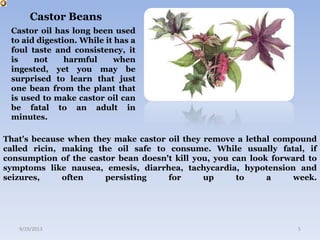
Castor Beans
That's because when they make castor oil they remove a lethal compound
called ricin, making the oil safe to consume. While usually fatal, if
consumption of the castor bean doesn't kill you, you can look forward to
symptoms like nausea, emesis, diarrhea, tachycardia, hypotension and
seizures, often persisting for up to a week.
9/19/2013 5
Castor oil has long been used
to aid digestion. While it has a
foul taste and consistency, it
is not harmful when
ingested, yet you may be
surprised to learn that just
one bean from the plant that
is used to make castor oil can
be fatal to an adult in
minutes.
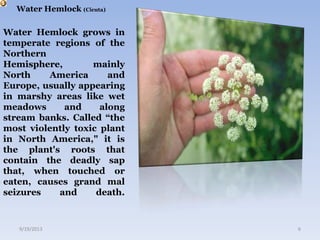
Water Hemlock (Cicuta)
Water Hemlock grows in
temperate regions of the
Northern
Hemisphere, mainly
North America and
Europe, usually appearing
in marshy areas like wet
meadows and along
stream banks. Called “the
most violently toxic plant
in North America," it is
the plant's roots that
contain the deadly sap
that, when touched or
eaten, causes grand mal
seizures and death.
9/19/2013 6
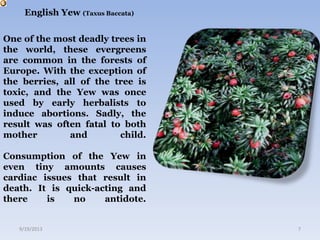
English Yew (Taxus Baccata)
One of the most deadly trees in
the world, these evergreens
are common in the forests of
Europe. With the exception of
the berries, all of the tree is
toxic, and the Yew was once
used by early herbalists to
induce abortions. Sadly, the
result was often fatal to both
mother and child.
Consumption of the Yew in
even tiny amounts causes
cardiac issues that result in
death. It is quick-acting and
there is no antidote.
9/19/2013 7
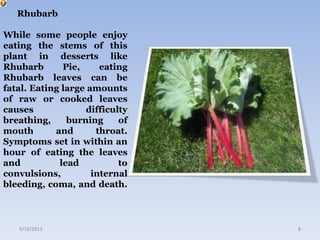
Rhubarb
While some people enjoy
eating the stems of this
plant in desserts like
Rhubarb Pie, eating
Rhubarb leaves can be
fatal. Eating large amounts
of raw or cooked leaves
causes difficulty
breathing, burning of
mouth and throat.
Symptoms set in within an
hour of eating the leaves
and lead to
convulsions, internal
bleeding, coma, and death.
9/19/2013 8
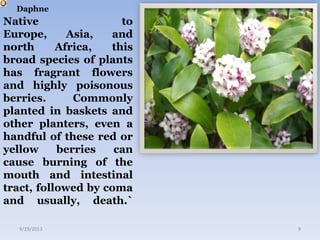
Daphne
Native to
Europe, Asia, and
north Africa, this
broad species of plants
has fragrant flowers
and highly poisonous
berries. Commonly
planted in baskets and
other planters, even a
handful of these red or
yellow berries can
cause burning of the
mouth and intestinal
tract, followed by coma
and usually, death.`
9/19/2013 9
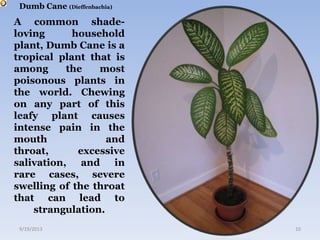
Dumb Cane (Dieffenbachia)
A common shade-
loving household
plant, Dumb Cane is a
tropical plant that is
among the most
poisonous plants in
the world. Chewing
on any part of this
leafy plant causes
intense pain in the
mouth and
throat, excessive
salivation, and in
rare cases, severe
swelling of the throat
that can lead to
strangulation.
9/19/2013 10
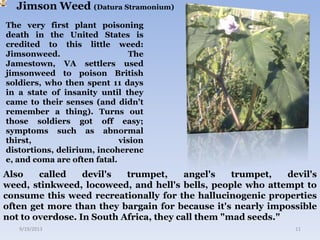
Jimson Weed (Datura Stramonium)
The very first plant poisoning
death in the United States is
credited to this little weed:
Jimsonweed. The
Jamestown, VA settlers used
jimsonweed to poison British
soldiers, who then spent 11 days
in a state of insanity until they
came to their senses (and didn't
remember a thing). Turns out
those soldiers got off easy;
symptoms such as abnormal
thirst, vision
distortions, delirium, incoherenc
e, and coma are often fatal.
9/19/2013 11
Also called devil's trumpet, angel's trumpet, devil's
weed, stinkweed, locoweed, and hell's bells, people who attempt to
consume this weed recreationally for the hallucinogenic properties
often get more than they bargain for because it's nearly impossible
not to overdose. In South Africa, they call them "mad seeds."
9/19/2013 12

Top 10 poisonous plant's & tree's

  • 1.
  • 2.
    Oleander (Nerium Oleander) Gardeningis a rewarding and enjoyable hobby, but if you're not careful, it can also be a deadly activity. Here are ten common plants that can be extremely poisonous when handled or consumed. Nature-lovers, beware! It may look like an attractive flowering shrub, but don't be fooled! Oleander is one of the most poisonous of all commonly grown garden plants, and though it's especially toxic to children it is often planted in school yards. It is a hearty bush and grows on many different continents, and with beautiful, fragrant blossoms, it is tempting to include it in any garden... just don't even think about touching it or tasting the leaves or stems. A small child can experience symptoms after handling just one leaf from the plant, though typically it takes more contact for severe reactions to take place. Upon consumption, the poison causes intestinal issues like vomiting, diarrhea (sometimes bloody), excess salivation, and cramping/pain. It can also cause a racing, irregular heart rate, poor circulation, tremors, seizures, coma, and death. In India, there are many cases of people consuming mashed Oleander seeds to attempt suicide. 9/19/2013 2
  • 3.
    Manchineel (Hippomane Mancinella) Theflowering plants are considered among the most poisonous trees in the world and are native to Florida, the Bahamas, the Caribbean, Central America and northern South America. The Spanish name is "manzanilla de la muerte: which means "little apple of death." In fact, it's not just the fruit (which does in fact resemble little apples) that is poisonous, but the entire tree is toxic to humans and animals. The tree oozes a white sap when it rains, so standing beneath the tree can cause blistering of the skin. Burning the tree releases extremely toxic fumes which can cause blindness and respiratory problems when humans come into contact with the smoke. Consumption is generally fatal, and it's, by all accounts, an agonizing death. It is common for locals to mark the tree with signs or a red X on the trunk to keep people away. The sign on the tree above reads: "Warning! The leaves, bark, and fruits of these trees contain a caustic sap which may be injurious if touched. Columbus described the small green fruits as 'death apples.' The trees are common along the Caribbean shores. Avoid contact with any part of this tree!" 9/19/2013 3
  • 4.
    Deadly Nightshade (AtropaBelladonna) One of the most toxic plants in the Western Hemisphere, consumption of Deadly Nightshade leads to delirium, hallucinations, dilated pupils, sensitivity to light, blurred vision, tachycardia, loss of balance, staggering, headache, rash, dry mouth and throat, slurred speech, urinary retention, constipation, confusion, hallucinations, delirium, and convulsions. Without receiving the antidote, sufferers will eventually die due to the plant's disruption of their body's involuntary activities such as sweating, breathing, and heart rate. 9/19/2013 4 This plant goes by many names, including Belladonna, Devil's Berries, and Death Cherries. Both the leaves and the berries are extremely toxic, and children have been known to die from eating just two berries.
  • 5.
    Castor Beans That's becausewhen they make castor oil they remove a lethal compound called ricin, making the oil safe to consume. While usually fatal, if consumption of the castor bean doesn't kill you, you can look forward to symptoms like nausea, emesis, diarrhea, tachycardia, hypotension and seizures, often persisting for up to a week. 9/19/2013 5 Castor oil has long been used to aid digestion. While it has a foul taste and consistency, it is not harmful when ingested, yet you may be surprised to learn that just one bean from the plant that is used to make castor oil can be fatal to an adult in minutes.
  • 6.
    Water Hemlock (Cicuta) WaterHemlock grows in temperate regions of the Northern Hemisphere, mainly North America and Europe, usually appearing in marshy areas like wet meadows and along stream banks. Called “the most violently toxic plant in North America," it is the plant's roots that contain the deadly sap that, when touched or eaten, causes grand mal seizures and death. 9/19/2013 6
  • 7.
    English Yew (TaxusBaccata) One of the most deadly trees in the world, these evergreens are common in the forests of Europe. With the exception of the berries, all of the tree is toxic, and the Yew was once used by early herbalists to induce abortions. Sadly, the result was often fatal to both mother and child. Consumption of the Yew in even tiny amounts causes cardiac issues that result in death. It is quick-acting and there is no antidote. 9/19/2013 7
  • 8.
    Rhubarb While some peopleenjoy eating the stems of this plant in desserts like Rhubarb Pie, eating Rhubarb leaves can be fatal. Eating large amounts of raw or cooked leaves causes difficulty breathing, burning of mouth and throat. Symptoms set in within an hour of eating the leaves and lead to convulsions, internal bleeding, coma, and death. 9/19/2013 8
  • 9.
    Daphne Native to Europe, Asia,and north Africa, this broad species of plants has fragrant flowers and highly poisonous berries. Commonly planted in baskets and other planters, even a handful of these red or yellow berries can cause burning of the mouth and intestinal tract, followed by coma and usually, death.` 9/19/2013 9
  • 10.
    Dumb Cane (Dieffenbachia) Acommon shade- loving household plant, Dumb Cane is a tropical plant that is among the most poisonous plants in the world. Chewing on any part of this leafy plant causes intense pain in the mouth and throat, excessive salivation, and in rare cases, severe swelling of the throat that can lead to strangulation. 9/19/2013 10
  • 11.
    Jimson Weed (DaturaStramonium) The very first plant poisoning death in the United States is credited to this little weed: Jimsonweed. The Jamestown, VA settlers used jimsonweed to poison British soldiers, who then spent 11 days in a state of insanity until they came to their senses (and didn't remember a thing). Turns out those soldiers got off easy; symptoms such as abnormal thirst, vision distortions, delirium, incoherenc e, and coma are often fatal. 9/19/2013 11 Also called devil's trumpet, angel's trumpet, devil's weed, stinkweed, locoweed, and hell's bells, people who attempt to consume this weed recreationally for the hallucinogenic properties often get more than they bargain for because it's nearly impossible not to overdose. In South Africa, they call them "mad seeds."
  • 12.