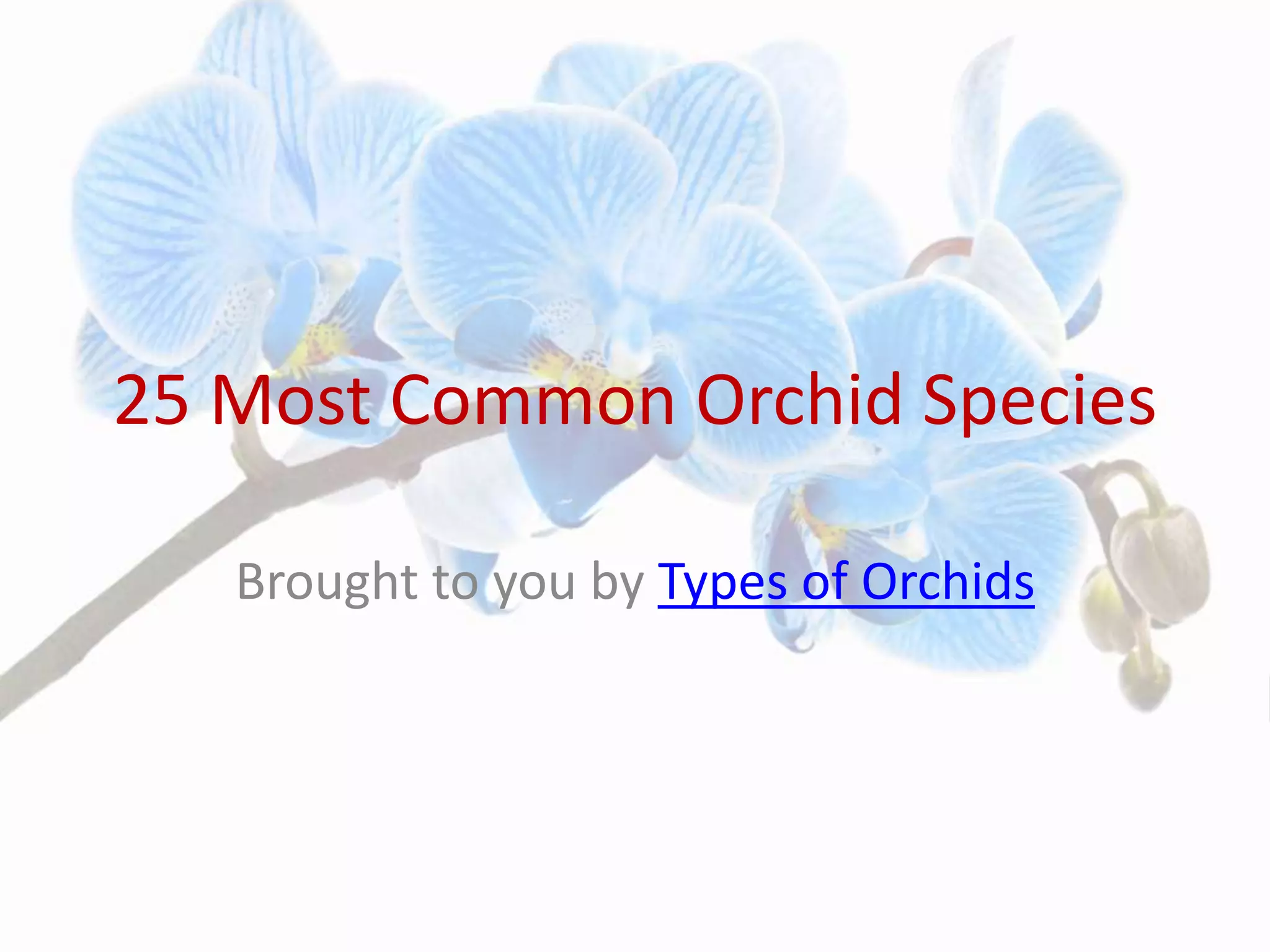
25 Most Common Orchid Species
Brought to you by Types of Orchids
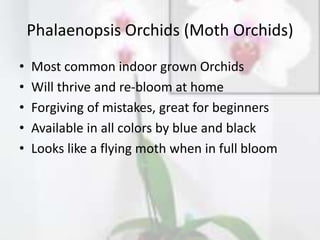
Phalaenopsis Orchids (Moth Orchids)
• Most common indoor grown Orchids
• Will thrive and re-bloom at home
• Forgiving of mistakes, great for beginners
• Available in all colors by blue and black
• Looks like a flying moth when in full bloom
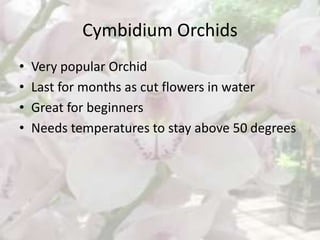
Cymbidium Orchids
• Very popular Orchid
• Last for months as cut flowers in water
• Great for beginners
• Needs temperatures to stay above 50 degrees
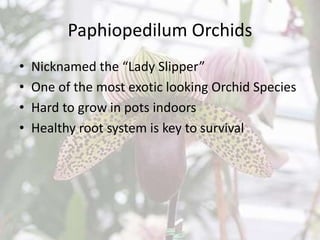
Paphiopedilum Orchids
• Nicknamed the “Lady Slipper”
• One of the most exotic looking Orchid Species
• Hard to grow in pots indoors
• Healthy root system is key to survival
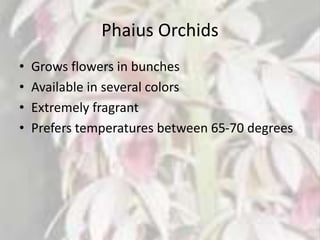
Phaius Orchids
• Grows flowers in bunches
• Available in several colors
• Extremely fragrant
• Prefers temperatures between 65-70 degrees
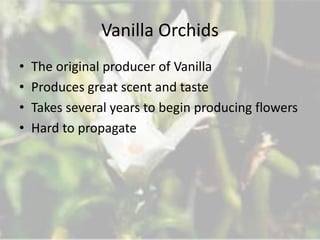
Vanilla Orchids
• The original producer of Vanilla
• Produces great scent and taste
• Takes several years to begin producing flowers
• Hard to propagate
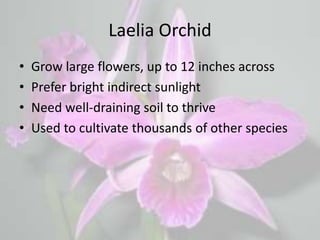
Laelia Orchid
• Grow large flowers, up to 12 inches across
• Prefer bright indirect sunlight
• Need well-draining soil to thrive
• Used to cultivate thousands of other species
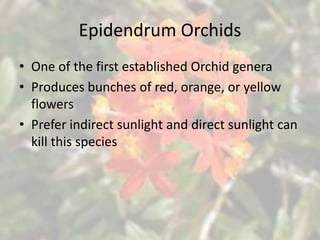
Epidendrum Orchids
• One of the first established Orchid genera
• Produces bunches of red, orange, or yellow
flowers
• Prefer indirect sunlight and direct sunlight can
kill this species
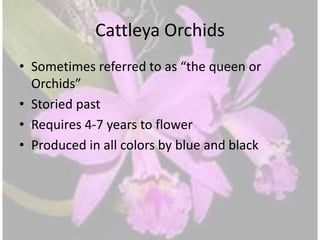
Cattleya Orchids
• Sometimes referred to as “the queen or
Orchids”
• Storied past
• Requires 4-7 years to flower
• Produced in all colors by blue and black
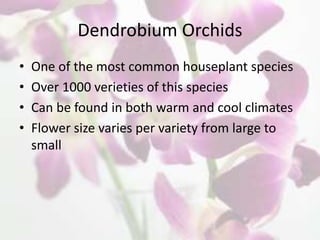
Dendrobium Orchids
• One of the most common houseplant species
• Over 1000 verieties of this species
• Can be found in both warm and cool climates
• Flower size varies per variety from large to
small
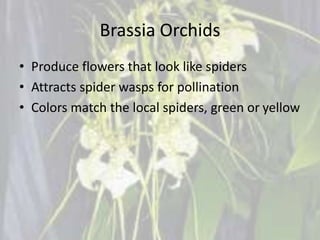
Brassia Orchids
• Produce flowers that look like spiders
• Attracts spider wasps for pollination
• Colors match the local spiders, green or yellow
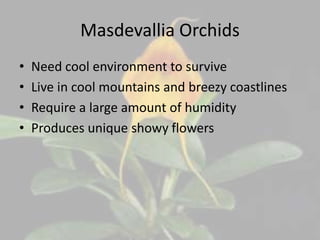
Masdevallia Orchids
• Need cool environment to survive
• Live in cool mountains and breezy coastlines
• Require a large amount of humidity
• Produces unique showy flowers
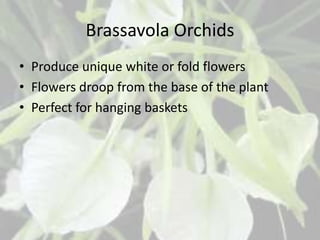
Brassavola Orchids
• Produce unique white or fold flowers
• Flowers droop from the base of the plant
• Perfect for hanging baskets
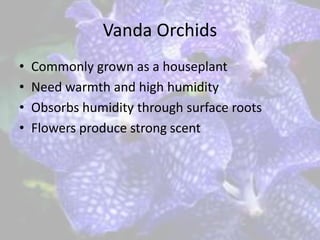
Vanda Orchids
• Commonly grown as a houseplant
• Need warmth and high humidity
• Obsorbs humidity through surface roots
• Flowers produce strong scent
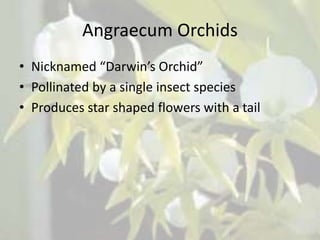
Angraecum Orchids
• Nicknamed “Darwin’s Orchid”
• Pollinated by a single insect species
• Produces star shaped flowers with a tail
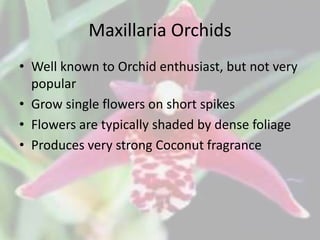
Maxillaria Orchids
• Well known to Orchid enthusiast, but not very
popular
• Grow single flowers on short spikes
• Flowers are typically shaded by dense foliage
• Produces very strong Coconut fragrance
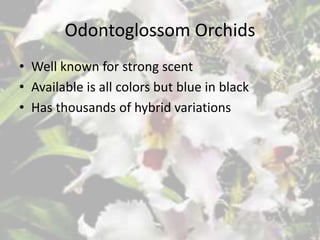
Odontoglossom Orchids
• Well known for strong scent
• Available is all colors but blue in black
• Has thousands of hybrid variations
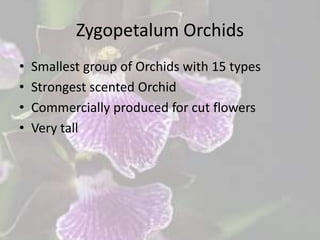
Zygopetalum Orchids
• Smallest group of Orchids with 15 types
• Strongest scented Orchid
• Commercially produced for cut flowers
• Very tall
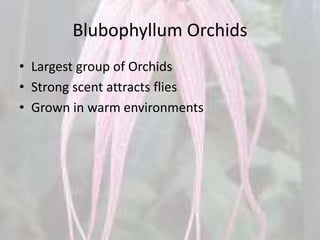
Blubophyllum Orchids
• Largest group of Orchids
• Strong scent attracts flies
• Grown in warm environments
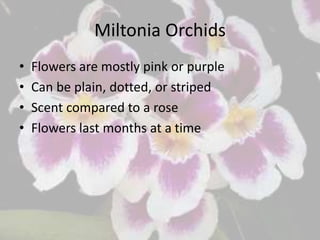
Miltonia Orchids
• Flowers are mostly pink or purple
• Can be plain, dotted, or striped
• Scent compared to a rose
• Flowers last months at a time
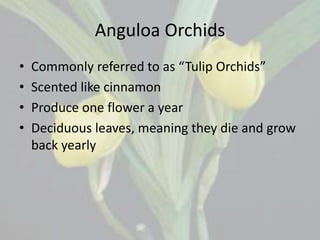
Anguloa Orchids
• Commonly referred to as “Tulip Orchids”
• Scented like cinnamon
• Produce one flower a year
• Deciduous leaves, meaning they die and grow
back yearly
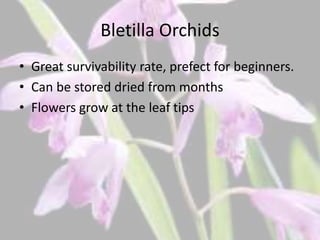
Bletilla Orchids
• Great survivability rate, prefect for beginners.
• Can be stored dried from months
• Flowers grow at the leaf tips
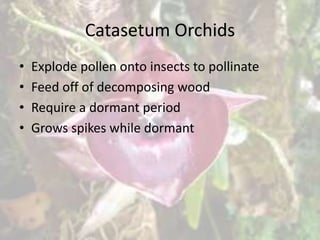
Catasetum Orchids
• Explode pollen onto insects to pollinate
• Feed off of decomposing wood
• Require a dormant period
• Grows spikes while dormant
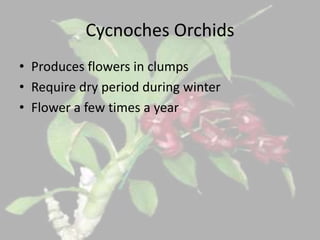
Cycnoches Orchids
• Produces flowers in clumps
• Require dry period during winter
• Flower a few times a year
Disa Orchids
• Have evolved significantly over the years
• Produces red flowers on long spikes
• Commonly used as cut flowers
• Prone to root rot, need to be kept dry
Lycaste Orchids
• Produce flowers with only three petals
• Scented like clove or cinnamon
• Each stem produces a single flower
• Produces veined leaves
References:
Types of Orchids

25 most common orchid species

  • 1.
    25 Most CommonOrchid Species Brought to you by Types of Orchids
  • 2.
    Phalaenopsis Orchids (MothOrchids) • Most common indoor grown Orchids • Will thrive and re-bloom at home • Forgiving of mistakes, great for beginners • Available in all colors by blue and black • Looks like a flying moth when in full bloom
  • 3.
    Cymbidium Orchids • Verypopular Orchid • Last for months as cut flowers in water • Great for beginners • Needs temperatures to stay above 50 degrees
  • 4.
    Paphiopedilum Orchids • Nicknamedthe “Lady Slipper” • One of the most exotic looking Orchid Species • Hard to grow in pots indoors • Healthy root system is key to survival
  • 5.
    Phaius Orchids • Growsflowers in bunches • Available in several colors • Extremely fragrant • Prefers temperatures between 65-70 degrees
  • 6.
    Vanilla Orchids • Theoriginal producer of Vanilla • Produces great scent and taste • Takes several years to begin producing flowers • Hard to propagate
  • 7.
    Laelia Orchid • Growlarge flowers, up to 12 inches across • Prefer bright indirect sunlight • Need well-draining soil to thrive • Used to cultivate thousands of other species
  • 8.
    Epidendrum Orchids • Oneof the first established Orchid genera • Produces bunches of red, orange, or yellow flowers • Prefer indirect sunlight and direct sunlight can kill this species
  • 9.
    Cattleya Orchids • Sometimesreferred to as “the queen or Orchids” • Storied past • Requires 4-7 years to flower • Produced in all colors by blue and black
  • 10.
    Dendrobium Orchids • Oneof the most common houseplant species • Over 1000 verieties of this species • Can be found in both warm and cool climates • Flower size varies per variety from large to small
  • 11.
    Brassia Orchids • Produceflowers that look like spiders • Attracts spider wasps for pollination • Colors match the local spiders, green or yellow
  • 12.
    Masdevallia Orchids • Needcool environment to survive • Live in cool mountains and breezy coastlines • Require a large amount of humidity • Produces unique showy flowers
  • 13.
    Brassavola Orchids • Produceunique white or fold flowers • Flowers droop from the base of the plant • Perfect for hanging baskets
  • 14.
    Vanda Orchids • Commonlygrown as a houseplant • Need warmth and high humidity • Obsorbs humidity through surface roots • Flowers produce strong scent
  • 15.
    Angraecum Orchids • Nicknamed“Darwin’s Orchid” • Pollinated by a single insect species • Produces star shaped flowers with a tail
  • 16.
    Maxillaria Orchids • Wellknown to Orchid enthusiast, but not very popular • Grow single flowers on short spikes • Flowers are typically shaded by dense foliage • Produces very strong Coconut fragrance
  • 17.
    Odontoglossom Orchids • Wellknown for strong scent • Available is all colors but blue in black • Has thousands of hybrid variations
  • 18.
    Zygopetalum Orchids • Smallestgroup of Orchids with 15 types • Strongest scented Orchid • Commercially produced for cut flowers • Very tall
  • 19.
    Blubophyllum Orchids • Largestgroup of Orchids • Strong scent attracts flies • Grown in warm environments
  • 20.
    Miltonia Orchids • Flowersare mostly pink or purple • Can be plain, dotted, or striped • Scent compared to a rose • Flowers last months at a time
  • 21.
    Anguloa Orchids • Commonlyreferred to as “Tulip Orchids” • Scented like cinnamon • Produce one flower a year • Deciduous leaves, meaning they die and grow back yearly
  • 22.
    Bletilla Orchids • Greatsurvivability rate, prefect for beginners. • Can be stored dried from months • Flowers grow at the leaf tips
  • 23.
    Catasetum Orchids • Explodepollen onto insects to pollinate • Feed off of decomposing wood • Require a dormant period • Grows spikes while dormant
  • 24.
    Cycnoches Orchids • Producesflowers in clumps • Require dry period during winter • Flower a few times a year
  • 25.
    Disa Orchids • Haveevolved significantly over the years • Produces red flowers on long spikes • Commonly used as cut flowers • Prone to root rot, need to be kept dry
  • 26.
    Lycaste Orchids • Produceflowers with only three petals • Scented like clove or cinnamon • Each stem produces a single flower • Produces veined leaves
  • 27.