1
Presented by
Mr. Akash U. Thakur
M. Pharm IInd sem
(Dept. of Pharmaceutics)
Guide
Mr. P. S. Gangane
2
Toothpaste
Requirements of a toothpaste
Formulation of a toothpaste
Ingredients used in toothpaste
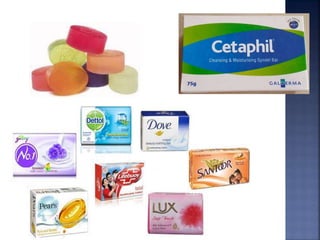
Soap and syndetbars
Manufacture of soap
Other type of soaps
Reference
3
Purpose
Cleansing
Polishing
Removal of stains
Reduce incidence of tooth decay
Reduction of oral malodors
4
5
E.g.
6
7
8
E g.
9
10
11
Gelling agents
Gelling or binding agents is necessary to maintain a
high solids suspension in stable form. Gelling agents
includes natural gum such as, gum tragacanth, silica,
synthetic cellulosic products. (CMC,SCMC)
Gum tragacanth
This gum is extensively used at one time and
satisfactory pastes can be made with it. The final
product may be variable because of natural origin of
the gum.
12
13
14
15
Bleaches
To enhance the whitening effect and to assist in the
removal of stains.
E.g. Magnesium peroxide, hydrogen peroxide
compound.
16
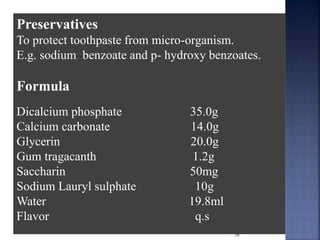
Preservatives
To protect toothpaste from micro-organism.
E.g. sodium benzoate and p- hydroxy benzoates.
Formula
Dicalcium phosphate 35.0g
Calcium carbonate 14.0g
Glycerin 20.0g
Gum tragacanth 1.2g
Saccharin 50mg
Sodium Lauryl sulphate 10g
Water 19.8ml
Flavor q.s
17
Soaps are sodium or potassium salts of long
chain fatty acids.
When triglycerides in fat/ oil react with aq.
NaOH or KOH and they are converted into soap
and glycerol.
This process is called as alkaline hydrolysis of
esters. Since this reaction leads to formation of
soap, it is called as saponification process.
18
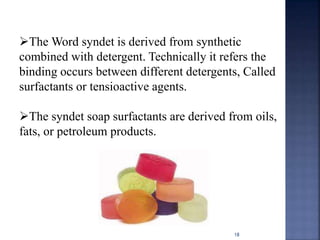
The Word syndet is derived from synthetic
combined with detergent. Technically it refers the
binding occurs between different detergents, Called
surfactants or tensioactive agents.
The syndet soap surfactants are derived from oils,
fats, or petroleum products.
19
Raw Materials
Fats and oils
Main raw materials in soap making are
fats and alkali. Fat mixture containing Saturated
and long and short chain fatty acid in satiable
proportion are used. Saturated fatty acids with
12 to 18 carbon atoms are used.
E g. Stearic acid, oleic acid, palmitic acid.
Fish oils, palm oil and coconut oil are
also used in preparation of soaps.
20
Alkali:-
Caustic soda (NaOH) is used as raw materal in the
preparation of soap.
Caustic potash (KOH) is used in making soft soaps.
Potassium carbonate and soda ash are used to
saponify fatty acids.
Alkalis should be free from iron or heavy metals
and it may cause by Discoloration of soap and it may
also affect oxidation.
21
Other Additives
1)Antioxidants
Used to Stabilize the soap against rancidity.
E g. sodium silicate, sodium hyposulphite, sodium
thiosulphate.
2) Whiteners
Titanium dioxide and zinc oxide are used to
improve whiteness.
3) Perfumes
The pH of the soap is around 10.0. The
selected perfume should be stable in this pH range.
22
Manufacture of Soap
Soap is manufacture by three type of processes namely
are as,
1) Semi- boiled and Cold Process.
2) Full- boiled Process.
3) Continuous saponification
1) Semi- boiled and Cold Process
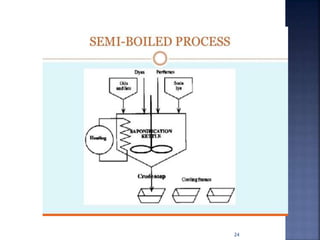
 Semi boiled and cold processes are the simplest processes of
soap making.
 In these processes, fat is reacted with strong alkali and
strong alkali is nearly equal to that just required for
saponification.
 The semi boiled process differs from the cold process in the
fact that the saponification.

23
Mixture is heated to 70-90 c . Using a steam
heated coil to accelerate and complete the
saponification reaction. After the
saponification is complete other ingredients
added.
Cold process, mixing of fat and strong alkali
is carried out substantially at room temp so
that litter more than emulsification take place.
Saponification is completed after this
mixture is run into frames in several days at
warm temp. then addition of other ingredients.
24
25
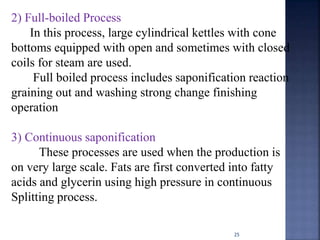
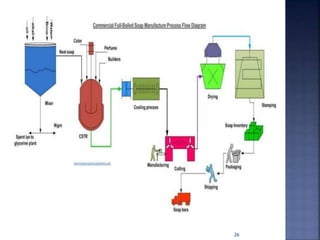
2) Full-boiled Process
In this process, large cylindrical kettles with cone
bottoms equipped with open and sometimes with closed
coils for steam are used.
Full boiled process includes saponification reaction
graining out and washing strong change finishing
operation
3) Continuous saponification
These processes are used when the production is
on very large scale. Fats are first converted into fatty
acids and glycerin using high pressure in continuous
Splitting process.
26
27
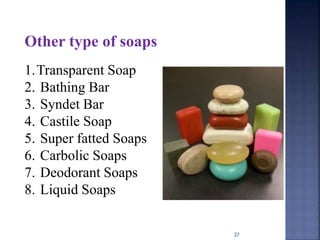
Other type of soaps
1.Transparent Soap
2. Bathing Bar
3. Syndet Bar
4. Castile Soap
5. Super fatted Soaps
6. Carbolic Soaps
7. Deodorant Soaps
8. Liquid Soaps
28
1) Transparent Soap
Soap can be deposited from alcoholic solution in
transparent from.
Formula
Tallow fatty acids 26 %
Coconut oil 8.0%
Caster oil 5.0%
Ethanol 10.0%
sodium hydroxide 6.0%
Sugar 15.0%
Glycerin 9.0%
EDTA 0.25%
Water 100.0
29
2) Bathing Bar
Usually are a combination of soap, detergent
and other additives.
Formula
Soap 40 %
Sodium glyceryl monolaurate 45 %
SLS 10 %
Cetyl alcohol 4 %
Titanium dioxide 1 %
Perfume q.s
Colour q.s
antioxidant q.s
30
4) Castile Soap
Castile soap is produced either from olive oil. Castile soap
is usually manufactured with cold process.
3)Syndet Bar
Bars based on detergents only are called syndet bar.
Formula
Sodium glyceryl monolaurate sulphate 78 %
Glyceryl monostearate 10 %
Cetyl alcohol 9 %
Lanolin derivative 1 %
Corn starch 2 %
perfum, colour q.s.
Anti-oxidants q.s.
31
5) Deodorant Soaps
Deodorant soaps contain anti- bacterial substance
Hexachlorophene has used in cosmetics.
Other anti-bacterials which have been used in toilet
soap include trichlorocabanilide (TCC). If TCC is used
as a antibacterial in the toilet soap at no stage of
manufacture the temp. of process should 60°c.
antibacterial check the growth of bacteria order of the
is produce through bacterial action on sweat/
sebaceous. These soaps are mainly used for their
Antibacterial properties.
32
6) Liquid Soaps
Liquid soaps can be easily dispensed from
automatic or semi-automatic devices. Therefore,
liquid soaps are aq. Solution of soap. Soap for liquid
soap is usually made from caustic potash and
Coconut oil.
33
34
References
Cosmetics- formulation, manufacturing and quality control
by P. P. Sharma 4th edition, Vandana Publications Page no.
539-554,615-633.
35
36

Toothpaste, soap, dyndetbar

  • 1.
    1 Presented by Mr. AkashU. Thakur M. Pharm IInd sem (Dept. of Pharmaceutics) Guide Mr. P. S. Gangane
  • 2.
    2 Toothpaste Requirements of atoothpaste Formulation of a toothpaste Ingredients used in toothpaste Soap and syndetbars Manufacture of soap Other type of soaps Reference
  • 3.
    3 Purpose Cleansing Polishing Removal of stains Reduceincidence of tooth decay Reduction of oral malodors
  • 4.
  • 5.
  • 6.
  • 7.
  • 8.
  • 9.
  • 10.
  • 11.
    11 Gelling agents Gelling orbinding agents is necessary to maintain a high solids suspension in stable form. Gelling agents includes natural gum such as, gum tragacanth, silica, synthetic cellulosic products. (CMC,SCMC) Gum tragacanth This gum is extensively used at one time and satisfactory pastes can be made with it. The final product may be variable because of natural origin of the gum.
  • 12.
  • 13.
  • 14.
  • 15.
    15 Bleaches To enhance thewhitening effect and to assist in the removal of stains. E.g. Magnesium peroxide, hydrogen peroxide compound.
  • 16.
    16 Preservatives To protect toothpastefrom micro-organism. E.g. sodium benzoate and p- hydroxy benzoates. Formula Dicalcium phosphate 35.0g Calcium carbonate 14.0g Glycerin 20.0g Gum tragacanth 1.2g Saccharin 50mg Sodium Lauryl sulphate 10g Water 19.8ml Flavor q.s
  • 17.
    17 Soaps are sodiumor potassium salts of long chain fatty acids. When triglycerides in fat/ oil react with aq. NaOH or KOH and they are converted into soap and glycerol. This process is called as alkaline hydrolysis of esters. Since this reaction leads to formation of soap, it is called as saponification process.
  • 18.
    18 The Word syndetis derived from synthetic combined with detergent. Technically it refers the binding occurs between different detergents, Called surfactants or tensioactive agents. The syndet soap surfactants are derived from oils, fats, or petroleum products.
  • 19.
    19 Raw Materials Fats andoils Main raw materials in soap making are fats and alkali. Fat mixture containing Saturated and long and short chain fatty acid in satiable proportion are used. Saturated fatty acids with 12 to 18 carbon atoms are used. E g. Stearic acid, oleic acid, palmitic acid. Fish oils, palm oil and coconut oil are also used in preparation of soaps.
  • 20.
    20 Alkali:- Caustic soda (NaOH)is used as raw materal in the preparation of soap. Caustic potash (KOH) is used in making soft soaps. Potassium carbonate and soda ash are used to saponify fatty acids. Alkalis should be free from iron or heavy metals and it may cause by Discoloration of soap and it may also affect oxidation.
  • 21.
    21 Other Additives 1)Antioxidants Used toStabilize the soap against rancidity. E g. sodium silicate, sodium hyposulphite, sodium thiosulphate. 2) Whiteners Titanium dioxide and zinc oxide are used to improve whiteness. 3) Perfumes The pH of the soap is around 10.0. The selected perfume should be stable in this pH range.
  • 22.
    22 Manufacture of Soap Soapis manufacture by three type of processes namely are as, 1) Semi- boiled and Cold Process. 2) Full- boiled Process. 3) Continuous saponification 1) Semi- boiled and Cold Process  Semi boiled and cold processes are the simplest processes of soap making.  In these processes, fat is reacted with strong alkali and strong alkali is nearly equal to that just required for saponification.  The semi boiled process differs from the cold process in the fact that the saponification.
  • 23.
    23 Mixture is heatedto 70-90 c . Using a steam heated coil to accelerate and complete the saponification reaction. After the saponification is complete other ingredients added. Cold process, mixing of fat and strong alkali is carried out substantially at room temp so that litter more than emulsification take place. Saponification is completed after this mixture is run into frames in several days at warm temp. then addition of other ingredients.
  • 24.
  • 25.
    25 2) Full-boiled Process Inthis process, large cylindrical kettles with cone bottoms equipped with open and sometimes with closed coils for steam are used. Full boiled process includes saponification reaction graining out and washing strong change finishing operation 3) Continuous saponification These processes are used when the production is on very large scale. Fats are first converted into fatty acids and glycerin using high pressure in continuous Splitting process.
  • 26.
  • 27.
    27 Other type ofsoaps 1.Transparent Soap 2. Bathing Bar 3. Syndet Bar 4. Castile Soap 5. Super fatted Soaps 6. Carbolic Soaps 7. Deodorant Soaps 8. Liquid Soaps
  • 28.
    28 1) Transparent Soap Soapcan be deposited from alcoholic solution in transparent from. Formula Tallow fatty acids 26 % Coconut oil 8.0% Caster oil 5.0% Ethanol 10.0% sodium hydroxide 6.0% Sugar 15.0% Glycerin 9.0% EDTA 0.25% Water 100.0
  • 29.
    29 2) Bathing Bar Usuallyare a combination of soap, detergent and other additives. Formula Soap 40 % Sodium glyceryl monolaurate 45 % SLS 10 % Cetyl alcohol 4 % Titanium dioxide 1 % Perfume q.s Colour q.s antioxidant q.s
  • 30.
    30 4) Castile Soap Castilesoap is produced either from olive oil. Castile soap is usually manufactured with cold process. 3)Syndet Bar Bars based on detergents only are called syndet bar. Formula Sodium glyceryl monolaurate sulphate 78 % Glyceryl monostearate 10 % Cetyl alcohol 9 % Lanolin derivative 1 % Corn starch 2 % perfum, colour q.s. Anti-oxidants q.s.
  • 31.
    31 5) Deodorant Soaps Deodorantsoaps contain anti- bacterial substance Hexachlorophene has used in cosmetics. Other anti-bacterials which have been used in toilet soap include trichlorocabanilide (TCC). If TCC is used as a antibacterial in the toilet soap at no stage of manufacture the temp. of process should 60°c. antibacterial check the growth of bacteria order of the is produce through bacterial action on sweat/ sebaceous. These soaps are mainly used for their Antibacterial properties.
  • 32.
    32 6) Liquid Soaps Liquidsoaps can be easily dispensed from automatic or semi-automatic devices. Therefore, liquid soaps are aq. Solution of soap. Soap for liquid soap is usually made from caustic potash and Coconut oil.
  • 33.
  • 34.
    34 References Cosmetics- formulation, manufacturingand quality control by P. P. Sharma 4th edition, Vandana Publications Page no. 539-554,615-633.
  • 35.
  • 36.