Tongue paralysis
ON
Menoufia faculty of medicine
Under
supervision
Dr/ Hanaa Noah
Dr/ Engy Abd el azeem
Dr/ Lubna Taher
• Dr/ Amira Ahmady
• Dr/ Amira Fathy
• Dr/ Amira Elmeligy
• Dr/ Alaa Mousa
• Dr/ Alaa Saber
• Dr/ Alshimaa Elsalakawy
• Dr/ Gihan Osama
• Dr/ Ahmed Salama
• Dr/ Ehab Adel
• Dr/ Wael Elkattan
by
Outlines
• What is the tongue?
• Development of the tongue
• Anatomy of the tongue
• Tongue paralysis
Definition
Causes
Epidemiology
Diagnosis
-history & examination
- clinical picture
-investigation
• Treatment
• Prevention
• Prognosis
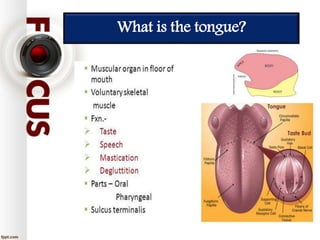
What is the tongue?
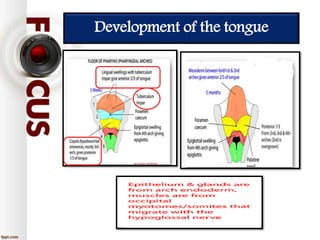
Development of the tongue
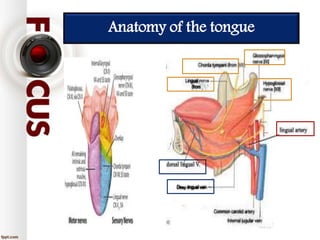
Anatomy of the tongue
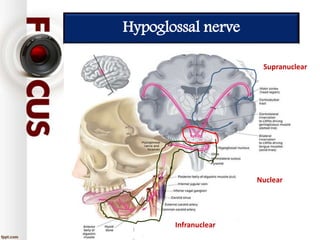
Hypoglossal nerve
Supranuclear
Infranuclear
Nuclear
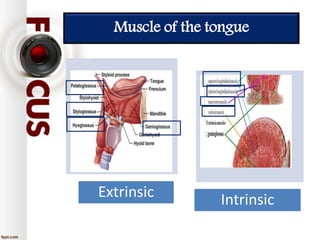
Muscle of the tongue
Extrinsic Intrinsic
What is tongue paralysis?
Definition
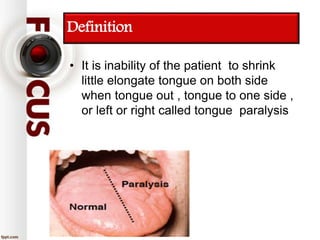
• It is inability of the patient to shrink
little elongate tongue on both side
when tongue out , tongue to one side ,
or left or right called tongue paralysis
Historical Background
• The first recorded description of the unnamed
hypoglossal nerve was by Herophilos (335–280
BC).
• The first use of the name hypoglossal in Latin as
nervi hypoglossi externa was used by Winslow in
1733.
• This was followed though by several different
namings including nervi indeterminati, par
lingual, par gustatorium, great sub-lingual by
different authors, and gustatory nerve and lingual
nerve (by Winslow).
• It was listed in 1778 as nerve hypoglossum
magnum by Soemmering.
• It was then named as the great hypoglossal nerve
Causes
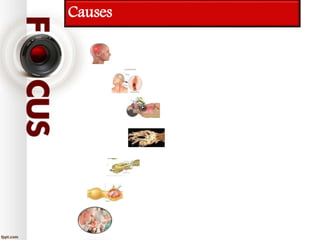
Damage or lesions to the hypoglossal
nerve.
It is classified to:
 Nuclear.
 Supranuclear (UMNL).
 Infranuclear (LMNL).
 It is either unilateral or bilateral
Causes
Epidemiology
• About 30.5% varied geographic location
• Sex : more in males
• Age :
* more freqenty in adulthood
* prominance increase by age
Epidemiology
Diagnosis
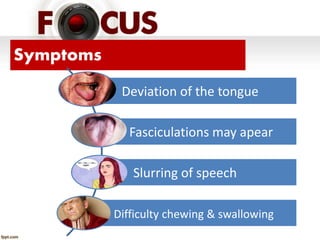
Symptoms
Deviation of the tongue
Fasciculations may apear
Slurring of speech
Difficulty chewing & swallowing
Company Logo
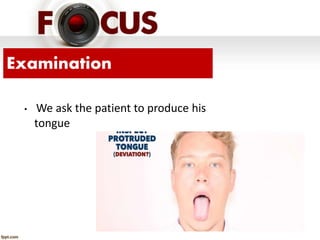
Examination
• We ask the patient to produce his
tongue
Investigations
Company Logo
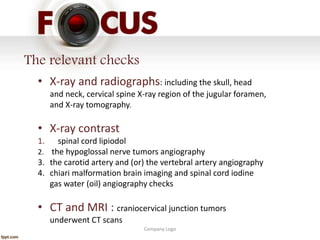
The relevant checks
• X-ray and radiographs: including the skull, head
and neck, cervical spine X-ray region of the jugular foramen,
and X-ray tomography.
• X-ray contrast
1. spinal cord lipiodol
2. the hypoglossal nerve tumors angiography
3. the carotid artery and (or) the vertebral artery angiography
4. chiari malformation brain imaging and spinal cord iodine
gas water (oil) angiography checks
• CT and MRI : craniocervical junction tumors
underwent CT scans
Company Logo
Treatment
Company Logo
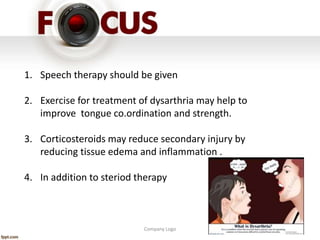
1. Speech therapy should be given
2. Exercise for treatment of dysarthria may help to
improve tongue co.ordination and strength.
3. Corticosteroids may reduce secondary injury by
reducing tissue edema and inflammation .
4. In addition to steriod therapy
Company Logo
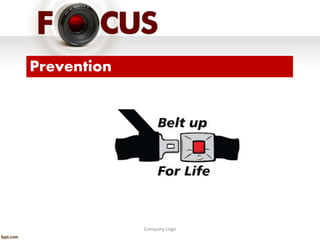
Prevention
Company Logo
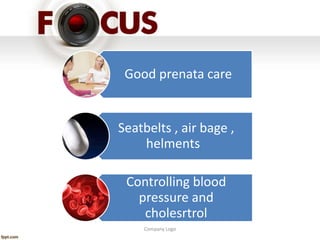
Good prenata care
Seatbelts , air bage ,
helments
Controlling blood
pressure and
cholesrtrol
Company Logo
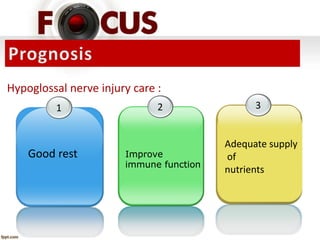
Hypoglossal nerve injury care :
Good rest
1 2
Improve
immune function
Adequate supply
of
nutrients
3
Add your company slogan

Tongue paralysis

  • 1.
  • 2.
    Under supervision Dr/ Hanaa Noah Dr/Engy Abd el azeem Dr/ Lubna Taher • Dr/ Amira Ahmady • Dr/ Amira Fathy • Dr/ Amira Elmeligy • Dr/ Alaa Mousa • Dr/ Alaa Saber • Dr/ Alshimaa Elsalakawy • Dr/ Gihan Osama • Dr/ Ahmed Salama • Dr/ Ehab Adel • Dr/ Wael Elkattan by
  • 3.
    Outlines • What isthe tongue? • Development of the tongue • Anatomy of the tongue • Tongue paralysis Definition Causes Epidemiology Diagnosis -history & examination - clinical picture -investigation • Treatment • Prevention • Prognosis
  • 4.
    What is thetongue?
  • 5.
  • 6.
  • 7.
  • 8.
    Muscle of thetongue Extrinsic Intrinsic
  • 9.
    What is tongueparalysis?
  • 10.
    Definition • It isinability of the patient to shrink little elongate tongue on both side when tongue out , tongue to one side , or left or right called tongue paralysis
  • 11.
    Historical Background • Thefirst recorded description of the unnamed hypoglossal nerve was by Herophilos (335–280 BC). • The first use of the name hypoglossal in Latin as nervi hypoglossi externa was used by Winslow in 1733. • This was followed though by several different namings including nervi indeterminati, par lingual, par gustatorium, great sub-lingual by different authors, and gustatory nerve and lingual nerve (by Winslow). • It was listed in 1778 as nerve hypoglossum magnum by Soemmering. • It was then named as the great hypoglossal nerve
  • 12.
    Causes Damage or lesionsto the hypoglossal nerve. It is classified to:  Nuclear.  Supranuclear (UMNL).  Infranuclear (LMNL).  It is either unilateral or bilateral
  • 13.
  • 14.
  • 15.
    • About 30.5%varied geographic location • Sex : more in males • Age : * more freqenty in adulthood * prominance increase by age Epidemiology
  • 16.
  • 17.
    Symptoms Deviation of thetongue Fasciculations may apear Slurring of speech Difficulty chewing & swallowing
  • 18.
    Company Logo Examination • Weask the patient to produce his tongue
  • 19.
  • 20.
    Company Logo The relevantchecks • X-ray and radiographs: including the skull, head and neck, cervical spine X-ray region of the jugular foramen, and X-ray tomography. • X-ray contrast 1. spinal cord lipiodol 2. the hypoglossal nerve tumors angiography 3. the carotid artery and (or) the vertebral artery angiography 4. chiari malformation brain imaging and spinal cord iodine gas water (oil) angiography checks • CT and MRI : craniocervical junction tumors underwent CT scans
  • 21.
  • 22.
    Company Logo 1. Speechtherapy should be given 2. Exercise for treatment of dysarthria may help to improve tongue co.ordination and strength. 3. Corticosteroids may reduce secondary injury by reducing tissue edema and inflammation . 4. In addition to steriod therapy
  • 23.
  • 24.
    Company Logo Good prenatacare Seatbelts , air bage , helments Controlling blood pressure and cholesrtrol
  • 25.
    Company Logo Hypoglossal nerveinjury care : Good rest 1 2 Improve immune function Adequate supply of nutrients 3
  • 26.