FISHERY ARTS
LESSON 1
FISHERY – is the business of catching, taking, handling, harvesting and presenting fish
other fish or aquatic products.
1. FISH CULTURE – it is the art and science of raising aquatic products under a controlled or
controlled environment.
2. FISH CAPTURE – it is the branch of fishery science that deals with the scientific method of
any aquatic animal, using any king of fishing methods, often operated from a
vessel.
3. FISH PRESERVATION – it is the method of extending the shelf life of fish and other fishery
by applying the principles of chemistry, engineering and other branches
science in order to improve the quality of the products.
BRANCHES OF FISHERY
FIN FISH – have fins and scales
SHELLFISH – have outer shells.
 1. oysters 3. crabs 5. scallops 7. prawns
 2. shrimps 4. crayfish 6. lobsters 8. clams
KINDS OF FISH
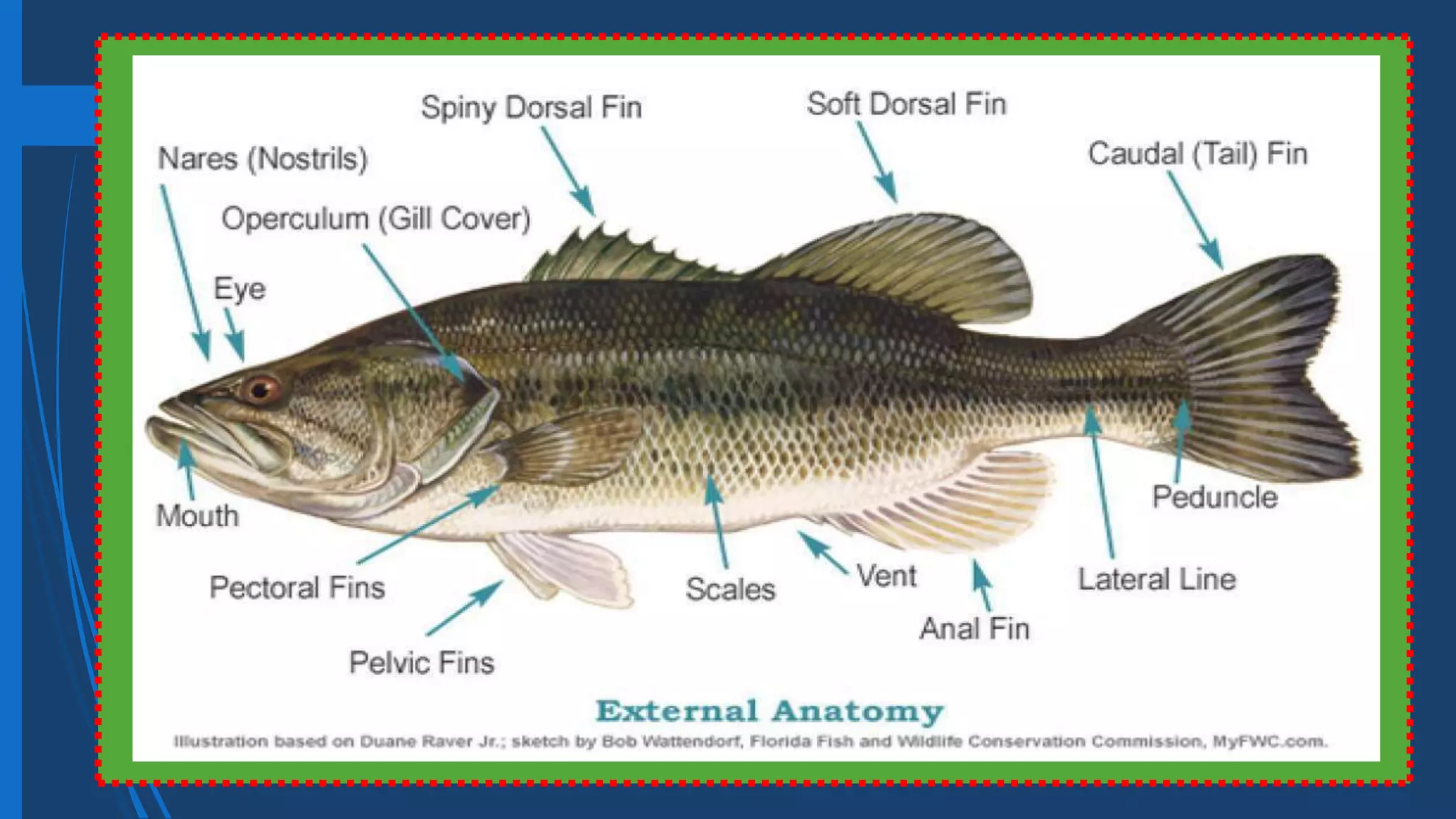
1. OPERCULUM/ GILL COVER – it is a bony structure covering and protecting the gills.
2. SCALES – the part of the fish that covers the body.
3. FINS – these are appendages used by the fish to maintain its position, move steer and stop.
are either single fins along the centreline of the fish, such as the dorsal(Back),
and anal or paired fins which include the pectoral(Chest) and pelvic(Hip).
4. EYES – fish see through their eyes and can detect color.
5. MOUTH – besides being the only channel where foods are entered the inner part of the
contains the taste sensory. Some fishes have this sensory cell grown around the lips
head to provide acute taste for what they want to hunt.
6. CAUDAL PREDUNCLE – it is the engine to thrust the fish forward and caudal fin is the
that releases that thrust.
EXTERNAL PARTS OF FISH
7. NARSES/NOSTRILS – this is one of the vital parts of the organ that helps the fishes
locate their foods especially those that hunt in milky water or during the
8. PECTORALS – these allow the fish to stabilize, rotate and act like a water-braking
system.
9. PELVIC FINS – these allow the fish to stabilize itself and act like a water-braking
10. ANAL FIN – it keeps the fish upright during swimming and also acts like a sub
to help the fish to steer during high speed swim.
11. SPINY FIN – it is also known as “Spinous fin”. Both hard and soft dorsal fins help
stabilize the fishes upright position.
12. LATERAL LINE – it is one of the vital organs that help the fishes to detect
order to evade predators or locate their preys.
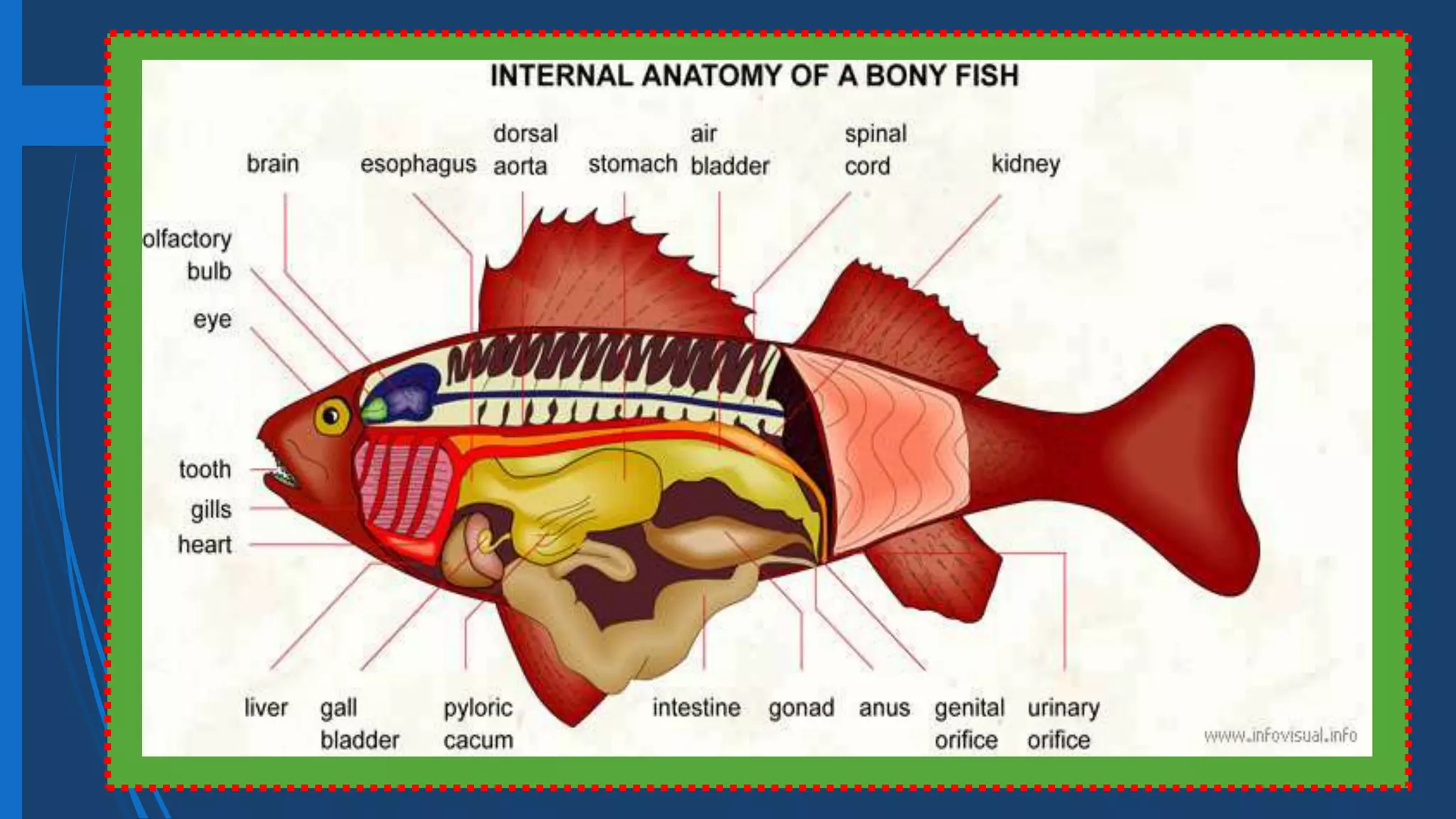
1. BRAIN – it is the control center of the fish where both automatic functions and higher
behaviours occur.
2. SPINAL CORD – it is the part that connects the brain to the rest of the body and relays
sensory information from the body to the brain.
3. GALL BLADDER – it plays an important role in digestion for the fish.
4. AIR BLADDER – it is a gas-filled organ used primarily to maintain neutral buoyancy.
5. KIDNEY – it filters out liquid wastes in the blood and channels them out of the body.
INTERNAL PARTS OF FISH
6. STOMACH AND INTESTINES – it breaks down food and absorbs nutrients.
7. PYLORIC CACUM – it is an organ that resembles thin fingers emanating from the
stomach and intestine junction.
8. LIVER – it is an important organ of fish anatomy with multiple functions, primarily
breaks down fats with enzymes and stores fats and carbohydrates.
9. HEART – it circulates blood throughout the body.
10. GONAD – it is a hormone-secreting sexual gland of a fish.
1. ANATOMY – the art of separating the parts of an organism in order to ascertain
position, relation, structure and function.
2. ENZYMES – any of numerous complex proteins that are produced by living cells and
catalyse specific biochemical reactions at body temperatures.
3. PREY – an animal taken by a predator as food.
4. PEDUNCLE – a narrow part by which some larger part or the whole body of an
organism is attached.
5. PECTORAL – of, situated in or on, or worn on the chest.
TECHNICAL TERMS

TLE 8 Chapter 2 Lesson 1

  • 1.
  • 2.
    FISHERY – isthe business of catching, taking, handling, harvesting and presenting fish other fish or aquatic products. 1. FISH CULTURE – it is the art and science of raising aquatic products under a controlled or controlled environment. 2. FISH CAPTURE – it is the branch of fishery science that deals with the scientific method of any aquatic animal, using any king of fishing methods, often operated from a vessel. 3. FISH PRESERVATION – it is the method of extending the shelf life of fish and other fishery by applying the principles of chemistry, engineering and other branches science in order to improve the quality of the products. BRANCHES OF FISHERY
  • 3.
    FIN FISH –have fins and scales SHELLFISH – have outer shells.  1. oysters 3. crabs 5. scallops 7. prawns  2. shrimps 4. crayfish 6. lobsters 8. clams KINDS OF FISH
  • 4.
    1. OPERCULUM/ GILLCOVER – it is a bony structure covering and protecting the gills. 2. SCALES – the part of the fish that covers the body. 3. FINS – these are appendages used by the fish to maintain its position, move steer and stop. are either single fins along the centreline of the fish, such as the dorsal(Back), and anal or paired fins which include the pectoral(Chest) and pelvic(Hip). 4. EYES – fish see through their eyes and can detect color. 5. MOUTH – besides being the only channel where foods are entered the inner part of the contains the taste sensory. Some fishes have this sensory cell grown around the lips head to provide acute taste for what they want to hunt. 6. CAUDAL PREDUNCLE – it is the engine to thrust the fish forward and caudal fin is the that releases that thrust. EXTERNAL PARTS OF FISH
  • 5.
    7. NARSES/NOSTRILS –this is one of the vital parts of the organ that helps the fishes locate their foods especially those that hunt in milky water or during the 8. PECTORALS – these allow the fish to stabilize, rotate and act like a water-braking system. 9. PELVIC FINS – these allow the fish to stabilize itself and act like a water-braking 10. ANAL FIN – it keeps the fish upright during swimming and also acts like a sub to help the fish to steer during high speed swim. 11. SPINY FIN – it is also known as “Spinous fin”. Both hard and soft dorsal fins help stabilize the fishes upright position. 12. LATERAL LINE – it is one of the vital organs that help the fishes to detect order to evade predators or locate their preys.
  • 8.
    1. BRAIN –it is the control center of the fish where both automatic functions and higher behaviours occur. 2. SPINAL CORD – it is the part that connects the brain to the rest of the body and relays sensory information from the body to the brain. 3. GALL BLADDER – it plays an important role in digestion for the fish. 4. AIR BLADDER – it is a gas-filled organ used primarily to maintain neutral buoyancy. 5. KIDNEY – it filters out liquid wastes in the blood and channels them out of the body. INTERNAL PARTS OF FISH
  • 9.
    6. STOMACH ANDINTESTINES – it breaks down food and absorbs nutrients. 7. PYLORIC CACUM – it is an organ that resembles thin fingers emanating from the stomach and intestine junction. 8. LIVER – it is an important organ of fish anatomy with multiple functions, primarily breaks down fats with enzymes and stores fats and carbohydrates. 9. HEART – it circulates blood throughout the body. 10. GONAD – it is a hormone-secreting sexual gland of a fish.
  • 10.
    1. ANATOMY –the art of separating the parts of an organism in order to ascertain position, relation, structure and function. 2. ENZYMES – any of numerous complex proteins that are produced by living cells and catalyse specific biochemical reactions at body temperatures. 3. PREY – an animal taken by a predator as food. 4. PEDUNCLE – a narrow part by which some larger part or the whole body of an organism is attached. 5. PECTORAL – of, situated in or on, or worn on the chest. TECHNICAL TERMS